

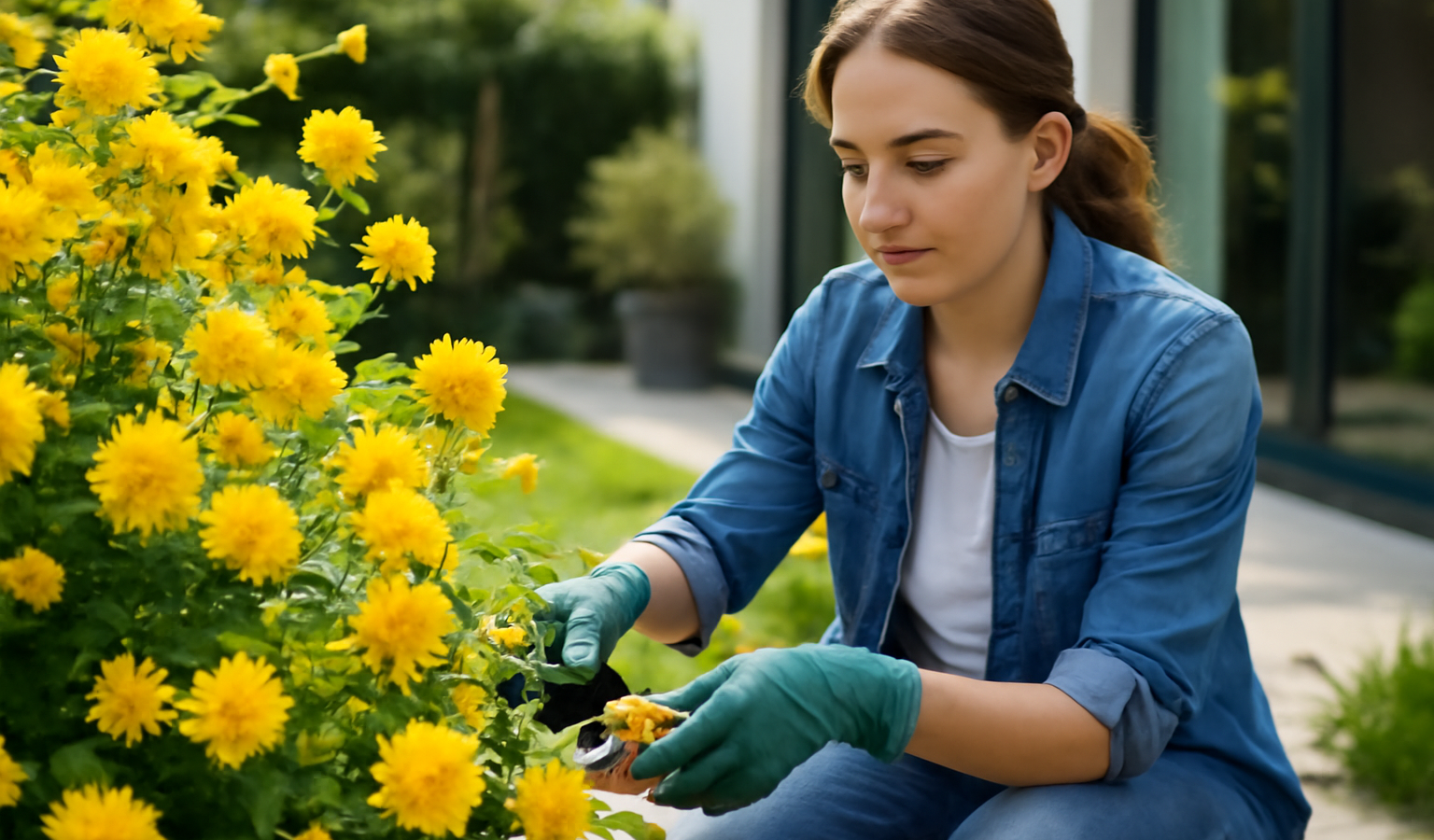
Kerria (Kerria japonica), often called Japanese rose or Japanese kerria, is the shrub for that shady spot where you’d given up on getting any real color. In mid-spring it covers itself in bright golden-yellow flowers—single and buttercup-like on the species, or double and pompom-shaped on the popular ‘Pleniflora’—and the green stems stay attractive all winter long. It’s an old-fashioned, almost foolproof deciduous shrub: it thrives in part to full shade, tolerates a range of soils, shrugs off most pests, and grows so easily that the real skill is keeping its suckering habit in bounds. For a graceful, arching shrub that lights up a woodland edge or north-facing border, kerria is hard to beat.
Key Takeaways
- Zones: Hardy in USDA zones 4–9, one of the more cold-tolerant flowering shrubs for shade.
- Light: Part shade to full shade is ideal; flowers fade and scorch in hot full sun.
- Soil: Adaptable to most well-drained soils; prefers loamy, evenly moist ground but tolerates clay.
- Size & spacing: Reaches 3–6 feet tall and 5–8 feet wide; space plants 4–6 feet apart.
- Bloom: Golden-yellow flowers in mid-to-late spring (April–May), with scattered repeat blooms possible in summer.
- Prune: Prune right after flowering—it blooms on old wood, so spring pruning removes the flowers.
Light: a true shade-flowering shrub
Kerria is one of the few flowering shrubs that genuinely prefers shade, which makes it invaluable. Plant it in partial to full shade—dappled light under high trees, a north- or east-facing bed, or the shaded side of a building. In these conditions the yellow flowers hold their rich color and last longer. Avoid hot, direct afternoon sun: full sun bleaches the blooms to a pale, washed-out yellow, shortens the bloom period and can scorch the foliage in warm climates. A bit of morning sun is fine, but when in doubt, give kerria more shade rather than less. This shade tolerance also means it pairs beautifully with woodland companions that share the same conditions.
Soil and planting
Kerria isn’t picky about soil. It does best in average, loamy, well-drained ground that stays evenly moist, but it tolerates clay and a range of pH levels without complaint. The main thing to avoid is soggy, waterlogged soil, which can stress the roots. If your soil is heavy clay, work in some compost at planting to improve structure and drainage; if it’s sandy and quick to dry, compost helps hold moisture.
Plant in spring or fall, digging a hole as deep as the root ball and twice as wide, and setting the shrub at the same depth it grew in the container. Because kerria spreads by suckers into a broad, arching colony reaching 5–8 feet wide, give it room—space plants 4–6 feet apart if you’re grouping several, and don’t crowd it against a path or patio it will want to overrun. Water in well and mulch with 2–3 inches of shredded bark, keeping the mulch off the stems.
Watering and feeding
Water newly planted kerria regularly through its first growing season to establish the roots—aim to keep the soil evenly moist but not waterlogged, roughly an inch of water a week including rain. Once established, kerria is fairly drought-tolerant and needs supplemental watering only during prolonged dry spells, though it appreciates a deep soak in summer heat to keep the foliage fresh.
This is a shrub that can be ruined with kindness. Kerria flowers best in lean to average soil and needs little or no fertilizer. A light topdressing of compost in spring is ample. Over-feeding, especially with high-nitrogen lawn fertilizer, produces a flush of leafy green growth at the expense of flowers and makes the already-vigorous plant sucker even more aggressively. When it comes to feeding kerria, less is genuinely more.
Pruning: the one rule that matters
The single most important thing to know about kerria is when to prune. It blooms on old wood—stems formed the previous year—so the rule is to prune immediately after flowering finishes, in late spring. Prune in winter or early spring and you’ll cut off the very stems that were about to bloom, sacrificing the whole show. Right after the flowers fade, you have a window to shape the plant before it sets next year’s flower buds on new growth.
At pruning time, cut back the stems that just flowered, and remove any dead, weak, crossing or wayward canes down to the base or to a strong side shoot. This keeps the shrub from becoming a tangled, leggy thicket. Kerria responds wonderfully to rejuvenation pruning: an old, overgrown plant can be cut nearly to the ground after flowering and will resprout vigorously, returning to bloom within a season or two. Don’t be timid—this is a shrub that thrives on a hard cut.
Controlling the suckers
Kerria spreads by underground suckers, sending up new shoots around the parent plant to form a slowly expanding colony. In a woodland or naturalized setting this is an asset, knitting into an attractive thicket. In a tidy border it can become a nuisance, popping up where you don’t want it. To control the spread, dig out unwanted suckers as they appear, slicing them off below soil level with a sharp spade. Doing this once or twice a year keeps the plant in bounds.
If you want to contain kerria more firmly, you can install a root barrier at planting or site it where mowing or hard edges naturally limit the suckers. The flip side of this habit is that those suckers make propagation effortless—which brings us to the next section. For more on managing vigorous, spreading plants in the landscape, see our Outdoor Living guides.
Propagating kerria by division and cuttings
Kerria is one of the easiest shrubs to propagate. The simplest method is division: in spring or fall, dig up a rooted sucker from the edge of the clump—it will already have its own roots—sever it from the parent, and replant it where you want it. Water it in and it usually establishes with little fuss. This is the fastest way to make new plants or to share with neighbors.
You can also take softwood cuttings in early summer or hardwood cuttings in late fall. Dip the cut end in rooting hormone, insert into moist, well-drained potting mix, and keep humid until roots form. Because the plant suckers so readily, though, most gardeners simply divide—it’s quicker and nearly always succeeds.
Problems, pests and winter interest
Kerria is refreshingly trouble-free. It has few serious pests or diseases; the occasional issue is a leaf or twig blight (a fungal canker) that can cause dieback, usually managed by pruning out affected stems and improving air circulation. Good drainage and not overcrowding the plant prevent most fungal trouble. Deer tend to leave it largely alone, though no shrub is entirely deer-proof.
One of kerria’s quiet pleasures is its winter interest: after the leaves drop, the slender, bright green, zigzagging stems stay vivid all winter, adding welcome color to a bare landscape. Watch, though, for stems that revert or grow oddly—and on variegated forms like ‘Picta’, promptly cut out any all-green shoots, which are more vigorous and will overtake the variegation if left. Pair kerria with hellebores, ferns and spring bulbs for a layered shade planting; for more flowering shrubs and shade companions, browse our Plants & Flowers guides.
Using kerria in the garden
With its arching habit, golden spring flowers and green winter stems, kerria works as a specimen shrub, an informal flowering hedge, a woodland-edge planting or a colonizing groundcover for a shaded bank. The double-flowered ‘Pleniflora’ is the most widely grown for its showy pompom blooms and slightly more upright form, while the single species has a more delicate, natural look that wildlife and naturalistic gardeners prefer. Either way, you get a tough, shade-loving shrub that delivers spring color where little else will and asks only for a well-timed prune in return.
Frequently Asked Questions
When should I prune kerria?
Prune kerria immediately after it finishes flowering in late spring. It blooms on old wood from the previous year, so pruning in winter or early spring removes the stems that were about to flower. Right after bloom, cut back flowered stems and remove dead or weak canes.
Does kerria grow in shade?
Yes—kerria is one of the best flowering shrubs for shade. It prefers part to full shade, where its golden flowers hold their color and last longest. Hot, direct afternoon sun bleaches the blooms pale and can scorch the foliage, so shade is genuinely better for this shrub.
How do I stop kerria from spreading?
Kerria spreads by underground suckers. Control it by digging out unwanted shoots once or twice a year, slicing them off below the soil with a sharp spade. Installing a root barrier at planting or siting it against a hard edge or lawn that gets mowed also helps contain the spread.
How do you propagate kerria?
The easiest way is division: in spring or fall, dig up a rooted sucker from the clump’s edge, sever it from the parent, and replant it. You can also root softwood cuttings in early summer or hardwood cuttings in late fall, but dividing suckers is faster and almost always succeeds.
Why isn’t my kerria flowering?
The most common cause is pruning at the wrong time—kerria blooms on old wood, so cutting it back in winter or spring removes the flower buds. Too much shade is fine, but too much nitrogen fertilizer also produces leafy growth instead of flowers. Prune only after blooming and feed sparingly.
Kerria asks very little: shade, ordinary soil, a deep drink in dry spells, and a prune right after it blooms. Keep its suckers in check, divide them when you want more plants, and you’ll have a shrub that delivers cheerful golden spring flowers and bright green winter stems for decades. For more easy flowering shrubs and shade plants, explore our Plants & Flowers collection.