

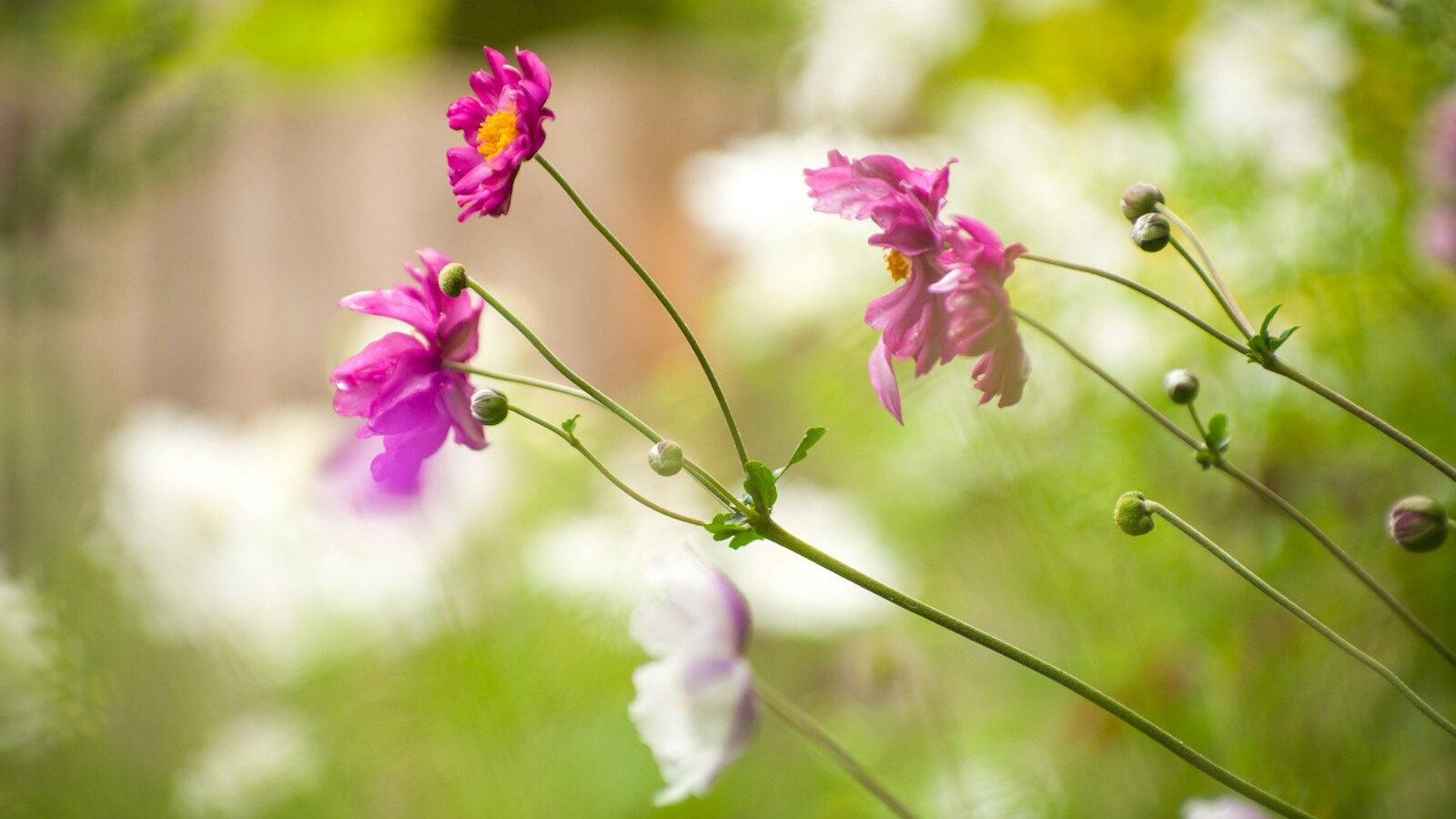
Japanese anemones (Anemone hupehensis, A.×hybrida, and relatives) are the perennials that save the late-season garden. Just as summer flowers fade, these plants send up tall, wiry stems topped with clean white or pink saucer-shaped blooms that dance above mounds of dark, divided foliage from late summwell into fall. They are long-lived, shade-tolerant, and beloved by pollinators, which makes them one of the best perennials for that tricky transitional period between summer and frost. The one thing to know up front: once established and happy, they spread, sometimes enthusiastically. This guide covers hardiness zones, where and how to plant, watering and feeding, dividing to manage their spread, overwintering, wildlife value, and the few problems you might encounter.
Key Takeaways
- Zones: Reliably hardy in USDA zones 4–8 (some varieties to 3 or 9), blooming late summer through fall.
- Light: Best in part shade; full sun is fine in cooler climates with steady moisture, while hot-summer regions need afternoon shade.
- Soil: Rich, moist, well-drained soil with plenty of organic matter; they dislike soggy winter ground and bone-dry summer soil.
- Spreading: They spread by underground rhizomes and can colonize — site them where they have room or contain them.
- Division: Divide in spring (or early fall) every few years to control spread and rejuvenate clumps.
Hardiness and Where They Grow
Japanese anemones are dependable perennials across USDA hardiness zones 4 through 8, with certain cultivars stretching to zone 3 on the cold end and zone 9 in milder winters. They are at their best in regions with distinct seasons, where they bloom from roughly late August through October, lighting up the autumn border. In zones 4 and colder, a layer of winter mulch helps young plants survive their first season; once established, they are quite cold-tough. They take a year or two to settle in after planting and may bloom modestly the first year, then hit their stride from year two onward.
Light and Soil
These anemones are happiest in partial shade — a spot with morning sun and afternoon shade, or dappled light beneath high tree canopies, is ideal. In cool-summer climates they grow and bloom well in full sun provided the soil stays consistently moist. In hot-summer regions, full afternoon sun stresses them and scorches the foliage, so give them shade during the heat of the day. Too much deep shade, on the other hand, produces floppy, sparse growth and fewer flowers, so aim for that bright, part-shade middle ground.
Soil is where you set them up to thrive. They want rich, fertile, humus-laden soil that holds moisture but still drains — think woodland-edge conditions. Work in a generous amount of compost or well-rotted organic matter before planting to improve both moisture retention and drainage. The combination they cannot tolerate is heavy, waterlogged soil in winter, which rots the crowns. If your ground is heavy clay, amend it well or plant in a raised area. A neutral to slightly alkaline or slightly acidic pH is all fine; they are not fussy about pH.
Planting
Plant Japanese anemones in spring, after the last frost, so they have the full growing season to establish strong roots before winter. Early fall planting also works in milder zones, giving them time to root before cold sets in. Space plants about 18 to 24 inches apart — they will fill in and spread, so resist the urge to crowd them. Dig a hole as deep as the root ball and twice as wide, set the plant so the crown sits at soil level (not buried), backfill with the amended soil, and water in well.
Apply a two- to three-inch layer of mulch around the plants to conserve moisture, moderate soil temperature, and suppress weeds — but keep the mulch a couple of inches away from the crown to prevent rot. Newly planted anemones need consistent moisture their first season while they root in. Because they take time to establish and dislike disturbance, choose the planting spot with their eventual spread in mind. They pair beautifully with other shade-tolerant perennials; see the Plants & Flowers hub for companions.
Watering and Feeding
Consistent moisture is the key to healthy Japanese anemones, especially during their first year and during summer dry spells. They are not drought-tolerant; if the soil dries out badly, the foliage wilts, leaf edges brown, and bloom is reduced. Water deeply about once a week in the absence of rain, more in extreme heat, aiming to keep the soil evenly moist but never waterlogged. A good mulch layer does a lot of the work of holding moisture in.
They are not heavy feeders. An annual spring top-dressing of compost or a balanced slow-release fertilizer as growth begins is plenty to fuel a season of foliage and fall flowers. Overly rich feeding, especially high nitrogen, encourages floppy leafy growth at the expense of blooms. Tall varieties may need light staking or support from neighboring plants if grown in too much shade or rich conditions, though most stand on their own wiry stems.
Managing Spread and Dividing
Once established, Japanese anemones spread by underground rhizomes (and some by self-seeding), gradually expanding their colony each year. In the right spot this is a virtue — they fill space and naturalize beautifully. Where space is limited, the spread can become a chore. To keep them in bounds, plant them in an area with natural borders (a path, edging, or lawn), install a root barrier, or grow them in large containers or sunken pots. Each spring, simply pull or dig out runners that stray beyond their allotted area.
Division serves double duty: it controls spread and rejuvenates aging clumps. Divide every three to four years, ideally in early spring as new growth appears, though early fall works in mild climates. Dig up the clump, separate it into sections each with healthy roots and several growth buds, and replant promptly at the same depth, watering in well. Root cuttings taken in late winter are another reliable way to propagate them. Newly divided plants may sulk and bloom less the first year before bouncing back, which is normal given how much they dislike disturbance.
Seasonal Care and Overwintering
After bloom, you can leave the seed heads — fluffy, cottony tufts that have their own late-season charm and feed wildlife — or cut them back if you want to limit self-seeding. In late fall or early winter, the foliage dies back; cut spent stems down to the ground after frost, or leave some standing for winter interest and habitat and tidy up in spring. In colder zones (especially zone 4 and below), apply a protective winter mulch of straw, shredded leaves, or evergreen boughs over the crowns after the ground begins to freeze, removing it gradually in spring. Established plants are reliably perennial and return stronger each year. Avoid disturbing the roots in fall in cold climates, since spring is the safer time for any moving or dividing.
Wildlife Value
Japanese anemones are a valuable late-season nectar source. Their open, saucer-shaped flowers are easy for pollinators to access, drawing bees, hoverflies, and other beneficial insects at a time when many summer blooms have finished. Planting them extends the pollinator buffet right up to frost, supporting insects as they prepare for winter. The fluffy seed heads left standing provide a little forage and shelter. Deer and rabbits tend to leave Japanese anemones largely alone, making them a good choice for gardens troubled by browsing. For more pollinator-friendly fall perennials, our guide to growing Joe Pye weed pairs perfectly with anemones in a late-season border.
Common Problems
Wilting or scorched leaves. Usually drought stress or too much hot sun. Increase watering, mulch well, and provide afternoon shade in hot climates.
Floppy, sparse plants with few flowers. Too much shade or overly rich soil. Move to brighter part shade and ease off the nitrogen.
Aggressive spreading. Expected behavior once established. Use barriers, divide regularly, and remove stray runners in spring.
Powdery mildew or leaf spot. Can appear in humid conditions or crowded plantings. Improve air circulation, avoid overhead watering late in the day, and remove affected foliage.
Slow to establish. Normal. Anemones dislike disturbance and may bloom little the first year. Be patient and keep them watered; they reward you from the second season on.
Frequently Asked Questions
When do Japanese anemones bloom?
They bloom from late summer into fall, typically late August through October, making them one of the best perennials for extending color into the autumn garden.
Do Japanese anemones prefer sun or shade?
They are happiest in partial shade, especially morning sun with afternoon shade. They tolerate full sun in cool climates with steady moisture, but in hot-summer regions they need protection from intense afternoon sun.
Are Japanese anemones invasive?
They are not classified as invasive but they do spread vigorously by underground rhizomes once established and can colonize an area. Use root barriers, regular division, and removal of runners to keep them in bounds.
When and how do I divide Japanese anemones?
Divide in early spring as new growth emerges (or early fall in mild climates), every three to four years. Dig the clump, separate sections with healthy roots and growth buds, and replant at the same depth, watering well.
Are Japanese anemones deer resistant?
Yes, deer and rabbits generally avoid them, making them a reliable choice for gardens with browsing pressure. No plant is completely deer-proof in a hungry winter, but anemones are rarely a first choice.