

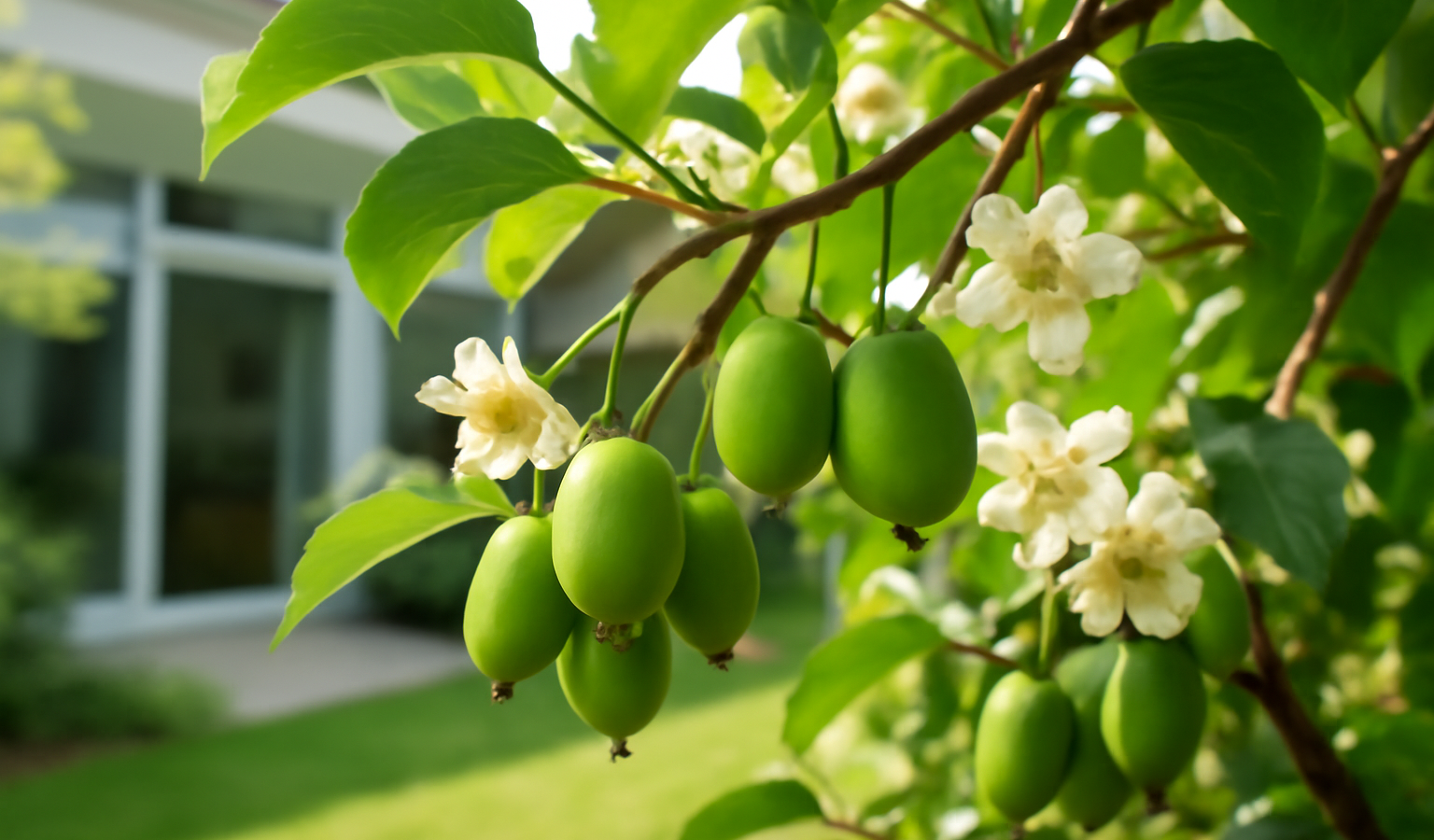
Hardy kiwi (Actinidia arguta, and the extra-cold-hardy A. kolomikta) is the grow-your-own answer for gardeners far too cold for the fuzzy supermarket kiwi. The fruit is smaller — grape- to large-olive-sized — with smooth, edible skin and a flavor sweeter and more intense than fuzzy kiwi, so you pop them whole like berries, no peeling. The vines are vigorous, ornamental, productive, and tough, surviving winters down to -25°F or colder. There are two non-negotiables that catch new growers out: hardy kiwi needs a seriously strong trellis to carry its rampant growth, and (for the common types) you must plant both a male and a female vine to get any fruit at all. Get those right and a mature pair can yield many pounds of fruit a year for decades.
Key Takeaways
- Cold-hardy: Survives USDA zones 3/4–8 — far hardier than fuzzy kiwi, which needs zones 7–9.
- Smooth, snackable fruit: Grape-sized, fuzzless, sweeter than fuzzy kiwi, eaten skin and all.
- Need male + female: Most varieties are dioecious — plant one male per up to 6–8 females for fruit.
- Strong support required: Extremely vigorous; build a heavy-duty T-bar or pergola trellis.
- Patience: Vines take 3–5 years (sometimes more) to begin fruiting, then produce for decades.
Hardy Kiwi vs Fuzzy Kiwi
The kiwi at the grocery store is fuzzy kiwi (Actinidia deliciosa), a tender vine that needs the long, mild seasons of zones 7 to 9 and gets damaged by hard freezes. Hardy kiwi is a different, much tougher species. A. arguta shrugs off winters to about -25°F (roughly zones 4–8), and A. kolomikta is hardier still, surviving to -40°F (zones 3–8), making real kiwi fruit possible in northern gardens where fuzzy kiwi has no chance. The trade-off is fruit size: hardy kiwi fruits are tiny by comparison, but their smooth, fuzzless skin means you eat them whole and their flavor is often sweeter and more aromatic. A. kolomikta also offers striking pink-and-white variegated foliage, doubling as an ornamental.
Male and Female Plants — The Pollination Rule
This is the most important thing to understand before you buy. Most hardy kiwi vines are dioecious, meaning each plant is either male or female. Female vines bear the fruit; male vines produce no fruit but supply the pollen the females need. Plant a female alone and you will get flowers but never a single kiwi. To fruit, you need at least one male vine to pollinate your females, and the male must be the same species and bloom at the same time (an A. arguta male pollinates A. arguta females; pair A. kolomikta with its own kind).
One male can pollinate up to about six to eight female vines, so a typical home planting is one male plus one or two females. Plant the male within roughly 50 feet of the females and let bees and wind carry the pollen — or hand-pollinate with a brush in a poor bee year. A small number of self-fertile varieties exist (such as ‘Issai’), which can set some fruit alone, but even these fruit more heavily with a male nearby. When buying, always confirm you are getting both sexes; nurseries usually label them clearly.
Climate, Site, and Soil
Choose the right species for your zone — A. arguta for zones 4–8, A. kolomikta for the coldest zones 3–7. While the dormant vines are extremely cold-hardy, the new spring growth is frost-tender, so a late frost after budbreak can damage shoots and wipe out a year’s flowers. Plant in a site that warms a little late in spring, or on a slope where cold air drains away, to dodge late frosts.
Give hardy kiwi full sun (it tolerates part shade but fruits best in sun) and rich, deep, well-drained soil with a slightly acidic pH of 5.5 to 7.0. The fleshy roots will not tolerate waterlogging, so amend heavy clay or plant on a mound. Shelter from strong wind helps, since the long shoots can whip and break.
Building the Trellis
Do not underestimate this vine. A mature hardy kiwi is enormously vigorous, sending out shoots 10 to 20 feet in a single season and eventually weighing hundreds of pounds. It will crush a flimsy structure and pull down a fence. Build a heavy-duty support before planting: the standard is a T-bar trellis — sturdy 6×6 or steel posts set in concrete, topped with crossarms carrying several high-tensile wires — or a strong, well-built pergola or arbor, which makes a spectacular fruiting shade structure. Run one main trunk up to the top wire, then train two permanent arms (“cordons”) along the wires and let fruiting shoots hang down. Space vines about 10 to 15 feet apart along the trellis.
Planting and Early Care
Plant dormant vines in spring after the worst frosts, setting them at the same depth they grew in the pot and watering in well. Mulch the root zone but keep mulch off the trunk. In the first couple of years, focus on building a single strong vertical trunk: tie the most vigorous shoot to a stake, remove competing shoots, and pinch the tip once it reaches the top wire to force the two side arms. Young vines especially need protection from late frost and from sunscald on the trunk; a coat of white tree paint or a guard helps. Be patient — hardy kiwi typically takes three to five years, sometimes longer, to begin fruiting.
Watering, Feeding, and Pruning
Keep the soil consistently moist, especially in the first years and during fruit development — about 1 inch of water a week, more in heat, since the shallow roots dry out fast. Feed in early spring with a balanced fertilizer or compost; hardy kiwi is sensitive to over-fertilizing, particularly fresh manure and excess nitrogen, which can burn roots and push leafy growth over fruit, so go moderate.
Pruning is essential to keep this vine productive and under control, and you will prune both summer and winter. In winter (dormant season), cut back the previous year’s fruiting wood, remove tangled and crossing shoots, and shorten the fruiting canes to a handful of buds beyond where they fruited — females fruit on the current season’s shoots arising from year-old wood. In summer, tip back rampant non-fruiting shoots to keep the vine from becoming an unmanageable thicket and to let light into the canopy. Prune the male vine only after it flowers (so it can do its pollination job first), then cut it back hard to keep it tidy.
Harvesting and Storage
Hardy kiwi ripens in late summer to fall. The fruit is ripe when it is slightly soft to gentle pressure and the seeds inside have turned black; a ripe fruit eaten off the vine is sweet and full-flavored. Because the whole crop tends to ripen close together and birds love it, many growers pick the fruit when it is full-sized but still firm, once a few have started to soften, then ripen it indoors at room temperature over several days — much like ripening a hard pear or avocado. Firm-picked fruit also stores in the refrigerator for several weeks to a couple of months, ripening as needed. Eat them whole, skin and all.
Pests, Diseases, and Common Problems
Hardy kiwi is relatively trouble-free. The biggest threats are environmental: late spring frosts that kill tender new growth and flowers, addressed by site selection and frost protection, and cats, which are attracted to the vines (especially A. kolomikta) much like catnip and may damage young plants — a wire cage protects new vines. Birds and deer enjoy the fruit and foliage, so net fruit and fence if needed. Fungal root rot shows up in soggy soil; ensure drainage. The number-one complaint, though, is the simplest to diagnose: no fruit. That almost always means there is no male vine to pollinate the females, the vine is still too young, or a late frost killed the flowers. For more on how plant pollination works, see our guide on self-pollinating vs cross-pollinating fruit.
Hardy kiwi is a long-term investment that pays off for decades: bombproof cold tolerance, snackable fuzzless fruit, and a handsome vine for an arbor. Match the species to your zone, build a trellis that can take the weight, plant both a male and female, and prune twice a year. For more vining and trellised fruit projects, see our guides on growing passion fruit and dragon fruit, and browse the Plants & Flowers hub.
Frequently Asked Questions
Do I need both male and female hardy kiwi plants?
For most varieties, yes. Hardy kiwi is usually dioecious: females bear the fruit and males supply pollen. One male can pollinate up to six to eight females. A few self-fertile varieties like ‘Issai’ can set some fruit alone, but they still fruit better with a male nearby.
How is hardy kiwi different from regular kiwi?
Hardy kiwi (Actinidia arguta and A. kolomikta) is far more cold-tolerant, surviving to -25°F or colder, while fuzzy supermarket kiwi needs mild zones 7–9. Hardy kiwi fruit is much smaller, grape-sized, with smooth fuzzless skin you eat whole, and it is often sweeter.
How long until hardy kiwi produces fruit?
Be patient — vines typically take three to five years, and sometimes longer, to begin fruiting. Once established, they are very productive and can keep bearing for decades.
How big a trellis does hardy kiwi need?
A very strong one. The vines are extremely vigorous, growing 10 to 20 feet a season and eventually weighing hundreds of pounds. Use a heavy-duty T-bar trellis with posts set in concrete, or a sturdy pergola or arbor. Build it before planting.
When do I harvest hardy kiwi?
In late summer to fall, when the fruit softens slightly and the seeds inside turn black. Because the crop ripens together and birds love it, many growers pick fruit firm once a few soften, then ripen it indoors over several days, similar to a pear or avocado.