

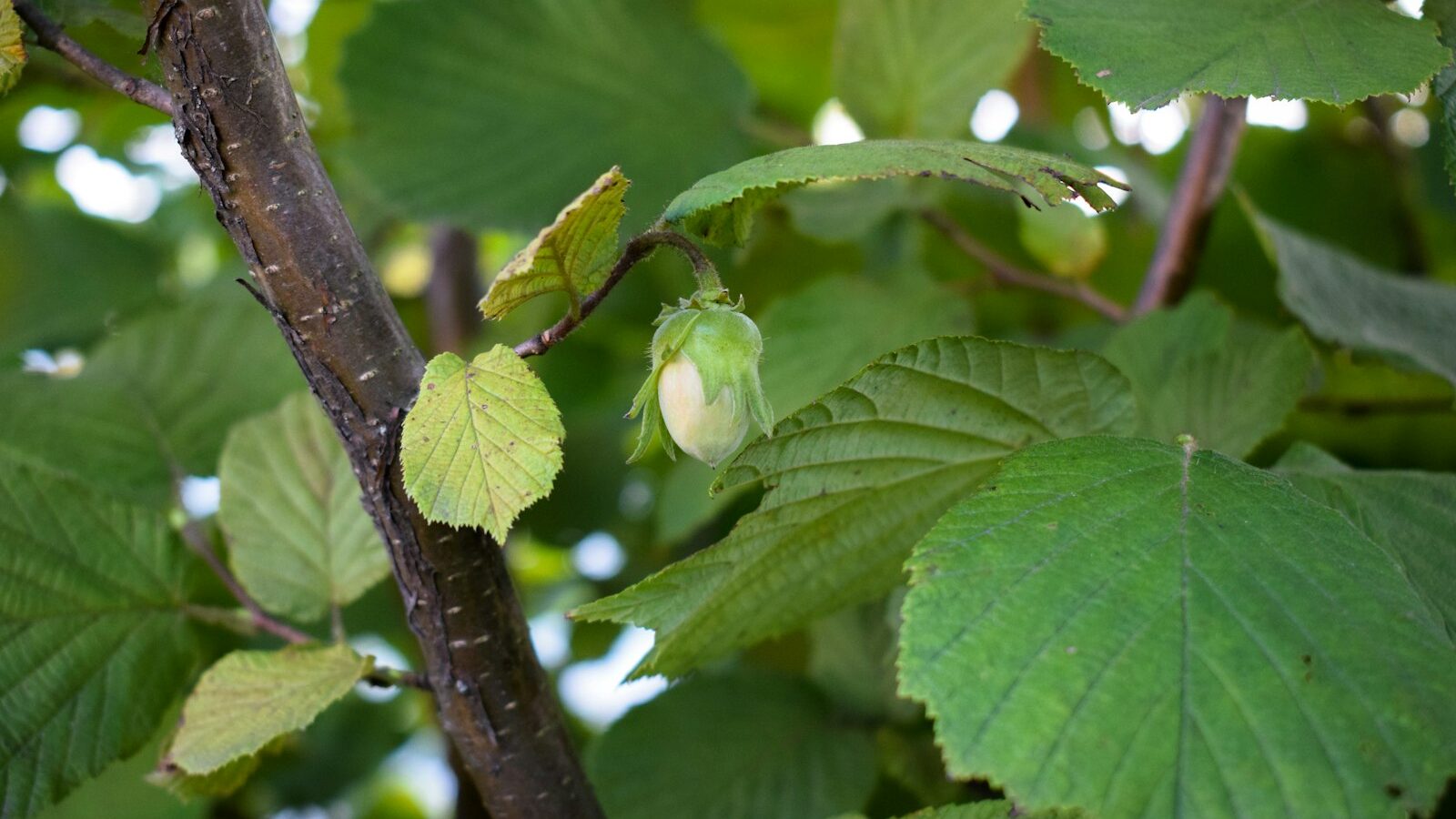
A hazelnut tree (Corylus avellana), also called a filbert, is one of the most productive and space-efficient nut plants a home gardener can grow. It naturally forms a large multi-stemmed shrub or small tree 10 to 15 feet tall, starts bearing within three to four years, and can yield pounds of sweet, round nuts every fall for decades. The one thing that trips up new growers is pollination: hazelnuts will not set a crop on their own, so understanding how they flower is the key to actually harvesting nuts. This guide covers variety choice and disease resistance, the pollination rules, planting, ongoing care, and the harvest itself.
Key Takeaways
- Hardy in USDA zones 4–9; grows as a 10–15 ft multi-stemmed shrub or small tree.
- You must plant at least two compatible, different varieties for cross-pollination — a lone tree bears little or nothing.
- Wind-pollinated in late winter, so space pollinizers within about 50 feet and avoid solid barriers between them.
- In the eastern U.S., choose Eastern Filbert Blight–resistant cultivars like ‘Jefferson’, ‘Yamhill’, or ‘Theta’.
- Needs full sun and well-drained soil; tolerates a range of soils but not waterlogging.
- Nuts ripen and drop in late summer to early fall — gather them off the ground promptly before squirrels do.
Understanding Hazelnut Pollination
This is the most important section, so read it before you buy a single plant. Hazelnuts are monoecious — each plant carries both the dangling yellow male catkins and the tiny red female flowers — but they are also self-incompatible. That means a plant’s own pollen usually cannot fertilize its own female flowers. To get nuts, you must grow at least two genetically different, cross-compatible varieties so they can pollinate each other.
Pollination happens in the dead of winter, typically January through March, by wind. The catkins release clouds of pollen that must drift to the receptive red female flowers on a neighboring compatible plant. Because it is wind-driven, plant your pollinizers within roughly 50 feet of each other and avoid putting a solid wall or dense evergreen hedge directly between them. Timing also matters: the two varieties must shed and receive pollen during overlapping windows, which is why nurseries publish recommended pollinizer pairings. When you buy, always ask which varieties pollinate the one you want and plant a matched pair or trio.
Choosing Disease-Resistant Varieties
In much of North America — especially the eastern and central states — the single biggest threat to hazelnuts is Eastern Filbert Blight, a fungal disease (Anisogramma anomala) that forms cankers on the stems and can slowly kill susceptible plants. The good news is that breeding programs, particularly at Oregon State University, have released excellent resistant cultivars. If you garden east of the Rockies, buying a resistant variety is not optional.
Strong blight-resistant choices include ‘Jefferson’, a large-nutted, productive standard, paired with pollinizers like ‘Eta’ or ‘Theta’; ‘Yamhill’, a compact, heavy-bearing variety; and ‘Theta’ and ‘Felix’, which double as both crop and pollen sources. American hazelnut (Corylus americana) and hybrid hazelnuts are naturally more blight-tolerant and extremely cold-hardy, making them a smart pick for the upper Midwest and Northeast, though their nuts are smaller. Confirm with your nursery that your chosen pair are cross-compatible and bloom together. For other home-orchard projects, see our guide on pruning fig trees.
Where and When to Plant
Hazelnuts are hardy in zones 4 through 9 and want full sun — at least 6 to 8 hours — for the best nut set, though they tolerate light afternoon shade. They are not picky about soil type and grow in everything from sandy loam to clay loam, but they demand good drainage; they will decline in soggy, waterlogged ground. A slightly acidic to neutral pH (around 6.0 to 7.0) is ideal. Choose a site with some air movement to discourage fungal disease, but not a frost pocket, since hard late freezes can damage the winter flowers.
Plant bare-root or container trees in late winter or early spring while they are still dormant; fall planting also works in mild-winter areas. Space full-size plants about 15 to 18 feet apart if you want them to grow into open trees, or as close as 4 to 5 feet in a row if you intend to grow them as a hedgerow for nut production. Remember the 50-foot pollination radius when laying out the planting.
Planting Steps
- Soak bare-root plants in water for an hour or two before planting.
- Dig a hole as deep as the roots and twice as wide; loosen the sides.
- Set the plant at the depth it grew in the nursery (look for the soil line on the stem) and spread the roots out.
- Backfill with native soil, firm gently, and water in thoroughly to settle the roots.
- Apply 2 to 3 inches of mulch over the root zone, keeping it a few inches away from the stems, and protect young trunks from rabbits and deer with a guard.
Watering, Feeding, and Suckers
Water new plants regularly through their first two seasons, providing about 1 inch per week so the soil stays evenly moist while the roots establish. Mature hazelnuts are moderately drought-tolerant but produce larger, better-filled nuts with steady summer moisture, so water during dry spells, especially as the nuts are sizing up in mid to late summer.
Feed lightly. A spring application of a balanced fertilizer or a generous topdressing of compost is usually enough; over-fertilizing with nitrogen pushes leafy growth at the expense of nuts. Hazelnuts sucker freely from the base, sending up new shoots that can turn a single plant into a dense thicket. If you want a tidy multi-stemmed shrub or a tree form, remove suckers each year with pruners or a sharp spade. If you want a productive hedgerow, you can let some suckers grow. Either way, do your structural pruning in late winter while the plant is dormant, thinning out the oldest and weakest stems to keep light and air moving through the canopy.
Harvesting Hazelnuts
Hazelnuts ripen in late summer to early fall, usually from late August through October depending on variety and climate. The nuts develop inside leafy green husks, and the surest sign of ripeness is that the husks turn brown and the nuts begin dropping naturally to the ground. Do not pick nuts off the plant early — unlike tree fruit, hazelnuts ripen on the plant and the cleanest way to harvest is simply to gather the fallen nuts.
The catch is competition. Squirrels, jays, and chipmunks will strip a hazelnut planting with astonishing speed, often taking nuts the moment they fall. Collect daily during the drop period, or lay clean tarps or netting under the plants and shake the branches gently to bring down the ripe nuts, then gather them up. Once collected, peel off any husks, then cure the in-shell nuts by spreading them in a single layer in a dry, airy spot for a few weeks until the kernels firm up and rattle slightly. Properly cured and stored in a cool, dry place, in-shell hazelnuts keep for many months; shelled kernels store best in the refrigerator or freezer.
Troubleshooting
- Flowers but no nuts: almost always a pollination failure — a lone plant, two incompatible varieties, or pollinizers planted too far apart. Add a compatible second variety within 50 feet.
- Cankers and dieback on stems: Eastern Filbert Blight. Prune out infected wood well below the cankers, sanitize tools, and replace susceptible plants with resistant cultivars.
- Empty or “blank” nuts: often poor pollination weather, drought during nut fill, or the nut weevil. Improve summer watering and monitor for pests.
- Plant turning into a thicket: normal suckering. Remove unwanted suckers annually to maintain a tree or controlled shrub form.
- Whole crop disappearing: squirrels. Harvest daily, use tarps, or net the plants as the nuts ripen.
With a compatible pair of disease-resistant plants, a sunny well-drained site, and a little vigilance against squirrels at harvest, hazelnuts are among the lowest-maintenance and longest-lived edibles you can add to a home landscape. For more fruit-and-nut growing across the site, browse the full Plants & Flowers section.
Frequently Asked Questions
Do I need two hazelnut trees to get nuts?
Yes. Hazelnuts are self-incompatible, so a single plant pollinates itself poorly and sets little or no crop. Plant at least two different, cross-compatible varieties within about 50 feet of each other for reliable nut production.
How long until a hazelnut tree produces nuts?
Most hazelnuts begin bearing within 3 to 4 years of planting and reach full production around year 6 to 8. They can then crop for several decades with good care.
What is Eastern Filbert Blight and how do I avoid it?
It’s a fungal disease that forms stem cankers and kills susceptible hazelnuts, especially in the eastern U.S. Avoid it by planting resistant cultivars such as ‘Jefferson’, ‘Yamhill’, or ‘Theta’, and prune out any cankers you find.
When are hazelnuts ready to harvest?
From late summer into fall, when the husks turn brown and the nuts drop to the ground on their own. Gather the fallen nuts promptly — they ripen on the plant and are best collected after they fall, before wildlife takes them.
How big does a hazelnut tree get?
Left to grow naturally it forms a multi-stemmed shrub or small tree about 10 to 15 feet tall and wide. You can keep it as a tidy tree by removing suckers, or let it form a fuller hedge for nut production.