

Dragon fruit (Hylocereus, also sold as Selenicereus) is a climbing tropical cactus that produces some of the most striking fruit you can grow at home: bright pink or yellow skin, speckled white or magenta flesh, and a mild, kiwi-meets-pear sweetness. Despite the exotic looks, it is forgiving. It thrives in a pot on a sunny patio, climbs a simple post, and can fruit within one to two years of planting a cutting. The two things that trip up most growers are giving the plant nothing to climb and assuming the flowers will set fruit on their own. Get the support and pollination right, and a single plant can hand you 20 to 60 pounds of fruit a year once mature.
Key Takeaways
- Climate: Hardy in USDA zones 10–11 outdoors; grow in a large container and overwinter indoors in zones 9 and colder.
- Propagation: Start from a 12-inch cutting, not seed — cuttings fruit years sooner.
- Support is mandatory: This is a vining cactus that needs a sturdy post and top frame to climb and cascade.
- Sun and drainage: Full to part sun and fast-draining cactus mix; never let roots sit wet.
- Pollination: Many varieties are self-sterile — hand-pollinate the night-blooming flowers or grow two compatible types.
What Dragon Fruit Is — and Why It Needs a Trellis
Dragon fruit is an epiphytic, climbing cactus native to Central America. In the wild it scrambles up tree trunks and rock faces, anchoring with aerial roots and dangling its heavy, three-sided green stems. There is no woody trunk to hold the plant upright, so in cultivation you have to supply the structure. Without support, the stems sprawl across the ground, root randomly, rot at the contact points, and rarely flower. With a good frame, the same plant climbs, matures, and converts that height into flowering wood.
The standard home setup is a single sturdy post — a 4×4 pressure-treated timber or a thick concrete pillar — set 4 to 5 feet above the soil, topped with a square frame or an old bicycle tire. You train two to four stems up the post, then let them drape over the top frame. That cascading habit is exactly what triggers heavy flowering, because the plant fruits on mature, hanging stem segments. A flimsy tomato cage will collapse under a mature plant, which can weigh well over 100 pounds, so build the support to last a decade.
Climate, Zones, and Temperature
Dragon fruit is genuinely tropical. It grows in the ground year-round only in USDA zones 10 and 11, where winter lows stay above roughly 32°F. The plant is damaged below about 32°F and can be killed outright in the upper 20s, especially young plants. Its ideal range is 65°F to 85°F. Above 100°F the green stems can sunburn and bleach yellow, which is why growers in desert climates often give afternoon shade.
If you garden in zone 9 or colder — which is most of the US — grow dragon fruit in a large container, 15 to 25 gallons, on casters or a plant dolly. Keep it outdoors from the last frost through fall, then wheel it into a bright garage, sunroom, or greenhouse before the first frost. Indoors over winter it needs the brightest spot you have and only sparing water. A few weeks of cool, dry rest can actually improve next season’s flowering, so do not panic if it sulks.
Starting From a Cutting
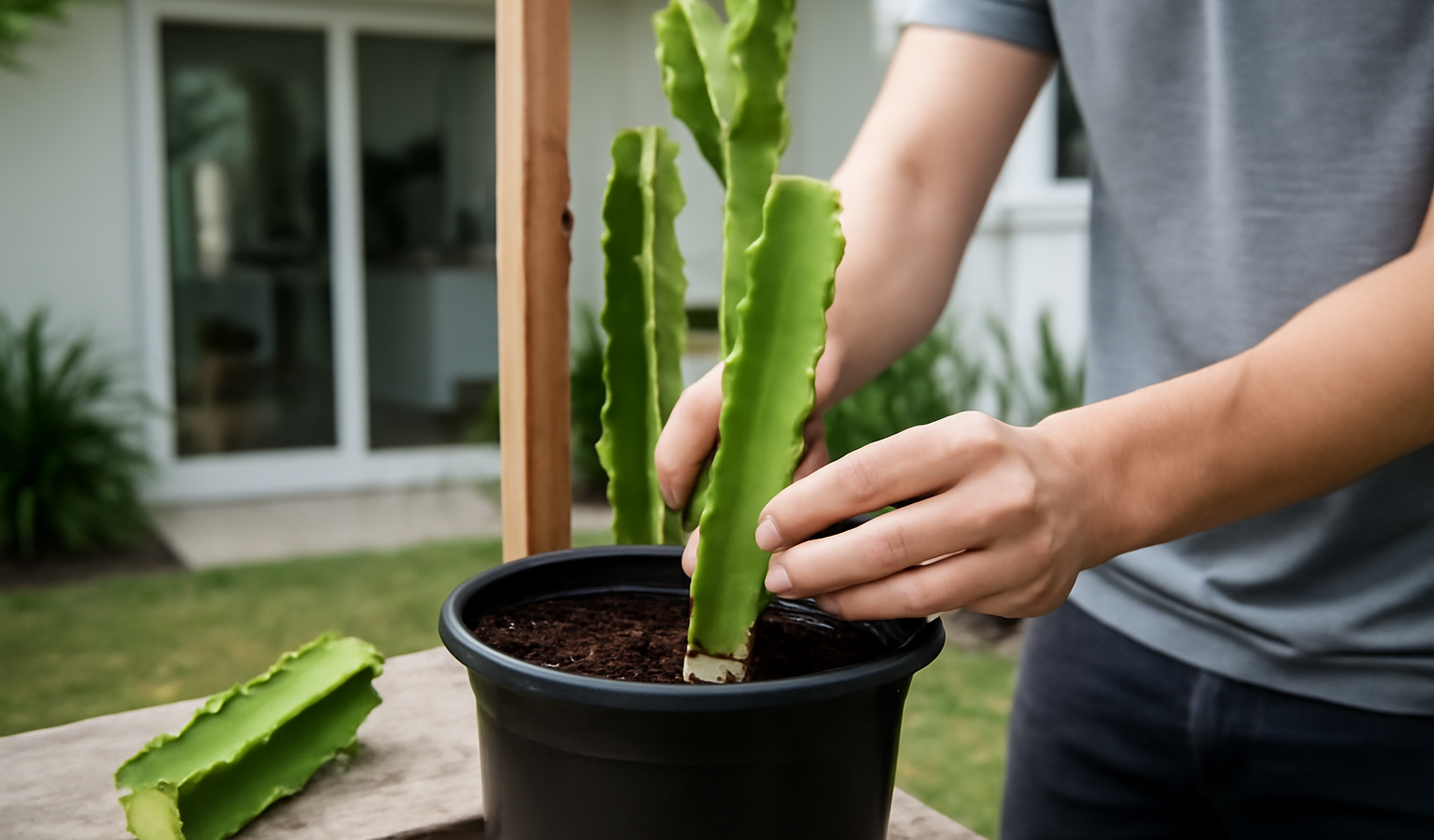
You can grow dragon fruit from seed, but seedlings take five to seven years to fruit and may not come true to the parent. Cuttings are the way to go: they fruit in one to two years and are genetically identical to the variety you chose. Take or buy a cutting 10 to 18 inches long from healthy, mature stem.
Curing and Rooting the Cutting
After cutting, let the cut end callus in a dry, shaded spot for 7 to 10 days. Skipping this step is the number-one cause of rot. Once a dry, papery callus forms, plant the cutting 2 to 3 inches deep in fast-draining cactus mix, with the original “up” orientation preserved (stems are polar — plant them the way they grew). Water lightly only after the first week, then keep the mix barely moist. Roots form in three to six weeks, and you will see new green growth from the areoles as your signal that it has taken.
Soil, Containers, and Planting
Dragon fruit demands sharp drainage. Use a cactus or succulent mix, or build your own with two parts quality potting soil, one part coarse perlite or pumice, and one part coarse sand or fine bark. Aim for a slightly acidic to neutral pH of 6.0 to 7.0. In the ground, plant on a raised mound if your soil is heavy clay; standing water around the base is fatal.
Set the post first, then plant two to four cuttings around its base, a few inches out, and tie them loosely to the post with soft plant tie or strips of old t-shirt. As they grow, keep tying every 12 inches and rub off side branches below the top frame so the plant funnels energy upward. Once stems reach the top, stop tying and let them flop over to cascade.
Light, Water, and Feeding
Give dragon fruit full sun in cooler and coastal climates, and bright morning sun with light afternoon shade where summers blow past 95°F. Six or more hours of light supports flowering.
Despite being a cactus, dragon fruit is thirstier than most. During active growth, water deeply when the top 1 to 2 inches of mix dries out — roughly every 5 to 10 days in summer for containers, less in the ground. The rule is “soak, then dry”: never keep it constantly wet, but do not let a fruiting plant bone-dry either, or developing buds abort. In winter rest, cut watering back to once every few weeks.
Feed lightly and often. A balanced low-strength fertilizer (such as a 10-10-10 or a cactus formula) every 4 to 6 weeks through the growing season is plenty. As flowering approaches, switch to a bloom formula higher in phosphorus and potassium and lower in nitrogen — too much nitrogen gives you lush green stems and few flowers. A topdress of compost or worm castings in spring rounds out the micronutrients.
Flowering and Pollination
This is where dragon fruit earns its drama. Mature plants produce enormous, fragrant white (sometimes pink-tinged) flowers up to 12 inches across. They open for a single night, usually around dusk, and close by mid-morning — which is why they are nicknamed “moonflower” or “Queen of the Night.” In their native range, moths and bats handle pollination. In your backyard, those pollinators may be absent, and many of the best-tasting varieties are self-incompatible (self-sterile), meaning a flower cannot set fruit with its own pollen.
The reliable fix is hand-pollination. On the night a flower opens, use a small dry brush or cotton swab to gather the powdery yellow pollen from the many stamens and dab it generously onto the central forked stigma. If your variety is self-fertile (some white-fleshed types are), pollinating it with its own pollen works. If it is self-sterile — common with many red and yellow-fleshed types — you must transfer pollen from a second, compatible variety blooming the same night, so plant at least two different types if you want a hands-off harvest. Pollinated flowers swell at the base within days; the fruit ripens in about 30 to 50 days.
Harvesting
Harvest when the skin has fully colored (bright pink, red, or yellow depending on variety) and the leafy “wings” or bracts on the fruit begin to dry and curl at the tips. Ripe fruit gives slightly when pressed, like a ripe avocado, and twists off the stem with a gentle turn. Unlike many fruits, dragon fruit does not sweeten much after picking, so let it color fully on the plant. A healthy, mature plant flushes several rounds of flowers and fruit from summer into fall.
Pests, Diseases, and Common Problems
Dragon fruit is relatively pest-resistant, but watch for a few issues. Stem rot and root rot from overwatering or poor drainage show as soft, yellow, mushy patches — cut well past the damage with a sterile knife and let the wound callus. Sunburn bleaches stems yellow-white; provide afternoon shade in extreme heat. Mealybugs and scale tuck into stem grooves and areoles; blast them off or wipe with insecticidal soap. Birds and rodents love ripe fruit, so bag developing fruit or net the plant. If a mature plant simply will not flower, the usual culprits are too much shade, excess nitrogen, or stems that never reached the top frame to cascade.
Dragon fruit rewards patience and a good frame more than constant fussing. Build a solid support, plant a cured cutting in gritty mix, water on a soak-and-dry rhythm, and be ready to play moth with a paintbrush on flowering nights. If you are expanding a tropical container collection, pair it with our guide on growing pineapple from a top and our banana tree walkthrough, and browse the Plants & Flowers hub for more edible-plant guides.
Frequently Asked Questions
How long until dragon fruit produces fruit?
A plant grown from a cutting typically flowers and fruits in one to two years once the stems reach the top of their support and cascade. Seed-grown plants take five to seven years, which is why cuttings are strongly preferred.
Do I need two dragon fruit plants to get fruit?
It depends on the variety. Some white-fleshed types are self-fertile and will set fruit with their own pollen. Many red- and yellow-fleshed varieties are self-sterile and need pollen from a second, compatible variety. If you are unsure, plant two different types and hand-pollinate to be safe.
Can I grow dragon fruit in a pot?
Yes, and it is the best option outside zones 10–11. Use a 15- to 25-gallon container with fast-draining cactus mix, install a sturdy post, and move the pot indoors to a bright spot before the first frost.
Why is my dragon fruit not flowering?
The most common reasons are too little light, too much nitrogen fertilizer, and stems that have not yet reached the top frame to drape over. Dragon fruit flowers on mature, cascading stem segments, so give it full sun, a bloom-type feed, and time to climb.
How do I know when dragon fruit is ripe?
Pick when the skin is fully colored and the leafy bracts begin drying at the tips. Ripe fruit yields slightly to gentle pressure and twists off easily. It does not sweeten much after picking, so leave it on the plant until fully colored.