

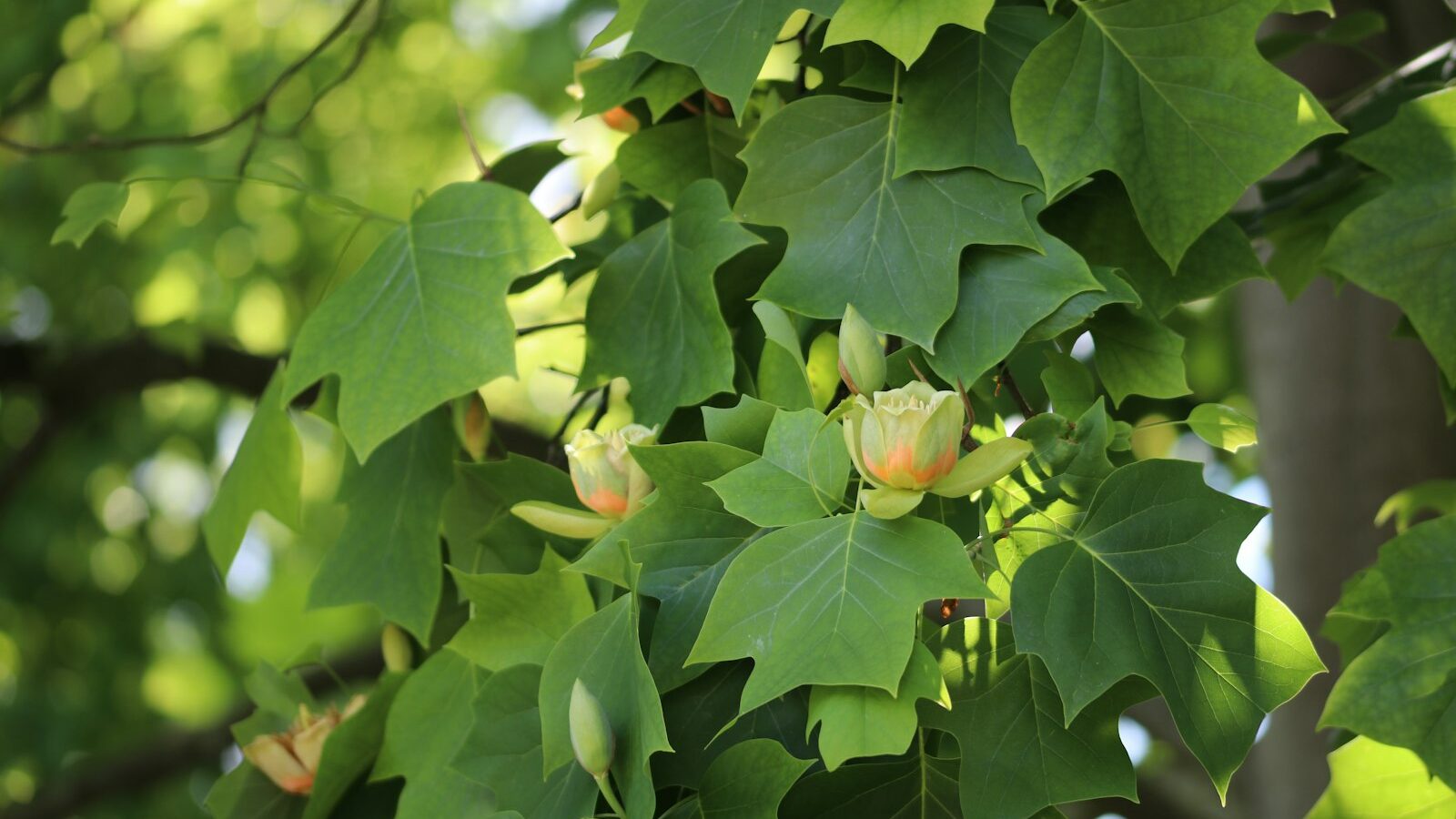
The tulip tree (Liriodendron tulipifera) is one of the largest and fastest-growing native hardwoods in North America, prized for its distinctive lobed leaves, its tulip-shaped greenish-yellow flowers, and a tall, straight, stately form. Also called tulip poplar or yellow poplar — though it is a member of the magnolia family, not a true poplar — it can soar 70 to 90 feet or more, making it a magnificent shade and specimen tree for large properties. The flip side of all that vigor is that it is the wrong tree for a small yard. This guide focuses on the two things that matter most: siting a tree this big correctly, and understanding when and how it blooms, along with the basics of planting and care.
Key Takeaways
- Hardy in USDA zones 4–9; a large, fast-growing tree that reaches 70–90 ft tall and 30–50 ft wide.
- Needs a big, open site — keep it well away from houses, power lines, and septic systems.
- Grows fast (2+ ft per year when young) but has somewhat weak wood, so give it room and steady care.
- Tulip-shaped yellow-green flowers with orange bands appear in late spring (May–June), often only after the tree is 15–20 years old.
- Prefers full sun and deep, moist, well-drained, slightly acidic soil; dislikes drought and compaction.
- Brilliant clear-yellow fall color is a reliable seasonal payoff.
How Big Does a Tulip Tree Get?
Be honest with yourself about scale before you plant. The tulip tree is a true forest giant. In the open landscape it commonly reaches 70 to 90 feet tall with a 30 to 50 foot spread, and in ideal forest conditions it is among the tallest hardwoods in eastern North America, with record specimens topping 150 feet. It grows fast — young trees often add 2 feet or more of height per year — which is wonderful for quick shade but means a sapling that looks modest at planting will be a massive tree within a couple of decades.
It develops a single straight central trunk and a high, oval-to-pyramidal canopy. The root system is wide and vigorous. All of this makes the tulip tree a poor choice for small lots and a superb choice for parks, large rural and suburban properties, and naturalized landscapes where it has room to express its full grandeur.
Siting the Tree Correctly
Because of its size and speed, siting is the decision you cannot undo. Plan around the mature dimensions, not the sapling in front of you.
- Distance from structures: plant at least 30 to 50 feet from your house, garage, driveway, and patio so the eventual canopy and roots have room and won’t threaten the foundation or hardscape.
- Overhead clearance: never plant beneath or near power lines — this tree will reach them quickly.
- Underground utilities: keep it well clear of septic fields, drain lines, and water mains, since the aggressive roots seek moisture.
- Sun: give it full sun, at least 6 hours, for the best form, flowering, and fall color.
- Wind and wood strength: the wood is relatively brittle and large limbs can break in ice or wind storms, so avoid siting it where falling branches would endanger people, cars, or buildings.
If your yard can’t accommodate a 70-foot tree, consider a smaller-statured flowering tree instead. For ideas on right-sizing trees and shrubs to a space, our outdoor living and landscaping guides can help you plan the layout.
Soil and Planting
Tulip trees are hardy in zones 4 through 9 and grow best in deep, rich, moist, well-drained soil that is slightly acidic (pH around 5.5 to 6.5). They naturally grow in fertile bottomlands and coves, so they reward good soil and resent drought, compaction, and poor, dry ground. They are not salt-tolerant and dislike heavily polluted urban sites.
Plant in spring (preferred in colder zones) or fall, while the tree is dormant or just leafing out. Tulip trees have somewhat fleshy roots that resent disturbance, so handle the root ball carefully and avoid planting in the heat of summer.
- Dig a hole as deep as the root ball and two to three times as wide, roughening the sides.
- Set the tree so the root flare sits at or slightly above grade — never plant it deep.
- Backfill with native soil, water thoroughly to remove air pockets, and avoid heavy amendments that discourage roots from spreading.
- Mulch a wide ring 2 to 3 inches deep, keeping it well off the trunk, to conserve moisture and protect the shallow feeder roots.
- Stake only if the site is windy, and remove the stakes after the first year.
Watering and Feeding
The biggest care priority is consistent moisture, especially while the tree is young. Water deeply and regularly for the first two or three years, providing the equivalent of about 1 inch per week, so the soil stays evenly moist. Tulip trees are notably intolerant of drought: a stressed tree will shed its inner leaves prematurely in mid to late summer, dropping yellow foliage all over the lawn. This is a common and alarming sight, but it is usually just the tree conserving water, and a deep soaking helps. Maintaining a wide mulch ring and watering during dry spells, even on an established tree, keeps it healthier and reduces summer leaf drop.
Feeding needs are modest in good soil. If growth is weak or foliage is pale, apply a balanced slow-release tree fertilizer in early spring. In rich, deep soil, a young tulip tree often needs no supplemental feeding at all and will grow rapidly on its own.
When and How It Blooms
The flowers are the tree’s namesake and its quiet surprise. In late spring — typically May into June — the tulip tree produces upright, cup-shaped blooms about 1.5 to 2 inches across, with greenish-yellow petals marked by a bright orange band at the base. They genuinely resemble small tulips or magnolia flowers, which makes sense given the magnolia-family connection.
Here is the key expectation to set: tulip trees usually do not flower until they are well established and fairly large, often around 15 to 20 years old. So if you plant a young tree, patience is required. There is a second reason the blooms can go unnoticed even on a mature tree — they are held high in the canopy and their green-and-yellow coloring blends with the foliage, so you may only discover them by spotting the fallen petals or the rich nectar that attracts bees and hummingbirds. The flowers are followed by upright, cone-like seed clusters that persist into winter. After bloom season, the tree’s other great ornamental moment arrives in autumn, when the uniquely shaped leaves turn a clear, glowing yellow.
Pruning and Problems
Tulip trees need little pruning beyond establishing good structure when young. Prune in late winter or early spring to remove dead, damaged, or crossing branches and to encourage a strong central leader. Because the wood is somewhat weak and prone to storm breakage, removing narrow, weak crotches early in the tree’s life pays off later. Avoid heavy pruning of large limbs on mature trees, which can leave big wounds slow to heal.
- Summer yellow-leaf drop: usually drought stress, not disease. Water deeply and mulch.
- Aphids and sooty mold: tulip trees host aphids whose honeydew can coat cars and patios below — another reason not to plant over a driveway. Heavy infestations can be hosed off or treated with horticultural oil.
- Tulip tree scale: a sap-sucking pest that can weaken branches; treat with dormant oil or insecticidal controls if severe.
- Weak, breakable limbs: manage with early structural pruning and by siting away from targets.
Given the right big, sunny, well-watered site, a tulip tree is a fast, magnificent shade tree that rewards patience with high-canopy spring blooms and dazzling fall color for generations. For more on choosing and caring for trees and flowering plants, explore the rest of our Plants & Flowers guides.
Frequently Asked Questions
How big does a tulip tree get?
In the open landscape it typically reaches 70 to 90 feet tall and 30 to 50 feet wide, and even taller in forest conditions. It grows fast — often 2 feet or more per year when young — so it needs a large, open site.
How far from my house should I plant a tulip tree?
At least 30 to 50 feet from any structure, and well clear of power lines, septic fields, and water lines. Its large canopy, vigorous roots, and somewhat brittle wood make close planting a poor idea.
When does a tulip tree bloom?
The tulip-shaped yellow-green flowers open in late spring, usually May into June. However, trees often don’t begin flowering until they are 15 to 20 years old, and the blooms are held high in the canopy where they can be easy to miss.
Why is my tulip tree dropping yellow leaves in summer?
This is almost always drought stress, not a disease. Tulip trees shed inner leaves to conserve water during dry spells. Water deeply and maintain a wide mulch ring, especially while the tree is young.
Is a tulip tree the same as a poplar?
No. Despite the common names “tulip poplar” and “yellow poplar,” it is a member of the magnolia family (Liriodendron), not a true poplar. The names come from its tall, straight habit and soft wood.