

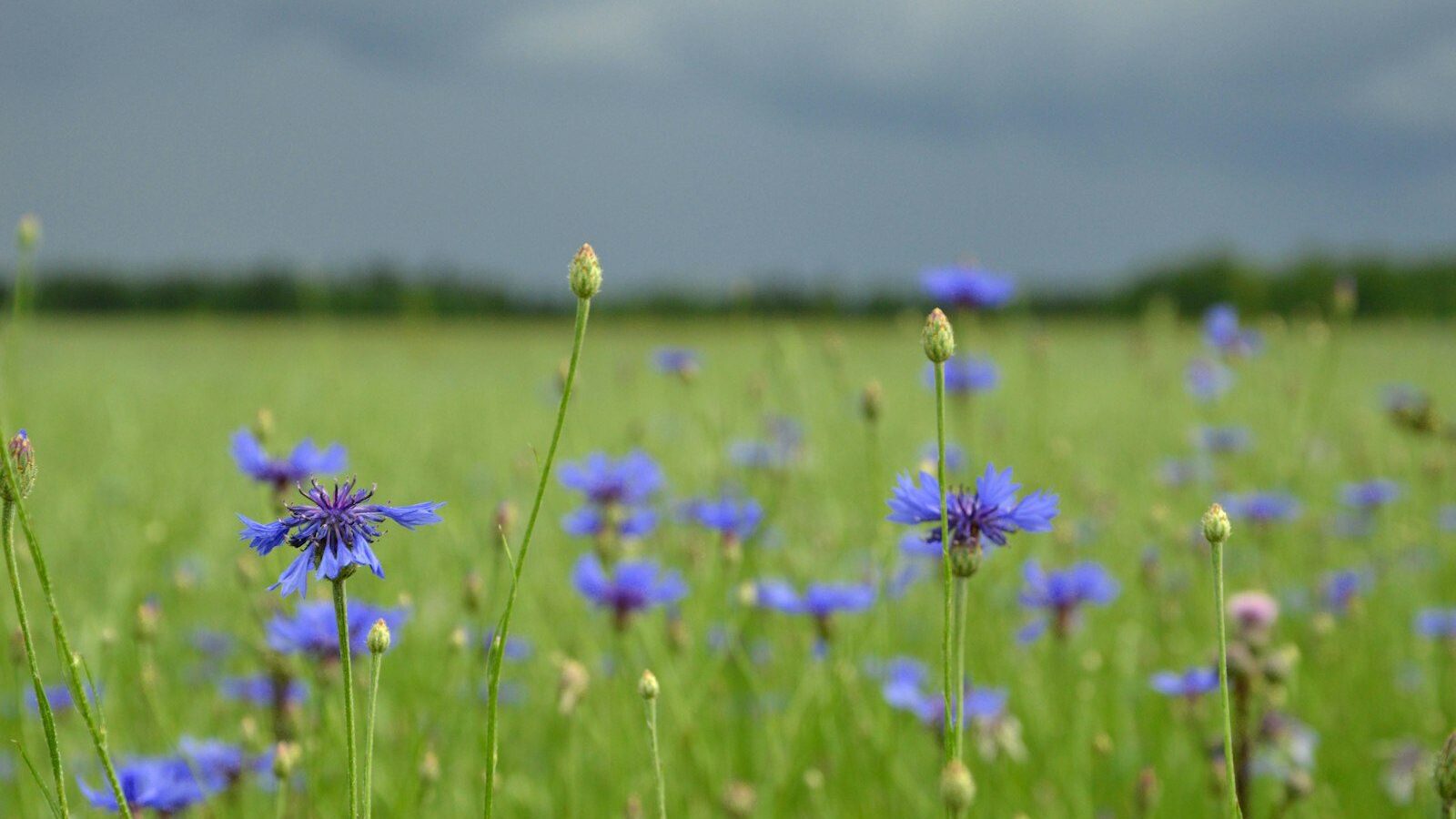
Few flowers deliver a truer blue than bachelor’s buttons, also known as cornflower. This old-fashioned hardy annual is about as easy as gardening gets: scatter the seed in early spring or fall, thin the seedlings, and within ten to twelve weeks you’ll have a haze of vivid blue (plus pink, white, and burgundy in mixes) on slender, branching stems. Bees and butterflies adore it, it’s a classic cut and dried flower, and it shrugs off poor soil and cold. This guide covers when and how to sow cornflower, how to space and care for it, and how to keep it blooming through the season.
Key Takeaways
- Hardy annual: Centaurea cyanus tolerates frost. Direct-sow in early spring or in fall (zones 7+) for the strongest plants.
- Full sun, lean soil: 6+ hours of sun and average-to-poor, well-drained soil; rich soil makes it flop.
- Space 6–12 inches apart: thin seedlings so plants branch and bloom freely without crowding.
- Deadhead to extend bloom: removing spent flowers prevents seeding and keeps new blooms coming for weeks.
- Cut and dried flower: long stems, a 5–7 day vase life, edible petals, and a strong pollinator draw.
About Bachelor’s Buttons (Cornflower)
Bachelor’s buttons (Centaurea cyanus) is a hardy annual native to Europe, where it once grew as a weed in grain fields—hence “cornflower,” corn being the old word for cereal grain. Plants grow 1 to 3 feet tall on wiry, branching stems clothed in narrow gray-green leaves, topped by fringed, button-like flower heads about an inch across. The wild form is an intense cornflower blue, but garden mixes add rose, lavender, maroon, and white. Dwarf strains stay under a foot for the front of a border; tall types are bred for cutting.
It’s a true cottage-garden staple, valued as much for its toughness as its color. The flowers are edible—the petals make a striking garnish—and they dry beautifully, holding their blue better than almost any other flower.
Varieties worth knowing
For the classic true blue, look for named selections such as ‘Blue Boy’, a tall heirloom that reaches 30 to 36 inches and is the standard cutting variety. ‘Black Ball’ (sometimes sold as ‘Black Magic’) produces deep maroon-chocolate pompoms that are striking in bouquets, while ‘Blue Diadem’ offers extra-large, fully double blue heads. For mixed-color drifts, the ‘Polka Dot’ and ‘Tall Double Mixed’ strains bundle blue, pink, white, rose, and burgundy together. If your space is tight, the dwarf ‘Dwarf Blue Midget’ and ‘Polka Dot Dwarf’ stay 12 to 16 inches and need no staking, making them ideal for containers and border edges. Choosing a named variety rather than a generic packet gives you predictable height, which matters a great deal when you’re planning whether you’ll need support.
When to Plant Bachelor’s Buttons
Cornflower is cold-hardy and actually wants cool conditions to establish, so plant it early. In most regions, direct-sow in early spring as soon as the soil can be worked—two to four weeks before your last frost is fine, since seedlings tolerate light frost. Early sowing produces the largest, most floriferous plants, because cornflower fades fast once high summer heat arrives.
In mild-winter climates (USDA zones 7 and warmer), fall sowing is the secret to spectacular results. Sow in September or October; the seed germinates, overwinters as a small rosette, and bursts into early, vigorous bloom the following spring—the same overwintering strategy that works so well for other hardy annuals. For a longer season, succession-sow every three to four weeks until early summer.
Direct-sow rather than transplant
Like many quick-growing hardy annuals, cornflower forms a taproot and prefers not to be transplanted. Direct sowing where plants will grow gives the best results. If you garden in a very short season and want a head start, sow indoors only 4 weeks before your last frost in deep cells or soil blocks, and transplant while seedlings are small to minimize root disturbance.
How to Sow Cornflower Seed
Pick a full-sun spot—at least six hours—and rake the bed level. Cornflower seed needs darkness to germinate, so sow it about 1/4 to 1/2 inch deep and cover it fully. Water gently and keep the soil lightly moist. Germination takes 7 to 14 days in cool soil. Because the plants are inexpensive and easy from seed, most gardeners broadcast a generous patch and thin afterward rather than fussing over individual placement.
If you prefer rows—easier for weeding and cutting—draw shallow furrows 12 to 18 inches apart, drop two or three seeds every few inches, and thin to the strongest seedling. Soil temperatures between 60 and 70°F give the fastest, most even germination; below 50°F the seed sits and sulks, and above 75°F germination drops off. A light pre-soak of the seed for a few hours can nudge stubborn batches along, though it isn’t necessary. Once seedlings have two sets of true leaves, they grow quickly and crowd out most weeds, so the early window—keeping the bed weeded and evenly moist for the first three weeks—is the only labor-intensive part of the whole crop.
Spacing, Soil, and Support
Thin seedlings to stand 6 to 12 inches apart—closer for dwarf types, wider for tall cutting varieties. Crowded cornflower grows thin and leggy and is more prone to powdery mildew. Properly spaced plants branch out and carry many more blooms.
Soil should be average and well-drained, with a neutral pH around 6.5 to 7.5. This is one flower that genuinely prefers lean soil—rich, fertile, heavily fertilized ground produces tall, weak, floppy stems and fewer flowers. Skip the fertilizer entirely in decent soil. Tall varieties grown for cutting do benefit from support: install a grid of netting or a corral of stakes and twine early, while plants are young, so stems grow up through it straight. This is the same low-effort staking approach that keeps top-heavy larkspur upright in the cutting garden.
Watering and Care
Water seedlings to keep them growing steadily, then taper off—established cornflower is notably drought-tolerant and prefers to dry slightly between waterings. About an inch of water a week during active growth and bloom is plenty; soggy soil invites root rot and mildew. Water at the base rather than overhead to keep the foliage dry. Mulch lightly to suppress weeds and conserve moisture while plants are small, but keep mulch off the stems.
Pests and problems
Bachelor’s buttons is largely pest-free. The most common issue is powdery mildew, a white film on the leaves that shows up in humid, crowded, or shady conditions—prevent it with full sun, wide spacing, and base watering. Aphids occasionally cluster on buds and tender shoots and can be knocked off with a strong spray of water. Floppy, weak growth nearly always traces back to too-rich soil or too little sun. Deer tend to leave cornflower alone, and the flowers are a magnet for bees, butterflies, and beneficial insects.
Deadheading and Extending the Bloom
Cornflower blooms hard but for a limited window, and it stops once it sets seed. Deadhead regularly—snip spent flowers back to the next bud or leaf—and you’ll stretch the bloom season by several weeks. Cutting flowers for arrangements does the same job. When the main flush winds down and plants look ragged in midsummer heat, you can shear them back by a third; in cooler climates they may rebound with a lighter second flush.
Cutting and Drying Cornflowers
Cornflower is a wonderful cut flower. Harvest stems when the buds are just opening, cutting in the cool of early morning and placing them straight into water. Strip the lower leaves and condition the stems for a few hours before arranging; expect five to seven days of vase life. For drying—cornflower keeps its blue exceptionally well—cut just as the flowers open, bundle the stems, and hang them upside down in a dark, dry, airy room for two to three weeks. The dried blooms are a favorite for wreaths, confetti, and craft. The edible petals also make a vivid, peppery garnish for salads and desserts.
Hardiness Zones and Climate
Because bachelor’s buttons is grown as an annual, it succeeds across virtually every USDA zone, from the cold North to the warm South—what changes is the timing, not the possibility. In cold-winter zones 3 through 6, spring sowing as soon as the ground thaws is the standard approach, and plants bloom from early to midsummer before heat shuts them down. In zones 7 through 9, fall sowing is the game-changer: seedlings establish over the cool months and explode into bloom weeks earlier and far larger the next spring. In the hottest zones (9 and 10), treat cornflower strictly as a cool-season flower—sow in fall or very early spring and expect the show to end by the time summer heat sets in. Wherever you garden, the principle is the same: cornflower wants to do its growing while the weather is cool, so the earlier you can get it established, the better it performs.
Companion Planting and Garden Design
That clear cornflower blue is one of the most useful colors in the garden because it flatters almost everything. It sings next to warm oranges and yellows—calendula, California poppies, and zinnias—and creates a cool, calming drift when planted with white and silver foliage. In a dedicated cutting bed, group it with other hardy annuals that share its lean-soil, cool-season preferences so they all peak together. Beyond looks, cornflower earns its place ecologically: its flowers produce abundant nectar and the plant has extrafloral nectaries that draw beneficial insects such as ladybugs, lacewings, and parasitic wasps, making it a quiet ally against aphids elsewhere in the garden. Scatter it through a vegetable plot or along a border edge and you’ll pull in pollinators and pest predators at the same time.
Saving Seed and Self-Sowing
Bachelor’s buttons saves and self-sows easily. Let a few flowers mature into fluffy seed heads, then collect the seed once it’s dry and store it in a labeled envelope—it stays viable for several years. Left on the plant, that same seed drops and germinates on its own, so cornflower often returns year after year as a welcome volunteer. If you’d rather control where it grows, deadhead before seed sets and sow your saved seed deliberately. It pairs beautifully with other easygoing cottage annuals—tuck it among nigella for a soft blue-on-blue drift, and explore more options in our Plants & Flowers guides.
Frequently Asked Questions
Are bachelor’s buttons and cornflower the same plant?
Yes. Bachelor’s buttons, cornflower, and Centaurea cyanus all refer to the same hardy annual. “Cornflower” comes from its history as a weed in grain (“corn”) fields in Europe.
When should I plant bachelor’s buttons?
Direct-sow in early spring as soon as the soil can be worked—the seedlings tolerate light frost. In mild-winter climates (zones 7+), fall sowing produces the biggest, earliest-blooming plants the following spring.
Do bachelor’s buttons come back every year?
They’re annuals, so individual plants die after setting seed. But they self-sow readily, so cornflower often returns year after year from dropped seed unless you deadhead before it sets seed.
How tall do bachelor’s buttons get?
It depends on the variety. Dwarf strains stay under a foot, while tall cutting types reach 2 to 3 feet. The tall types usually need light staking, since their wiry stems can flop in wind or rich soil.
Can you eat bachelor’s button flowers?
Yes—the petals are edible, with a mild, slightly peppery flavor, and make a colorful garnish for salads, drinks, and desserts. Only eat flowers grown without pesticides or other non-food-safe chemicals.