

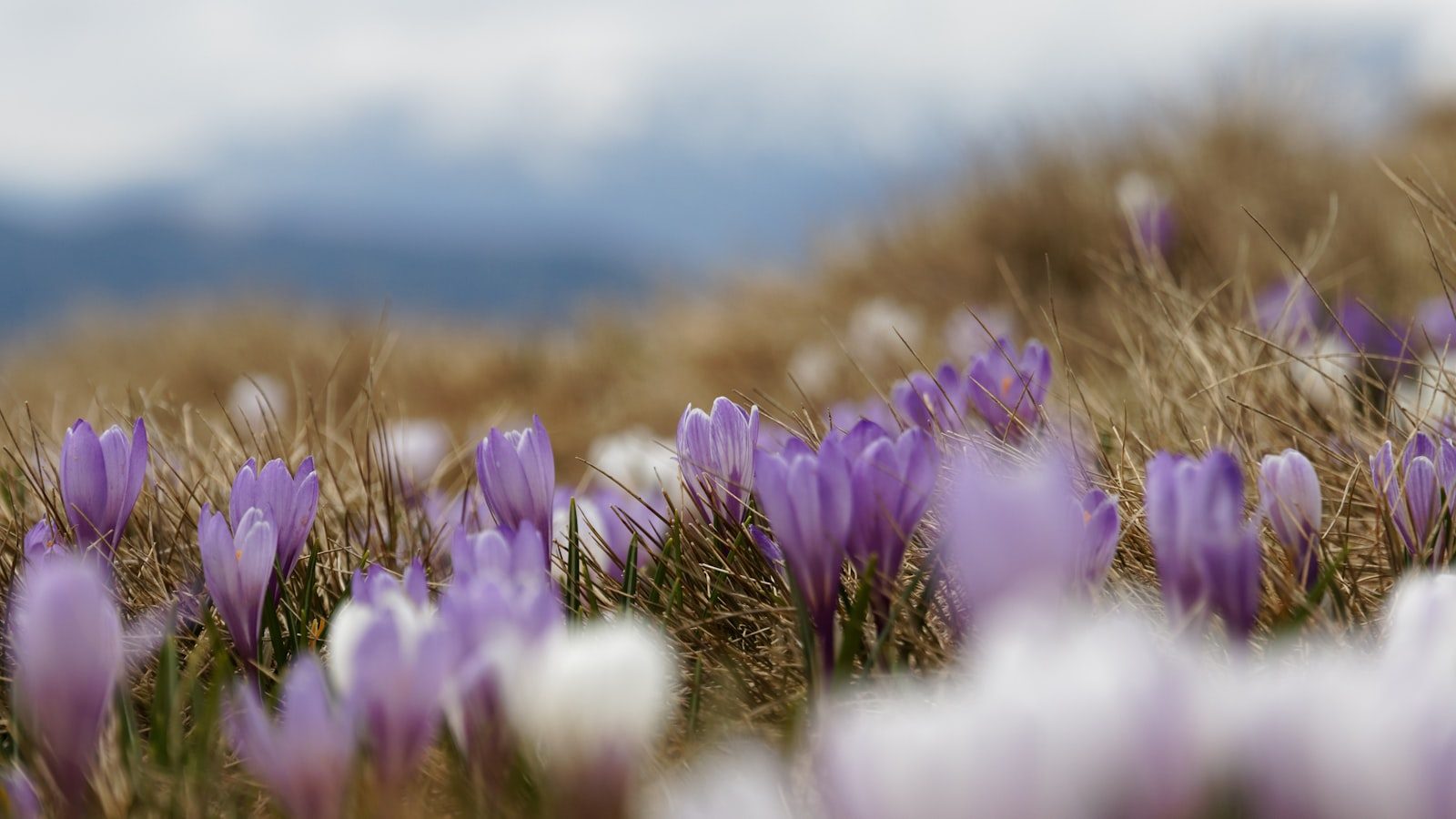
Crocus is the flower that ends winter. While the rest of the garden is still brown and bare, a drift of crocus pushes up through frozen mulch and even melting snow, opening into cups of purple, gold, white, and striped lilac. They are among the easiest bulbs you can grow: plant the corms in fall, ignore them all winter, and they reward you in late February or March with weeks of color and an early meal for hungry bees. This guide covers everything you need — when and how deep to plant, spacing, the difference between snow crocus and giant Dutch crocus, how to naturalize them into a lawn, and how to keep squirrels from digging up your work.
Key Takeaways
- Plant in fall — September through November, once soil drops below 60°F, 6–8 weeks before hard ground freeze.
- Depth and spacing: 3–4 inches deep (measured to the base), 2–3 inches apart, pointed end up.
- Chilling is required: crocus need 12–15 weeks below 40–45°F to bloom, which happens naturally outdoors in USDA zones 3–8.
- Full sun and sharp drainage; they rot in soggy soil and skip bloom in deep shade.
- Let the foliage yellow before removing it — that grassy growth recharges the corm for next year.
- Snow crocus (C. tommasinianus, C. chrysanthus) bloom 2–3 weeks earlier and naturalize faster than the larger Dutch crocus.
Crocus Basics: Corms, Not Bulbs
Strictly speaking, crocus grow from corms — solid swollen stem bases — rather than true layered bulbs like tulips or daffodils. Practically, you plant and treat them the same way. A corm flowers once, then shrivels and is replaced by one or more new corms (cormels) that form on top of the old one. This is why a well-sited crocus planting spreads and thickens over the years instead of fading out: each corm is quietly multiplying underground.
There are two broad groups gardeners plant. Snow crocus — species and hybrids of Crocus tommasinianus, C. chrysanthus, and C. sieberi — have smaller flowers but bloom earliest, often in February, and multiply enthusiastically into broad drifts. Giant Dutch crocus (Crocus vernus) have larger, chunkier goblet flowers in solid purple, white, or striped patterns, blooming a couple of weeks later in March. For naturalizing a lawn or woodland edge, snow crocus are the better workhorse; for bold pops in beds and borders, Dutch crocus put on a showier individual display. Most gardeners plant both for a longer season.
Crocus are reliably hardy in USDA zones 3 through 8. In zones 9 and warmer, winters aren’t cold enough to satisfy their chilling requirement, so gardeners there either pre-chill corms in the refrigerator for 12–15 weeks or grow them as one-season annuals.
When to Plant Crocus
Plant crocus corms in fall, the same season you plant tulips and daffodils. The window runs from September in colder regions (zones 3–5) through October and into November in milder ones (zones 6–8). The rule of thumb: plant 6 to 8 weeks before your ground freezes hard, and wait until soil temperatures have dropped below about 60°F. That cooling soil is the cue that tells the corm to start rooting.
Planting too early, while the soil is still summer-warm, can encourage premature top growth that gets damaged over winter. Planting too late is the more common mistake — corms that go in just before the freeze have no time to establish roots and may bloom weakly or not at all the first spring. If you buy corms and miss the ideal window, plant them anyway; corms left in a warm garage until spring are wasted, while late-planted corms usually catch up by their second year.
The Chilling Requirement
Crocus must experience a sustained cold period — roughly 12 to 15 weeks at 40–45°F or below — to trigger flowering. Outdoors in zones 3–8 this happens automatically over winter, which is why you simply plant and wait. If you want to force crocus indoors for winter bloom, pot the corms in fall, water once, and set the pot in a refrigerator (away from ripening fruit, which releases bloom-aborting ethylene) or an unheated garage at 35–45°F for 12–15 weeks. Then bring them into a cool bright room and they’ll bloom in 2–4 weeks.
Where to Plant: Light and Soil
Give crocus full sun in spring. Because they bloom before deciduous trees leaf out, a spot under a maple or oak that’s shady in summer is often perfectly sunny in March — making the base of deciduous trees and the edges of woodland gardens ideal. Crocus open their flowers in response to sun and warmth, so a sunny site also gives you fuller, more reliable displays. In deep evergreen shade they grow but bloom sparsely.
Drainage matters more than fertility. Crocus corms rot in waterlogged ground, so avoid low spots where snowmelt pools. They thrive in average, well-drained garden soil with a near-neutral pH of about 6.0–7.0. Heavy clay benefits from a few inches of compost or coarse grit worked in before planting to open it up. They are not heavy feeders — a light scattering of bone meal or a balanced bulb fertilizer at planting is plenty.
How to Plant Crocus Corms
The standard depth for crocus is 3 to 4 inches deep, measured from the soil surface to the base of the corm, with corms set 2 to 3 inches apart. A useful general rule for any bulb is to plant it two to three times as deep as its height; crocus corms are small, so 3–4 inches is right. Orient the corm with the pointed growing tip facing up and the flatter, sometimes root-scarred base facing down. If you genuinely can’t tell which end is up, plant the corm on its side — the shoot will find its way to the surface.
- Loosen the soil to about 6 inches and mix in a little compost and bone meal if your ground is poor.
- Dig holes or a trench 3–4 inches deep. For natural-looking drifts, scatter a handful of corms across the bed and plant them where they land rather than in rows.
- Set corms pointed-end up, 2–3 inches apart. Plant generously — crocus look best in clusters of at least 15–25, not scattered singles.
- Backfill and firm the soil gently to remove air pockets, then water once to settle and trigger rooting.
- Mulch lightly with an inch of shredded leaves or bark in colder zones to moderate soil temperature, but don’t bury them deeply.
For a coordinated spring display, plant crocus alongside other early bulbs — see our guide on how to grow grape hyacinths (muscari), which bloom just after crocus in the same beds.
Naturalizing Crocus in a Lawn
One of the loveliest uses for crocus is naturalizing — letting them spread freely through a lawn or under trees to form a self-renewing carpet that comes back thicker every spring. Snow crocus, especially Crocus tommasinianus (“Tommies”), are the champions here: they multiply by both offsets and self-seeding, and squirrels tend to leave them alone more than the larger Dutch types.
To naturalize into turf, lift sections of sod with a spade or use a bulb planter, drop 5–10 corms into each opening 3–4 inches deep, and replace the turf. Or simply toss handfuls of corms across the area and plant them where they fall for a random, drift-like effect. The single most important rule: do not mow until the crocus foliage has yellowed and died back, usually 4–6 weeks after bloom. Mowing the green leaves early starves the corms and the planting dwindles. Choose a low-traffic area where you can delay that first spring mow.
Crocus Care Through the Year
Crocus are about as low-maintenance as ornamentals get. After fall planting they need essentially no attention over winter. As they emerge and bloom in late winter to early spring, natural rainfall and snowmelt usually supply enough moisture; water only during an unusually dry spring stretch. Avoid summer irrigation over dormant corms — they prefer a dry summer rest.
After Bloom: The Critical Part
The single most important care task is to leave the foliage alone until it yellows naturally. Those grassy leaves photosynthesize for several weeks after the flowers fade, rebuilding the corm and forming next year’s bloom. Cutting, braiding, or mowing green foliage is the number-one reason crocus plantings decline. You can snip off spent flowers if you like, but it isn’t necessary. A light feeding of bulb fertilizer or bone meal as the leaves emerge in spring, and again in fall, keeps a long-lived planting vigorous.
Dividing Crowded Clumps
After several years, clumps may become so crowded that bloom thins out. If that happens, dig the corms after the foliage has died back in late spring or early summer, separate the offsets, discard any soft or moldy corms, let them dry briefly, and replant immediately or store cool and dry until fall.
Pests and Problems
Squirrels, chipmunks, voles, and mice are the biggest threat — they dig and eat crocus corms, especially freshly planted ones disturbed by digging. Defenses that work: lay chicken wire or hardware cloth over the planting until the ground freezes, scatter sharp grit or crushed gravel in the planting holes, plant the more rodent-resistant snow crocus and Tommies, and avoid leaving papery corm husks on the surface that advertise the buffet. Interplanting with daffodils, which rodents won’t touch, can also help screen them.
Rot from poor drainage is the other common failure — the cure is siting and grit, not a spray. Deer and rabbits occasionally nibble flowers but rarely do serious damage. If corms come up blind (leaves but no flowers), the usual causes are too-shallow planting, insufficient chilling, summer watering breaking dormancy, or foliage that was cut too early the previous year. For more on building the kind of well-drained beds bulbs love, see our Plants & Flowers guides, and pair your spring bulbs with summer color from tuberous begonias as the crocus go dormant.
Frequently Asked Questions
How deep do you plant crocus corms?
Plant crocus 3 to 4 inches deep, measured from the soil surface to the base of the corm, with the pointed end facing up. Space them 2 to 3 inches apart in clusters for the best display.
When should I plant crocus bulbs?
Plant in fall, from September in cold zones (3–5) through October–November in milder ones (6–8), once soil cools below 60°F and 6–8 weeks before the ground freezes hard. This gives the corms time to root before winter.
Do crocus come back every year?
Yes. Crocus are perennial in zones 3–8 and actually multiply over time, especially snow crocus and Crocus tommasinianus. The key is letting the foliage yellow naturally after bloom so the corm can recharge for the following spring.
Can I plant crocus in my lawn?
Absolutely — naturalizing crocus in a lawn is one of their best uses. Plant corms 3–4 inches deep under the turf and delay the first spring mowing until the crocus leaves have yellowed and died back, usually 4–6 weeks after flowering.
How do I stop squirrels from digging up my crocus?
Cover newly planted areas with chicken wire until the ground freezes, mix sharp grit into planting holes, remove loose corm husks from the surface, and choose more rodent-resistant snow crocus or Tommies. Interplanting with daffodils, which rodents avoid, also helps.
Few plants give back so much for so little effort. Spend an hour tucking crocus corms into the ground this fall, protect them from squirrels, and resist mowing too early in spring — and you’ll have the first flowers in the neighborhood for years to come, multiplying a little more with every winter that passes.