

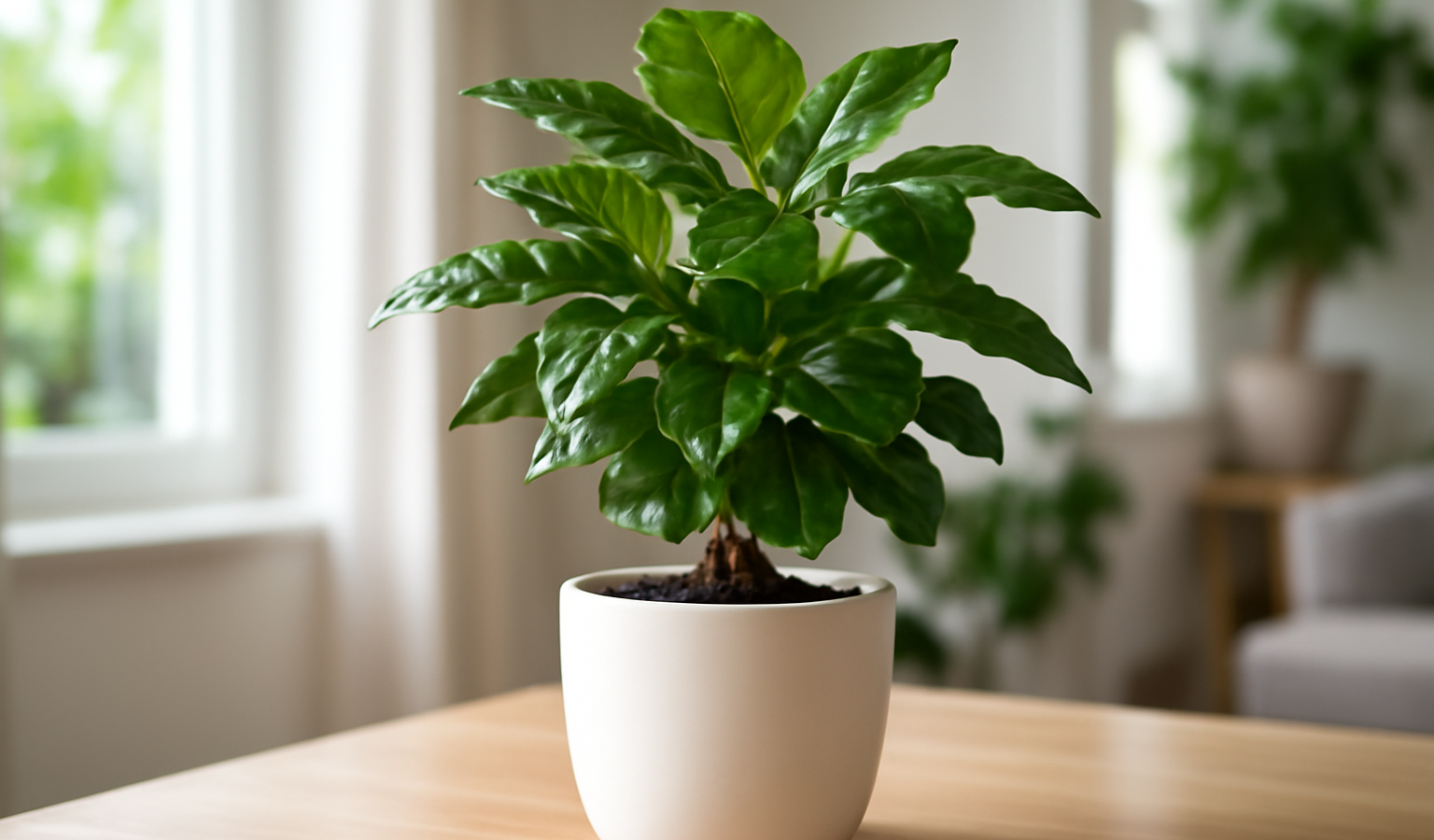
A coffee plant is one of the most rewarding houseplants you can grow, with glossy, deep-green leaves that look good year-round and the long-shot promise of harvesting your own beans. The species behind nearly every quality cup, Coffea arabica, happens to make an excellent indoor specimen: it stays manageable in a pot, tolerates the medium light of a typical home, and thrives in the same warm, humid conditions we keep ourselves comfortable in. Just set expectations on the beans. A coffee plant can flower and fruit indoors, but it takes years and a lot of patience to get from cutting to cup. This guide covers everything from light and humidity to the realistic path toward your first homegrown harvest.
In this guide
Key Takeaways
- Grow Coffea arabica; it’s the species used for fine coffee and the best indoor performer.
- Give bright indirect light, not harsh direct sun, which scorches the leaves.
- Coffee craves humidity (50%+) and warmth (65–75°F); it hates cold drafts and dry air.
- Expect 3 to 5 years before flowering, and roughly a year more for cherries to ripen, so harvests are a long game.
- One mature plant yields only a small handful of beans, enough for novelty rather than a daily habit.
Why Arabica, and What to Buy
There are several coffee species, but Coffea arabica is the one to grow at home. It produces the smooth, aromatic beans prized for quality coffee, stays compact enough for a pot, and is naturally an understory shrub, meaning it evolved in dappled forest shade and is well suited to indoor light. The other commercial species, Coffea canephora (robusta), is larger, hardier, and harsher in flavor, and is far less common as a houseplant. Dwarf arabica cultivars like ‘Nana’ and ‘Dwarf’ are excellent if you want a more compact plant.
You can start from fresh green seeds, but they lose viability quickly and germination is slow and finicky, often 8 to 12 weeks. The easier route is to buy a young nursery plant, frequently sold with three or four seedlings clustered in one pot for a fuller look. You can leave them together for a bushy plant or separate them. A purchased plant gives you a head start of a year or more toward eventual flowering.
Light: Bright but Indirect
Light is the most misunderstood part of coffee care. Because coffee grows under taller trees in the wild, it wants bright, filtered light rather than blazing sun. An east-facing window is close to ideal; a north window works if it is bright; and a south or west window is fine only if the plant is set back a few feet or shielded by a sheer curtain so the midday sun does not hit the leaves directly. Direct sun bleaches and scorches the foliage, leaving brown, crispy patches. Too little light, on the other hand, produces leggy, sparse growth and no chance of flowering. If your home is dim, a basic grow light run 10 to 12 hours a day keeps the plant lush and dramatically improves its odds of eventually blooming.
Temperature and Humidity
Coffee is a tropical plant and wants to be comfortable the way you are. Aim for daytime temperatures of 65 to 75°F and keep it above 60°F at night. It will not tolerate cold; temperatures below about 50°F cause damage, and frost kills it outright, so never let it sit against a cold winter window or near an exterior door. Keep it away from heating and cooling vents, which both dry and chill the air around the leaves.
Humidity is the make-or-break factor indoors. Coffee wants 50 percent relative humidity or more, and the dry air of a heated winter home is its biggest enemy, showing up as brown leaf edges and tips. Raise humidity by grouping plants together, setting the pot on a tray of pebbles and water (with the pot above the waterline), or, most reliably, running a small humidifier nearby. A steamy bathroom with good light is a surprisingly good home for a coffee plant. Misting helps only briefly and is no substitute for genuinely humid air.
Soil, Potting, and Watering
Coffee likes a rich but free-draining, slightly acidic mix with a pH around 6 to 6.5. A quality peat- or coir-based houseplant mix amended with perlite for drainage works well; you can blend in a bit of compost for richness. Always use a pot with drainage holes. Repot every couple of years in spring, stepping up one pot size, since coffee resents being severely rootbound but also dislikes drowning in an oversized pot.
Water to keep the soil consistently, lightly moist, never soggy and never bone-dry. The rule of thumb is to water when the top inch of soil feels dry, then water thoroughly until it drains from the bottom and discard the excess. Coffee is sensitive to both extremes: let it dry out completely and the leaves droop and brown; keep it waterlogged and the roots rot, with leaves yellowing and dropping. Reduce watering in winter when growth slows. Coffee can be sensitive to fluoride and chlorine in tap water, so if you see leaf browning, switch to filtered, distilled, or rainwater.
Feeding and Pruning
Feed during the active growing season, spring through early fall, with a balanced liquid houseplant fertilizer at half strength every two to four weeks, or use a fertilizer formulated for acid-loving plants. Stop feeding in late fall and winter when growth pauses. Overfeeding causes leaf burn, so err on the light side. A weak, dilute feed regularly beats an occasional strong dose.
Coffee naturally grows into a small tree, reaching 5 to 6 feet indoors over many years, but you can keep it bushy and compact with pruning. In spring, pinch or cut back the top to encourage branching and trim any leggy or crossing stems. Pruning the central leader keeps the plant at a comfortable height and denser. If you let it grow tall, it will still flower and fruit, just higher up and harder to reach.
From Flower to Bean: The Realistic Timeline
This is where honesty matters. A coffee plant grown indoors typically needs 3 to 5 years of healthy growth before it flowers for the first time. When it does, you are rewarded with clusters of small, intensely fragrant white flowers that smell like jasmine and last only a few days. Indoor coffee is self-pollinating, so a single plant can set fruit, though gently shaking the plant or dabbing the flowers with a soft brush during bloom improves fruit set indoors where there is no wind or insects.
After pollination, green berries form and slowly ripen over roughly 9 to 11 months, turning from green to yellow to the deep red of a ripe “cherry.” Each cherry contains two seeds, the coffee beans. To get to a drinkable cup you then have to pulp the cherries, ferment and dry the beans, hull off the parchment, and roast them. A single mature houseplant yields only a small handful of beans per year, enough for the novelty and bragging rights, not a daily pot of coffee. Grow it for the plant first and the beans as a bonus. If you enjoy the long game of slow-fruiting plants, our guide on growing a tea plant (Camellia sinensis) is a natural companion, and the Plants & Flowers hub has more.
Common Problems
Brown, crispy leaf edges almost always mean the air is too dry or the water too harsh, so raise humidity and try filtered water. Yellowing leaves usually signal overwatering or, if the yellowing is between green veins, a nutrient deficiency. Leaf scorch with bleached patches means too much direct sun, easily fixed by moving the plant back from the window. Sudden leaf drop points to cold drafts or a temperature shock. Indoors, coffee can attract mealybugs, scale, and spider mites, especially when stressed by dry air; wipe the leaves regularly, inspect leaf undersides, and treat infestations with insecticidal soap or neem oil. Keep the plant warm, humid, brightly but indirectly lit, and evenly watered, and it will stay handsome for years while you wait on those first flowers.
Frequently Asked Questions
How long until a coffee plant produces beans?
Expect 3 to 5 years before an indoor coffee plant flowers for the first time, then another 9 to 11 months for the cherries to ripen. From there you still have to process and roast the beans, and a single plant yields only a small handful per year.
Can a coffee plant grow indoors?
Yes, coffee is an excellent houseplant. It evolved as a forest understory shrub, so it thrives in the bright indirect light, warmth, and humidity of a typical home. Give it 50%+ humidity, temperatures of 65 to 75°F, and protection from cold drafts and direct sun.
How much light does a coffee plant need?
Bright but indirect light is ideal, such as an east-facing window. Direct sun scorches and bleaches the leaves, while too little light causes leggy growth and prevents flowering. In dim homes, a grow light run 10 to 12 hours a day keeps the plant healthy.
Why are my coffee plant’s leaves turning brown?
Brown, crispy leaf edges and tips are usually caused by low humidity or harsh tap water containing fluoride or chlorine. Raise humidity to 50% or more with a humidifier or pebble tray, and switch to filtered, distilled, or rainwater if browning continues.
Do I need more than one coffee plant to get beans?
No. Coffee is self-pollinating, so a single plant can set fruit once it flowers. Indoors, gently shaking the plant or brushing the flowers with a soft brush during bloom improves fruit set, since there is no wind or insect activity to move the pollen.