

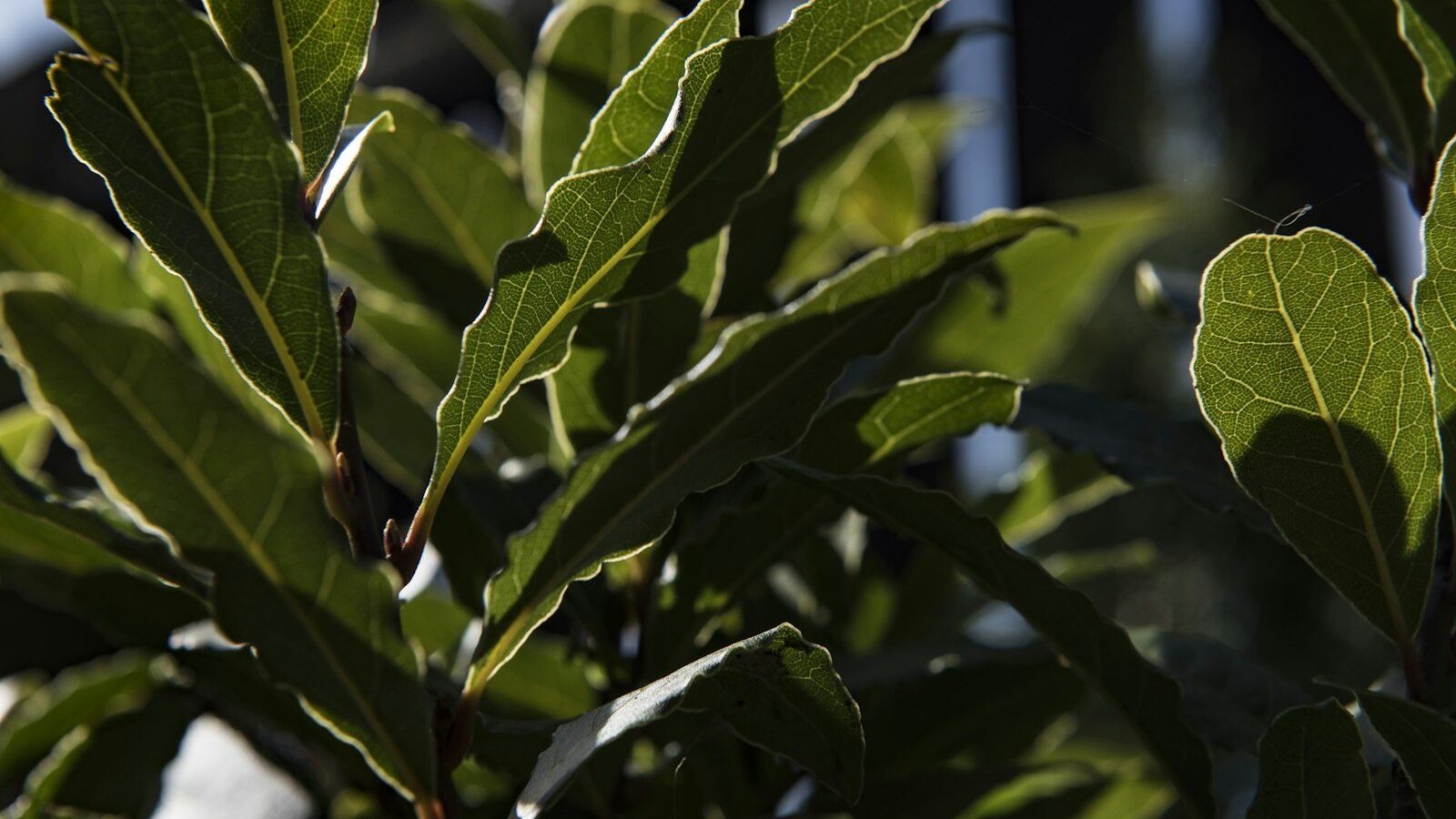
Bay laurel (Laurus nobilis) — the source of the aromatic bay leaves that flavor soups, stews, and stocks — is one of the most satisfying culinary plants you can grow, partly because a single tree supplies a lifetime of leaves and partly because it’s so handsome. In its Mediterranean homeland it grows into a 30- to 60-foot tree, but for most gardeners its real value is as a slow-growing, evergreen potted tree that can be clipped into a tidy ball, cone, or formal standard and parked by a doorway or kitchen window. Grown this way it stays a manageable 4 to 6 feet, looks elegant year-round, and lets cold-climate gardeners simply carry it indoors before the first hard frost. This guide covers everything you need to keep a bay laurel thriving as a long-lived potted tree: the right light and soil, a watering rhythm that suits its slow metabolism, how to prune it into a shape (or a topiary), how to overwinter it, and how to harvest and dry the leaves so they actually taste of something.
Key Takeaways
- A potted tree: Outside zones 8–11, grow bay laurel in a large container so you can move it indoors over winter — it’s not reliably frost-hardy.
- Light: Full sun to part shade outdoors; the brightest possible window indoors.
- Soil and drainage: Rich but free-draining potting mix; bay hates wet feet and rots in soggy soil.
- Water moderately: Let the top inch or two dry between waterings — slow-growing bay is easy to overwater.
- Slow grower, easy to shape: It tolerates hard pruning, making it perfect for topiary balls, cones, and standards.
- Harvest anytime: Pick mature leaves year-round; dried bay is actually stronger and keeps for a year or more.
Bay laurel as a potted tree
The first decision is whether to grow bay in the ground or a pot, and for most US gardeners the answer is a pot. Bay laurel is hardy only in USDA zones 8 to 11 (and is happiest in 9–10); it survives brief dips to around 20°F but is damaged or killed by hard freezes and cold winds. If you garden in zone 8 or warmer, you can plant it permanently in a sheltered, sunny spot and let it grow into a small tree or large shrub. Everywhere colder — which is most of the country — the practical and traditional approach is to grow it in a container that can spend summer outdoors and winter in a cool, bright indoor space.
Potted bay also stays conveniently small. Bay is a slow grower, adding perhaps 6 to 12 inches a year, and confining its roots keeps it that way, so a potted specimen typically tops out around 4 to 6 feet — easy to move, easy to clip, and easy to keep by the kitchen door where you’ll actually use the leaves. Choose a sturdy container at least 14 to 18 inches across to start, with generous drainage holes, and step it up to a larger pot every few years.
Light and placement
Bay laurel wants sun. Outdoors, give it full sun to light afternoon shade; in very hot southern climates a bit of midday shade prevents leaf scorch, while in cooler regions all-day sun produces the densest, most aromatic growth. It also benefits from a sheltered position out of strong, drying winds, which can brown the evergreen leaves.
Indoors over winter, place it at the brightest window you have — a south- or west-facing one is ideal — and rotate the pot every week or two so it grows evenly rather than leaning toward the light. Bay tolerates lower indoor light for a few months of dormancy, but it should never be in a dim corner. If natural light is poor, a grow light helps it hold its leaves and color through the dark months. When the weather warms in spring, reintroduce it to outdoor sun gradually over a week or two to avoid scorching the leaves that grew under softer indoor light.
Soil, watering, and feeding
Use a rich but free-draining potting mix — a quality general-purpose mix lightened with perlite, grit, or coarse sand works well, aiming for a near-neutral pH. The non-negotiable requirement is drainage: bay laurel resents soggy roots and is prone to root rot in heavy, waterlogged soil, so a pot with good drainage holes is essential and a saucer should never be left full of water.
Water moderately. Because bay is slow-growing and evergreen, it uses water steadily but not heavily; let the top inch or two of the mix dry out before watering again, then water thoroughly until it drains from the bottom. In hot summer weather a potted bay in full sun may need watering every couple of days; in winter indoors, when growth all but stops, it may need water only every week or two. Overwatering — keeping the soil constantly wet — is the most common way to kill bay, so when in doubt, wait. Yellowing lower leaves often signal soggy roots rather than thirst.
Feed lightly. A balanced, slow-release fertilizer applied once in spring, or a half-strength liquid feed every four to six weeks through the growing season, is plenty. Stop feeding in fall and winter. Top-dress the pot with fresh compost each spring and repot into the next size up every two to three years, or root-prune and refresh the mix if you want to keep it in the same container.
Pruning and shaping
One of bay laurel’s great virtues is how well it takes to pruning, which is why it’s a classic topiary subject. It readily resprouts from old wood and tolerates hard cutting, so you can shape it into a clean ball, a cone, a pyramid, or a lollipop-style standard with a bare trunk and a rounded head. The best time to prune for shape is late spring through summer during active growth, when cuts heal fast and new growth fills in quickly.
For a formal shape, lightly clip the new growth two or three times over the season to build a dense surface, removing any shoots that break the outline. To create a standard, choose a strong central stem, stake it, and rub off the lower side shoots as it grows, allowing only the top to branch out; once it reaches the height you want, pinch the tip to encourage the head to bush out. Whatever the style, also remove any suckers from the base, dead or crossing branches, and yellowed leaves to keep the plant tidy and airy. Pruning generously is fine — the leaves you cut off are exactly what you want for the kitchen. For more on shaping woody plants, our Plants & Flowers hub has related guides.
Overwintering
In zones 8 and warmer, an established in-ground bay generally rides out winter with just a sheltered spot and perhaps a mulch over the roots; young plants benefit from wind protection and a covering of fleece during cold snaps. Everywhere colder, the routine is to bring the potted tree indoors before the first hard frost — once nights start dipping toward freezing.
Bay overwinters best in a cool, bright room: an unheated porch, a bright garage, a conservatory, or a cool windowsill around 45–60°F is ideal. It doesn’t want to be in a warm, dry living room with the heating blasting, which causes leaf drop and invites scale insects. Cut watering right back so the soil stays barely moist, stop feeding entirely, and keep it away from heat vents and drafts. Check periodically for scale and spider mites, which thrive on stressed indoor plants in dry air. Move it back outside in spring once frost danger has passed, hardening it off gradually. For other tender potted edibles you’ll be shuttling indoors, see our habanero growing guide.
Harvesting and drying bay leaves
You can harvest bay leaves year-round, simply picking mature leaves as you need them — though the flavor is most concentrated in summer. Choose older, fully developed leaves over the soft new growth, which is milder; the glossy, leathery mature leaves carry the most aromatic oil. Picking from established plants doesn’t harm them and doubles as gentle pruning.
Surprisingly, dried bay leaves are often more flavorful than fresh, which can be slightly bitter, and they store beautifully. To dry them, lay the leaves in a single layer in a warm, dry, airy spot out of direct sun for a couple of weeks, or press them flat between paper to keep them from curling. Once they’re crisp and snap cleanly, store them whole in an airtight jar away from light; they’ll hold their flavor for a year or more. Always remove the whole leaf before serving a dish — bay leaves are tough and don’t soften enough to eat. For more kitchen-garden herbs to grow alongside bay, see our guide to growing tarragon.
Common problems
Yellowing leaves
Often overwatering and soggy roots, sometimes cold stress or nutrient shortage. Let the soil dry more, check drainage, and feed lightly in spring. A few yellow older leaves dropping is normal.
Scale insects
The most common bay pest — small brown bumps on stems and leaf undersides with sticky honeydew and sooty mold. Wipe them off, treat with horticultural oil, and improve air circulation, especially on indoor plants in winter.
Brown, scorched leaf edges
Cold damage, drying winds, or sudden sun after winter indoors. Shelter the plant, harden it off gradually in spring, and trim damaged leaves.
Slow or no growth
Bay is naturally slow, but a stalled plant may be pot-bound or underfed. Repot in spring, top-dress with compost, and feed lightly during the growing season.
Frequently Asked Questions
Can I grow a bay laurel tree in a pot?
Yes — growing bay laurel in a container is the standard approach outside zones 8–11 because it isn’t reliably frost-hardy. A pot also keeps this naturally slow grower to a manageable 4–6 feet and lets you move it indoors for winter. Use a large, well-draining container and step it up a size every few years.
How cold can bay laurel tolerate?
Bay laurel is hardy in USDA zones 8–11 and can survive brief dips to around 20°F when established, but hard freezes, cold winds, and prolonged frost damage or kill it. In colder zones, grow it in a pot and overwinter it in a cool, bright room around 45–60°F.
How often should I water a potted bay tree?
Water when the top inch or two of soil has dried, then water thoroughly until it drains. In hot summer sun that may be every couple of days; indoors in winter it may be only every week or two. Bay is slow-growing and easily overwatered, so err on the dry side to avoid root rot.
Can you prune bay laurel into a topiary shape?
Absolutely — bay is a classic topiary plant because it resprouts well from old wood and tolerates hard pruning. Shape it into a ball, cone, or lollipop standard by clipping new growth two or three times through the growing season, and the leaves you remove go straight to the kitchen.
When can I harvest bay leaves?
Any time of year. Pick mature, leathery leaves as you need them — they’re more aromatic than the soft new growth and harvesting doubles as light pruning. Dried bay leaves are often even more flavorful than fresh and keep for a year or more in an airtight jar.
Grow bay laurel as a potted tree and you get the best of both worlds: an elegant, clip-able evergreen that doubles as a permanent supply of one of the kitchen’s essential flavorings. Give it sun, sharp drainage, restrained watering, and a winter haven indoors, and a single bay tree will keep you in fresh and dried leaves for decades.