

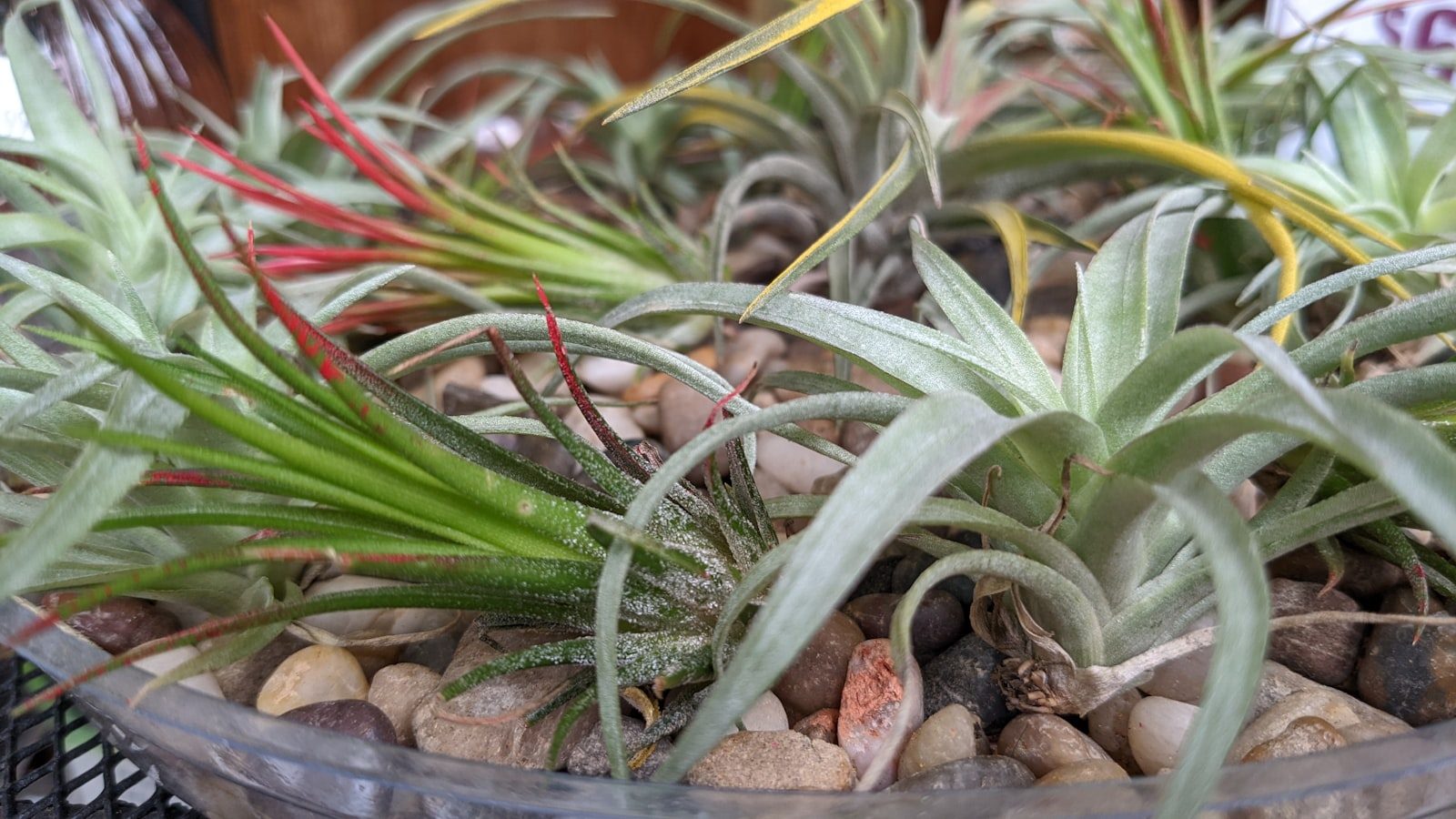
Air plants (Tillandsia) break every rule you’ve learned about houseplants: no soil, no pot, often no roots doing any real work. These soil-free bromeliads cling to trees and rocks in the wild and pull water and nutrients straight out of the air and rain through specialized scales on their leaves. That makes them wonderfully flexible for display — in glass globes, on driftwood, in shells, glued to magnets — but it also means watering and light work differently than for any potted plant. The number-one killer of air plants is, ironically, neglecting to water them, closely followed by trapping them in a damp container where they rot. This guide demystifies the soak-and-dry routine, the light they need, temperature and humidity, how they produce “pups” and bloom, the handful of problems to watch for, and why they’re a safe pick for pet households.
Key Takeaways
- Water: Soak in room-temperature water 20–30 minutes weekly (more in dry/hot air), then dry fully within 4 hours.
- Light: Bright, indirect light. Greener species want more humidity; silvery, fuzzy ones tolerate brighter, drier conditions.
- Drying matters most: Trapped moisture rots air plants — always dry them upside down before returning to display.
- No soil: Never plant in soil or seal in a closed container. They need air circulation.
- Feeding: Bromeliad/Tillandsia fertilizer once or twice a month in the soak water.
- Pets: Non-toxic to cats and dogs — a safe, soil-free option for animal homes.
Watering: the soak-and-dry method
Watering is where air plants live or die, so get this right first. The most reliable method is soaking. Submerge the whole plant in a bowl of room-temperature water — filtered, rain, or aquarium water is better than chlorinated tap or softened water — and leave it for 20 to 30 minutes. Do this once a week as a baseline. In hot, dry, or air-conditioned indoor air, bump it up to twice a week; in cool, humid conditions you can stretch it longer. Between soaks, a quick misting two or three times a week tops them up but should not replace soaking.
The drying step is just as important as the soak. After soaking, gently shake off excess water and set each plant upside down or on its side on a towel in a bright, airy spot until it is completely dry — within about four hours. Water that pools in the base or between the leaves while the plant sits in a container is the leading cause of rot, which shows as a browning, mushy center and leaves that pull away from the base. Never soak a plant that is in bloom by submersion; mist it instead, keeping water off the flower. Read your plant, too: leaves that curl, roll inward, and look exaggerated are thirsty, while a well-hydrated air plant feels firm with open, relaxed foliage.
Light
Air plants want bright, indirect light — think within a few feet of a bright window, or under a sheer curtain. A couple of hours of gentle morning sun is fine, but harsh, direct afternoon sun will scorch and dehydrate them quickly, especially because they have no soil reservoir to draw from. They also do well under fluorescent or LED lighting, making them practical for offices and bathrooms with limited daylight; a full-spectrum bulb within a foot or so, run 10–12 hours a day, keeps them healthy.
There’s a useful rule based on appearance. Silvery, fuzzy, heavily-scaled species like Tillandsia xerographica and T. tectorum come from drier, sunnier habitats and tolerate brighter light and longer gaps between waterings. Greener, smoother species like T. bulbosa and T. butzii come from shadier, more humid forests and prefer gentler light with more frequent watering and higher humidity. Match your watering to the type and you’ll rarely go wrong.
Temperature, humidity, and air circulation
Tillandsia are happiest at typical room temperatures, roughly 50–90°F (10–32°C), and most are not frost-hardy — keep them above 45°F (7°C) and away from freezing windows in winter. They thrive in humid air, which is why bright bathrooms and kitchens suit them, but here’s the crucial caveat: humidity must come with air movement. In dry homes you’ll water more often; in very humid still air you risk rot. Good air circulation lets the plant dry between waterings, which is exactly why a closed terrarium or a sealed glass globe is a poor long-term home for an air plant. Open displays, or sealed ones you remove the plant from to water and dry, work far better.
Feeding
Air plants get by on very little, but light feeding boosts growth and encourages blooming and pup production. Use a fertilizer formulated for bromeliads or air plants (low in copper and boron, which Tillandsia dislike), or a regular houseplant fertilizer at quarter strength. Add it to the soak water once or twice a month during the growing season. Don’t overdo it — too much fertilizer can burn the delicate leaf scales. Many growers simply use rainwater, which carries trace nutrients naturally, and feed only occasionally.
Displaying air plants without killing them
Part of the appeal is the endless display options, but a few rules keep the plant alive. Never pot an air plant in soil — buried bases rot. If you mount one on wood, cork, or stone, attach it with a dab of waterproof, non-toxic adhesive (E6000 or hot glue used sparingly) or fishing line, gluing the base, never the growing center. Avoid copper wire and treated woods, which can poison them. For anything in a globe or vessel, take the plant out to soak and dry, then return it only once it’s bone dry. The display should always allow air to move around the plant.
Blooming and propagation (pups)
A mature, well-cared-for air plant eventually produces a striking bloom — often a flush of red, pink, or purple in the central leaves followed by tubular flowers. Blooming is the plant’s grand finale: each Tillandsia flowers only once, then slowly begins to decline. The reward is that, around or after flowering, the mother plant produces offsets called “pups” at its base.
- Let pups grow until they reach about one-third to one-half the size of the parent.
- Separate them by gently twisting or cutting the pup away from the mother, keeping its base intact — or leave them attached to form a clump.
- Care for pups exactly like adults; they’ll mature, bloom, and produce their own pups, so a single plant becomes a lifetime collection.
This pup cycle means air plants never truly “end” with proper care. For another soil-free, water-loving plant that’s beginner-easy, see our Lucky Bamboo care guide.
Common problems and fixes
Rotting base / mushy center
Trapped water. The plant didn’t dry fully after soaking or was kept in a damp container. Improve air flow, dry it upside down, and never let water pool in the base. Rot is usually fatal once it reaches the core.
Drying out / browning, curling leaves
Under-watering. Exaggerated leaf curl and crispy, browning tips mean it needs more frequent soaks. Try a long rehydrating soak of a few hours for a badly dehydrated plant.
Faded or scorched leaves
Too much direct sun or accompanying dehydration. Move it to bright indirect light and water more often.
Lower leaves falling off
Some shedding is normal, especially after blooming. Widespread leaf loss with a soft base points to rot.
Pests
Rare, but mealybugs or scale can appear. A long soak followed by manual removal usually clears them; avoid harsh oils that clog the leaf scales.
Are air plants toxic to pets?
Air plants are non-toxic to cats and dogs, so they’re a genuinely safe choice for pet households — and their off-the-ground display options (mounted high, in hanging globes) naturally keep them away from curious mouths anyway. The main hazard isn’t poisoning but the display itself: small plants can be a choking risk if a pet chews one off its mount, and decorative containers, wire, or glue could cause problems if swallowed. Mount them securely and out of reach and you’ve got one of the worry-free options for animal lovers. Explore more in our Plants & Flowers hub.
Frequently Asked Questions
How often should I water an air plant?
Soak it in room-temperature water for 20–30 minutes about once a week, and twice a week in hot or dry air. Always dry it fully — upside down, within four hours — before returning it to display, because trapped moisture causes rot.
Can I keep an air plant in a closed terrarium?
Not long-term. Air plants need air circulation to dry between waterings, and a sealed container traps humidity and causes rot. Use open displays, or remove the plant to soak and dry it before placing it back.
How do I know if my air plant is dehydrated?
Look at the leaves: exaggerated curling and rolling, wrinkling, and browning, crispy tips signal it needs water. A well-hydrated plant feels firm with relaxed, open foliage. Give a thirsty one a longer soak.
Do air plants come back after they flower?
The individual plant blooms only once and then slowly declines, but it produces offsets called pups at its base. Let the pups grow to a third or half the parent’s size, then separate or leave them to clump — they’ll mature and bloom in turn.
Are air plants safe for cats and dogs?
Yes, Tillandsia are non-toxic to cats and dogs. The main concern is mechanical — a chewed-off plant or its mounting glue, wire, or container could be a choking or swallowing hazard — so mount them securely and out of reach.
Air plants reward you for unlearning your potted-plant instincts. Soak them weekly, dry them thoroughly, give them bright indirect light and moving air, and they’ll thrive for years — flowering, throwing pups, and turning shelves, walls, and windows into living sculpture, all without a speck of soil.