

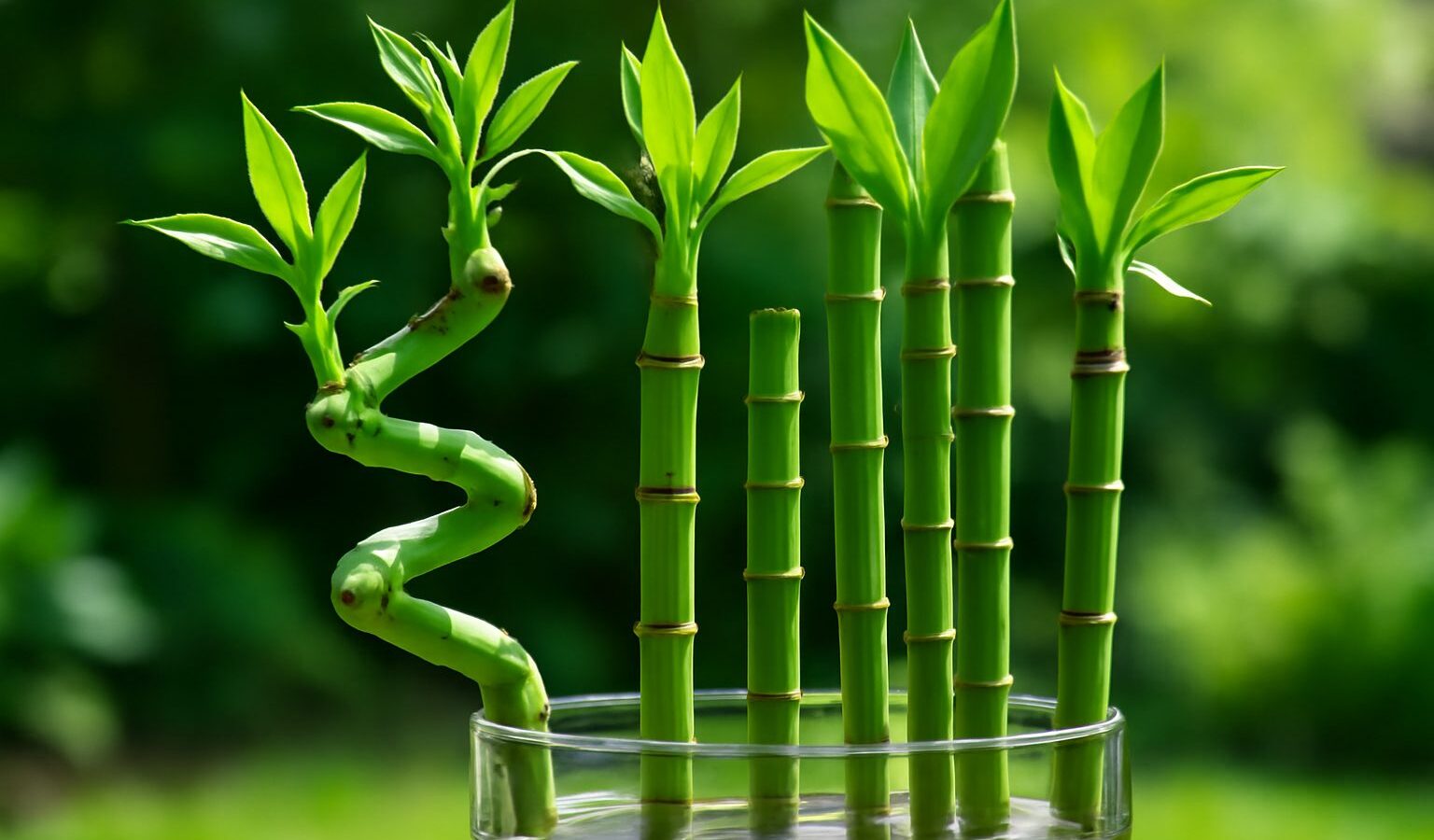
Lucky Bamboo is not bamboo at all. It is Dracaena sanderiana, a tropical foliage plant trained to grow in water with its stalks twisted into spirals and braids. It is wildly popular as a desk and gift plant because it survives in a simple glass of water with low light and almost no attention. The trade-off is that the things that keep it healthy, mainly clean water, the right kind of water, and protection from too much sun, are easy to get wrong. Here is how to keep those green stalks firm and leafy for years.
In this guide
Key Takeaways
- Light: Bright, indirect light; direct sun scorches the leaves and low light yellows them.
- Water: Keep the roots in about one to two inches of water; refresh weekly and top up so roots never dry out.
- Water quality: Use distilled, filtered, or rainwater; the fluoride and chlorine in tap water cause leaf-tip browning.
- Feeding: A drop of diluted liquid fertilizer every month or two is plenty; it is a light feeder.
- Common problems: Yellow stalks usually mean too much sun, bad water, or over-fertilizing.
Light Requirements
Lucky Bamboo grows on the shaded forest floor in the wild, so it wants bright but indirect light indoors. A spot a few feet from an east or north window, or anywhere with steady ambient light, is ideal. In good light the stalks stay deep green and push out fresh leaves. It tolerates fairly low light better than most houseplants, which is why it survives on office desks, but very dim conditions eventually leave it pale and slow.
What it cannot take is direct sun. A few hours of hot, unfiltered light through a south or west window will scorch the leaves with yellow and brown burn marks, so keep it out of any beam of direct sunlight. If the plant leans hard toward the light, rotate it a quarter turn each week so it grows evenly rather than curving. Faded, washed-out leaves usually mean too little light, while crisp scorched patches mean too much.
Water: Quality and Routine
Most Lucky Bamboo is grown hydroponically in a vase, often anchored with decorative pebbles. Keep the roots covered with about one to two inches of water at all times, enough to submerge the roots but not so much that the stalk sits deeply in water, which can rot it. Top up as the level drops through evaporation, and never let the roots dry out completely.
Water quality matters more than almost anything else for this plant. Dracaena sanderiana is sensitive to the chlorine and especially the fluoride found in most municipal tap water, which builds up and burns the leaf tips brown. Use distilled water, filtered water, or collected rainwater. If you only have tap water, let it sit out uncovered overnight so the chlorine can dissipate, though this does not remove fluoride. Change the water completely once a week to prevent it from going stagnant and cloudy, rinsing the pebbles and the inside of the vase when you do. Clean water and clean roots are the foundation of a healthy plant.
Growing in Soil Instead of Water
Lucky Bamboo can also be grown in soil, and many growers find it lives longer and stronger that way. Use a well-draining potting mix and a pot with a drainage hole. Keep the soil lightly and consistently moist but never waterlogged, watering when the top inch begins to dry. Soil-grown plants get a steadier supply of nutrients and are less prone to the leaf-tip burn caused by sitting in mineral-laden water.
If you want to move a water-grown plant into soil, do it while the roots are healthy rather than after they have started to rot. Pot it up, water it in, and keep it in bright indirect light while it adjusts. Whether you keep it in water or soil is mostly personal preference; water displays look striking, but soil is the lower-maintenance long-term home. For more low-light foliage options, see our Plants & Flowers guides.
Temperature, Humidity and Feeding
As a tropical plant, Lucky Bamboo likes warmth, ideally between 65°F and 90°F, and it must be kept above 50°F and away from cold drafts, air-conditioning vents, and heat sources. Average household humidity is fine, though it appreciates a bit more in very dry winter air. Keep it out of the path of forced-air vents, which dry and brown the foliage.
Lucky Bamboo is a very light feeder, and over-fertilizing is a common cause of yellowing. Use a liquid houseplant fertilizer diluted heavily, just a single drop or two in the water for a water-grown plant, only once every month or two during the growing season. Specialty Lucky Bamboo fertilizers exist and are formulated for this low dosing. Soil-grown plants can take a diluted balanced fertilizer monthly in spring and summer. When in doubt, skip a feeding; the plant gets by on remarkably little.
Arrangement, Stalk Count and Shaping
Part of Lucky Bamboo’s appeal is the way the stalks are arranged, and the number of stalks carries symbolic meaning in the feng shui tradition that popularized the plant. Three stalks are commonly associated with happiness, five with health, and arrangements of eight or nine with wealth and good fortune; the number four is traditionally avoided. None of this affects how you care for the plant, but it explains why bundles are sold in specific counts and often tied with red ribbon. From a practical standpoint, the more stalks you crowd into one vase, the more often you should change the water, because a dense cluster fouls the water faster.
The spirals and curves you see on store-bought plants are not natural and cannot be recreated quickly at home. Growers produce them by laying the stalk on its side and rotating it slowly toward a single light source over many months, so the stem bends as it reaches for the light. You can gently encourage a new shoot to lean by controlling its light direction, but expect it to take a long time. For most owners, simply keeping the existing shape clean and the foliage green is the goal, and trimming overgrown side shoots keeps the arrangement tidy and balanced.
Propagation
Lucky Bamboo propagates easily from stem cuttings, which is handy because tall plants can be trimmed and the cuttings rooted into new ones. Choose a healthy stalk and cut a section just below a node (one of the raised rings on the stalk), making sure your cutting has at least one leaf node. Remove the lower leaves so they will not sit in water.
Place the cutting in a container of clean water (the same distilled or filtered water you use for the parent) in bright, indirect light. Refresh the water weekly, and roots should emerge from the base within a few weeks. Once a good cluster of roots has formed, you can leave the new plant in water or pot it into soil. You cannot regrow the spiral shape at home, since those curves are created commercially by rotating the plant against the light over a long period, but your cutting will grow straight and healthy.
Common Problems and Pests
Yellowing is the number one complaint, and it has several causes. A yellow stalk (as opposed to just the leaves) is serious and often signals rot or sun damage; if a stalk turns yellow and soft, remove it before the problem spreads to healthy stalks sharing the same water. Yellow leaves usually point to too much direct sun, fluoride or chlorine in the water, or over-fertilizing. Brown, crispy leaf tips almost always mean tap-water chemicals or dry air, so switch to filtered water and raise humidity.
Mushy roots and a foul-smelling, slimy, or algae-green vase indicate the water has gone stagnant; clean everything, trim any rotten roots, and refresh more often. Algae growth is encouraged by light hitting the water, so an opaque container helps. Pests are uncommon but mealybugs, spider mites, and occasional fungal spots can appear; wipe the leaves, treat with insecticidal soap, and improve airflow. With clean water, gentle light, and a light hand on fertilizer, Lucky Bamboo is one of the most resilient plants you can grow, much like other easy beginner-friendly houseplants.
Frequently Asked Questions
Why is my Lucky Bamboo turning yellow?
Yellowing is usually caused by too much direct sunlight, chlorine or fluoride in tap water, or over-fertilizing. Move it out of direct sun, switch to distilled or filtered water, and feed only a drop of diluted fertilizer every month or two. A yellow, soft stalk should be removed to protect the rest.
What kind of water is best for Lucky Bamboo?
Distilled, filtered, or rainwater is best because Lucky Bamboo is sensitive to the fluoride and chlorine in tap water, which cause brown leaf tips. If you must use tap water, let it sit out overnight to release chlorine, though that will not remove fluoride. Change the water weekly.
How often should I change the water?
Change the water completely once a week to keep it from going stagnant and cloudy. Rinse the pebbles and the inside of the container at the same time, and keep the roots covered with about one to two inches of fresh water between changes.
Is Lucky Bamboo safe for cats and dogs?
No. Despite its name, Lucky Bamboo is a Dracaena and is toxic to cats and dogs if eaten, potentially causing drooling, vomiting, and weakness. Keep it out of reach of pets, and contact your veterinarian if you suspect your pet has chewed on it.
Can I grow Lucky Bamboo in soil instead of water?
Yes, and it often grows stronger that way. Use a well-draining potting mix and keep it lightly but consistently moist. Soil-grown plants get steadier nutrients and avoid the mineral buildup that browns water-grown leaves, so soil is the easier long-term home for the plant.
Lucky Bamboo earns its easy reputation: keep it in bright indirect light, give it clean fluoride-free water changed weekly, and feed it almost nothing, and it will stay green and upright for years. Whether you grow it in a vase of pebbles or pot it into soil, the same simple habits keep those stalks healthy and ready to be trimmed into new plants.