

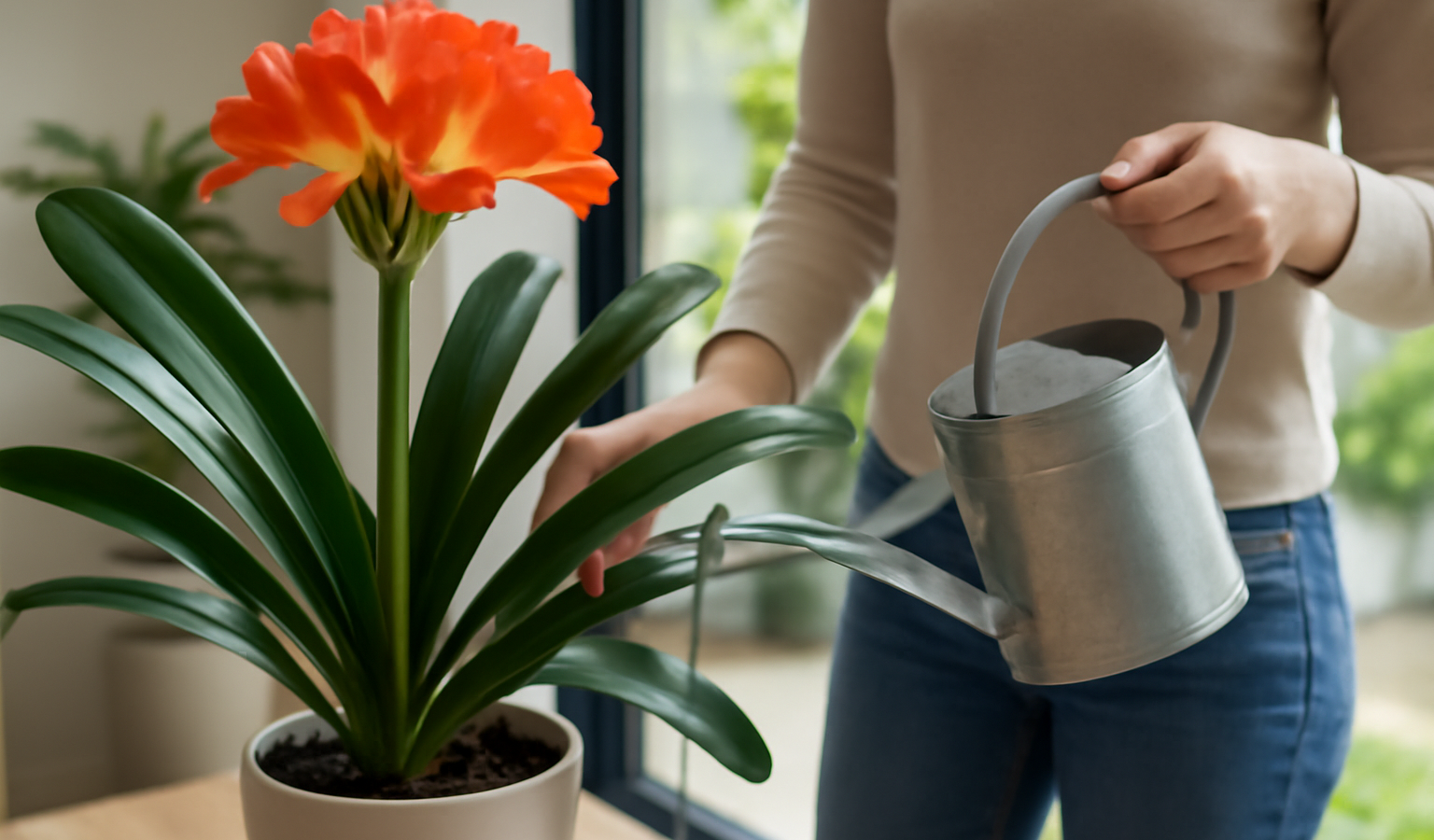
Few houseplants reward a little patience like the clivia (Clivia miniata), sometimes called the bush lily or Kaffir lily. Native to the shaded woodlands of South Africa, it sends up dramatic clusters of trumpet-shaped flowers—usually fiery orange, sometimes yellow, cream, or red—on a thick stalk above a fan of strappy, dark-green, evergreen leaves. Clivias are remarkably long-lived (specimens are routinely passed down for decades) and undemanding the rest of the year. The one secret nearly everyone misses is that clivia needs a cool, dry winter rest to set buds. Give it that, plus bright indirect light and restrained watering, and you will get a reliable late-winter show year after year.
Key Takeaways
- Light: Bright, indirect light; never hot direct sun. Tolerates moderate light.
- Water: Moderate in growth; let the top inch or two dry. Keep nearly dry during winter rest.
- Bloom trigger: A 6–12 week cool (50–55°F), dry, dim rest in fall/winter sets flower buds.
- Soil: Rich, well-draining mix; clivia likes being root-bound.
- Pet warning: Toxic to cats and dogs (contains lycorine alkaloids).
- Longevity: Slow to mature but lives and blooms for decades.
Light Requirements
In the wild, clivias grow on the forest floor under a canopy, so they are built for bright, indirect light rather than blazing sun. Indoors, an east-facing window is close to perfect, as is a spot a few feet back from a brighter south or west window where a sheer curtain softens the rays. Good light produces sturdy leaves and strong flower stalks; in too little light the plant survives but is reluctant to bloom and grows floppy, pale foliage.
The one thing clivia will not forgive is harsh, direct midday sun, which bleaches and scorches the leaves, leaving permanent tan or brown patches. If you move the plant outdoors for summer, keep it in full shade or dappled shade only—a porch or beneath a tree, never open sun. Rotate the pot a quarter turn every week or two so the leaf fan grows symmetrically instead of leaning toward the window.
Watering
Clivias have thick, fleshy roots that store water, so they tolerate—and actually prefer—drying out between waterings. During the active growing season from spring through early fall, water moderately: soak the soil thoroughly, let excess drain away, then wait until the top inch or two has dried before watering again. That usually means roughly once a week, but always check the soil first. Never let the pot sit in a saucer of water; clivia roots rot quickly in standing moisture.
The watering routine changes dramatically in fall and winter, and this is central to getting flowers (see the bloom section below). During the rest period you water very sparingly—just enough to keep the leaves from shriveling, perhaps a small drink every 3 to 4 weeks. Once a flower stalk appears in late winter, resume normal watering and the bud will rise and open. Overwatering, especially in winter, is the most common way clivias are killed, so when in doubt, water less.
Soil and Potting
Use a rich but free-draining mix. A quality houseplant potting soil amended with extra perlite, bark, or coarse sand suits clivia well; some growers use an orchid-style bark mix because clivia’s chunky roots appreciate the aeration. Whatever you choose, the pot must have drainage holes. A slightly acidic to neutral pH is fine.
Here is a quirk that works in your favor: clivias bloom best when root-bound, so resist the urge to repot often. Leave the plant in the same container for 3 to 5 years, repotting only when roots are bursting out of the pot or actually cracking it. When you do repot, do it in spring after flowering, move up just one pot size, and handle the brittle roots carefully. Feed during the growing season with a balanced liquid fertilizer about every 2 to 4 weeks from spring until late summer; some growers switch to a lower-nitrogen, higher-potassium feed in late summer to encourage flowering. Stop fertilizing entirely during the winter rest.
Temperature, Humidity, and the Bloom Trigger
Clivias are comfortable in ordinary room conditions—60–75°F during the growing season—and tolerate average household humidity without fuss, so no misting or pebble trays are required. They are not frost-hardy and should never be left outdoors below about 35–40°F.
The make-or-break factor for flowers is the cool, dry winter rest. Beginning in late fall, give the plant 6 to 12 weeks in a cool spot—ideally 50–55°F—with reduced light and very little water. An unheated but frost-free room, a cool basement, an enclosed porch, or a garage that stays above freezing all work. This chill-and-dry period mimics the dry season in clivia’s native habitat and is what convinces the plant to push up a flower stalk. After 6 to 12 weeks, move it back to a warmer, brighter room and resume normal watering; within a few weeks a stalk should emerge and bloom, typically in late winter to early spring. A common mistake is letting the stalk start to develop while the plant is still too cold and dry—if you see a bud beginning, bring the plant into warmth so the stalk elongates fully instead of opening down among the leaves. Skip the cool rest and a healthy clivia will simply refuse to bloom, no matter how good the rest of your care is.
Propagation
The easiest and fastest way to multiply clivias is by dividing offsets—the small “pups” that mature plants produce at the base. Wait until a pup has at least three or four of its own leaves and ideally some roots. In spring after flowering, slide the plant from its pot, find where the offset joins the parent, and cut it free with a clean, sharp knife, keeping as many of its roots intact as possible. Let the cut surfaces dry for a few hours, then pot each division in its own container of well-draining mix. Water sparingly at first and keep it in bright indirect light. A division typically takes 2 to 3 years to reach blooming size.
You can also grow clivia from seed if your plant sets the large red or orange berries after flowering—but this is a long game. Sow the ripe seeds in moist mix, keep them warm, and be prepared to wait: seed-grown clivias often take 4 to 6 years (sometimes longer) to flower for the first time. Division is the practical choice unless you are breeding for new colors.
Common Problems and Pests
Clivias are tough, but a few issues come up. Mealybugs are the most frequent pest, hiding in the crown and leaf bases as white cottony specks; wipe them off with a cotton swab dipped in rubbing alcohol and follow with insecticidal soap if needed. Scale can also appear as small brown bumps on the leaves. Soft, mushy, rotting roots or a collapsing crown almost always mean overwatering or poor drainage—back off the water and ensure the pot drains freely.
Yellowing leaves can signal overwatering, while pale or stretched leaves indicate too little light. Brown, scorched patches come from direct sun. And the most common complaint of all—“my clivia won’t flower”—nearly always traces back to a missing or too-short cool, dry rest, too much shade, or a plant that is simply too young. Be patient, dial in the winter rest, and the blooms will come.
Is Clivia Toxic to Pets?
Yes—clivia is toxic to cats and dogs, and to people if eaten. Like other members of the amaryllis family, it contains lycorine and related alkaloids, with the highest concentration in the bulb-like base and roots. Ingestion can cause drooling, vomiting, diarrhea, and in large amounts more serious symptoms. The bright berries and the fleshy base are the riskiest parts. If you share your home with pets that nibble plants, keep clivia well out of reach or choose a pet-safe alternative; the bamboo palm is a good non-toxic substitute. Contact your veterinarian or a pet poison hotline if you suspect your animal has eaten any part of the plant.
Once you understand its annual rhythm—lush growth in spring and summer, a cool rest in winter, then a burst of color—clivia becomes one of the most rewarding flowering houseplants you can own. For more flowering and foliage care guides, browse our Plants & Flowers hub.
Frequently Asked Questions
Why won’t my clivia bloom?
The usual reason is a missing cool, dry winter rest. Clivia needs 6–12 weeks at around 50–55°F with very little water and reduced light in fall/winter to set buds. Too much shade or a plant that is still too young (under 3 years from division) can also prevent flowering.
How often should I water a clivia?
During spring and summer growth, water when the top inch or two of soil dries—roughly weekly. During the fall/winter rest, water very sparingly, just enough to keep the leaves from shriveling (about every 3–4 weeks). Resume normal watering once a flower stalk appears.
Does clivia need to be root-bound to flower?
Clivia blooms best when somewhat root-bound, so don’t repot often. Leave it in the same pot for 3–5 years and repot (one size up) only when roots are bursting out. A cramped pot combined with the cool winter rest encourages reliable flowering.
Is clivia poisonous to cats and dogs?
Yes. Clivia contains lycorine and related alkaloids, concentrated in the bulb-like base and roots, and is toxic to cats, dogs, and humans. Ingestion can cause drooling, vomiting, and diarrhea. Keep it away from pets and call your vet if your animal eats any part of it.
How do I propagate clivia?
Divide offsets (“pups”) from the base in spring after flowering, once a pup has 3–4 leaves and some roots. Cut it from the parent, let the cut dry, and pot it in well-draining mix. Divisions bloom in 2–3 years. Seeds work too but can take 4–6 years to flower.