

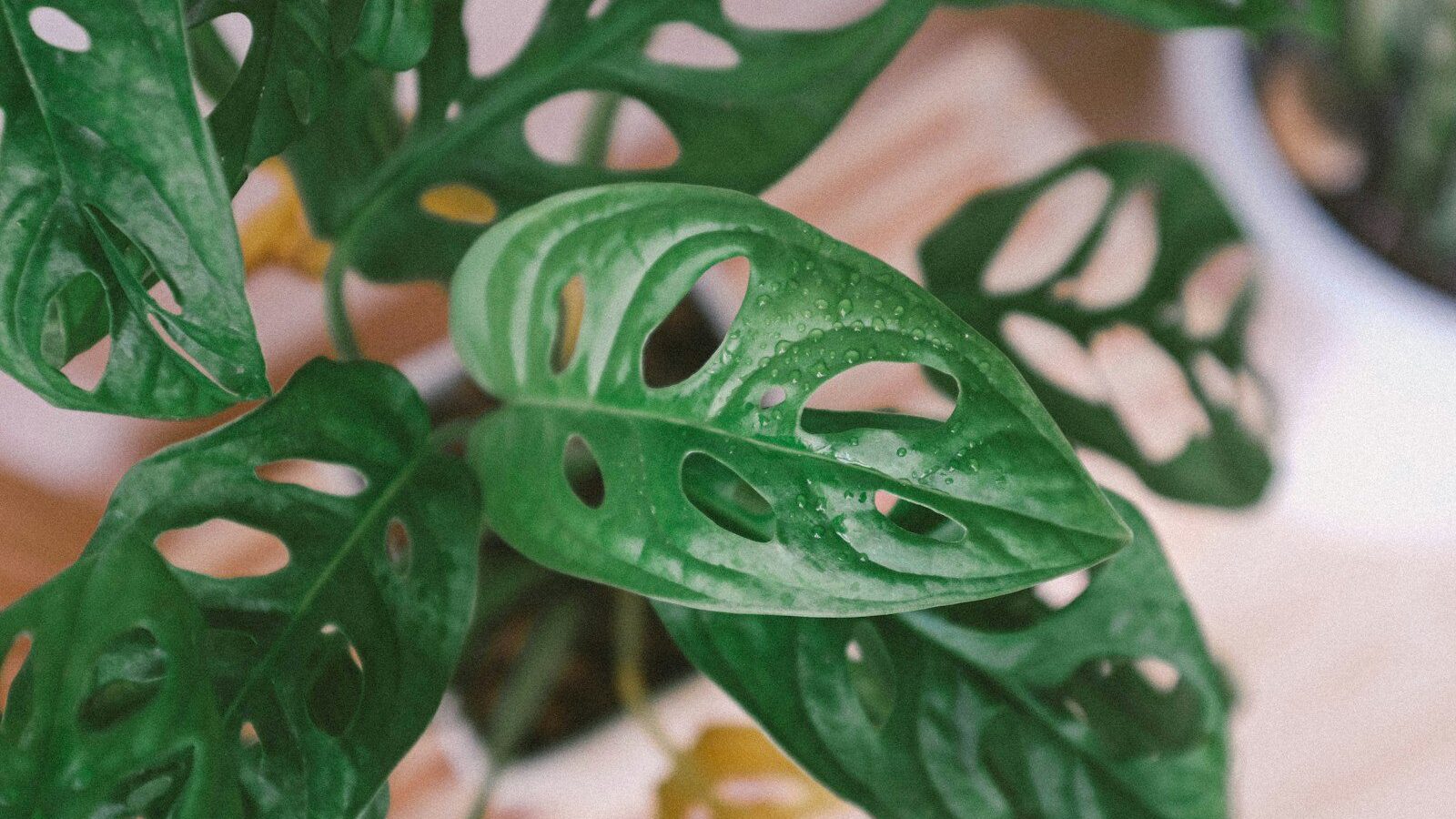
Monstera adansonii, affectionately called the Swiss Cheese Vine, is the smaller-leaved, faster-vining relative of the iconic Monstera deliciosa. Its thin, delicate leaves are perforated with dramatic oval holes (called fenestrations) that give the plant its nickname, and its eager vines will either trail from a hanging basket or climb a moss pole into a lush, jungly column. It is a tropical climber that is genuinely easy to please once you nail down its preferences for light, moisture, and humidity. This guide covers everything you need: light, watering, soil, humidity, propagation, common problems, and pet safety.
Part of our Houseplants & Container Gardening guide →
In this guide
Key Takeaways
- Give bright indirect light for strong growth and well-developed fenestrations; avoid harsh direct sun.
- Water when the top inch or two of soil dries — usually every 5–7 days in summer, less in winter.
- Use a chunky, airy aroid mix rich in bark and perlite, in a pot with drainage.
- It loves humidity above 50%; raise it with a humidifier or pebble tray for bigger, holier leaves.
- Propagate effortlessly from stem cuttings with a node, in water or soil.
- Monstera adansonii is toxic to cats and dogs (calcium oxalate crystals); keep it out of reach.
Light: Bright and Indirect
Monstera adansonii thrives in bright, indirect light, which mimics the dappled sun it receives under the rainforest canopy in its native Central and South America. Good light is directly tied to those signature holes: well-lit plants produce larger leaves with more dramatic fenestrations, while plants in low light grow leggy, with smaller, less-perforated leaves and longer gaps between them.
An east-facing window with soft morning sun is ideal, as is a spot a few feet back from a brighter south or west window. Avoid prolonged harsh, direct afternoon sun, which scorches the thin leaves and leaves crispy brown or bleached patches. The plant tolerates medium light but grows more slowly and sparsely there. Rotate the pot every week or two for even, balanced growth, and consider a grow light through dim winter months to keep new leaves full and fenestrated.
Watering: Keep Lightly Moist
Unlike succulents, this tropical vine likes to stay lightly and evenly moist — but never soggy. Water when the top one to two inches of soil feel dry, then water thoroughly until it drains from the bottom and empty the saucer. In a warm, bright spot this often means watering about once every five to seven days in the growing season, slowing considerably in winter.
Always check the soil with your finger before watering, since pot size, temperature, and humidity all affect how quickly it dries. The plant gives clear signals: thin, curling, or droopy leaves suggest it is thirsty, while yellowing leaves and a soggy, sour-smelling base point to overwatering and the risk of root rot. Consistency matters here — letting the plant dry out completely and then drenching it stresses the foliage, so aim for steady, moderate moisture. As with most tropicals, lukewarm water and good drainage keep the roots healthy.
Soil and Potting
Monstera adansonii is an aroid, and aroids want a chunky, airy mix that drains fast while holding some moisture around the roots. A great blend is one part quality potting soil, one part orchid bark, and one part perlite, optionally with a handful of coco coir or worm castings. This open structure lets air reach the roots and prevents the compacted, waterlogged conditions that cause rot.
Use a pot with a drainage hole and repot every one to two years, or when roots fill the pot, moving up just one size at a time in spring. This vigorous grower benefits from support: train it up a moss pole or trellis and the aerial roots will grab on, producing larger, more fenestrated leaves than a trailing plant. Feed monthly during spring and summer with a balanced liquid fertilizer at half strength, and stop in fall and winter. Pinch back leggy vines to encourage bushier growth, and save the cuttings to propagate. For its larger cousin’s care, see our guide on how to care for a Scindapsus, another easygoing trailing aroid.
Temperature and Humidity
This tropical vine prefers warm, stable temperatures between 65 and 85°F. Keep it above 60°F and shield it from cold drafts, chilly windows, and air-conditioning vents, since sudden temperature swings stress the foliage. It has no frost tolerance and must never be exposed to near-freezing conditions.
Humidity is where this plant really shows its rainforest heritage. It thrives in humidity above 50%, and higher levels produce bigger leaves with more pronounced holes. In dry indoor air — especially in winter with the heat on — you may see brown, crispy leaf edges. Raise humidity by grouping plants together, using a pebble tray, or, most effectively, running a humidifier nearby. A bathroom or kitchen with a bright window can be an ideal home. The reward for keeping humidity up is faster growth and the lush, well-fenestrated foliage this plant is prized for.
Propagation From Stem Cuttings
Monstera adansonii is one of the most satisfying plants to propagate because it roots quickly and reliably. The essential ingredient is a node — the knobby point on the stem where leaves and aerial roots emerge.
- With clean scissors, cut a stem segment just below a node so the cutting has at least one node and a leaf or two. Each cutting needs a node to root.
- Water propagation: submerge the node (not the leaves) in a jar of water in bright, indirect light. Change the water every few days, and watch roots appear within one to three weeks. Pot up once roots are a couple of inches long.
- Soil or sphagnum propagation: nestle the node into moist, airy mix or damp sphagnum moss, keep it warm and humid (a clear cover or bag helps), and roots will form over a few weeks.
Plant several rooted cuttings back into the parent pot to create a fuller, bushier plant fast. For a detailed walkthrough, see our companion guide on how to propagate a Monstera.
Common Problems and Fixes
Yellowing Leaves
Multiple yellowing leaves usually mean overwatering or poor drainage. Let the top inch or two dry between waterings and make sure the pot drains freely. An occasional yellow lower leaf is simply old age and can be removed.
Brown, Crispy Edges
Crispy brown leaf edges point to low humidity or inconsistent watering. Raise the humidity and keep soil moisture steady. Large brown scorched patches instead indicate too much direct sun, so move the plant out of harsh light.
No Holes / Small Leaves
Leaves with few or no fenestrations and leggy, stretched vines mean the plant wants more light and, often, more humidity and support. Brighten its spot, give it a moss pole to climb, and new growth should develop the classic holes.
Pests
Spider mites are the most common pest in dry air, leaving fine webbing and stippled leaves; thrips, mealybugs, and scale also appear occasionally. Wipe leaves regularly, treat with insecticidal soap or neem oil, dab mealybugs with 70% alcohol, and raise humidity to deter mites.
Is Monstera Adansonii Toxic to Pets?
Yes — like other aroids, Monstera adansonii is toxic to cats and dogs. The leaves and stems contain insoluble calcium oxalate crystals, which cause irritation when chewed: oral pain and burning, intense drooling, pawing at the mouth, difficulty swallowing, and vomiting. The sap can also irritate human skin and is harmful if ingested. Although rarely life-threatening, it can make a pet quite miserable, so keep this vine out of reach of cats, dogs, and small children. A hanging basket or high shelf both protects pets and shows off the trailing, hole-filled foliage to great effect. If a pet chews on it, contact your veterinarian. For more pet-conscious plant ideas, browse our full Plants & Flowers library.
Training It Up a Moss Pole
In the wild, Monstera adansonii climbs tree trunks, and giving it something to climb indoors transforms the plant. A moss pole, coir pole, or trellis encourages the aerial roots to attach and signals the plant to produce larger, more heavily fenestrated leaves than it ever would while trailing. To train it, set the support in the pot at planting or repotting time, then gently tie the main vines to it with soft plant ties until the aerial roots grab hold on their own.
Keep a moss pole lightly moist by misting it or pouring a little water down the top; damp moss invites the aerial roots to root in and climb faster. As the plant grows taller, add ties and guide new vines upward. Within a season or two of climbing, you will notice a clear difference: bigger leaves, more dramatic holes, and a fuller, more architectural plant. If you prefer the trailing look instead, simply skip the pole and let the vines spill from a hanging basket — just expect smaller leaves.
Repotting Without Stress
This vigorous grower outpaces its pot every one to two years. Tell-tale signs it is time to repot include roots circling the surface or emerging from the drainage hole, water running straight through without soaking in, and growth that has noticeably slowed. The best time is spring, at the start of the active season.
Choose a pot just one size larger — too big a jump leaves excess soil that stays wet and invites rot. Gently ease the plant out, loosen any tightly circling roots, and settle it into fresh, chunky aroid mix at the same depth it was growing before. Water it in, then keep it out of harsh sun for a week or so while it settles. If you are also adding a moss pole, repotting is the ideal moment to install it. Refreshing the soil every couple of years replenishes nutrients and keeps the airy structure these roots depend on.
Seasonal Care Summary
Spring and summer are the growth season: provide bright indirect light, keep the soil lightly moist with watering every five to seven days, feed monthly at half strength, and maintain high humidity for big, holey leaves. In fall, reduce feeding and water a little less as growth slows. In winter, water less often, stop fertilizing, protect the plant from cold drafts, and run a humidifier to counter dry indoor heat. This rhythm keeps the Swiss Cheese Vine vigorous, full, and dramatically fenestrated all year.
Frequently Asked Questions
Why doesn’t my Monstera adansonii have holes?
Missing or small fenestrations usually mean the plant needs more bright indirect light, and often more humidity and a support to climb. Brighten its location, add a moss pole, and keep humidity above 50%, and new leaves should develop the characteristic holes as they mature.
How often should I water a Monstera adansonii?
Water when the top one to two inches of soil feel dry — typically every 5–7 days in summer and less in winter. Keep the soil lightly and evenly moist but never soggy, and always check the soil before watering rather than following a fixed schedule.
Should I let it climb or trail?
Both are fine, but climbing produces the best results. Given a moss pole, the aerial roots attach and the plant grows larger leaves with more dramatic fenestrations. Left to trail, it makes a lush hanging plant with smaller leaves. Choose based on your space and the look you want.
Is Monstera adansonii toxic to cats and dogs?
Yes. It contains insoluble calcium oxalate crystals that irritate the mouth and digestive tract, causing drooling, oral pain, and vomiting if chewed. Keep it out of reach of pets and children, such as on a high shelf or in a hanging basket.
Why are the leaf edges turning brown and crispy?
Crispy brown edges typically signal low humidity or inconsistent watering. Raise the humidity with a humidifier or pebble tray and keep soil moisture steady. If you see large scorched patches instead of edge browning, the plant is getting too much direct sun.
Give Monstera adansonii bright indirect light, steady moisture, an airy mix, and plenty of humidity, and it will reward you with fast, jungly growth and leaves full of dramatic holes — especially if you let it climb. Keep it away from curious pets, propagate the trimmings, and this Swiss Cheese Vine becomes one of the most rewarding tropical plants in your home.