

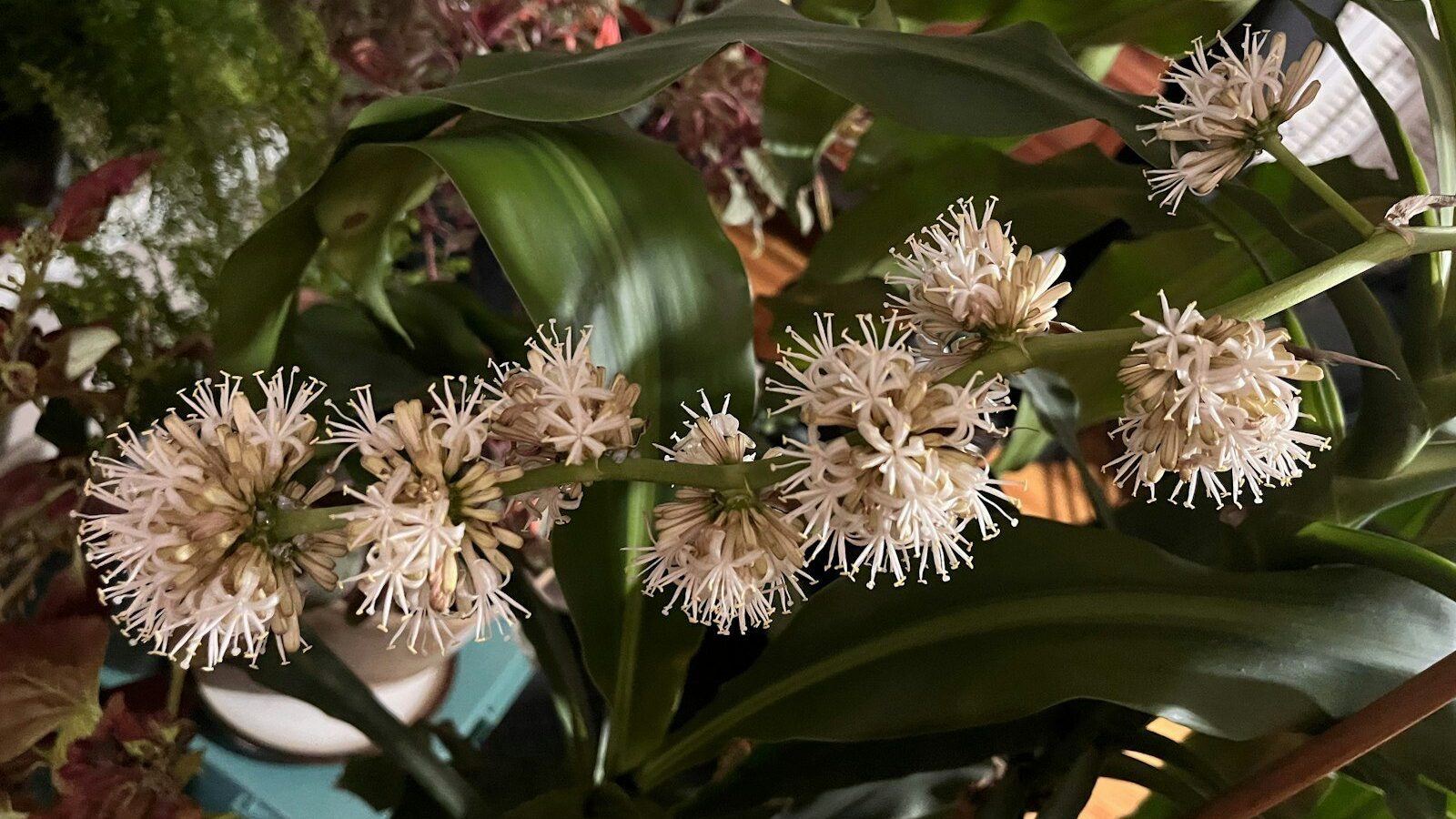
If you want a tall, architectural houseplant that survives forgetful watering and low light, the dracaena is hard to beat. This is the plant family behind the corn plant, the slim “Janet Craig,” the colorful Madagascar dragon tree, and the ribbon-leaved “lucky bamboo” — all sharing the same easygoing temperament. Dracaenas store water in their woody canes, so they would rather you underwater than overwater them, and they shrug off the dim corners that kill fussier tropicals. The two things that actually trip people up are watering too often and using fluoridated tap water, both of which show up as brown leaf tips. This guide covers light, watering, soil, feeding, pruning a leggy plant back into shape, and the surprisingly easy cane and tip cuttings that let you turn one plant into several.
Key Takeaways
- Dracaenas thrive in bright indirect light but tolerate medium and low light better than most plants.
- Let the top 2–3 inches of soil dry before watering — overwatering is the main killer.
- Use filtered, distilled, or rainwater; dracaenas are sensitive to fluoride, which browns leaf tips.
- Plant in a well-draining mix in a pot with drainage holes; repot every 2–3 years.
- Prune the top cane to control height and force branching — you can root the cutting.
- Propagate easily from top cuttings or sections of bare cane laid in soil or water.
Know Your Dracaena
The genus is large and varied, but a few types dominate homes and offices. Dracaena fragrans is the corn plant, with broad arching leaves striped down a thick cane; the “Massangeana” form is the familiar mass cane. Dracaena deremensis cultivars like “Janet Craig” (deep green) and “Lemon Lime” are upright and compact. Dracaena marginata, the Madagascar dragon tree, has thin spiky leaves edged in red on slender, often twisting canes. Dracaena reflexa (“Song of India”) shows yellow-margined leaves, and the so-called lucky bamboo is actually Dracaena sanderiana. Care is essentially the same across all of them, with the marginata being the most drought-tolerant and the broad-leaved types preferring a bit more humidity. As a bonus, dracaenas are among the plants noted for tolerating indoor air well, and their upright form makes them excellent floor plants for filling a corner.
Light Requirements
Dracaenas do best in bright, indirect light — a few feet from an east, west, or curtain-filtered south window. In that kind of light they grow steadily, keep their variegation crisp, and hold a full crown of leaves. Their real selling point, though, is tolerance: they handle medium and even fairly low light better than almost any other large foliage plant, which is exactly why they fill so many office lobbies. The trade-off in dim conditions is slower growth, smaller leaves, and faded variegation, since colorful types like marginata and “Lemon Lime” need more light to keep their stripes vivid.
Keep them out of direct, hot sun, which scorches pale patches into the leaves — especially on variegated forms. If a plant in a low-light spot starts leaning hard toward the window or dropping lower leaves faster than usual, move it brighter or supplement with a grow light. Rotating the pot a quarter turn every week or two keeps growth even and upright.
Watering: Less Is More
Because dracaenas store water in their canes, they are far more forgiving of drought than of constant moisture. Let the top 2–3 inches of soil dry out before watering again. In practice that is often every 10–14 days, and even less in winter; in lower light the soil dries slowly and you should stretch the interval further. When you water, do it thoroughly until water runs from the drainage holes, then discard whatever collects in the saucer so the roots never sit in water.
The most common mistake is watering on a rigid weekly schedule regardless of how dry the soil actually is — that is how dracaenas end up with rotting roots, yellowing lower leaves, and a mushy base. When in doubt, wait. A slightly thirsty dracaena recovers quickly; a waterlogged one may not. Average household humidity is fine, though the broad-leaved corn-plant types appreciate a little extra humidity and will brown at the tips faster in very dry winter air.
The Fluoride Problem and Water Quality
Dracaenas are unusually sensitive to fluoride, and this is the single most common cause of those brown, dead leaf tips that frustrate owners. Fluoride is added to many municipal water supplies and is also present in some perlite and superphosphate fertilizers. Over time it accumulates in the leaf tips and kills the tissue, leaving a brown or yellow margin with a sometimes-yellow halo.
The fix is to water with distilled water, collected rainwater, or filtered water that removes fluoride. Letting tap water sit out helps dissipate chlorine but does not remove fluoride, so it is not enough on its own. Avoid fertilizers containing superphosphate, and flush the pot with clean water periodically to wash out accumulated salts. Once a tip browns it stays brown — trim the dead portion off with scissors, cutting to follow the leaf’s natural shape — but correcting the water keeps new growth clean.
Soil, Potting & Feeding
A standard well-draining houseplant mix suits dracaenas well; add perlite or a little orchid bark if your soil feels dense, since good drainage is what keeps the roots healthy. Always use a pot with drainage holes. These plants grow slowly and like being somewhat snug, so repot only every two to three years, or when roots fill the pot, moving up just one size in spring.
Feeding is light. During spring and summer, apply a balanced liquid houseplant fertilizer at half strength roughly once a month. Stop in fall and winter when growth slows. Dracaenas are easy to over-fertilize, and excess salts contribute to the same tip browning that fluoride causes, so err on the side of feeding less. For another effortless floor plant to pair with a dracaena, our philodendron care guide covers a similarly forgiving option.
Pruning and Controlling Height
Dracaenas grow upward on bare canes and can eventually reach the ceiling or grow leggy with a tuft of leaves only at the top. The solution is simple and the plant takes it well: cut the cane straight across with a clean, sharp saw or pruners at whatever height you want, even right through bare wood. Within a few weeks the plant pushes one or more new shoots just below the cut, giving you a fuller, branching plant. Spring or early summer is the best time to prune so the plant has the energy to rebound. Do not throw away the top you removed — it roots into a brand-new plant.
How to Propagate a Dracaena
Few large houseplants propagate as readily as dracaenas, and pruning gives you the material for free.
- Top cuttings: Take the leafy top you cut off, with several inches of cane attached. Root it in water (change it every few days) or push it into moist potting mix. Roots form in a few weeks, after which it grows on as a normal plant.
- Cane cuttings: The bare length of leftover cane can be cut into 3–6 inch sections. Lay them horizontally on, or insert them upright into, moist soil — keeping track of which end was “up.” New shoots and roots sprout from the nodes. Some growers seal the top cut end with wax to prevent it drying out.
- Aftercare: Keep cuttings warm, in bright indirect light, and lightly moist until established. A loose clear bag over the pot raises humidity and speeds rooting.
Patience is the only requirement — dracaenas root reliably but not fast. Within a couple of months a single pruned plant can become two or three.
Common Problems & Fixes
Brown Leaf Tips
The dracaena signature. Caused by fluoride in tap water, salt buildup from over-fertilizing, underwatering, or very dry air. Switch to distilled or filtered water, ease off fertilizer, flush the soil, and trim dead tips with scissors.
Yellowing Lower Leaves
Dracaenas naturally shed their oldest lower leaves as they grow taller, so a slow trickle of yellowing at the bottom is normal. Sudden, widespread yellowing with soggy soil signals overwatering — let the soil dry more and check drainage.
Drooping or Mushy Stems
A soft, squishy base or wrinkled cane means root or stem rot from overwatering. Cut back to firm, healthy cane, let the soil dry out, and consider repotting in fresh, drier mix.
Pests
Spider mites and mealybugs occasionally appear, especially in dry conditions. Wipe the leaves, raise humidity, and treat with insecticidal soap or neem oil until clear. Note that dracaenas are toxic to cats and dogs if chewed, so keep them out of reach of pets. Explore the full Plants & Flowers collection, or compare with the more demanding calathea if you want a patterned tropical alongside your dracaena.
Frequently Asked Questions
Why does my dracaena have brown leaf tips?
The most common cause is fluoride in tap water, which dracaenas are especially sensitive to. Salt buildup from over-fertilizing, underwatering, and dry air also brown the tips. Switch to distilled or filtered water, feed sparingly, and flush the soil periodically.
How often should I water a dracaena?
Let the top 2–3 inches of soil dry out first, which usually means every 10–14 days and even less in winter or low light. Dracaenas store water in their canes and rot if overwatered, so when in doubt, wait longer.
Can I cut the top off a dracaena that’s too tall?
Yes. Cut the cane straight across at the height you want with clean pruners or a saw, even through bare wood. The plant sprouts new shoots below the cut within a few weeks, and you can root the removed top into a new plant.
Does a dracaena need a lot of light?
No. Bright indirect light is ideal, but dracaenas tolerate medium and low light better than most large plants, which is why they thrive in offices. In dim spots growth slows and variegation fades, and direct sun should be avoided as it scorches the leaves.
Are dracaenas toxic to pets?
Yes. Dracaenas are toxic to cats and dogs if chewed, potentially causing vomiting, drooling, and loss of appetite. Keep the plant out of reach of curious pets.