

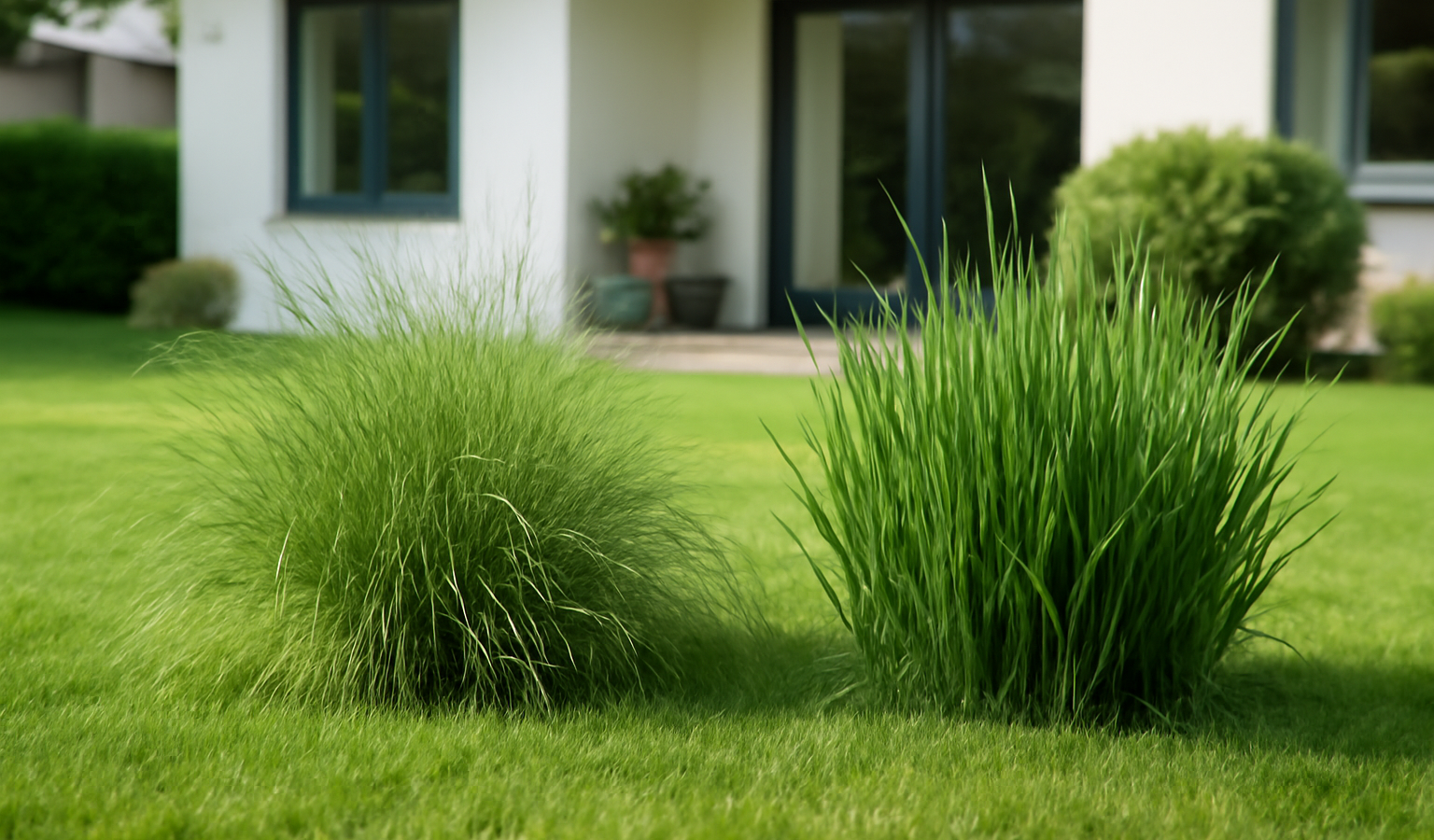
Fine fescue and tall fescue share a name and a genus (Festuca), but they behave like two different lawns. Fine fescue is a fine-bladed, low-growing group of grasses (creeping red, chewings, hard and sheep fescue) prized for thriving in shade, poor soil and dry conditions with very little input — it’s the go-to for shady, low-traffic or low-maintenance areas, but it can’t take much foot traffic or full hot sun. Tall fescue is a coarser, deeper-rooted bunch grass that makes a durable, drought-resistant, sun-and-part-shade lawn that holds up to kids and pets — the workhorse cool-season turf, though it doesn’t tolerate deep shade as well as fine fescue. Many quality seed blends actually combine the two. Knowing what each does best lets you pick the right one, or the right mix, for your yard’s conditions.
Key Takeaways
- Fine fescue is the shade and low-maintenance champion — fine-bladed, drought- and poor-soil-tolerant — but weak on foot traffic and full hot sun.
- Tall fescue is the durable all-rounder — coarser, deep-rooted, traffic- and heat-tolerant — best in sun to part shade.
- Both are cool-season grasses for zones 4–7, staying green in cool weather and best seeded in early fall.
- Tall fescue needs more mowing and water but handles wear; fine fescue can be mowed less and survives on little.
- Blends of the two cover mixed yards (sunny and shady areas) better than either grass alone.
| Trait | Fine Fescue | Tall Fescue |
|---|---|---|
| Blade texture | Very fine, needle-like | Coarse, wide |
| Shade tolerance | Excellent | Moderate |
| Foot traffic | Poor | Excellent |
| Heat tolerance | Low–moderate | Good |
| Water needs | Low | Moderate |
| Mowing height | 2.5–4 in (or unmowed) | 3–4 inches |
| Best for | Shade, low-maintenance areas | High-use sunny/part-shade lawns |
Fine Fescue: The Shade and Low-Maintenance Specialist
“Fine fescue” is actually a group — creeping red, chewings, hard and sheep fescue — all sharing very fine, almost needle-like blades and a fine, soft texture. Their standout trait is shade tolerance: fine fescues grow where most lawn grasses sulk, under trees and on the north side of buildings. They also tolerate poor, acidic, infertile and dry soils, need little fertilizer, and can survive on minimal water once established. Some types (sheep and hard fescue) can even be left unmowed for a soft, meadowy look.
The limitations are wear and heat. Fine fescue has a shallow, delicate growth habit that doesn’t recover well from heavy foot traffic, so it’s a poor choice for play areas or paths. It also struggles in full, hot afternoon sun and in humid heat, where it can thin and develop disease. Seed it in early fall (or early spring) in cool soil, keep it on the dry-to-moderate side, and mow high — 2.5 to 4 inches — or not at all for low-input areas. It’s the grass for the spots where you’d rather not fight nature.
Best Uses for Fine Fescue
Reach for fine fescue under shade trees, on slopes and banks where mowing is awkward, in low-traffic ornamental areas, and anywhere you want a green cover with minimal watering, feeding and mowing. It’s also a common ingredient in shade-mix and low-maintenance seed blends. Just keep it off the routes the kids and dogs run, and don’t expect it to thrive in a baking, sun-blasted front yard. For drainage issues in lawn areas, see how to get rid of standing water in your yard.
Tall Fescue: The Durable, Versatile Workhorse
Tall fescue is the opposite personality: coarse, wide-bladed (though modern “turf-type” tall fescues are noticeably finer than old pasture types), and tough. It forms deep roots — often 2–3 feet down — which give it strong drought and heat tolerance for a cool-season grass, plus the ability to stay green longer into dry spells. It’s a clumping bunch grass that handles foot traffic well and makes an excellent family lawn for sun and partial shade. Among cool-season grasses, it’s one of the most heat-tolerant, which makes it valuable in the transition zone where summers are too hot for many cool-season turfs.
Its weaknesses are the mirror image of fine fescue’s. It tolerates only moderate shade — less than fine fescue — and because it grows as a bunch grass rather than spreading, bare patches don’t fill in on their own, so worn or thin areas need overseeding to recover. It also wants more regular mowing and a bit more water than fine fescue to look its best. Seed it in early fall at 3–4 inches mowing height, and choose a turf-type blend for the finest texture and densest stand.
Getting the Most from Tall Fescue
Because it doesn’t self-repair, overseed tall fescue lawns every fall to keep them dense and crowd out weeds. Mow high (3.5–4 inches) to encourage deep roots and shade out weed seeds, water deeply but infrequently to push roots down, and fertilize in fall rather than summer. Its deep roots make it forgiving of dry weeks, but the deep-and-infrequent watering habit is what unlocks that drought resilience. For more lawn establishment and care, browse the outdoor living hub.
Establishing and Maintaining Fescue Lawns
Both fescues are cool-season grasses, which sets their whole calendar: the best time to seed either one is early fall, when soil is still warm enough for fast germination but air temperatures are cooling and weed competition is fading. This gives the new grass a full fall and the following spring to establish before its first hot summer. Early spring is a serviceable backup window. To seed, loosen the top inch of soil, spread seed at the rate on the bag (tall fescue is sown more heavily than fine fescue), rake lightly to ensure soil contact, and keep the surface consistently moist until germination — usually 7–14 days. Fescues are quicker to sprout than many grasses, which is part of their appeal.
Mowing height is one of the most important levers for both, and higher is better. Mow tall fescue at 3.5–4 inches and fine fescue at 2.5–4 inches (or leave low-input fine fescue unmowed). Tall grass shades the soil, keeps roots cool, and crowds out weeds, all of which matter most in summer heat — the season cool-season grasses find hardest. Follow the one-third rule, never cutting more than a third of the blade at once, and keep mower blades sharp so you slice rather than tear the leaf tips.
Watering, Feeding and Summer Survival
Water both deeply and infrequently rather than little and often — roughly 1 to 1.5 inches per week including rainfall, delivered in one or two soakings that encourage roots to grow deep. Tall fescue in particular develops the deep roots that make it drought-resilient when watered this way; fine fescue needs even less once established and resents being overwatered. Feed cool-season fescues primarily in fall, with a lighter application in early spring, and avoid heavy summer feeding, which stresses the grass during its toughest season. Tall fescue is the hungrier of the two; fine fescue thrives on minimal fertilizer.
Summer is the real test for both. Cool-season grasses naturally slow down and may brown slightly in heat, recovering when temperatures fall — so resist the urge to dump on water and fertilizer to force green growth in a heat wave. Overseed thin areas each fall (essential for clumping tall fescue, which can’t self-repair) to keep the lawn dense and weed-free. Watch for summer fungal diseases like brown patch in humid heat, which good airflow, morning-only watering and high mowing all discourage. Manage these shared cool-season habits and either fescue, or a blend of both, will give you a resilient lawn.
The Verdict: Which Should You Plant?
The choice hinges mostly on sun versus shade and how much wear the lawn will take. Match the grass to the conditions.
- Shady yard or under trees: Fine fescue — nothing else cool-season tolerates shade as well.
- Active family lawn, kids and pets: Tall fescue, for its durability and traffic tolerance.
- Sunny, open yard: Tall fescue handles full sun and heat far better than fine fescue.
- Low-maintenance / low-water area: Fine fescue, which survives on minimal input and can even go unmowed.
- Hot-summer transition zone: Tall fescue’s deep roots and heat tolerance make it the safer cool-season pick.
- Mixed sun-and-shade yard: A blend of both — most quality cool-season seed mixes combine tall and fine fescues so each thrives where it fits.
Both are cool-season grasses best seeded in early fall and suited to roughly zones 4–7. If your yard is uniformly shady and lightly used, go fine fescue; if it’s sunny and active, go tall fescue. And if it’s a typical mixed yard with both, don’t choose at all — plant a quality blend and let each grass settle into the spots it likes. Mow high, water deeply, feed in fall, and either fescue will reward you with a healthy cool-season lawn.
Frequently Asked Questions
Which fescue is better for shade?
Fine fescue, clearly. Creeping red, chewings, hard and sheep fescues are the most shade-tolerant cool-season grasses and thrive under trees and on north-facing sides. Tall fescue handles only moderate shade, so use fine fescue or a shade blend for deeply shaded areas.
Can I mix fine fescue and tall fescue in one lawn?
Yes, and it’s common. Many quality cool-season seed blends combine both so the tall fescue handles sunny, high-traffic areas while fine fescue covers shade. This makes blends ideal for typical yards that have a mix of sun and shade.
Why won’t my tall fescue fill in bare spots?
Tall fescue is a bunch grass — it grows in clumps rather than spreading by runners, so it can’t self-repair worn or thin areas. The fix is to overseed bare spots, ideally every fall, to keep the lawn dense and crowd out weeds.
How often should I water fescue lawns?
Water deeply but infrequently — roughly 1 to 1.5 inches per week including rain, applied in one or two soakings rather than light daily sprinkling. This encourages deep roots, especially in tall fescue. Fine fescue needs even less once established.
When is the best time to seed fescue?
Early fall is ideal, when soil is still warm but air temperatures are cooling — this gives the grass time to establish before winter and a head start on spring weeds. Early spring is the second-best option if you miss the fall window.