

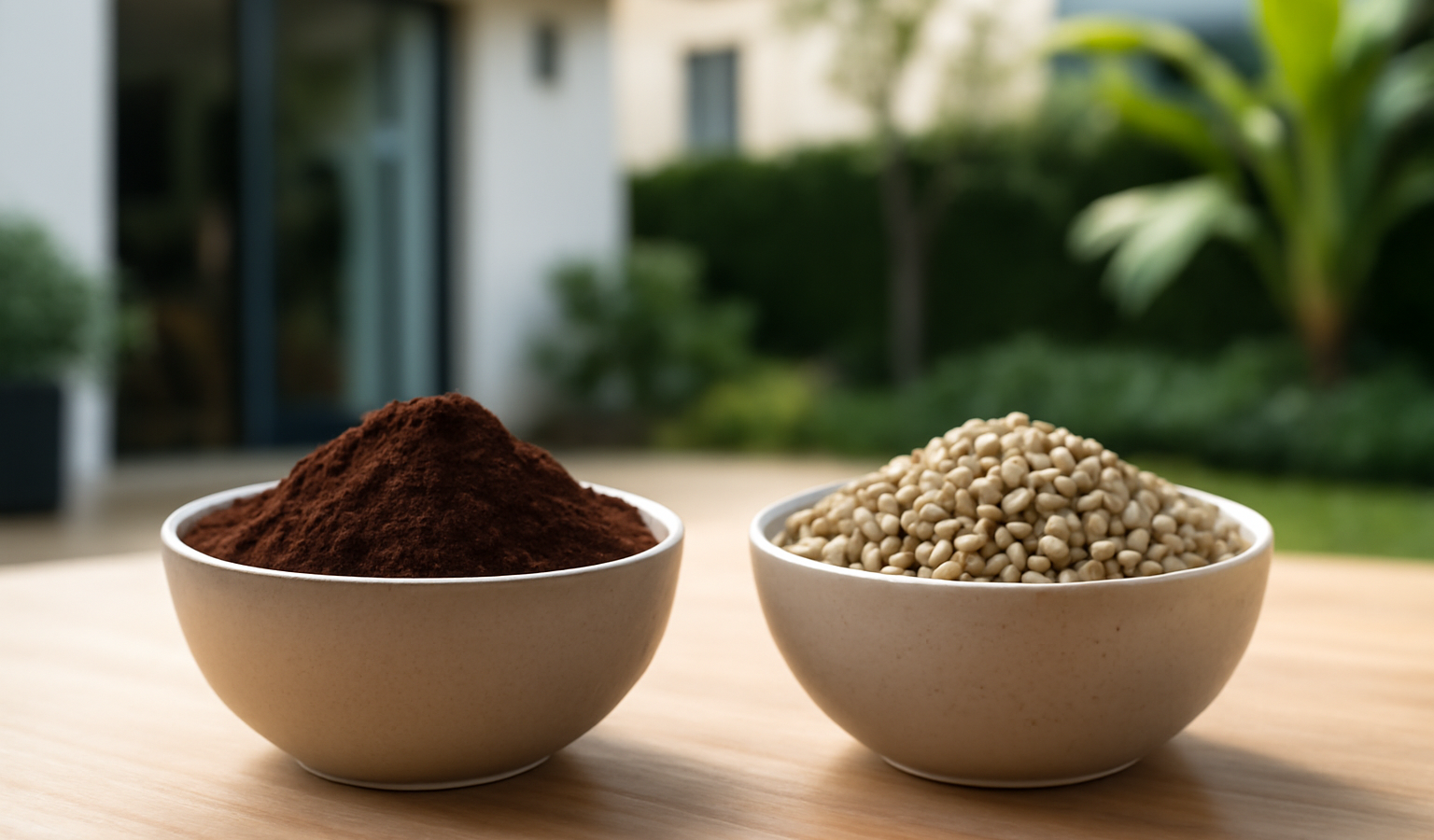
Used coffee grounds are not a fertilizer—they are a soil amendment and compost ingredient. They contain only modest, slow-release nitrogen and will not feed plants the way a balanced fertilizer does, despite the internet’s enthusiasm. If your goal is to actually fertilize hungry plants, use a real fertilizer; if your goal is to build soil and recycle a kitchen waste product, composted coffee grounds are genuinely useful. The two are not competitors so much as different tools, and most of the popular claims about coffee grounds—that they acidify soil, repel every pest, and feed acid-loving plants—are either exaggerated or flat wrong. This is an evidence-based look at what coffee grounds really do, the myths worth debunking, how to use them correctly, and the specific situations where commercial fertilizer is simply the better choice. The short version: grounds help your soil and your compost; they do not replace plant food.
Part of our Composting & Soil guide →
In this guide
Key Takeaways
- Coffee grounds are not fertilizer. Used grounds carry only about 2% slow-release nitrogen and little available P or K.
- Myth: used grounds are NOT strongly acidic—brewing washes out most acid, leaving them close to pH-neutral. They will not acidify soil for blueberries.
- Best use: add grounds to compost as a “green,” or mix thin amounts into soil—never a thick layer, which compacts and repels water.
- Fertilizer wins when plants need a measurable, fast, balanced nutrient dose with a known NPK ratio.
- Use both: compost grounds to build soil, then feed plants with the right fertilizer for the job.
| Factor | Coffee Grounds (used) | Commercial Fertilizer |
|---|---|---|
| NPK | ~2-0.3-0.3, slow-release | Defined, e.g. 10-10-10 |
| Speed of feeding | Very slow (must break down) | Fast, measurable |
| pH effect | Near-neutral (not acidic) | Varies by product |
| Soil structure | Improves (organic matter) | None |
| Cost | Free (waste product) | Purchased |
| Risk | Compaction/mold if overused | Burn if over-applied |
| Best use | Compost, soil amendment | Feeding hungry plants |
Coffee Grounds: What the Evidence Actually Says
Used coffee grounds contain roughly 2% nitrogen by weight, plus small amounts of phosphorus, potassium, and micronutrients—but that nitrogen is locked in organic matter and releases slowly as soil microbes break it down, so it is not immediately available to plants. In fact, fresh (uncomposted) grounds added straight to soil can temporarily tie up nitrogen, because the microbes decomposing them consume soil nitrogen in the process, briefly leaving less for your plants. That is the opposite of a quick feed. As a nutrient source, grounds are weak and slow; calling them “fertilizer” sets up false expectations.
Where grounds genuinely help is as organic matter. Composted or mixed sparingly into soil, they improve structure, feed earthworms and microbes, and improve water retention over time—the same benefits any organic amendment provides. They are best treated as a free “green” (nitrogen-rich) ingredient for your compost pile, balanced with “brown” (carbon-rich) materials like dry leaves and shredded paper. In compost, grounds shine: they heat the pile, attract worms, and break down readily. This is the use the evidence most strongly supports.
The big risks come from misuse. Applied as a thick layer on top of soil, grounds compact into a fine, water-repellent crust that sheds water and can grow mold—the opposite of helpful. Keep any direct soil application thin (a light scattering worked in, not a mulch layer), and prefer composting first. There is also some lab evidence that compounds in coffee can inhibit seed germination and the growth of certain seedlings, so keep heavy doses of fresh grounds away from seed beds and young plants. For the full soil picture, see our guide on how to prepare soil for planting.
Common Coffee-Grounds Myths, Debunked
Myth 1: Coffee grounds acidify soil, so they’re great for blueberries and azaleas. Mostly false. While brewed coffee and fresh grounds are acidic, most of that acidity is water-soluble and washes out during brewing—used grounds typically test close to neutral (around pH 6.5 to 6.8). They will not meaningfully lower soil pH for acid-loving plants. To acidify soil for blueberries, use elemental sulfur or an acidifying fertilizer, not coffee.
Myth 2: Grounds are a powerful slug, snail, and pest repellent. Overstated. Some studies suggest concentrated caffeine can deter slugs, but the small amount left in used grounds is unreliable, and results in real gardens are inconsistent at best. Do not count on a sprinkle of grounds to protect your hostas.
Myth 3: Grounds repel cats and keep them out of beds. Inconsistent at best—some cats are deterred, many ignore them entirely. For reliable results, see our guide on keeping cats out of the garden. Myth 4: More is better. Wrong—thick layers compact, repel water, and mold. Myth 5: Grounds replace fertilizer. No—their nutrient content is too low and too slow to feed hungry plants on its own.
Fertilizer: When You Need Real Plant Food
Commercial fertilizer exists to do the one thing coffee grounds cannot: deliver a known, measurable dose of nutrients in a form plants can use right away. A bag labeled 10-10-10 tells you exactly how much nitrogen, phosphorus, and potassium you are applying, so you can match the feed to the crop—high nitrogen for leafy greens and lawns, higher phosphorus and potassium for flowering and fruiting plants. When a plant shows a clear deficiency (yellowing leaves, stunted growth, poor fruiting) or you are growing heavy feeders, fertilizer gives a fast, reliable correction that grounds never will.
Fertilizers come as synthetic (fast-acting, precise) or organic (slow-release, soil-friendly) products, including granular, liquid, and slow-release options. The trade-off is that over-application can burn roots, push weak leafy growth, and leach into waterways, so you follow the label rate and avoid the temptation to overdo it. Unlike coffee grounds, fertilizer does nothing for soil structure or organic matter—it feeds the plant, not the soil. That is precisely why grounds (and compost) and fertilizer complement each other rather than compete.
If you want a free, organic feed in the same spirit as coffee grounds but with more real nutrition, composted manure is a better bet—our comparison of chicken vs cow manure covers how to use it. The honest framing is this: fertilizer is plant food; coffee grounds and compost are soil food. You generally need both for a thriving garden, and substituting grounds for fertilizer on hungry plants will leave them underfed.
One more practical note: how much coffee do you actually generate, and does the scale make sense? A daily coffee habit yields a surprisingly small volume of grounds relative to a garden’s needs—a few tablespoons per pot. That is plenty to enrich a compost bin over time, but nowhere near enough to fertilize a vegetable plot, which is another reason the “coffee grounds as fertilizer” framing falls apart at any real scale. Some gardeners collect spent grounds in bulk from a local coffee shop, which gives you enough volume to matter; even then, the right move is to compost that larger quantity rather than pile it raw on beds, where the same compaction and nitrogen-tie-up problems scale up with it. Worm bins (vermicomposting) are another excellent destination—worms process moderate amounts of grounds readily, and the resulting castings are a genuinely good soil amendment.
Which Should You Choose?
This is not really an either/or—each does a different job—but here is how to decide what to reach for.
Use coffee grounds if your goal is to recycle a free waste product, build long-term soil health and organic matter, or boost your compost pile with a nitrogen-rich “green.” Compost them first when you can, and if applying directly, keep it a thin, worked-in scattering—never a thick mulch layer. Do not expect them to feed plants quickly or to acidify soil.
Use fertilizer if plants need a measurable, fast, balanced nutrient dose—heavy feeders, visible deficiencies, lawns, fruiting crops—or you need to target a specific NPK ratio. It is the right tool whenever you actually need to feed the plant rather than improve the soil.
Best approach—use both. Compost your coffee grounds (and add finished compost to your beds) to build healthy, living soil, then apply the appropriate fertilizer to feed hungry plants during the growing season. Soil food plus plant food is the combination that actually works. For more soil and garden guidance, browse our Outdoor Living hub.
Frequently Asked Questions
Are coffee grounds a good fertilizer?
Not really. Used grounds carry only about 2% nitrogen, and it’s slow-release—locked in organic matter until microbes break it down. They’re a useful soil amendment and compost ingredient, but they can’t feed hungry plants the way a balanced fertilizer with a defined NPK ratio does.
Do coffee grounds make soil acidic for blueberries?
No—this is a common myth. Most of coffee’s acidity washes out during brewing, leaving used grounds close to neutral (around pH 6.5–6.8). They won’t meaningfully acidify soil. For blueberries and azaleas, use elemental sulfur or an acidifying fertilizer instead.
Can I put coffee grounds directly on my plants?
In small amounts, worked thinly into the soil—yes. But never apply a thick layer: grounds compact into a water-repellent, moldy crust. Fresh grounds can also briefly tie up soil nitrogen and may inhibit seed germination, so keep them away from seedbeds. Composting them first is safest.
Do coffee grounds repel pests like slugs?
The evidence is weak and inconsistent. Concentrated caffeine can deter slugs in lab tests, but the trace amount in used grounds is unreliable in real gardens. Don’t depend on grounds for pest control—use proven methods instead.
Should I use coffee grounds or fertilizer?
Both, for different jobs. Compost coffee grounds to build soil structure and organic matter, and use fertilizer to deliver a fast, measurable nutrient dose to hungry plants. Grounds are soil food; fertilizer is plant food. They complement each other rather than compete.