

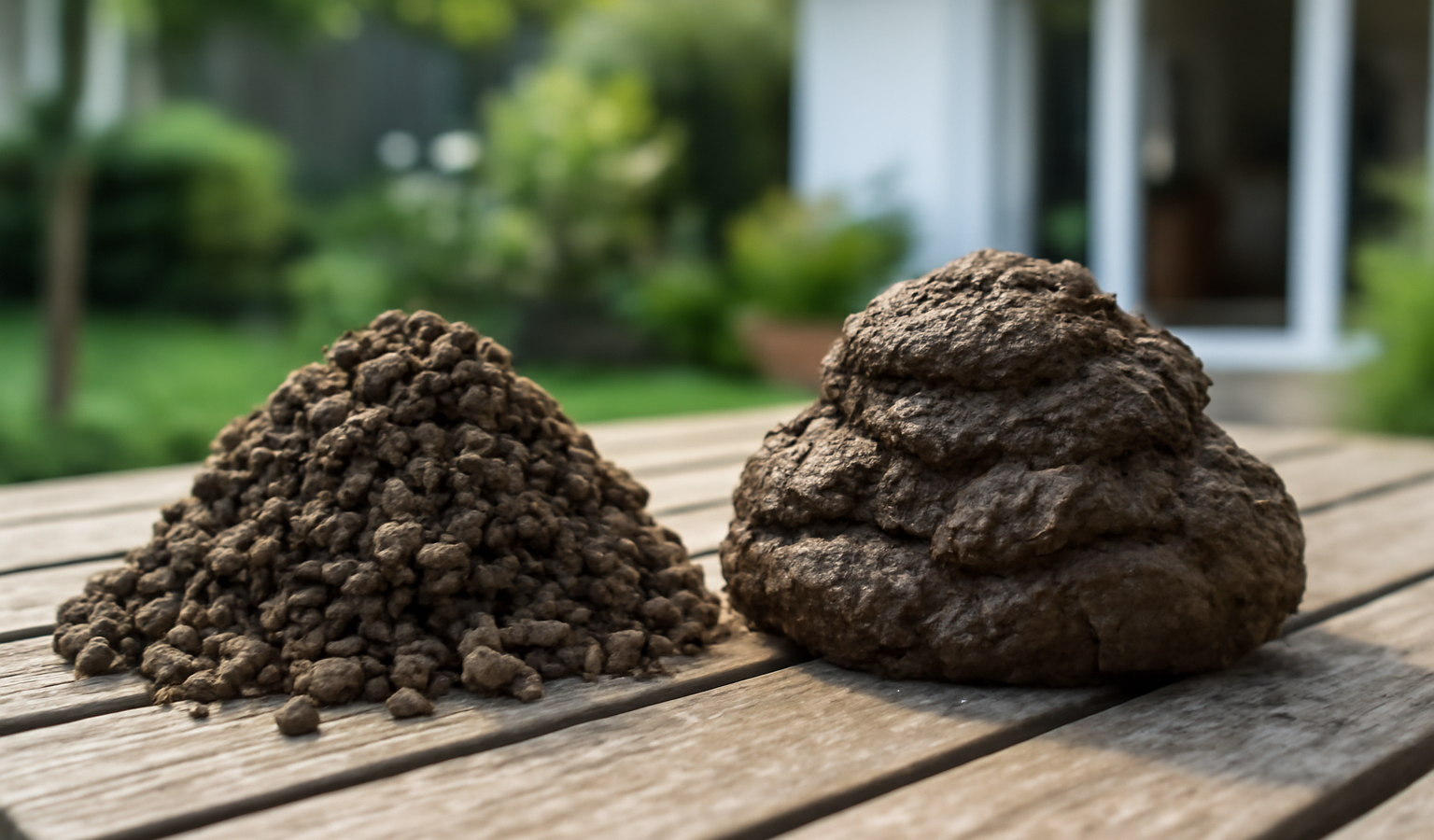
Chicken manure is the stronger fertilizer—much higher in nitrogen and a fast feed for hungry plants—but it must be composted first or it will burn roots. Cow manure is gentler and lower in nutrients, making it a safer, slower soil-builder you can use more freely. Choose chicken manure when you want a nutrient punch, cow manure when you want to improve soil structure with low risk of burning. Both are excellent organic amendments that add nutrients, feed soil microbes, and improve tilth, but they are not interchangeable: their nitrogen content differs several-fold, and that single fact drives every decision about how much to use, when, and whether you can apply it fresh. This guide compares the two on NPK content, burn risk, composting, application rates, and best uses so you match the right manure to your soil and crops instead of guessing.
Key Takeaways
- Chicken manure is the stronger feed: roughly 3-2-2 to 5-3-2 NPK—several times the nitrogen of cow manure.
- Cow manure is gentler: roughly 0.5-0.5-0.5, a low-burn-risk soil conditioner you can use generously.
- Always compost chicken manure (about 6 months) before use—fresh, it burns roots and may carry pathogens.
- Cow manure still benefits from aging but is far more forgiving if slightly fresh.
- Use chicken for heavy feeders (corn, tomatoes, leafy greens); use cow to build structure in poor or sandy soil.
| Factor | Chicken Manure | Cow Manure |
|---|---|---|
| Typical NPK | ~3-2-2 to 5-3-2 (high N) | ~0.5-0.5-0.5 (low N) |
| Nutrient strength | High, fast-acting | Low, slow-release |
| Burn risk (fresh) | High | Low to moderate |
| Composting needed | Essential (~6 months) | Recommended, not critical |
| Soil-building (structure) | Moderate | Excellent |
| Weed seeds | Fewer | More common |
| Best for | Heavy feeders, quick boost | Conditioning soil, mulching |
Chicken Manure: High-Nitrogen Powerhouse
Chicken (poultry) manure is the most nutrient-dense common animal manure, with a typical NPK around 3-2-2 to 5-3-2 depending on the birds’ diet and how it is processed. That high nitrogen makes it a fast, potent fertilizer—ideal for heavy feeders that demand a lot of N, such as corn, tomatoes, squash, and leafy greens like lettuce and spinach. It also contributes calcium and other micronutrients. Because it is so concentrated, a little goes a long way: well-composted chicken manure is usually worked in at roughly 20 to 40 pounds per 100 square feet, far less than you would use of cow manure.
The critical caveat is that fresh chicken manure is too “hot” to use directly. Its high nitrogen and ammonia will scorch roots and foliage, and fresh manure can carry pathogens like Salmonella and E. coli. It must be composted—hot-composted or aged for about six months—before it touches growing plants. Composting tames the nitrogen, kills pathogens, and reduces the strong odor. Many gardeners buy bagged, pelletized, or fully composted chicken manure, which is stabilized and safe to apply straight from the bag at the labeled rate.
One bonus: chicken manure typically contains fewer viable weed seeds than cow manure, because a chicken’s digestive system and the bedding involved tend to produce less seed contamination than a cow’s. Apply composted chicken manure in spring before planting, worked into the top few inches of soil, and side-dress heavy feeders midseason for a boost. Avoid overapplying—excess nitrogen drives lush leafy growth at the expense of flowers and fruit, and can leach into groundwater. For amending beds well, it pairs naturally with our guide on how to prepare soil for planting.
Cow Manure: Gentle Soil Conditioner
Cow (and steer) manure is lower in nutrients—typically around 0.5-0.5-0.5 NPK—which sounds weak but is exactly what makes it so useful and forgiving. Its real strength is soil conditioning rather than feeding. High in organic matter and fiber, cow manure improves soil structure, boosts water retention in sandy soils, loosens heavy clay, and feeds beneficial microbes and earthworms. Because its nutrients release slowly and gently, the burn risk is far lower than chicken manure, so you can apply it more generously—commonly 50 to 100 pounds per 100 square feet worked into beds, or as a 1- to 2-inch top layer.
Cow manure still benefits from aging or composting, both to mellow it and to reduce weed seeds, but it is much more forgiving than chicken manure if slightly fresh—the lower nitrogen means less scorching. That said, fresh manure of any kind can carry pathogens, so composted or well-aged cow manure (or bagged, composted product) is the safe standard, especially around vegetables you eat raw. A good rule is to apply any raw manure at least 90 to 120 days before harvesting edible crops.
The main drawbacks are its low nutrient content—you will need a lot of it, or a supplemental fertilizer, to feed hungry crops—and a higher tendency to introduce weed seeds, since cows graze on seed-bearing plants and pass many seeds intact. Composting at proper hot-pile temperatures (around 130 to 150°F) kills most of those seeds. Use cow manure as your go-to for building tired, sandy, or compacted soil over time, as a gentle amendment for the whole garden, and as a base layer when establishing new beds. It is the steady, low-drama option.
How you compost either manure follows the same principles. Build a pile that balances the manure (a nitrogen-rich “green”) with carbon-rich “browns” like straw, dry leaves, or shredded paper, roughly two to three parts brown to one part manure by volume. Keep it moist like a wrung-out sponge and turn it every week or two to keep air flowing. A working hot pile reaches 130 to 150°F in the center, which is the temperature that kills weed seeds and pathogens—the main reason composting matters for food safety. The pile shrinks and the manure smell fades to a sweet, earthy aroma when it is finished, usually after a few months. Bedding material is part of the package too: poultry litter often includes pine shavings or straw, and cow manure may come mixed with bedding, both of which add carbon and help the composting process along.
NPK, Burn Risk, and Composting Compared
The defining difference is strength. Chicken manure carries several times the nitrogen of cow manure, so it acts as a real fertilizer that can quickly green up and push heavy feeders, while cow manure acts more as a soil conditioner that nudges fertility while mainly improving structure. That strength is a double-edged sword: chicken manure’s burn risk is high and it absolutely must be composted, whereas cow manure’s low nitrogen makes it forgiving and only loosely dependent on aging.
On soil-building, cow manure wins thanks to its higher fiber and bulk—it does more to improve tilth and water retention per application. On weed seeds, chicken manure is cleaner. On application rate, you use far less chicken manure (it is concentrated) and far more cow manure (it is dilute), which affects both how much you haul and what it costs. On safety, both should be composted or aged before use around edibles, with the 90-to-120-day pre-harvest rule as a backstop. Neither is universally “better”—chicken feeds, cow conditions—and many gardeners use both: cow manure to build the soil and composted chicken manure to feed the hungry crops growing in it. Pairing manure with proper bed prep matters; see preparing a garden bed for winter for a good time to add it.
Which Should You Choose?
Match the manure to your goal—feeding plants or building soil.
Choose chicken manure if you need to feed heavy-feeding crops like corn, tomatoes, squash, or leafy greens, you want a faster, stronger nutrient boost, you are working with limited space (it is concentrated, so you haul less), or weed seeds are a concern. Always use it composted or fully aged.
Choose cow manure if your main goal is improving soil structure—loosening clay, adding body to sandy soil, boosting organic matter—you want a gentle, low-burn-risk amendment you can apply generously, or you are establishing new beds and conditioning tired ground. It is the forgiving, beginner-friendly option.
Use both for the best results: work cow manure in to build and condition the soil’s structure and organic matter, then use composted chicken manure to supply the nitrogen punch your hungry crops need. Together they cover both halves of soil fertility. Whatever you choose, compost or age it properly and respect the pre-harvest interval on edibles. For more soil and garden guides, visit our Outdoor Living hub.
Frequently Asked Questions
Can I use fresh chicken manure in my garden?
No—fresh chicken manure is too “hot.” Its high nitrogen and ammonia will burn roots and foliage, and it can carry pathogens like Salmonella and E. coli. Compost it or age it for about six months first, or buy bagged, fully composted poultry manure that’s safe to apply at the labeled rate.
Which manure has more nutrients?
Chicken manure, by a wide margin. It typically tests around 3-2-2 to 5-3-2 NPK versus roughly 0.5-0.5-0.5 for cow manure—several times the nitrogen. That makes chicken manure a true fertilizer and cow manure more of a gentle soil conditioner.
Why does cow manure have so many weed seeds?
Cows graze on seed-bearing plants and pass many seeds intact, so raw cow manure often sprouts weeds. Hot-composting the pile at about 130–150°F kills most of those seeds. Chicken manure generally has fewer viable weed seeds to begin with.
How long before harvest can I apply raw manure?
For food safety, apply raw or fresh manure at least 90 to 120 days before harvesting edible crops—120 days for crops whose edible part touches the soil. Using fully composted manure removes most of this concern, since proper composting kills pathogens.
Which manure is better for a beginner?
Cow manure. Its low nutrient content means a low burn risk, so it’s hard to overdo and forgiving if slightly fresh. It excels at improving soil structure. Once you’re comfortable, add composted chicken manure to feed heavy-feeding crops.