

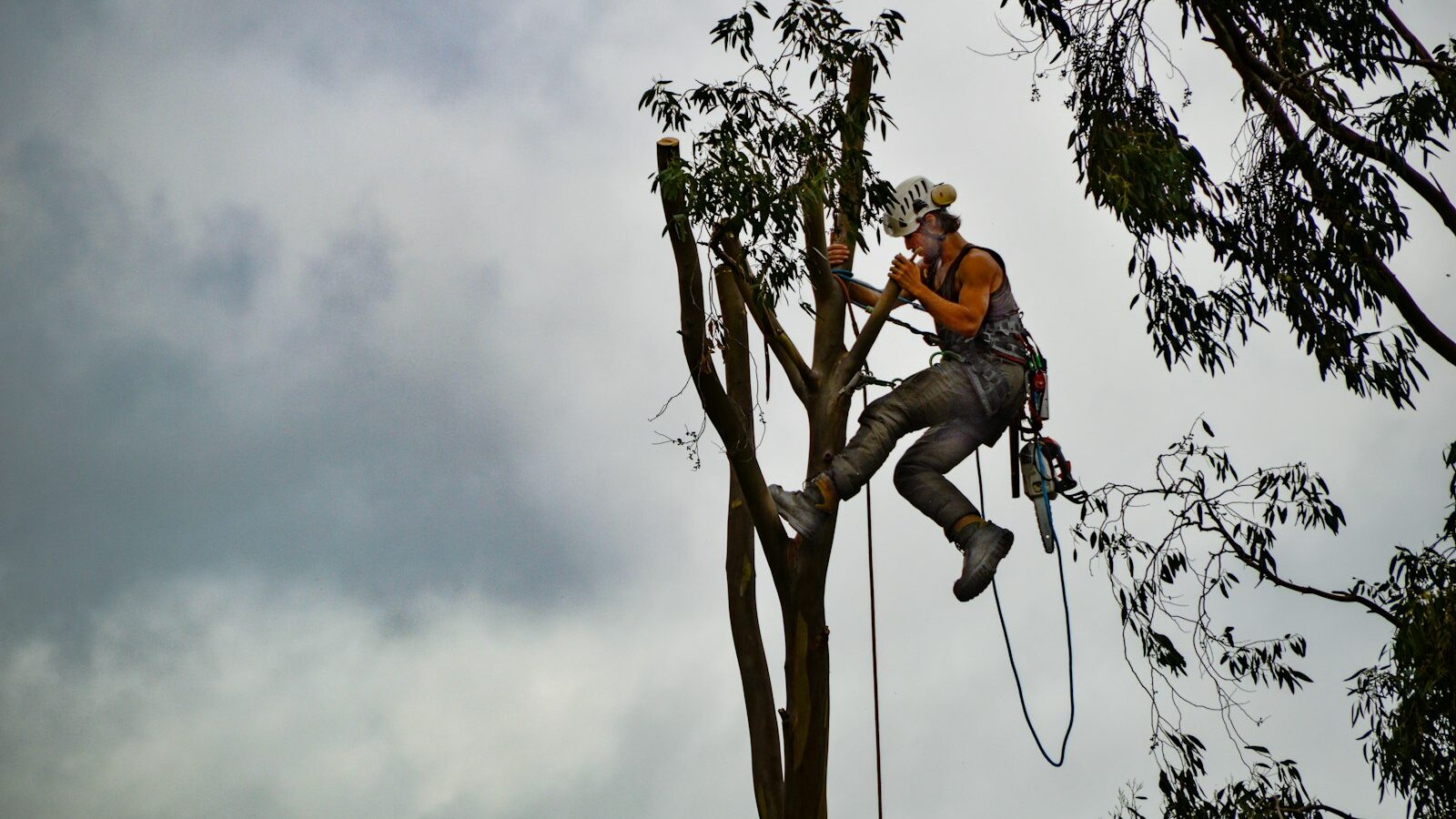
Singapore’s “City in a Garden” is held up by trees — the rain trees arching over expressways, the angsanas shading landed estates, the mature specimens in every condo compound. Keeping those trees healthy and safe is not a job for a general gardener or a man with a chainsaw; it is the work of an arborist. An arborist is a trained tree-care specialist who diagnoses, treats and manages trees as living structures. This guide explains what an arborist does, how the role differs from ordinary tree cutting, why NParks and ISA certification matters, when to call one, and what an assessment costs in SGD.
Key takeaways
- An arborist is a qualified tree specialist trained in arboriculture — the science of tree health, structure and safety — not just someone who trims or fells.
- In Singapore, look for an ISA Certified Arborist and check the NParks Certified Arborist register; certification signals genuine competence and is often required for NParks tree-work submissions.
- Call an arborist for a declining or leaning tree, any safety concern, before construction near a tree, or to settle a boundary dispute with a neutral report.
- A professional tree assessment typically costs around SGD 150–600, while a detailed report with NParks submission support runs higher.
- Always confirm certification and insurance before work begins — cheap “tree cutters” rarely carry either.
What is an arborist?
An arborist is a professional trained in arboriculture — the cultivation, management and study of individual trees. Where a gardener tends lawns and shrubs, and a tree cutter simply removes wood, an arborist understands a tree as a living organism with biology, structure and a relationship to the soil and buildings around it. They are trained to read the warning signs of decay, root damage, structural weakness and disease, and to prescribe the right intervention — which is sometimes pruning, sometimes cabling, and sometimes simply leaving the tree alone.
The distinction matters because trees do not heal the way we do; they compartmentalise damage. A bad cut, topping or careless wound never recovers and can shorten a tree’s life by years or invite the very decay that later makes it dangerous. A qualified tree specialist makes cuts that protect long-term health, whereas an untrained cutter optimises for a tidy result on the day.
Arborist vs. general gardener vs. tree cutter
These three roles overlap in the public mind but are genuinely different jobs. Choosing the wrong one for the task can cost you a tree, or worse, leave a hazard standing.
- General gardener: Maintains lawns, flower beds, hedges and shrubs, and handles routine tree and hedge trimming at low height. Excellent for upkeep, but not trained to diagnose tree health or structural risk.
- Tree cutter / feller: Removes branches or whole trees with saws and rigging. Skilled at the physical task, but typically focused on removal rather than the tree’s biology or whether removal is even the right call.
- Arborist: A certified specialist who assesses, diagnoses and prescribes — deciding what a tree needs, carrying out the work to standard, and producing reports that satisfy NParks and insurers.
What services does an arborist provide?
Arboriculture covers far more than cutting. A full-service arborist in Singapore typically offers the following.
- Tree health assessment: Inspecting foliage, bark, roots and growth to diagnose stress, pests, fungal infection or nutrient problems before they turn fatal.
- Pruning to standard: Structural and crown work that follows recognised arboricultural practice — thinning, crown lifting and deadwood removal — rather than topping. See our guide to tree pruning and NParks rules.
- Cabling and bracing: Installing cables or braces to support weak forks or heavy limbs, often saving a compromised but otherwise healthy tree.
- Tree removal: Safe, controlled felling and dismantling when a tree is dead, dangerous or unavoidably in the way — see our tree cutting services overview.
- Risk assessment: Formal evaluation of failure likelihood and the potential targets below — people, vehicles, buildings — usually documented in a written report.
- Planting and species advice: Recommending the right tree for the spot, soil and space so you avoid problems decades down the line, from fruit trees to palms for Singapore gardens.
ISA and NParks Certified Arborist: why certification matters
“Arborist” is not a protected title, so anyone can print it on a flyer. Certification is how you tell a genuine tree specialist from a cutter with marketing. Two credentials matter in Singapore.
- ISA Certified Arborist: The International Society of Arboriculture runs the globally recognised benchmark qualification. Holders pass an exam covering tree biology, diagnosis, pruning, safety and risk, and must earn continuing-education credits to stay certified.
- NParks Certified Arborist scheme: The National Parks Board maintains a register of certified arborists in Singapore as part of raising local tree-care standards. NParks-recognised certification is frequently expected for professional tree work, and a certified arborist’s report often supports applications to prune or fell protected trees.
Certification matters on three fronts. Competence: a certified arborist will not top your tree or make cuts that invite decay. Compliance: work on large or protected trees — especially within a Tree Conservation Area or on a Heritage Tree — can require NParks approval, and a certified arborist’s assessment carries the weight needed for those submissions. Accountability: a recognised qualification, paired with proper insurance, means a real professional stands behind the advice you act on.
When should you call an arborist?
Routine trimming of a small ornamental can be handled by a gardener, but several situations genuinely call for a tree specialist. If any of the following apply, book an assessment before the problem escalates.
- A declining tree: Thinning canopy, dieback at the branch tips, premature leaf drop, mushrooms at the base, or peeling bark all signal trouble an arborist can diagnose and possibly reverse.
- A visible safety concern: A sudden lean, lifted roots, large deadwood overhead, cracks in a major fork, or a limb resting on your roof — especially heading into the monsoon — need expert evaluation.
- Before construction or renovation: Digging, paving or building near a mature tree can sever roots and kill it slowly. An arborist advises on protection zones and what the tree can tolerate before work starts.
- Boundary or neighbour disputes: When a tree overhangs a fence or its roots reach next door, a neutral arborist’s report gives both parties an objective basis to resolve matters.
What to expect & rough costs (SGD)
An arborist visit usually starts with a site inspection: walking the tree, checking the trunk, root flare and canopy, and discussing your concerns. You then receive findings and recommendations, verbally or in a written report. The figures below are realistic ballpark ranges for private residential work in Singapore; always get an on-site quote, as access and tree size move the numbers significantly.
| Service | Typical SGD range | What affects the price |
|---|---|---|
| Basic tree assessment / site visit | $150 – $350 | Number of trees, travel, verbal vs. written findings |
| Detailed arborist report | $350 – $800+ | Scope, risk analysis, photos, documentation |
| Report with NParks submission support | $500 – $1,500+ | Protected-tree status, paperwork, assessment depth |
| Cabling / bracing installation | $400 – $1,500 | Tree size, number of supports, access |
| Pre-construction tree protection advice | $300 – $1,000+ | Site complexity, monitoring requirements |
Treat these as guides, not fixed quotes. A suspiciously cheap assessment often means no certification, no insurance, or a “free” visit that exists only to upsell unnecessary felling.
How to choose a qualified arborist
- Verify certification. Ask for ISA Certified Arborist credentials and check the NParks Certified Arborist register; do not take the title on trust.
- Confirm insurance. Insist on current public liability and work injury compensation cover before any work begins — an uninsured accident can land on you as the property owner.
- Ask for a written, itemised quote. It should specify the assessment, any recommended work, debris removal and whether NParks paperwork is included.
- Check NParks knowledge. A genuine specialist will know at once whether your tree sits in a Tree Conservation Area or is otherwise protected.
- Be wary of removal-first advice. A good arborist tries to save a tree where it is safe to do so; pushing straight to felling is a red flag.
- Read reviews and ask for references. Past landed-home and condo jobs are the best signal of reliability.
Get the assessment right and everything that follows rests on sound advice. Compare vetted local arborists below.
Frequently asked questions
What is the difference between an arborist and a gardener?
A gardener maintains lawns, beds, hedges and shrubs and handles light trimming. An arborist is a certified specialist in arboriculture — the science of tree health, structure and safety — trained to diagnose problems, assess risk, prescribe the right treatment and carry out structural work to professional standards. For mature or problem trees, you want an arborist.
How do I know if an arborist is certified in Singapore?
Ask for ISA Certified Arborist credentials and check whether they appear on the NParks Certified Arborist register. Certification means they have passed examinations in tree biology, pruning, safety and risk. A certified arborist’s report is also often required to support NParks applications to prune or fell protected trees.
How much does an arborist assessment cost in Singapore?
A basic site assessment typically runs around SGD 150–350, while a detailed written report costs roughly SGD 350–800 or more. Reports that include NParks submission support are higher again. Always get an on-site quote, as the number of trees, access and the depth of analysis all affect the price.
When should I call an arborist instead of a tree cutter?
Call an arborist whenever a tree is declining, leaning, dropping limbs, or poses a safety concern, before any construction near a mature tree, and when a tree is involved in a boundary dispute. A tree cutter removes wood; an arborist first works out whether removal is even necessary and what the tree actually needs.
Can an arborist help with NParks tree-work approvals?
Yes. Work on large or protected trees — particularly within a Tree Conservation Area or on a Heritage Tree — can require NParks approval, and a certified arborist’s assessment usually forms part of the submission. A reputable arborist will tell you whether approval is needed and guide or handle the paperwork.
Get free arborist quotes in Singapore
Tell us about your tree and we’ll match you with vetted local arborists. Free quotes, no obligation.