

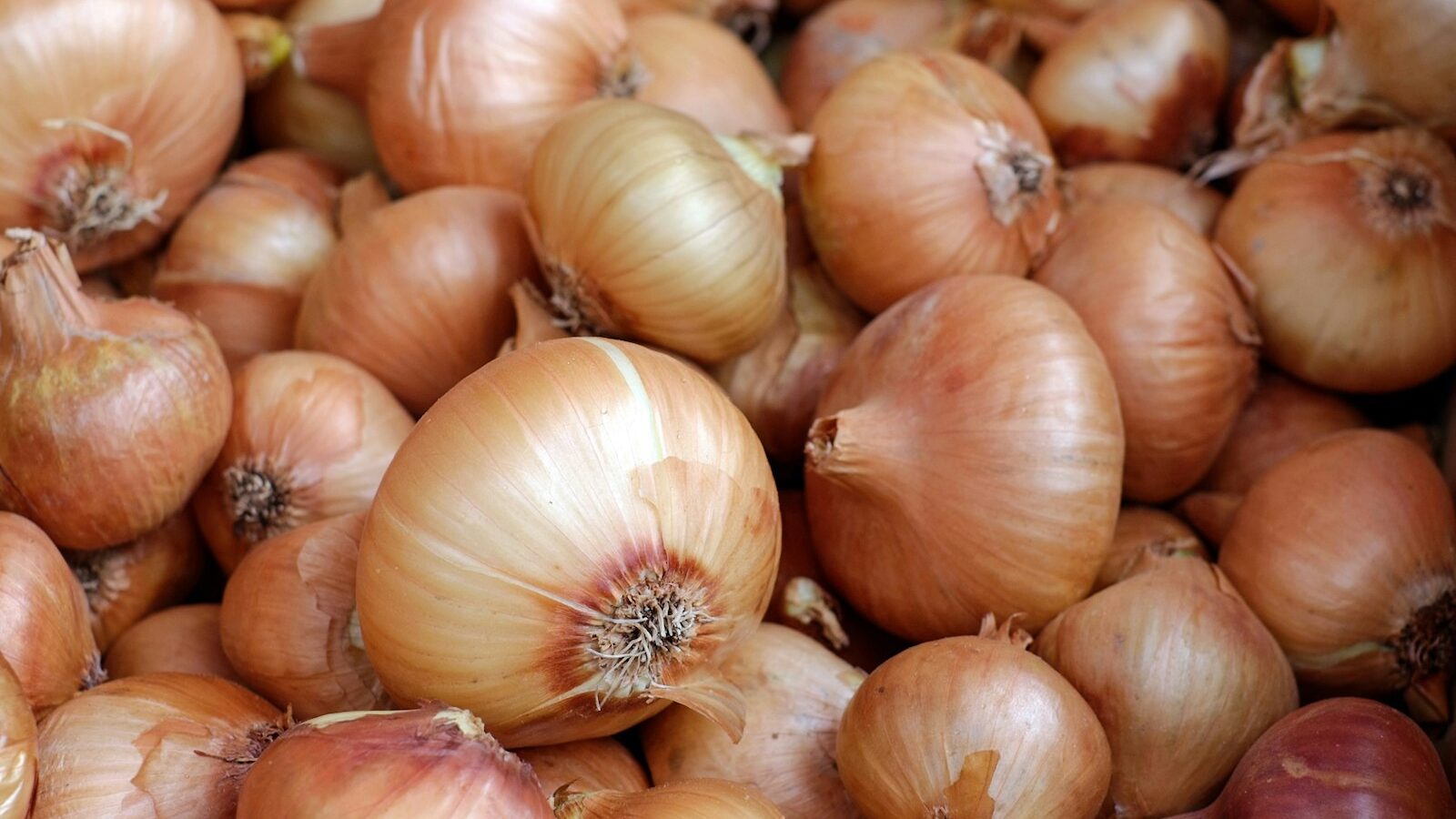
“Onion” covers two very different crops, and confusing them is the fastest way to a disappointing harvest. Bunching onions, the scallions or green onions you snip for stir-fries and garnishes, never form a big bulb and are forgiving, fast, and almost impossible to grow wrong. Bulb onions, the storage onions you slice for cooking, swell into the familiar globe but only if you match the variety to your latitude’s day length and feed them well. Pick the wrong bulb-onion type for your region and you will get scallions instead of bulbs whether you wanted them or not. Here is how the two differ and which one fits your garden and your kitchen.
Key Takeaways
- Bunching onions grow for their green stalks and slim white base; they never form a large bulb and are very easy.
- Bulb onions swell into a storage globe, but only if the variety’s day-length type matches your latitude.
- Day length matters for bulbs: long-day for the North, short-day for the South, day-neutral nearly everywhere.
- Harvest timing: bunching onions are ready in 60 to 80 days and can be cut continually; bulb onions need 90 to 120-plus days.
- Best choice: bunching for fast, fuss-free greens and small spaces; bulb onions for cooking and long winter storage.
| Trait | Bunching Onions | Bulb Onions |
|---|---|---|
| What you harvest | Green tops + slim white stalk | Mature swollen bulb |
| Forms a bulb? | No (or tiny) | Yes, the whole point |
| Day-length sensitive? | No | Yes, critical to match |
| Days to harvest | 60 to 80 days | 90 to 120+ days |
| Spacing | 1 to 2 inches | 4 to 6 inches |
| Storage | Days, use fresh | Weeks to months (storage types) |
| Perennial? | Often (can be left to clump) | No, grown as annual |
| Best use | Garnish, stir-fry, salad | Cooking, caramelizing, storing |
Bunching Onions: Fast, Easy, and Forgiving
Bunching onions, sold as scallions, green onions, or by the species name Allium fistulosum, are grown for their tender green tops and slender white shanks rather than for any bulb. Some, like the classic Evergreen and Tokyo Long White, never bulb at all; others form only a slight swelling at the base. Either way, you eat the whole young plant, and that simplicity is their great advantage. They are among the easiest crops a beginner can grow.
The biggest practical benefit is that bunching onions ignore day length entirely. You can plant and harvest them at almost any time in the growing season without worrying about latitude, which removes the single most common cause of onion failure. Sow seed directly about a quarter to half an inch deep, thin to 1 to 2 inches apart, and you can begin harvesting in roughly 60 to 80 days, often sooner if you just want thin scallions. Succession sow every few weeks for a continuous supply.
Many bunching onions are effectively perennial. Left in the ground, they form clumps that you can divide, and some gardeners keep a permanent scallion patch going for years, snipping greens as needed and letting it multiply. They tolerate cold well; in mild-winter areas they often overwinter and resprout. Their small footprint and shallow roots also make them ideal for containers, window boxes, and tight raised beds, which is why they are a favorite for small-space and container growing.
Bulb Onions: Storage Crops With a Catch
Bulb onions (Allium cepa) are what most people mean by “growing onions”: the yellow, red, and white globes you slice, dice, and caramelize. They put on green growth first, then, triggered by lengthening days, channel that energy into swelling a bulb. Get it right and you can store cured yellow onions for months in a cool, dry place, giving you homegrown cooking onions deep into winter. The catch is the trigger itself, because bulbing depends on day length matched to your latitude.
The day-length rule (read this before you buy seed)
Bulb onions come in three day-length categories, and choosing the wrong one is the number-one reason home onions never size up:
- Long-day onions bulb when days reach about 14 to 16 hours. Grow these in the North, roughly above the 36th parallel (the northern two-thirds of the US). They are the best storage onions. Examples: Yellow Sweet Spanish, Walla Walla, Patterson.
- Short-day onions bulb at about 10 to 12 hours of daylight. Grow these in the South, roughly below the 35th parallel, often planted in fall or late winter. They tend to be sweeter and store less well. Examples: Texas Early Grano, Georgia Sweet (Vidalia type), Red Burgundy.
- Day-neutral (intermediate) onions bulb at about 12 to 14 hours and perform across a wide middle band, making them the safe choice if you are unsure. Examples: Candy, Superstar.
Plant a short-day onion in Minnesota and it will bulb far too early and small; plant a long-day onion in Florida and it may never bulb at all, leaving you with scallions. Always check the day-length type against your region before buying seed, sets, or transplants.
Growing bulb onions for size
Big bulbs come from big, healthy tops before bulbing begins, because each leaf becomes a ring. Start onions early: northern growers often start seed indoors 8 to 10 weeks before the last frost or use sets/transplants, getting them in as soon as the soil can be worked. Space plants 4 to 6 inches apart in fertile, loose, well-drained soil with a pH near 6.2 to 6.8 and full sun. Onions are shallow-rooted and compete poorly with weeds, so keep the bed clean and water consistently, about an inch a week, to prevent splitting and bolting.
Feed nitrogen during the leafy growth phase, then ease off once bulbing starts so the plant focuses on the bulb rather than more leaves. Harvest when about half to two-thirds of the tops have flopped over and started to yellow, usually 90 to 120-plus days after planting. Pull the bulbs, then cure them: dry them with tops attached in a warm, airy, shaded spot for two to three weeks until the necks are tight and the skins are papery. Properly cured storage onions keep for months. If your onion tops flop too early or unevenly, our guide on why onion tops fall over explains what it means for harvest.
Kitchen Use and Storage Compared
The two onions do different jobs in the kitchen. Bunching onions are a fresh ingredient: the green tops and white shanks add a mild, bright allium bite to salads, stir-fries, tacos, soups, and garnishes. They are best used within a few days of cutting and do not store long, which is fine because you can keep harvesting more from the garden as you need them. Their flavor is gentler and grassier than a cured bulb onion.
Bulb onions are the cooking and storing workhorse. Pungent storage types caramelize, roast, and form the base of countless dishes, and well-cured yellow onions can last all winter in a cool pantry. Sweet short-day types are milder and great raw on burgers and in salads, but they bruise easily and store only a few weeks. If your goal is a pantry full of onions to cook with for months, you want long-day storage bulbs; if you want fresh greens on demand, you want bunching types.
The Verdict: Which Onion Should You Grow?
Grow bunching onions if you want a fast, nearly foolproof crop, you garden in containers or small beds, or you mainly use green onions for cooking and garnish. They ignore day length, mature in two to three months, can be cut repeatedly, and often come back year after year. For beginners, they are the most reliable allium you can plant.
Grow bulb onions if you want storage onions for cooking through winter and you are willing to match the day-length type to your latitude, start them early, and give them rich soil and consistent care. The reward is a cured harvest that lasts for months, but the day-length rule is non-negotiable.
For many gardens the best plan is both: a permanent or succession-sown patch of bunching onions for everyday fresh greens, plus a bed of correctly chosen bulb onions for the pantry. They take the same simple care once planted, so growing the two together gives you fresh scallions all season and a storage crop to carry you through the cold months. Explore more vegetable guides in the Plants & Flowers hub.
Frequently Asked Questions
Are scallions and bunching onions the same thing?
Essentially yes. Scallions and green onions are usually bunching onions (Allium fistulosum) harvested young for their green tops and slim white base. They do not form a true bulb, though immature regular bulb onions are sometimes also sold as scallions.
Why didn’t my bulb onions form big bulbs?
The most common cause is a day-length mismatch: the variety’s bulbing trigger did not line up with your latitude. Other causes are planting too late, crowding, weed competition, or too little nitrogen during the leafy growth phase.
What is the difference between long-day and short-day onions?
Long-day onions bulb when daylight reaches about 14 to 16 hours and suit the North; short-day onions bulb at about 10 to 12 hours and suit the South. Day-neutral types work across the middle. Match the type to your region or the bulbs won’t size up.
Do bunching onions come back every year?
Many do. Left in the ground they form clumps you can divide, and in mild climates they often overwinter and resprout, letting you keep a perennial scallion patch for years.
When do I harvest bulb onions?
Harvest when about half to two-thirds of the tops have fallen over and yellowed, usually after 90 to 120-plus days. Pull the bulbs and cure them in a warm, airy spot for two to three weeks before storing.