

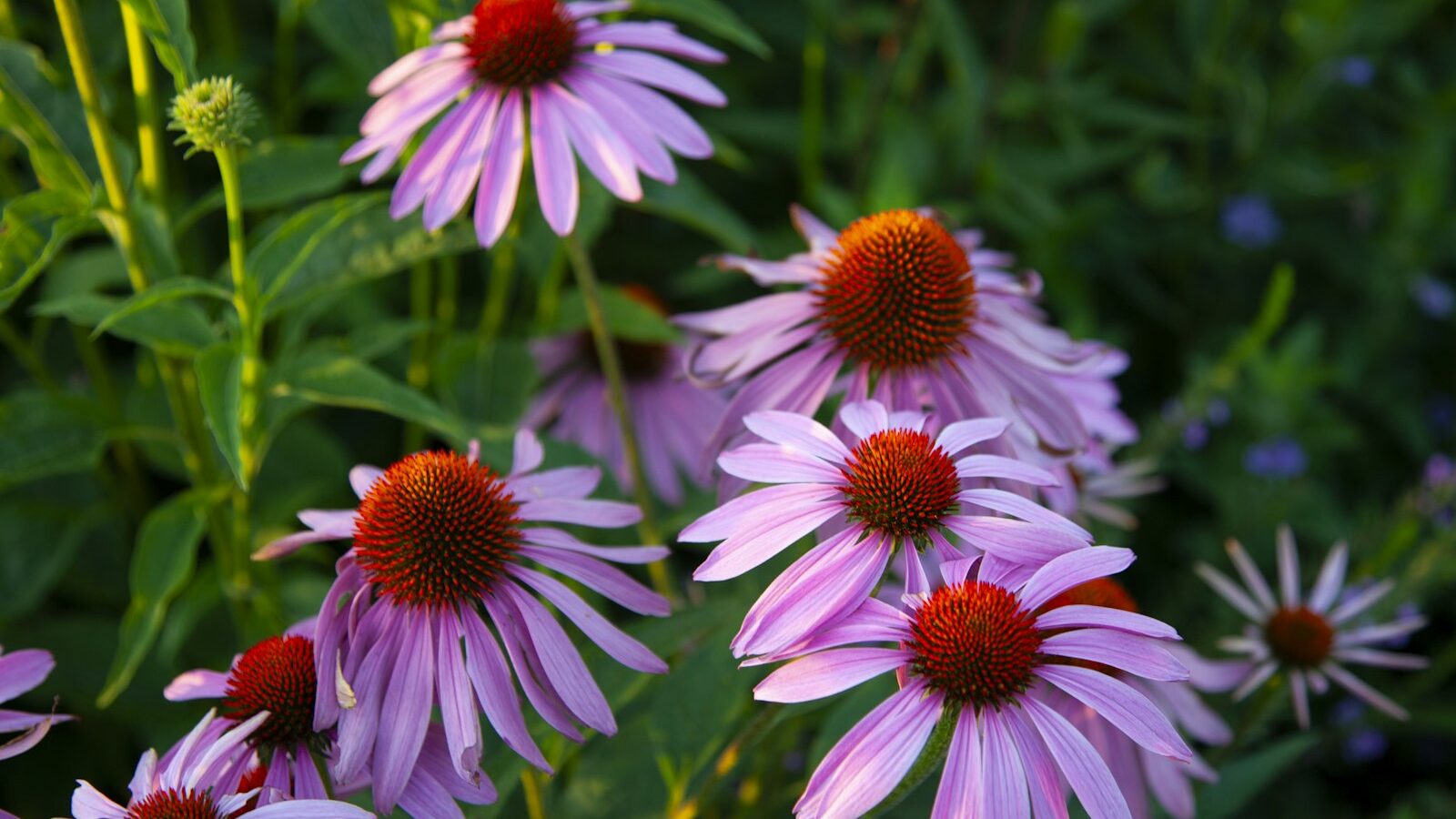
Few perennials earn their keep like the coneflower (Echinacea). This tough North American native shrugs off heat, drought, and lean soil while throwing out weeks of daisy-like blooms that hum with bees and butterflies. If you want a plant that looks great, feeds pollinators, and asks almost nothing in return, coneflower belongs in your garden.
Coneflower quick facts
- Light: full sun
- Soil: average to poor, well-drained
- USDA zones: 3-9
- Bloom: summer-fall
- Drought-tolerant; pollinator magnet
As an Amazon Associate we earn from qualifying purchases.
Light and soil: lean is the secret
Coneflowers are prairie plants at heart, which tells you almost everything about how to grow them. They evolved in open grasslands with blazing sun and unimproved soil, so the more you try to pamper them, the more likely you are to disappoint yourself.
Give them full sun
Plant coneflowers where they get at least six hours of direct sun a day, and ideally eight or more. In too much shade the stems stretch, flop, and lean toward the light, and bloom counts drop sharply. A little afternoon shade in the hottest southern climates is tolerated, but full sun produces the sturdiest, most floriferous plants.
Poor soil is fine, wet soil is fatal
Echinacea actively prefers average to poor, well-drained soil. Rich, heavily amended beds produce lush, floppy growth with fewer blooms and a shorter lifespan. The one thing coneflowers will not forgive is wet feet. Soggy, heavy clay that stays saturated in winter rots the crown and is the single most common reason plants disappear.
- Heavy clay? Work in coarse grit or plant on a slight mound to lift the crown above standing water.
- Sandy or rocky soil? Lucky you. Coneflowers thrive in it with no amendment.
- pH: They are unfussy, tolerating roughly 6.0 to 8.0.
Planting coneflowers
You can start with nursery transplants for fast, predictable results, or sow seed for a larger, cheaper sweep of color over a season or two.
From plants
Set out transplants in spring or early fall, spacing them 18 to 24 inches apart to allow air circulation. Dig a hole no deeper than the root ball, keep the crown at soil level, backfill, and water in well. Container-grown echinacea coneflower plants establish quickly and many bloom their first summer.
From seed
Coneflower seed germinates best after a cold, moist period (cold stratification). Sow outdoors in late fall and let winter do the work, or chill seed in the fridge for four to six weeks before a spring sowing. Seed-grown plants typically bloom in their second year. For a meadow-style planting, mix echinacea into a blend of native wildflower seeds for layered, season-long interest.
After planting, a 2-to-3-inch layer of shredded bark mulch conserves moisture and suppresses weeds while plants establish. Keep mulch pulled back an inch or two from the crowns so they stay dry.
Watering and feeding (less is more)
Watering
Water new plants regularly for the first growing season so the deep taproot can develop. Once established, coneflowers are genuinely drought-tolerant and need watering only during prolonged dry spells. Overwatering, especially in clay, causes far more losses than drought ever will. When you do water, soak deeply and infrequently rather than sprinkling daily.
Feeding
Coneflowers need very little feeding. A light topdressing of compost in spring is plenty. Skip high-nitrogen fertilizers entirely, as they push soft, leggy growth that flops and blooms poorly. This low-input nature makes echinacea a cornerstone of low-maintenance landscaping.
Deadheading, seedheads, and winter interest
How you handle spent flowers is a genuine choice with trade-offs, and there is no single right answer.
Deadhead for more blooms and tidiness
Snipping faded flowers back to a leaf or bud encourages a fresh flush and keeps the plant looking neat. Regular deadheading also limits self-seeding, useful if you are growing named varieties and want to keep things contained.
Leave seedheads for birds and winter structure
Stop deadheading by late summer and let the cone-shaped seedheads ripen. Goldfinches and other songbirds feast on the seeds well into winter, and the blackened cones standing above frost or snow add real architecture to the dormant garden. Cut the stems back in early spring rather than fall to maximize both wildlife value and winter interest, and to leave overwintering habitat for native bees.
Dividing, self-seeding, and colors beyond purple
Dividing
Many coneflowers, especially the classic purple Echinacea purpurea, benefit from division every three to four years to rejuvenate clumps and prevent crowding. Lift the plant in early spring or fall, split the crown into sections with healthy roots and buds, and replant promptly. Note that some hybrids resent disturbance and are happiest left alone.
Self-seeding
Left to their own devices, the straight species will drop seed and pop up around the garden, a bonus in a naturalistic or wildflower planting and a mild nuisance in a formal bed. Seedlings of named hybrids rarely come true, so expect surprises. Pull unwanted volunteers while young or mulch to suppress them.
Colors beyond purple
The old purple coneflower is just the beginning. Breeders have expanded the palette dramatically:
- White selections like ‘White Swan’ for a cool, classic look.
- Yellow from Echinacea paradoxa and its hybrids.
- Orange, coral, and red in series such as ‘Sombrero’ and ‘Cheyenne Spirit’.
- Green and double-flowered novelties for collectors.
For reliability and pollinator value, the species and single-flowered hybrids tend to outperform showy doubles, whose crowded petals can make nectar harder for insects to reach. Many of the newest fancy colors are also less vigorous and shorter-lived than the dependable straight species, so if longevity matters to you, start with Echinacea purpurea and treat the exotic shades as accents rather than the backbone of a planting.
Attracting pollinators and wildlife
Coneflowers are a pollinator magnet. The broad, flat landing pad and accessible nectar draw native bees, honeybees, and a parade of butterflies all summer. Plant them in drifts of three or more rather than singletons to create a target pollinators can find from a distance, and pair them with other natives for a continuous nectar supply.
One of the best companions is black-eyed Susan care favorite Rudbeckia, which shares the same sun, soil, and low-water needs and blooms in overlapping waves of gold. Together they form the backbone of a classic, resilient native border.
To stretch the buffet across the whole season, weave in other sun-loving natives such as bee balm, blazing star, yarrow, and ornamental grasses. The varied flower shapes and bloom times keep something open from early summer straight through fall, supporting the widest range of bees, butterflies, and beneficial insects. Avoid spraying insecticides anywhere near a pollinator planting, and resist the urge to tidy too aggressively, since the spent stems and seedheads you leave standing are exactly what makes the garden valuable to wildlife.
Common problems and how to handle them
Aster yellows
This incurable disease, spread by leafhoppers, causes bizarre, deformed green growth from the center of the flower cone and distorted, yellowed foliage. There is no cure. Dig and destroy affected plants promptly (do not compost them) to stop the disease from spreading, and control weeds that harbor the pathogen.
Powdery mildew
A white, dusty coating on leaves shows up in humid weather or where air flow is poor. It rarely kills the plant but is unsightly. Space plants properly, avoid overhead watering, and cut back badly affected foliage. Thinning crowded clumps usually solves recurring problems.
Japanese beetles
These metallic pests chew petals and leaves into lace during midsummer. Hand-pick them into a bucket of soapy water in the cool early morning when they are sluggish, which is the most effective control for home gardens. Avoid pheromone traps, which tend to attract more beetles than they catch. Healthy, established plants generally bounce back from the damage.
A quick word on healthy plants
Most coneflower troubles trace back to the same handful of stress factors: too little sun, soil that is too rich or too wet, and overcrowded clumps with poor air flow. Get the basics right and the plants are remarkably self-sufficient, rarely needing chemical intervention of any kind. When you do see a problem, start by checking those cultural conditions before reaching for a spray bottle. Coneflowers want to be left alone, and that is precisely what makes them such forgiving, beginner-friendly perennials.
For more on building a thriving, resilient garden, explore our full plant & flower care guide.
Frequently asked questions
Do coneflowers come back every year?
Yes. Echinacea is a hardy perennial in USDA zones 3 to 9, returning each spring. Plants are longest-lived in well-drained soil; wet winter soil is the most common cause of losing them.
How long do coneflowers take to bloom from seed?
Seed-grown coneflowers usually flower in their second year. Seed needs a cold, moist period to germinate well, so sow in late fall or cold-stratify before a spring sowing. Nursery transplants often bloom the first summer.
Should I cut back coneflowers in fall or spring?
Leave the seedheads standing through winter to feed birds and add structure, then cut the stems back in early spring. This also preserves overwintering habitat for native bees and beneficial insects.
Why are my coneflowers flopping over?
Flopping usually means too little sun or soil that is too rich. Move plants to full sun, stop fertilizing, and divide overgrown clumps. Lean, sunny conditions produce sturdy, upright stems.
Are coneflowers deer resistant?
Coneflowers are considered deer resistant thanks to their slightly bristly foliage, though hungry deer may still sample them. They pair well with other tough, deer-tolerant natives in low-maintenance plantings.