

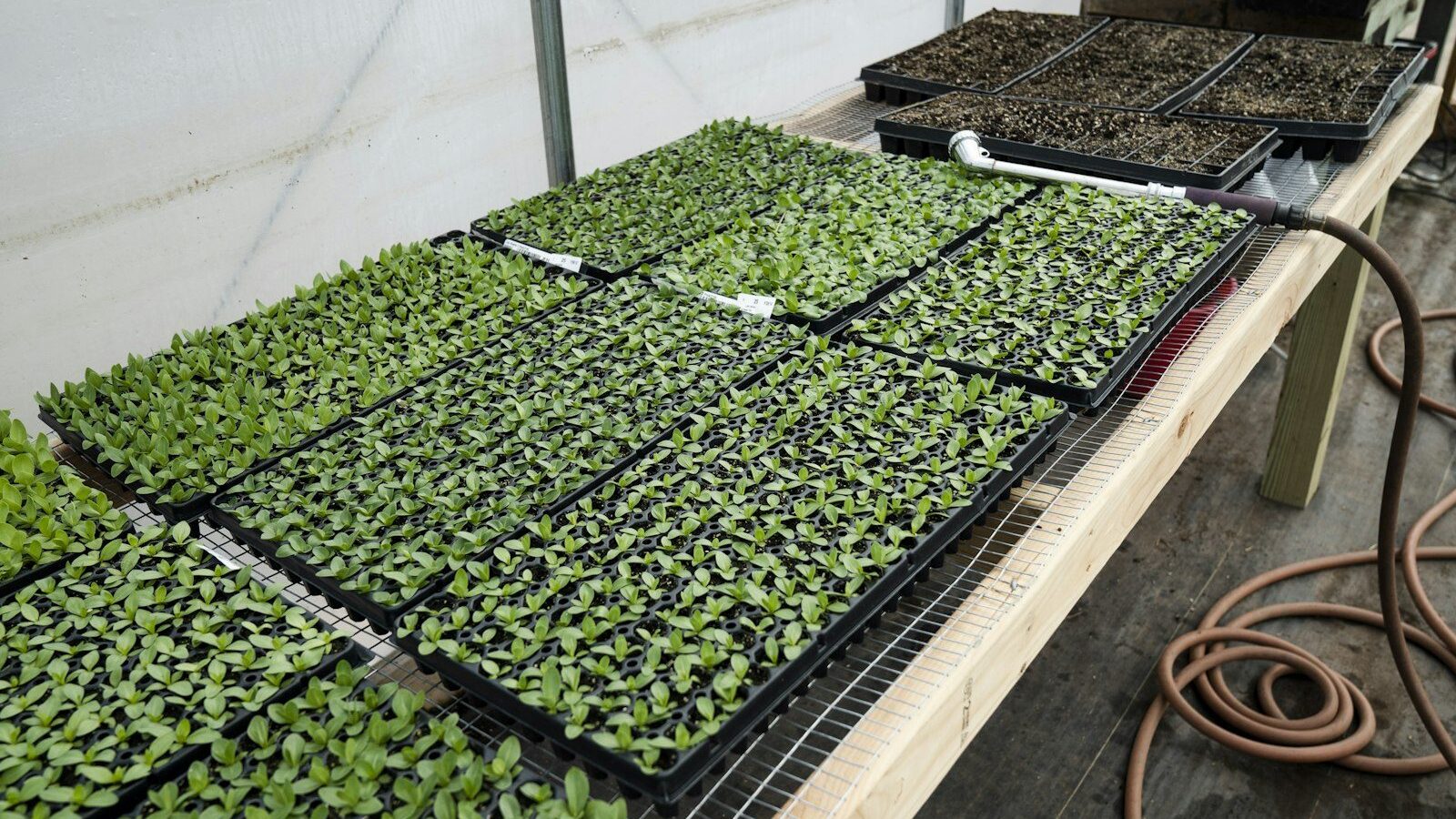
If your spring seed starts are stalling, leggy, or rotting in cold trays, the problem usually is not your seeds or your light. It is your soil temperature. Most warm-season vegetables and herbs want a root-zone temperature in the 70 to 85 degree Fahrenheit range to germinate quickly and evenly, and a basement, garage, or unheated spare room rarely gets above the low 60s in late winter. A seedling heat mat fixes that by warming the soil from below, typically raising the medium 10 to 20 degrees Fahrenheit above the surrounding air. The result is faster, more uniform germination and stronger early root growth. I have started peppers, tomatoes, eggplant, and basil on cheap mats and on better ones, and the differences between models are real. After years of running trays under lights every February, I pulled together the seven seedling heat mats below to cover the situations most home growers actually face, from a single 1020 tray on a shelf to a four-tray bench setup. Every recommendation includes the honest trade-offs, realistic specs, and where each one earns its keep.
As an Amazon Associate we earn from qualifying purchases. This page contains affiliate links at no extra cost to you.
Key Takeaways
- A seedling heat mat warms soil roughly 10 to 20 degrees Fahrenheit above ambient air; it does not hold a fixed temperature on its own.
- Buy a separate thermostat with a soil probe. Without one, mats run open-loop and can push soil past 90 degrees Fahrenheit in a warm room, which harms germination.
- Match the mat footprint to your trays. The standard single is 10 by 20.75 inches (one 1020 tray); large multi-tray mats run 48 by 20 inches for four trays.
- Look for a MET or UL safety listing and a sealed, waterproof (IPX-rated) surface, since trays drip and spills happen.
- Most quality mats draw 17 to 20 watts per 1020-tray section and use far-infrared or carbon film for even heat with no visible hot spots.
- Spend a few extra dollars on a digital thermostat combo if you are new to seed starting; it removes the biggest cause of failure.
| Product | Best For | Key Spec |
|---|---|---|
| VIVOSUN Seedling Heat Mat | Best overall single tray | 10 x 20.75 in, ~18 W, MET listed |
| VIVOSUN Heat Mat + Digital Thermostat Combo | Best for beginners | Mat plus probe thermostat, 40 to 108 F range |
| iPower Seedling Heat Mat | Best budget value | 10 x 20.75 in, ~17.5 W, optional thermostat |
| Jump Start Hydrofarm MT10006 | Best UL-listed durability | 9 x 19.5 in, 17 W, UL listed |
| Super Sprouter Heat Mat | Best for a single 1020 cell setup | 9 x 19.5 in, ~17 W, sealed surface |
| VIVOSUN 48 x 20 in Large Heat Mat | Best multi-tray / bench | 48 x 20 in, ~107 W, four 1020 trays |
| Bootstrap Farmer Waterproof Heat Mat | Best waterproof build | 10 x 20 in, fully sealed, heavy gauge |
VIVOSUN Seedling Heat Mat (10 x 20.75 in)
This is the mat most home growers should start with, and the one I reach for first. The footprint is exactly 10 by 20.75 inches, which is sized to sit under a single standard 1020 propagation tray with no overhang and no wasted heat. It draws roughly 18 watts and uses a far-infrared heating element laminated between waterproof PVC layers, so the warmth is spread across the whole surface rather than concentrated in a coil. In practice it lifts the soil about 10 to 20 degrees Fahrenheit over room temperature, which puts most rooms in the comfortable 70s for peppers and tomatoes.
It carries a MET safety listing, the cord is a reasonable length for shelf setups, and the surface wipes clean. The one thing to understand: like nearly every mat in this guide, it has no built-in temperature control. It is simply on or off when plugged in, so in a warm room it will keep climbing. Pair it with a thermostat (the combo below) and it becomes genuinely set-and-forget.
Pros
- Perfect 1020-tray fit with no overhang
- MET safety listed and waterproof PVC surface
- Even far-infrared heat, no detectable hot spots
- Widely available and inexpensive
Cons
- No thermostat included; runs open-loop
- Can overheat soil in an already-warm room
- Thin profile flexes if not laid flat
VIVOSUN Heat Mat with Digital Thermostat Combo
If you only buy one thing from this list, make it a mat-and-thermostat combo, and this is the most popular one for good reason. You get the same proven 10 by 20.75 inch mat plus a digital thermostat with a soil probe. The thermostat plugs into the wall, the mat plugs into the thermostat, and the probe goes into the soil. You set a target, commonly 75 to 80 degrees Fahrenheit for warm-season crops, and the controller cycles the mat on and off to hold it. The display range covers roughly 40 to 108 degrees Fahrenheit, which is far more than any seedling needs but useful for sprouting or fermentation projects too.
This combo solves the single biggest mistake new growers make: leaving a bare mat running until the soil bakes. With closed-loop control, germination becomes remarkably consistent. The thermostat is not laboratory-precise (expect a degree or two of swing), but for seeds that margin is irrelevant. The only real downside is a slightly cluttered nest of two cords and a probe to manage on the shelf.
Pros
- Includes the thermostat most people forget to buy
- Holds a true target soil temperature, not just on/off
- Wide 40 to 108 F control range
- Best value once you factor in buying a controller separately
Cons
- Two cords plus a probe to route and manage
- Probe placement affects accuracy; needs care
- Thermostat display can be dim in bright rooms
iPower Seedling Heat Mat
The iPower mat is the value pick that does not feel cheap. It uses the same 10 by 20.75 inch standard footprint, draws around 17.5 watts, and delivers the familiar 10 to 20 degree Fahrenheit rise above ambient. Build quality is comparable to the VIVOSUN, with a sealed waterproof surface and a flexible body that lays flat on a shelf. iPower sells it as a bare mat or bundled with their own thermostat, so you can scale your spend to your needs.
What keeps it a step behind the VIVOSUN overall is mostly consistency from unit to unit and slightly less polished documentation, but for a first mat or a second mat to expand a setup it is hard to argue with the price. If you already own a thermostat from another mat, buying the bare iPower to add a second tray is one of the cheapest ways to double your germination capacity.
Pros
- Lowest cost among the standard single mats
- Standard 1020 footprint and even heating
- Available bare or with an optional thermostat
- Flexible, lays flat without curling
Cons
- Slightly more unit-to-unit variability
- No safety listing as prominently stated as rivals
- Bundled thermostat is basic
Jump Start Hydrofarm MT10006 Seedling Heat Mat
The Hydrofarm Jump Start MT10006 is the veteran of this list and the one I trust most for long-term durability. It measures about 9 by 19.5 inches and draws 17 watts, and critically it carries a UL listing, which is the safety certification many growers specifically look for when running electrical equipment in a damp environment for weeks at a time. Hydrofarm has been making these for years, and the construction reflects it: a robust laminated body and a cord that feels built for repeated seasons.
The 9 by 19.5 inch surface is marginally smaller than the 10 by 20.75 inch standard, so a full 1020 tray will overhang slightly at the corners. That is cosmetic more than functional; the soil mass still warms evenly. As with the others, it provides roughly a 10 to 20 degree Fahrenheit lift and needs an external thermostat for true temperature control. If you want one mat that will still be working in five years, this is it.
Pros
- UL listed for safety in damp use
- Proven, durable construction from a veteran brand
- Consistent, even 17 W output
- Sturdy cord built for repeated seasons
Cons
- Slightly undersized at 9 x 19.5 in; trays overhang
- No thermostat included
- Costs a little more than budget mats
Super Sprouter Seedling Heat Mat
Super Sprouter, a brand built specifically around propagation, makes a clean, no-nonsense single mat in the 9 by 19.5 inch class drawing about 17 watts. It is designed to pair with their humidity domes and 1020 trays, so if you are buying into a propagation system rather than piecing one together, it slots in neatly. The sealed surface is genuinely waterproof, which matters because domed setups trap condensation that drips onto the mat constantly.
Performance is in line with the rest: a steady 10 to 20 degree Fahrenheit rise, even distribution, and the usual requirement for a separate thermostat. It is a solid, unremarkable mat in the best sense. The main reason to choose it over the VIVOSUN or iPower is brand-ecosystem fit, or availability at your local hydroponics shop. If you grow with a humidity dome, see our broader recommendations in the Tools and Gear hub for matching trays and domes.
Pros
- Designed to integrate with propagation domes and trays
- Genuinely waterproof sealed surface
- Even, reliable heat output
- Backed by a propagation-focused brand
Cons
- Smaller 9 x 19.5 in surface; tray overhang
- No thermostat included
- Availability can be spotty outside grow shops
VIVOSUN 48 x 20 in Large Seedling Heat Mat
When one tray is not enough, this is the upgrade. At 48 by 20 inches the large VIVOSUN mat holds up to four standard 1020 trays side by side and draws roughly 107 watts to do it. For anyone starting dozens of varieties at once, or running a small market-garden’s worth of transplants, a single large mat is far tidier and cheaper than four singles plus four thermostats. One mat, one controller, one outlet.
The heat distribution across that large surface is impressively even, and it provides the same 10 to 20 degree Fahrenheit rise. The trade-offs are size and control: it needs a flat surface roughly four feet wide, ideally a sturdy bench, and a thermostat rated to handle its higher wattage (most digital seedling thermostats handle well over 107 watts, but confirm before buying). It is overkill for a single windowsill, but for a dedicated seed-starting bench it is the most efficient choice here.
Pros
- Holds four 1020 trays on one mat and one outlet
- Very even heat across the full 48 in surface
- Cheaper than buying four single mats
- Great for high-volume seed starting
Cons
- Needs a large flat bench, about four feet wide
- Higher 107 W draw; verify thermostat rating
- Overkill for a single tray or windowsill
Bootstrap Farmer Waterproof Seedling Heat Mat
Bootstrap Farmer built its reputation on heavy-duty trays that survive years of abuse, and their heat mat follows the same philosophy. It is a roughly 10 by 20 inch single-tray mat with a fully sealed, genuinely waterproof construction and a thicker, more robust feel than the bargain mats. If you are rough on equipment, store gear in a damp shed, or simply want a mat that will not delaminate after a couple of seasons, this is the one to buy.
The KINGLAKE waterproof mats occupy a similar niche at a lower price if budget is tight, but the Bootstrap Farmer feels a clear notch above in materials. Heat performance is standard, the usual 10 to 20 degree Fahrenheit rise, and it still needs an external thermostat. You are paying for build quality and waterproofing here, not extra features, and for a mat that lives in wet conditions that is money well spent. It pairs well with seedlings you plan to grow on for transplant, like the basil in our guide to growing basil from seed.
Pros
- Heavy-gauge, fully waterproof construction
- Resists delamination and abuse over years
- Standard 1020-tray footprint
- Excellent for damp storage or rough handling
Cons
- Premium price for a single mat
- No thermostat included
- No extra features beyond durability
What to Look For in a Seedling Heat Mat
The mats above cover most situations, but understanding the underlying specs will help you choose confidently and avoid the common pitfalls. Here is what actually matters when you compare seedling heat mats.
Size and footprint matching your trays
The standard single mat is 10 by 20.75 inches, sized to fit one 1020 propagation tray exactly. Some mats run slightly smaller at 9 by 19.5 inches, which leaves a small overhang at the tray corners; this is harmless but means the very edges of the soil run a touch cooler. If you start more than one tray, decide between several single mats (flexible, you can move them) or one large 48 by 20 inch mat for four trays (tidier, one controller). Measure your shelf depth before buying a large mat; four feet is wider than many wire shelves.
Wattage and temperature rise above ambient
A typical single mat draws 17 to 20 watts and raises soil temperature about 10 to 20 degrees Fahrenheit above the surrounding air. This is the most misunderstood spec: a heat mat does not target a number, it adds a roughly fixed offset. If your room is 60 degrees, expect soil in the low-to-mid 70s; if your room is 75, soil can climb toward 90, which is too hot. That offset behavior is exactly why a thermostat matters. Large mats scale wattage with area, around 107 watts for a four-tray 48 by 20 inch model.
Waterproof rating
Seed starting is a wet activity. Trays drip, domes drip condensation, and you will spill while watering. A mat with a sealed, waterproof (often described with an IPX rating) surface can be wiped clean and shrugs off the inevitable moisture. Avoid any mat whose seams look like they could let water into the heating layer. Brands like Bootstrap Farmer and Super Sprouter emphasize waterproofing specifically because it is the difference between a mat lasting one season and lasting many.
Thermostat compatibility
I will keep saying it because it is the single most important point: buy a thermostat. Nearly every mat sold is just a resistive heater with no control, so a separate digital thermostat with a soil probe is what makes germination repeatable. Set 75 to 80 degrees Fahrenheit for most warm-season crops. When buying, confirm the thermostat’s wattage rating exceeds your mat’s draw, which matters most for large multi-tray mats near 107 watts. A single thermostat can often control several single mats wired through a power strip if their combined wattage stays under its rating.
Durability, MET or UL listing
You are running an electrical device in a damp environment for weeks. A recognized safety listing, MET (as on the VIVOSUN mats) or UL (as on the Hydrofarm Jump Start), tells you the product passed independent safety testing. I would not run an unlisted mat unattended overnight. Beyond certification, look at cord quality and lamination; the difference between a two-season mat and a six-season mat is usually in those details.
Even heat distribution
Good mats use a far-infrared film or carbon element that spreads warmth across the entire surface, so every cell in your tray germinates at the same pace. Cheaper or older designs can have hot spots over a coiled wire, leaving some seeds racing ahead while others lag. Even heat is hard to verify before buying, so reputation matters here; the established brands in this guide all deliver uniform output in my experience.
Frequently Asked Questions
Do I really need a thermostat with a seedling heat mat?
Strongly recommended, yes. A bare mat simply adds about 10 to 20 degrees Fahrenheit over room temperature and never shuts off, so in a warm room it can push soil past 90 degrees and harm germination. A thermostat with a soil probe holds your chosen target, usually 75 to 80 degrees Fahrenheit, and makes results consistent.
How hot does a seedling heat mat get?
On its own it does not target a temperature; it raises the soil roughly 10 to 20 degrees Fahrenheit above the ambient air. So a 60 degree room yields low-to-mid 70s soil, while a 75 degree room can reach the upper 80s or higher. That offset behavior is exactly why a thermostat is so useful.
What size heat mat do I need?
For a single propagation tray, get a standard 10 by 20.75 inch mat. For multiple trays, either use several single mats or one large 48 by 20 inch mat that holds four 1020 trays. Measure your shelf or bench depth first, since the large mats are about four feet wide.
Can I leave a heat mat on all day and night?
Yes, that is normal during germination, ideally through a thermostat and on a UL or MET listed mat. Keep it on a waterproof surface, route cords away from standing water, and remove the mat once seedlings are up and growing well, since established seedlings prefer cooler roots.
When should I take seedlings off the heat mat?
Once most seeds in the tray have germinated and pushed up. Heat mats accelerate germination, but seedlings grow stronger, stockier stems at normal room temperature. Leaving trays on heat too long can encourage leggy growth and dry the medium faster than you expect.
For most home growers, the VIVOSUN Heat Mat with Digital Thermostat Combo is the smartest first purchase: it bundles the controller you would otherwise forget and turns guesswork into a repeatable process. If you only want a mat, the standard VIVOSUN single is the best all-rounder, the Hydrofarm Jump Start wins on long-term durability and its UL listing, and the 48 by 20 inch VIVOSUN is the obvious choice once you are running multiple trays. Whatever you choose, pair it with a thermostat, put it on a waterproof surface, and move your seedlings off the heat once they sprout. Warm roots are the quiet difference between a tray that sulks and a tray that takes off.