

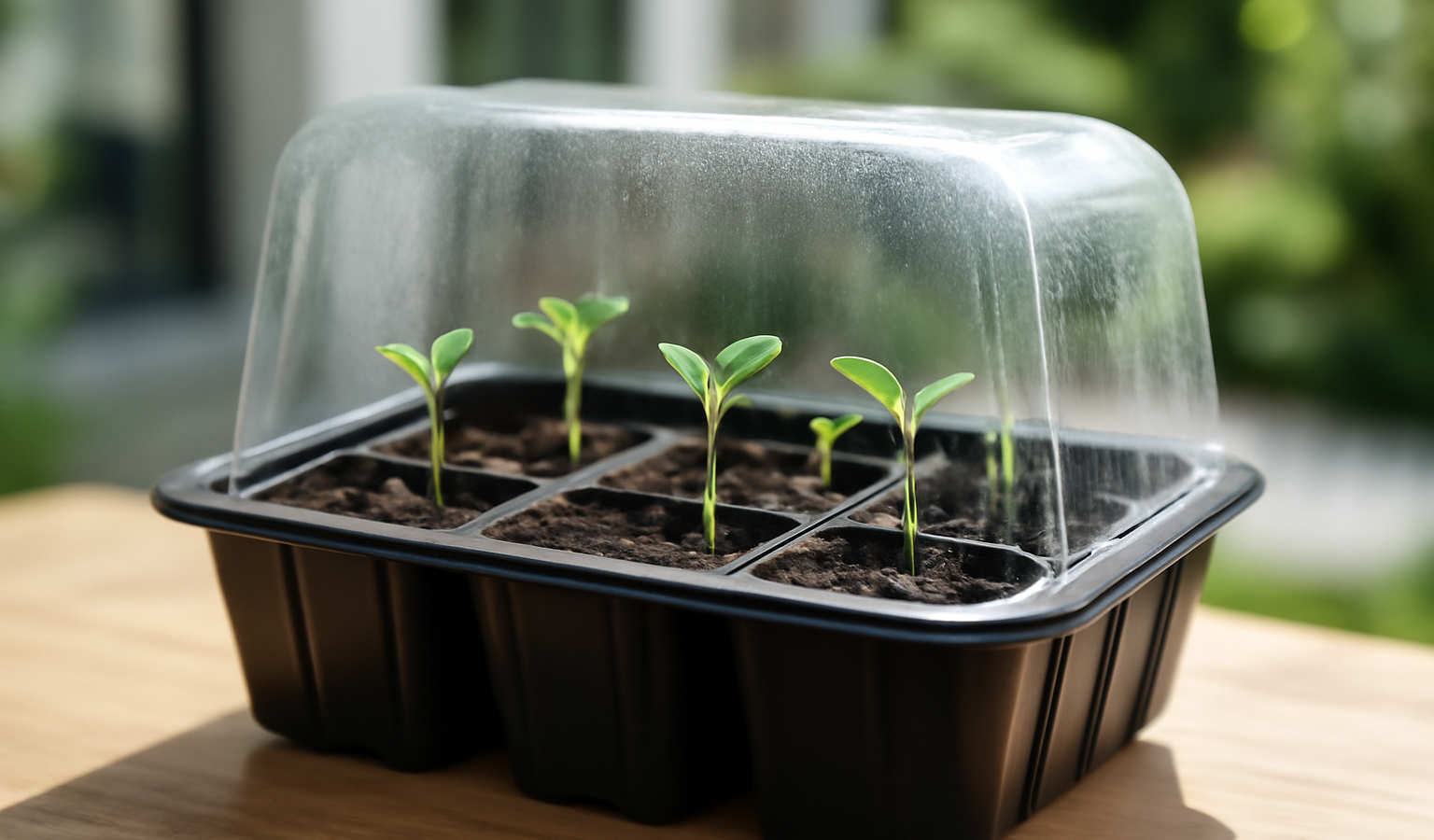
A humidity dome is the cheapest piece of gear that meaningfully raises your seed-starting and propagation success. By trapping moisture over a 1020 tray, it holds humidity near saturation and stabilizes the surface temperature—exactly the microclimate that coaxes fussy seeds to germinate and keeps unrooted cuttings from wilting before they form roots. Without one, the soil surface dries between waterings, tiny seedlings desiccate, and cuttings collapse. With one, you can often skip watering for days while germination runs its course.
The decisions that matter are height, ventilation, and fit. A short 2-inch dome is fine for germinating seeds but useless once seedlings stretch; a 7-inch tall dome gives transplants and leggy cuttings room to grow. Adjustable vents let you dial humidity down as seedlings establish, which prevents the damping-off and mold that plague sealed, sweaty domes. And it all has to fit the standard 1020 tray footprint or you’ll fight gaps and slippage. This guide ranks seven domes worth buying—from bargain multipacks to tall vented pro lids—and closes with a buyer’s guide so you match the dome to what you’re actually growing.
As an Amazon Associate we earn from qualifying purchases. This page contains affiliate links at no extra cost to you.
Key Takeaways
- Height is the big choice: short (~2 in.) domes for germination only; tall (5–7 in.) domes if seedlings or cuttings need headroom.
- Vents matter more than people think. Adjustable vents let you taper humidity to prevent damping-off and mold.
- Fit the 1020 footprint. A dome that doesn’t seat on a standard tray leaks humidity and slides around.
- Remove the dome once seeds sprout or seedlings touch the top—crack the vents first, then take it off entirely to harden them.
- Best overall value: a tall vented 7-inch dome over a 1020 tray; budget growers do fine with a clear vented multipack.
| Product | Best For | Key Spec |
|---|---|---|
| Bootstrap Farmer 7" Vented Dome | Best overall, durability | 7 in. tall, vented, fits 1020 |
| Super Sprouter 7" Tall Dome | Tall cuttings & transplants | 7 in. tall, 2 vents |
| Hydrofarm Jump Start 7" Dome | Bundles with heat mats | 7 in. tall, vented |
| Burpee XL Vented Dome | Beginners, garden-center pick | ~6 in. tall, adjustable vents |
| Gardzen / Clear Multipack | Best budget, volume | ~2 in. short, vented, multi |
| MIXC Mini Greenhouse Trays | All-in-one starter kits | Short dome + cells + tray |
| Bootstrap Farmer 2" Short Dome | Germination-only, heavy duty | 2 in. short, vented, durable |
1. Bootstrap Farmer 7" Vented Humidity Dome — Best Overall
Bootstrap Farmer’s 7-inch vented dome is the one we recommend to anyone who’s tired of replacing flimsy lids. The polypropylene/PET construction is noticeably thicker than the throwaway domes bundled with cheap kits, with two large adjustable vents on top and a footprint that seats cleanly on a standard 1020 tray. The 7-inch height gives germinating seedlings and rooting cuttings real headroom, so you’re not pulling the dome the moment the first leaves stretch.
The vents are the quiet hero here: slide them open as seedlings establish to taper humidity and head off damping-off and surface mold. It costs several times what a bargain dome does, but it survives years of reuse rather than cracking after a season, which is the whole value proposition. If you start seeds every spring or propagate regularly, the durable tall vented dome pays for itself.
Pros
- Thick, genuinely reusable construction
- 7 in. of headroom for seedlings and cuttings
- Two large adjustable vents to taper humidity
- Clean fit on standard 1020 trays
Cons
- Costs several times more than throwaway domes
- Tall profile needs more shelf clearance under lights
- Overkill if you only germinate small seeds
2. Super Sprouter 7" Tall Humidity Dome — Best for Tall Cuttings
The Super Sprouter 7-inch dome is a propagation-shop staple, built for the grower who needs height for cuttings and transplants rather than just germination. The clear walls let plenty of light through, the two vents adjust to manage humidity, and the tall profile means leggy tomato seedlings or rooting stem cuttings don’t bump the ceiling and rot at the tip. It seats on a standard tray and pairs naturally with a seedling heat mat.
It’s a mid-priced dome—sturdier than bundled lids but not as heavy-duty as the thickest pro options—so treat it as a solid every-season tool rather than a lifetime buy. The clarity and height are its strengths; the trade-off is that the thinner plastic can crack if you stack heavy things on it or store it carelessly. For cuttings and tall starts, it’s a dependable, widely available choice.
Pros
- 7 in. of height for cuttings and tall seedlings
- Very clear walls for good light transmission
- Two adjustable vents
- Widely stocked and reasonably priced
Cons
- Thinner plastic than premium domes
- Can crack if stored or stacked carelessly
- Tall profile eats vertical shelf space
3. Hydrofarm Jump Start 7" Dome — Best for Heat-Mat Bundles
Hydrofarm’s Jump Start system is the easy on-ramp because the dome is sold both on its own and bundled with a tray and a seedling heat mat—the three things you actually need to start seeds well. The 7-inch vented dome itself is a competent tall lid with adjustable vents, but the real appeal is buying the matched components together so the dome, tray, and mat all fit without guesswork.
As a standalone dome it’s comparable to the Super Sprouter—clear, vented, mid-weight plastic—so the decision usually comes down to whether you want the kit. For a first-time seed starter, getting the dome, tray, and bottom heat in one purchase removes a lot of friction; bottom heat in particular speeds germination on warm-season crops like peppers and tomatoes. If you already own a heat mat and tray, buy the dome alone.
Pros
- Sold as a matched dome + tray + heat-mat kit
- 7 in. tall with adjustable vents
- Components fit together with no guesswork
- Great turnkey option for beginners
Cons
- Dome alone is unremarkable vs. rivals
- Kit costs more if you own a mat already
- Mid-weight plastic, not lifetime-durable
4. Burpee XL Vented Humidity Dome — Best for Beginners
Burpee’s XL vented dome is the friendly garden-center pick: a roughly 6-inch tall dome with adjustable vents, clear instructions, and the brand recognition that reassures first-timers. It gives more headroom than the stubby domes in budget kits, the vents adjust to manage humidity as seedlings grow, and it fits standard Burpee and generic 1020 trays. For someone starting their first flat of tomatoes and marigolds, it’s an approachable, no-fuss choice.
The trade-off is that you pay a little for the brand, and the plastic, while decent, isn’t as rugged as the dedicated pro domes. It’s also sometimes sold as part of a seed-starting kit, which can be good value or redundant depending on what you already own. As a straightforward, widely available beginner dome with real vents, it does the job well.
Pros
- ~6 in. height—more room than budget domes
- Adjustable vents for humidity control
- Beginner-friendly and widely available
- Fits standard 1020 trays
Cons
- Slight brand premium
- Plastic less rugged than pro domes
- Sometimes bundled with kit you may not need
5. Gardzen / Clear Vented Dome Multipack — Best Budget
If you start lots of flats or just want cheap, replaceable lids, a multipack of short (~2-inch) clear vented domes is the value play. Brands like Gardzen and similar clear-dome multipacks sell several lids at once for the price of one premium dome, each with a small vent and a footprint that fits standard trays. For pure germination—where you only need to hold humidity until sprouts appear—a short dome is all the height you need.
The limits are obvious: at 2 inches there’s no room for seedlings to grow, the thin plastic cracks more easily, and the small single vent gives less fine control than a pro dome’s dual vents. But the math is hard to argue with—when you’re filling six trays at once, buying domes by the pack keeps the cost trivial. Plan to pull these the moment seeds sprout and move seedlings on, since you can’t grow under them for long.
Pros
- Lowest cost per dome by far
- Multipacks suit high-volume germination
- Clear and vented, fits standard trays
- Cheap to replace when one cracks
Cons
- Only ~2 in.—no headroom for seedlings
- Thin plastic cracks easily
- Single small vent, less humidity control
6. MIXC Mini Greenhouse Trays — Best All-in-One Starter Kit
For someone who wants everything in one box, MIXC-style mini greenhouse kits bundle a short vented dome, a cell insert, and a base tray—often in multipacks. The domes are short and the plastic is light, but you get a complete germination setup with drainage and matched components for very little money, which is ideal for a windowsill operation or a kid’s first seed project.
Treat these as germination kits rather than long-term gear. The short dome works only until seedlings stretch, the thin cells can warp, and the small vents offer limited control. But as an inexpensive, self-contained way to germinate a tray of herbs, salad greens, or flower seeds—dome, cells, and tray all sized to fit—they’re a sensible entry point. Once seedlings are up and the dome comes off, pot them on into something sturdier.
Pros
- Complete dome + cells + tray in one buy
- Matched, drainage-ready components
- Very affordable, often multipacked
- Great for windowsill and beginner projects
Cons
- Short dome—germination only
- Light plastic; cells can warp
- Small vents, limited humidity control
7. Bootstrap Farmer 2" Short Dome — Best Heavy-Duty Germination Dome
Sometimes you only need a short dome—but you want it to last. Bootstrap Farmer’s 2-inch short dome answers that with the same rugged, thick plastic as their tall version, in a low profile suited to pure germination and to setups where vertical clearance under lights is tight. It seats firmly on a 1020 tray, includes vents, and shrugs off years of reuse where bargain short domes crack after a season or two.
The obvious limitation is height: at 2 inches it’s for germination, not growing on, so you’ll lift it as soon as seedlings touch the top. But if you germinate in volume, run tight shelf spacing, and hate replacing cracked lids, a durable short dome is a smart, long-lived buy. Many growers keep a stack of these short domes for starting and a couple of tall domes for the cuttings and transplants that need room.
Pros
- Thick, reusable plastic that lasts for years
- Low profile fits tight shelf spacing
- Vented and seats firmly on 1020 trays
- Ideal heavy-duty germination dome
Cons
- Only 2 in.—no room to grow seedlings on
- Pricier than budget short domes
- You’ll still need a tall dome for cuttings
How to Choose a Humidity Dome: Buyer’s Guide
Start with height, because it dictates what you can grow. A short dome (around 2 inches) holds humidity perfectly for germinating seeds, but the moment seedlings stretch they hit the ceiling and you have to remove it. A tall dome (5–7 inches) gives transplants, leggy starts, and rooting cuttings room to develop under cover for longer. If you start seeds and propagate cuttings, the honest answer is to own both: a stack of short domes for germination and a couple of tall ones for growing on.
Ventilation
Adjustable vents are worth paying for. A fully sealed dome runs near 100% humidity, which is great for the first few days but quickly invites damping-off—a fungal collapse that wipes out seedlings at the soil line—and surface mold. Vents let you crack the dome open as seedlings establish, gradually lowering humidity and increasing airflow so the plants toughen up. Dual vents give finer control than a single small hole. As a rule, keep vents closed until germination, then open them progressively before removing the dome entirely.
Fit, durability, and clarity
Almost everything is built around the standard 1020 tray footprint (about 11×21 inches), so confirm your dome and tray are both 1020 to avoid gaps that leak humidity and let the dome slide. On durability, you get what you pay for: thick polypropylene domes from propagation specialists survive years of stacking and washing, while the thin lids in cheap kits crack within a season or two—fine if you treat them as disposable, frustrating if you expected them to last. Look for clarity too, since cloudy plastic cuts the light reaching seedlings; if you’re starting under grow lights, clear walls help. For the rest of your setup, browse the Tools & Gear hub.
Using the dome well
Mist the inside lightly and seat the dome at sowing; once roughly half the seeds have sprouted, crack the vents, and remove the dome entirely soon after so seedlings don’t get soft and leggy under constant humidity. For cuttings, keep the dome on longer—until roots form—but still ventilate daily to prevent rot. Pair the dome with a heat mat for warm-season crops, and you’ll cut germination time noticeably. The same humid, stable microclimate that germinates seeds also helps cuttings root, which is why domes pull double duty; see our guide to propagating houseplants for more on creating the right rooting environment.
Frequently Asked Questions
When should I take the humidity dome off?
Crack the vents once about half your seeds have sprouted, then remove the dome entirely within a few days. Leaving it on too long keeps seedlings soft and invites damping-off. For cuttings, keep it on until roots form but ventilate daily.
Do I need a tall dome or a short one?
Short (~2 in.) domes are for germination only—seedlings quickly outgrow them. Tall (5–7 in.) domes give headroom for transplants and rooting cuttings. If you do both, owning a short dome for starting and a tall one for growing on is ideal.
Why does mold grow inside my dome?
Trapped humidity with no airflow breeds surface mold and damping-off fungus. Open the vents, reduce misting, and remove the dome once seeds are up. Always use a sterile seed-starting mix and clean trays to limit fungal spores.
Will any dome fit my seed tray?
Most domes and trays are built to the standard 1020 footprint (~11×21 in.), so a 1020 dome fits a 1020 tray. Mismatched sizes leave gaps that leak humidity and let the dome slide, so confirm both are 1020.
Can I use a humidity dome for cuttings, not just seeds?
Yes—domes are excellent for cuttings. The high, stable humidity keeps unrooted cuttings from wilting while they form roots. Use a tall vented dome so cuttings have headroom, ventilate daily, and add bottom heat to speed rooting.
Bottom line: a tall vented dome like the Bootstrap Farmer 7-inch is the best single buy for most growers because it covers both germination and growing-on, while a clear vented multipack keeps costs trivial if you start flats in volume. Decide on height first, insist on adjustable vents, confirm the 1020 fit, and you’ll have a microclimate that gets fussy seeds up and cuttings rooted with far less babysitting.