

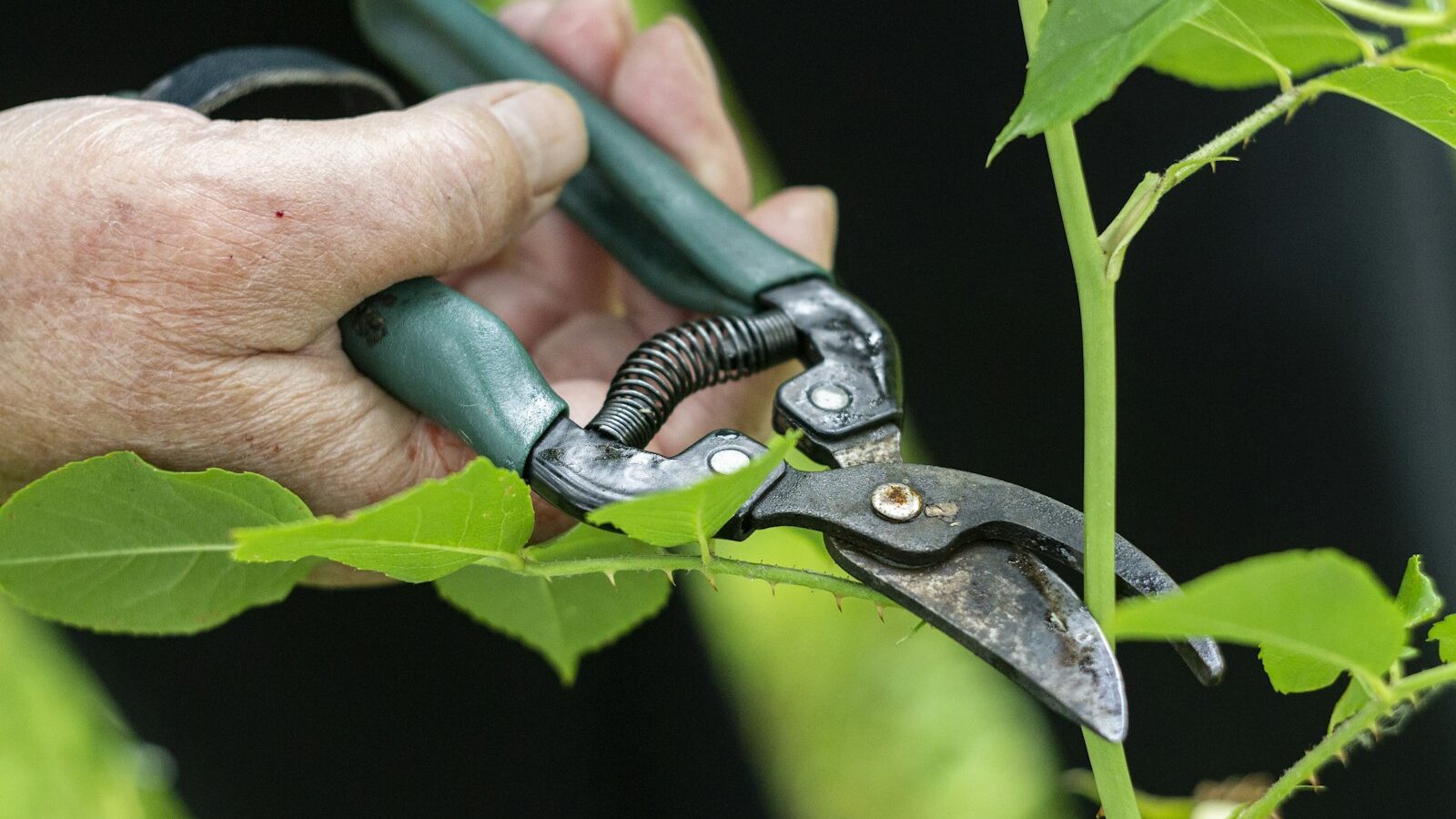
A great pair of pruning shears is the most-used tool in any gardener’s kit, yet most people grab whatever is cheapest and end up with crushed stems, sore hands, and ragged cuts that invite disease. The right pruners cut cleanly, fit your hand, and last for decades with a little care. Below we compare eight of the most popular pruning shears for 2026 across bypass, anvil, and ratchet designs, then walk you through exactly how to choose the pair that’s right for you.
Some links in this article are affiliate links. As an Amazon Associate we earn from qualifying purchases, at no extra cost to you.
Key takeaways
- Bypass pruners give the cleanest cuts on living stems and are the best all-round choice for most gardeners.
- Anvil and ratchet pruners trade some precision for power, making them ideal for dead wood and gardeners with weak hands or arthritis.
- The Felco F-2 remains the professional benchmark, while the Fiskars Softgrip offers excellent everyday performance for a fraction of the price.
- Match the handle size to your hand and look for replaceable blades so your pruners can be maintained rather than replaced.
- A clean, sharp blade does the work for you, reduces hand fatigue, and keeps your plants healthy.
| Pruners | Best for | Type | |
|---|---|---|---|
| Felco F-2 | Overall performance & durability | Bypass | Check price |
| Fiskars Softgrip Bypass Pruner | Budget all-rounder | Bypass | Check price |
| Felco F-6 | Small to medium hands | Bypass | Check price |
| ARS VS-8Z | Clean, surgical cuts | Bypass | Check price |
| Okatsune 103 | Edge retention | Bypass | Check price |
| Bahco PX-M2 | Ergonomics & comfort | Bypass | Check price |
| Corona ClassicCut Bypass Pruner | Forged budget pick | Bypass | Check price |
| Gonicc 8″ Professional Anvil Pruners | Weak hands & arthritis | Anvil / ratchet | Check price |
The best pruning shears reviewed
1. Felco F-2 — Best overall
The Swiss-made Felco F-2 has been the professional standard for decades, and for good reason. Landscapers, nursery workers, and serious gardeners reach for it because it consistently delivers comfort, cutting power, and durability that few rivals match. The hardened steel blade slices cleanly through woody stems, while the angled anvil and red-handled grip have become an icon of the gardening world.
What truly sets the F-2 apart is that nearly every part is replaceable. Wear out a blade, spring, or cushion and you can swap it rather than buy a whole new tool, which is why so many gardeners use the same pair for a lifetime. It’s a premium purchase, but it amortizes beautifully over the years.
Pros
- Outstanding durability and cutting power
- Fully serviceable with replaceable parts
- Trusted professional standard
Cons
- Premium price
- Standard size suits larger hands best
2. Fiskars Softgrip Bypass Pruner — Best budget all-rounder
If you want most of the performance of a premium pruner without the premium price, the Fiskars Softgrip Bypass Pruner is hard to beat. Its precision-ground steel blade stays sharp through plenty of trimming, and a low-friction coating helps it glide through green stems and slim branches without gumming up with sap.
The cushioned Softgrip handle makes longer sessions far more comfortable, and the whole tool is light enough that fatigue rarely sets in. It’s the pair we’d recommend to most new gardeners, and an easy second pair to keep in the shed or potting bench.
Pros
- Excellent value for money
- Low-friction coated blade resists sap buildup
- Comfortable, lightweight Softgrip handle
Cons
- Fewer replaceable parts than premium models
- Less suited to thick, woody growth
3. Felco F-6 — Best for small to medium hands
The Felco F-6 takes everything that makes the F-2 great and shrinks it into a more compact, ergonomic body built for smaller or medium-sized hands. The angled cutting head sits as a natural extension of the hand, so you get excellent maneuverability and control when working in tight, leafy growth.
Rubber shock absorbers deliver a soft closing action that protects your wrist over a long session, and it handles tender stems and dead flower heads with almost no effort. Like its bigger sibling, it’s Swiss-made and fully serviceable, so it rewards careful owners for years.
Pros
- Compact, ergonomic body for smaller hands
- Angled head improves comfort and control
- Replaceable parts and Swiss build quality
Cons
- Premium price like the rest of the Felco range
- Lower cutting capacity than full-size models
4. ARS VS-8Z — Best for clean, surgical cuts
Japanese maker ARS has a devoted following among gardeners who prize a razor-clean cut, and the VS-8Z is its standout bypass model. The high-quality blades arrive impressively sharp, slicing through stems with a satisfying lack of resistance, and a handy click-to-open mechanism makes one-handed use feel effortless.
The trade-off is serviceability: ARS pruners need less routine cleaning and maintenance than a Felco, but they offer fewer replacement parts, so they lean more toward replace-than-repair over the very long term. For precision deadheading and clean cuts on living wood, though, few tools feel as surgical.
Pros
- Exceptionally sharp, clean-cutting blades
- Convenient click-to-open mechanism
- Smooth, low-effort cutting action
Cons
- Fewer replacement parts available
- Less repairable than Felco over the long haul
5. Okatsune 103 — Best for edge retention
If you hate stopping to sharpen, the Okatsune 103 is built for you. These Japanese-made pruners use excellent high-carbon steel that takes a keen edge and holds it longer than just about anything else on the market, so a single sharpening lasts through far more cutting than usual.
The simple, no-nonsense design with its distinctive red-and-white handles is favored by professionals who value performance over frills. It’s a tool you buy once and learn to love, provided you keep the carbon-steel blades clean and lightly oiled to fend off rust.
Pros
- Outstanding edge retention from quality steel
- Clean, precise cuts on living stems
- Simple, durable, professional-grade design
Cons
- Carbon steel needs oiling to prevent rust
- Minimalist handles offer little cushioning
6. Bahco PX-M2 — Best for ergonomics and comfort
Swedish brand Bahco has built a reputation for ergonomics, and the PX series shows why. Many gardeners find these pruners more comfortable in the hand than a Felco while offering similar build quality, with a smooth cutting action and a thoughtfully shaped grip that reduces strain over long sessions.
A particularly nice touch is the one-handed close-and-lock mechanism, which lets you secure the blade without setting down your other tools. If comfort and easy handling top your list, the Bahco PX-M2 deserves a serious look.
Pros
- Highly ergonomic, comfortable grip
- One-handed close-and-lock action
- Smooth cutting with quality build
Cons
- Less widely stocked than Felco or Fiskars
- Sizing matters, so check the handle span
7. Corona ClassicCut Bypass Pruner — Best forged budget pick
The Corona ClassicCut bridges the gap between cheap pruners and premium ones. Its forged construction feels rugged yet elegantly simple, and the solid steel blade arrives well sharpened and cuts cleanly through test branches. At well under the price of a Felco, it’s remarkable value for a tool built this solidly.
The honest caveat is that it takes a touch more effort to close than the Felco or Fiskars, so gardeners with weaker grip may prefer a ratchet model. For everyone else looking for a tough, no-frills bypass pruner on a budget, the ClassicCut is an easy recommendation.
Pros
- Rugged forged construction
- Sharp, clean-cutting steel blade
- Excellent value below premium prices
Cons
- Requires more effort to close than rivals
- Less refined ergonomics
8. Gonicc 8″ Professional Anvil Pruners — Best for weak hands and arthritis
For gardeners with limited hand strength, arthritis, or carpal tunnel, the Gonicc 8″ Professional Anvil Pruners (model GPPS-1001) are a genuine difference-maker. The ratcheting mechanism multiplies your hand power, so cutting through tougher growth takes a series of easy squeezes instead of one painful crush.
Buyers praise the sharp high-carbon steel blade and the ergonomic handle, and many with arthritis say it’s exceptionally easy on the hands. As an anvil-style tool it’s best suited to dead and woody material rather than delicate green stems, but for power-on-a-budget it’s outstanding value.
Pros
- Ratchet action multiplies cutting power
- Easy on arthritic or weak hands
- Sharp high-carbon steel blade and good value
Cons
- Anvil design less ideal for live green stems
- Ratcheting is slower than a single clean cut
How to choose pruning shears
The best pruning shears are the ones that fit your hands, your garden, and the kind of cutting you do most. Here’s what to weigh up before you buy.
Bypass vs. anvil vs. ratchet
- Bypass pruners work like scissors, with a sharp curved blade passing a thicker counter-blade. They make the cleanest cuts on living stems and are the best all-round choice for most gardeners.
- Anvil pruners press a single blade down onto a flat surface. They’re powerful for dead, dry, woody material but can crush live stems, so they’re best kept for cleanup tasks.
- Ratchet pruners add a mechanism that lets you cut in stages, multiplying your hand power. They’re ideal for tougher branches and for anyone with reduced grip strength.
Blade material and coating
- High-carbon steel takes the sharpest edge and holds it well, but needs oiling to prevent rust.
- Stainless steel resists corrosion and is lower maintenance, though it can dull a little faster.
- Non-stick coatings reduce sap buildup and friction, helping the blade glide through green growth.
Cutting capacity
Manufacturers rate pruners by the maximum stem diameter they can handle, often around half to one inch. Don’t force shears through anything thicker than their rating, as this damages the blade and the cut. For branches beyond a pruner’s capacity, step up to loppers or a pruning saw.
Ergonomics and grip size
A handle that’s too large forces your hand wide open on every cut and tires you quickly. Models like the Felco F-6 are sized for smaller and medium hands, while standard models suit larger hands. Look for cushioned grips, shock absorbers, and an angled head if you prune for long stretches.
Replaceable parts and serviceability
Pruners that accept replacement blades, springs, and cushions can be maintained for decades rather than thrown away. Brands like Felco and Bahco are known for spare-part support, which makes a higher upfront cost easier to justify over the long run.
Locking mechanism
A reliable lock keeps the blade closed safely in storage and transport. The most convenient designs, like Bahco’s one-handed lock, let you secure the pruners without putting down whatever else you’re holding.
Left-handed options
Most pruners are designed for right-handed use, and the blade geometry and lock can feel awkward in the left hand. Felco and several other brands offer dedicated left-handed models, so it’s worth seeking one out if a standard pruner never quite feels right.
Maintenance
Wipe blades clean after use, sap and all, then dry and lightly oil them, especially on carbon-steel tools. Keep the edge sharp and the pivot bolt properly tensioned, and your pruners will cut better and last far longer. Our how to sharpen garden tools guide walks through the process step by step, and you’ll find more in our tools & gear section.
Frequently asked questions
Bypass vs. anvil pruners: which should I choose?
Choose bypass pruners for the cleanest cuts on living stems and general garden work, since they slice rather than crush. Choose anvil pruners for dead, dry, or woody material where extra crushing power helps. Many gardeners keep both, but if you can only buy one, a bypass pruner is the more versatile pick.
How do I sharpen pruning shears?
Clean the blade, then run a sharpening stone or file along the existing bevel of the cutting blade at the same angle, working in one direction until the edge is keen. Wipe away the burr, oil the blade, and check the pivot tension. Our full how to sharpen garden tools guide covers the technique in detail.
What size pruning shears do I need?
Match the handle to your hand span and the blade capacity to your typical cuts. Smaller hands suit compact models like the Felco F-6, while larger hands are comfortable with standard sizes. For stems thicker than about an inch, move up to loppers.
How often should I clean my pruners?
Ideally after every use, especially when cutting diseased plants, to avoid spreading problems between plants. A quick wipe, a dry off, and an occasional drop of oil on the blade and pivot keeps them cutting smoothly and rust-free.
Are ratchet pruners good for arthritis?
Yes. Ratchet pruners let you cut tough branches in several easy stages instead of one hard squeeze, which dramatically reduces hand strain. Models like the Gonicc anvil pruners are popular with gardeners who have arthritis, carpal tunnel, or limited grip strength.
Can I use one pair of pruners for everything?
A quality bypass pruner handles the large majority of garden tasks, from deadheading to light woody growth. For heavy dead wood or thicker branches, though, you’ll get better results pairing it with an anvil or ratchet pruner and a set of loppers.
Whichever pair you choose, a sharp, well-fitted pruner makes every garden job faster and kinder to your plants. To round out your kit, see our guide to essential garden tools and our pick of the best garden hoses.