

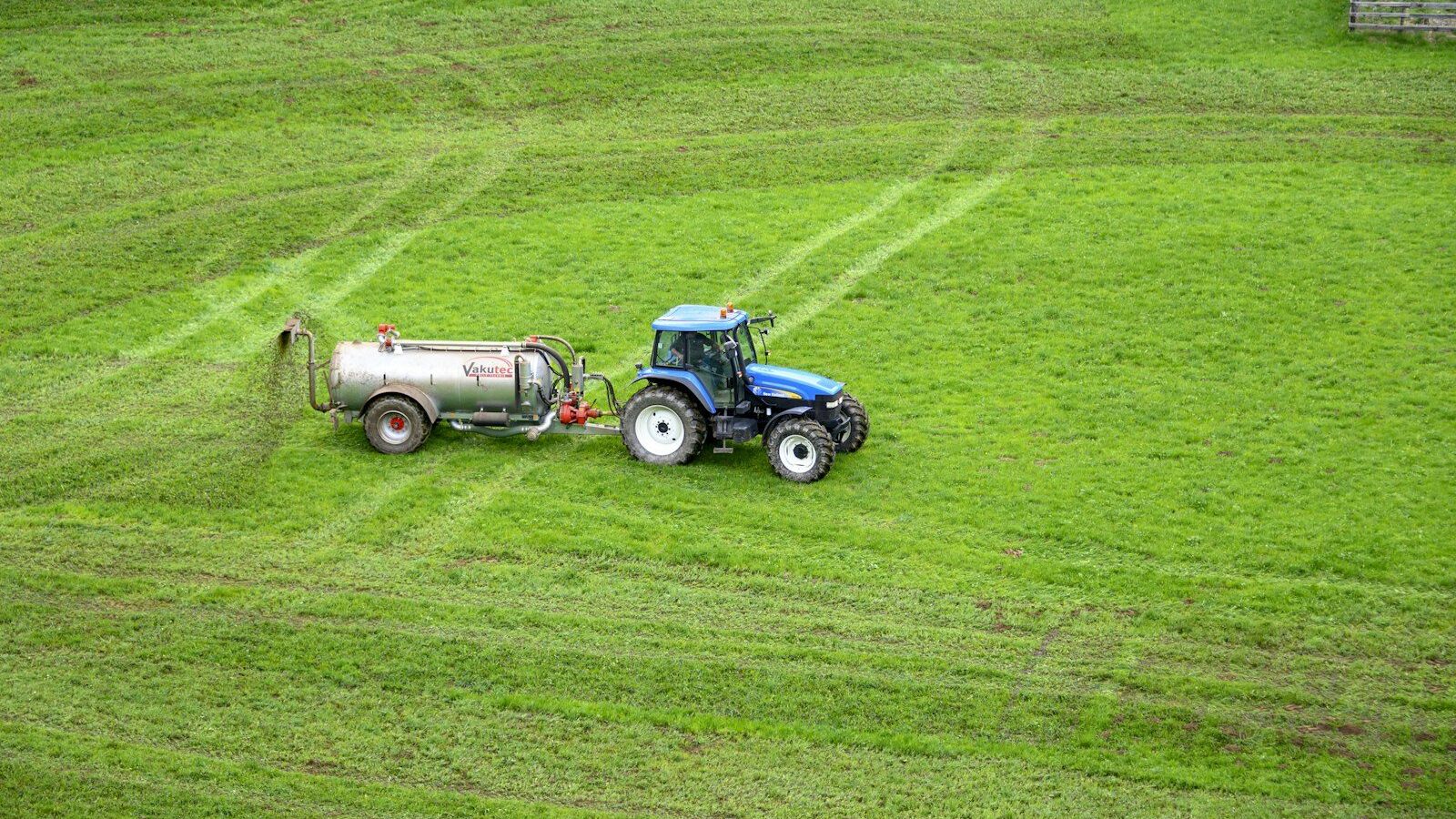
A good spreader is the difference between an even, healthy lawn and a striped, patchy one streaked with fertilizer burn. The choice splits two ways: broadcast (rotary) spreaders fling product in a wide arc to cover ground fast, while drop spreaders lay it precisely between their wheels — slower, but no overthrow onto beds or driveways. Then it’s about hopper size, build quality, and how accurately the rate gate calibrates. Get those right and you’ll apply fertilizer, grass seed, lime, and ice melt at exactly the rate the bag calls for. Here are seven lawn spreaders worth buying in 2026, from compact handhelds to tow-behind units.
As an Amazon Associate we earn from qualifying purchases. This page contains affiliate links at no extra cost to you.
Key Takeaways
- Broadcast vs. drop: Broadcast covers fast over large lawns; drop is precise near beds, edges, and driveways with no overthrow.
- Hopper size to lawn size: Handhelds for tiny lawns, 50–130 lb push spreaders for most, tow-behinds for acreage.
- Calibration matters most: A spreader you can dial to the bag’s setting prevents burn and waste.
- Always overlap broadcast passes and use a drop spreader (or edge guard) near hardscape to avoid striping and runoff.
- Rinse after every use — fertilizer is corrosive and will rust a wet spreader fast.
| Model | Best For | Key Spec |
|---|---|---|
| Scotts Elite Spreader | Most home lawns | Broadcast, 20,000 sq ft, dual rotors |
| Scotts Turf Builder EdgeGuard Mini | Small-mid lawns, value | Broadcast, 5,000 sq ft, edge guard |
| Earthway 2150 Commercial | Durable broadcast use | Broadcast, 175 lb, pneumatic tires |
| Agri-Fab 45-0463 Tow-Behind | Acreage behind a tractor | Broadcast, 130 lb, tow-behind |
| Scotts Turf Builder Classic Drop | Precision near beds | Drop, 10,000 sq ft, 22″ path |
| Scotts Whirl Hand Spreader | Tiny lawns & spot jobs | Handheld broadcast, crank |
| Lesco 80 lb High Wheel | Pro / large lawns | Broadcast, 80 lb, manometer rate |
Scotts Elite Spreader
The Scotts Elite is the broadcast spreader most homeowners should buy. Its dual-rotor design lays a wide, even 6-foot pattern that resists the striping single-rotor units leave, and the hopper holds enough to cover up to about 20,000 sq ft per fill. EdgeGuard technology blocks the right side so you can spread along beds and driveways without flinging product where it shouldn’t go.
It’s pricier than the basic Scotts models, and the rate settings are calibrated for Scotts-branded products — third-party fertilizers take some trial calibration. But the even pattern and large capacity make quick, accurate work of an average-to-large lawn. For careful application, pair it with our guides on lawn care and outdoor living.
Pros
- Dual rotors give an even, stripe-free pattern
- Large hopper covers up to ~20,000 sq ft
- EdgeGuard blocks overthrow onto hardscape
Cons
- Pricier than basic Scotts spreaders
- Rate settings tuned for Scotts products
Scotts Turf Builder EdgeGuard Mini
The EdgeGuard Mini is the best-selling spreader in America for good reason: it’s affordable, comes pre-calibrated out of the box, and the EdgeGuard feature keeps product off your sidewalks and beds. It covers up to about 5,000 sq ft per fill, making it ideal for small to mid-size suburban lawns where a full-size hopper is more than you need.
The smaller hopper means more refills on a big lawn, and the single-rotor pattern is narrower than the Elite’s. The all-plastic build also won’t last decades of pro use. But for a typical homeowner doing a few applications a year, it’s reliable, cheap, and genuinely easy — a great default.
Pros
- Affordable and pre-calibrated
- EdgeGuard prevents overthrow
- Light and easy to maneuver
Cons
- Small hopper needs frequent refills
- All-plastic build for light duty only
Free, no-obligation quote · Connect with a local pro
Earthway 2150 Commercial Broadcast Spreader
The Earthway 2150 is where you go when plastic Scotts units stop cutting it. It’s a commercial-grade broadcast spreader with a 175-lb-capacity hopper, large pneumatic tires that roll over rough ground, and a diamond-action agitator that keeps product flowing without clumping. The build is metal where it counts, and parts are widely available.
It needs more assembly than a homeowner spreader, and the price reflects the commercial pedigree. Calibration is manual rather than dialed-in presets, so you’ll do a test pass. But for large lawns, rough terrain, or anyone who spreads regularly, the 2150 is a durable workhorse that outlasts a stack of disposable plastic units.
Pros
- Commercial-grade durability and big hopper
- Pneumatic tires handle rough ground
- Diamond agitator prevents clumping
Cons
- More assembly required
- Manual calibration, higher price
Agri-Fab 45-0463 Tow-Behind Spreader
For lawns measured in acres, the Agri-Fab 45-0463 hitches behind a riding mower or tractor so you cover huge areas without pushing. The 130-lb-capacity hopper means fewer stops to refill, pneumatic tires roll smoothly, and a rate-control lever lets you adjust flow from the seat. It turns a half-day chore into a quick lap of the property.
You obviously need a tow vehicle, and a tow-behind is clumsy near beds and tight corners — keep a small spreader for detail work. The spread pattern also takes calibration to dial in. But for big open turf, nothing beats the speed of spreading at mower pace.
Pros
- Covers acreage fast behind a mower/tractor
- Large 130 lb hopper, fewer refills
- Rate control adjustable from the seat
Cons
- Requires a tow vehicle
- Awkward near beds and tight spaces
Scotts Turf Builder Classic Drop Spreader
When precision matters more than speed, a drop spreader wins, and the Scotts Classic Drop is the homeowner standard. It releases product straight down between the wheels in a 22-inch path, so there’s zero overthrow — perfect for narrow strips, beds adjacent to lawn, and anywhere near a driveway or storm drain where broadcast scatter causes runoff problems. It covers up to about 10,000 sq ft.
Drop spreaders are slower because the path is narrow, and they’re unforgiving of skipped or overlapped passes — miss a strip and you’ll see a green or burned line later. Walk in straight, slightly overlapping rows and it rewards you with the most controlled application of any spreader type.
Pros
- Zero overthrow — ideal near beds and pavement
- Most precise application type
- Good capacity for a drop spreader
Cons
- Slow — narrow 22″ path
- Skipped/overlapped passes leave visible lines
Scotts Whirl Hand-Powered Spreader
The Scotts Whirl is a handheld broadcast spreader you crank as you walk, scattering seed, fertilizer, or ice melt over small areas. It’s cheap, stores anywhere, and shines for spot jobs: overseeding a bare patch, treating a tiny front lawn, or de-icing steps where a push spreader is overkill.
Capacity is small and the pattern is harder to keep even than a wheeled unit — your walking and cranking pace both affect the rate. For anything bigger than a small lawn it’s tedious. But as a low-cost tool for spot treatments and small urban-gardening lawns, it earns its spot in the shed.
Pros
- Cheap and compact to store
- Great for spot jobs and overseeding
- Doubles for ice melt in winter
Cons
- Small capacity, tedious on big lawns
- Even rate depends on consistent cranking pace
Lesco 80 lb High Wheel Spreader
The Lesco 80 lb is the spreader lawn-care pros actually use. The large hopper and tall pneumatic wheels make light work of big lawns, and its precise manometer-style rate gate dials in any product accurately — a big advantage over presets calibrated only for one brand. Built tough, it holds up to commercial routes.
It’s expensive and heavier than homeowner units, and the no-frills design assumes you know how to calibrate. But if you treat a large lawn frequently or want pro-level accuracy with any fertilizer, the Lesco delivers consistent, repeatable results that justify the cost. It’s the long-term investment pick.
Pros
- Pro-grade accuracy with any product
- Durable build, large capacity
- Tall wheels roll easily over big lawns
Cons
- Expensive and heavy
- Assumes you can calibrate manually
Free, no-obligation quote · Connect with a local pro
How to Choose a Lawn Spreader
Broadcast or drop? Broadcast (rotary) spreaders fling product in a wide arc and cover ground fast — best for open lawns — but scatter onto beds and pavement unless they have an edge guard. Drop spreaders release straight down in a narrow path for total precision near hardscape, at the cost of speed. Many serious lawn owners keep one of each.
Hopper size to lawn size. Handhelds and 5,000 sq ft units suit small lawns; 10,000–20,000 sq ft push spreaders cover most properties; tow-behinds and 80 lb pro units are for acreage. Bigger hoppers mean fewer refills but more weight to push.
Calibration and build. The most important feature is a rate gate you can set accurately to the bag’s recommendation — this prevents fertilizer burn and waste. Spreaders calibrated only for one brand take trial passes with third-party products. Pneumatic tires beat hard plastic on rough ground. And whatever you buy, rinse it thoroughly after every use — fertilizer salts corrode and rust metal parts fast.
Frequently Asked Questions
What’s the difference between a broadcast and a drop spreader?
A broadcast (rotary) spreader uses a spinning disc to fling product in a wide arc, covering ground quickly but scattering near edges. A drop spreader releases product straight down between its wheels in a narrow, precise path with no overthrow — slower but ideal next to beds, driveways, and storm drains.
How do I calibrate my spreader?
Start with the setting printed on the product bag, then do a test pass over a measured area and weigh how much was applied. Adjust the rate gate up or down until the amount used matches the bag’s recommended rate. Splitting the application into two half-rate passes at right angles gives the most even coverage.
Why is my lawn striped after fertilizing?
Striping comes from uneven overlap — gaps leave under-fertilized strips and overlaps leave dark or burned ones. With a broadcast spreader, overlap each pass by the spread width’s edge; with a drop spreader, line wheels up edge-to-edge. Applying at half rate in two perpendicular directions evens it out.
Can I use the same spreader for ice melt?
Yes, broadcast and handheld spreaders work well for ice melt and de-icing salt. Just rinse and dry the spreader thoroughly afterward — salt is even more corrosive than fertilizer and will rust metal parts and seize moving components if left on.
How much lawn does one hopper cover?
It depends on capacity and rate. A 5,000 sq ft homeowner spreader covers a small-to-mid lawn per fill; a 20,000 sq ft unit handles most properties. The bag’s application rate and your spreader’s hopper size together determine real-world coverage, so check both.
The best spreader is the one matched to your lawn and your patience for refills. Most homeowners are well served by a broadcast unit like the Scotts Elite or EdgeGuard Mini; precision-minded gardeners add a drop spreader for edges; and big properties want a tow-behind or pro-grade Lesco. Whatever you choose, accurate calibration and a good rinse after every use are what keep your lawn even and your spreader alive.
Rather hire a lawn pro?
Don’t want to do it yourself? Compare free, no-obligation quotes from vetted local lawn care pros near you.