

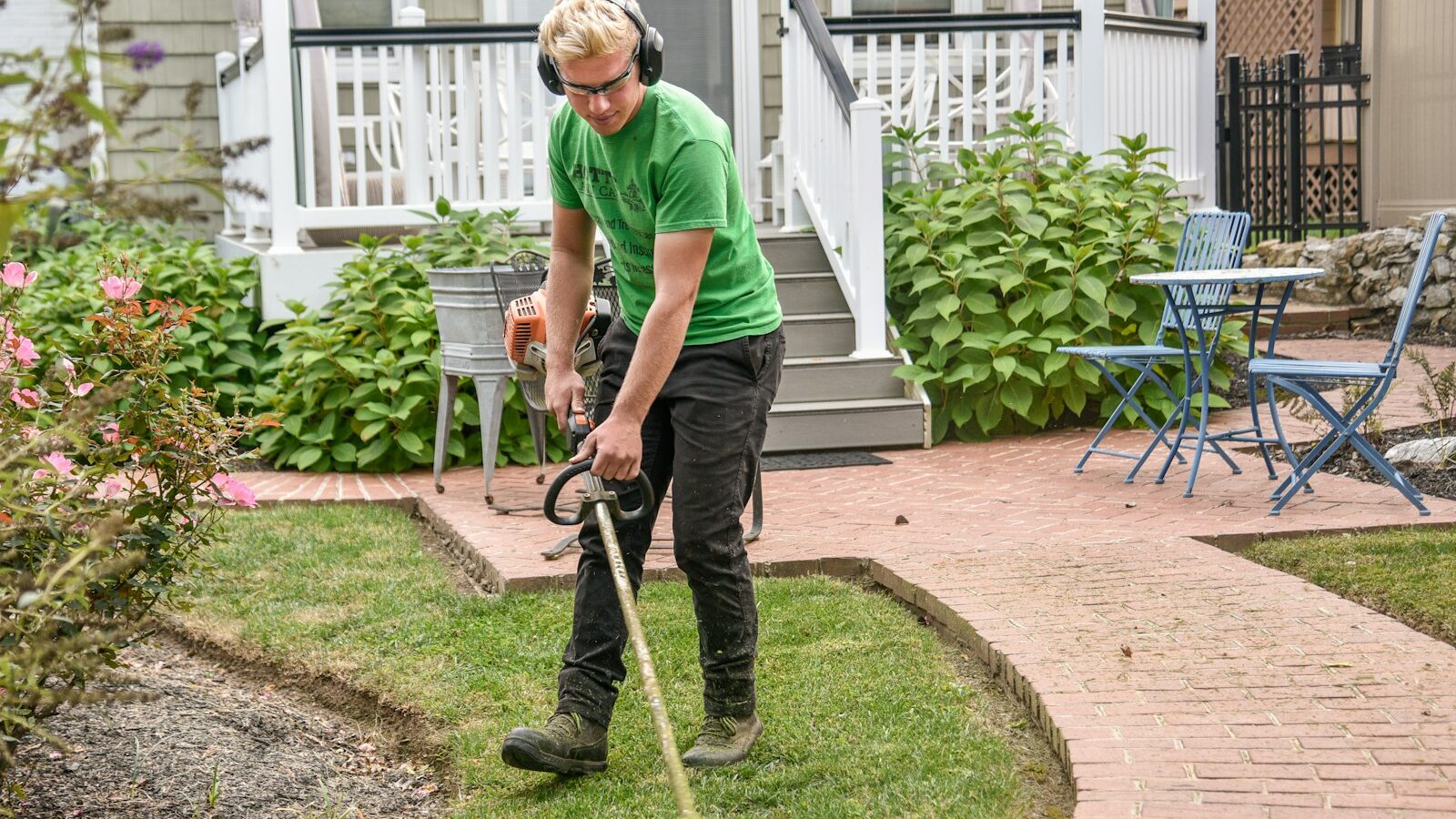
A crisp edge is the single fastest way to make an ordinary lawn look professionally maintained. The strip of bare soil between turf and a bed, walkway, or driveway does two jobs: it stops grass runners and rhizomes from creeping into the mulch, and it draws a clean line that makes everything inside it read as intentional. The trouble is that “lawn edging tool” covers at least four very different machines, from a $30 sharpened steel half-moon you push with your boot to a $200 gas stick edger that cuts a vertical trench along concrete. Buy the wrong category and you will either work twice as hard as you need to or spend money on power you will never use. This guide walks through seven edging tools I would actually buy in 2026, grouped by how they cut, with the honest trade-offs spelled out so you can match the tool to the size of your yard and the kind of edge you are chasing.
As an Amazon Associate we earn from qualifying purchases. This page contains affiliate links at no extra cost to you.
Key Takeaways
- Manual half-moon edgers cut the cleanest, deepest bed edge and need no fuel or batteries — but they are slow and hard on your back over long runs.
- Rotary step edgers roll a serrated wheel along walkway joints; great for tidying existing concrete edges with zero power.
- String-trimmer blade conversions and dedicated power edgers cut vertical lines along driveways and sidewalks fast — the right pick for long hard-surface borders.
- Match the tool to the run: a half-moon for a 20-foot flower bed, a powered edger for 200 feet of driveway.
- Re-cut bed edges twice a season (spring and midsummer); a sharp blade and a slight outward bevel keep the trench from collapsing.
| Product | Best For | Key Spec |
|---|---|---|
| Radius Garden 22611 Root Slayer Edger | Deep bed edges | Manual half-moon, carbon steel |
| Fiskars 46-Inch Steel Edger | Long bed runs | Manual, welded steel shaft |
| Ames 2917200 Saw-Tooth Border Edger | Budget half-moon | Serrated blade, 41 in |
| Rocklin Industry Rotary Edger | Sidewalk joints | Step rotary wheel, no power |
| WORX WG896 Electric Edger | Corded driveway edging | 12 A, 7.5 in blade, 3-depth |
| EGO Power+ ME0001 Edger Attachment | Cordless multi-head | 56 V, 7.5 in steel blade |
| Echo PE-2620 Gas Stick Edger | Large pro properties | 25.4 cc 2-stroke, 8 in blade |
1. Radius Garden 22611 Root Slayer Edger — Best Manual Bed Edger
Radius Garden took the classic half-moon edger and gave it the one feature it always needed: a blade that actually cuts roots instead of bouncing off them. The Root Slayer Edger uses a hardened carbon-steel head with a sharpened, slightly tapered edge and a forward-angled “shark-tooth” tip that bites into compacted soil and severs the grass rhizomes that make a bed edge fail. The O-shaped polypropylene handle gives you a two-hand grip that turns your body weight into clean downward force, which is exactly what you want when you are stepping a blade into turf for an hour.
This is my pick for creating a brand-new bed edge or re-cutting one that has crept and softened over a season. It carves a deep, vertical wall that holds its shape, and because it slices roots cleanly it does not leave the ragged torn edge that invites grass to grow right back. The downside is honest physical labor: on a long driveway run you will feel it in your shoulders, and it asks more of your technique than a powered tool. For beds and borders, though, nothing gives a crisper line.
Pros
- Sharp carbon-steel blade slices through grass roots cleanly
- O-grip handle makes stepping the blade in comfortable and controlled
- No fuel, batteries, or noise — works anywhere
Cons
- Physically demanding over long runs
- Slower than any powered edger
- Carbon steel needs drying and occasional oiling to avoid rust
2. Fiskars 46-Inch Steel Lawn Edger — Best for Long Bed Runs
The Fiskars 46-inch edger is the no-nonsense long-handled half-moon that I hand to anyone who has a lot of bed footage and a sore lower back. The whole tool is welded steel — shaft, blade, and a wide foot platform — so there is no wooden handle to crack and no joint to wobble. At 46 inches it is tall enough that a six-foot gardener can keep a straighter spine and use leg drive rather than bending over a short-handled spade, which is the difference between edging 60 feet and edging 160 feet before you quit.
The serrated sharpened blade handles turf and light roots well, though it does not have the aggressive root-cutting tooth of the Radius. Where it shines is repetitive re-edging of established beds: step, rock, pull the plug, move on. The all-steel build is heavier than a fiberglass-handled tool, and on rocky or heavy clay you will still work for it, but for clean lines along long perennial borders and tree rings it is a tank that will outlast you.
Pros
- One-piece welded steel — nearly indestructible
- Long shaft keeps your back straighter on long runs
- Wide foot platform makes stepping in easy
Cons
- Heavier than fiberglass-handled edgers
- Blade lacks an aggressive root-severing tooth
- Steel shaft transmits more shock in rocky soil
3. Ames 2917200 Saw-Tooth Border Edger — Best Budget Half-Moon
If you edge a couple of beds twice a year and do not want to spend much, the Ames saw-tooth border edger is the honest budget choice. It is the familiar half-moon shape with a 41-inch hardwood handle and a serrated steel blade whose teeth help it saw through sod and shallow surface roots rather than bouncing off them. For the price of a couple of bags of mulch, it does the core job: cutting a clean separation line between lawn and bed.
Set expectations accordingly. The blade steel is softer than the premium tools here, so it dulls faster and benefits from a touch-up with a mill file every few sessions. The hardwood handle is comfortable but will eventually loosen at the socket if you pry sideways with it — step the blade straight down and rock it, do not lever rocks out with it. Used as intended on average soil, it delivers a tidy edge and is the right tool for a small suburban lot.
Pros
- Inexpensive entry into manual edging
- Saw-tooth blade helps cut through sod and surface roots
- Lightweight hardwood handle is easy to swing and store
Cons
- Softer steel dulls faster and needs filing
- Wood handle can loosen if you pry sideways
- Not built for daily commercial use
4. Rocklin Industry Rotary Step Edger — Best for Sidewalk & Walkway Joints
The rotary step edger is the old-school tool your grandparents used along the front walk, and it is still the right answer for one specific job: cleaning the grass that creeps over an existing concrete or paver edge. Rocklin’s version has a serrated star-shaped cutting wheel and a smaller guide wheel; you set the cutter into the joint between turf and pavement, step on the foot bar, and roll it along. The wheel chops the encroaching grass into a neat line that follows the hard edge perfectly.
What I like about it is that it gives you a powered-edger look with zero fuel, batteries, or noise — perfect for a quiet Sunday morning or a small condo lot where a gas edger would be obnoxious. The limits are real, though: it only works where there is already a firm edge to ride against, it cannot cut a new bed line in open turf, and in thick or wet grass the wheel can skip rather than slice. As a finishing tool for existing walkways it earns its modest price; as your only edger it will leave you wanting.
Pros
- Quiet, no fuel or batteries to maintain
- Rolls a clean line along existing concrete and pavers
- Light and easy for most adults to operate
Cons
- Only works along an existing firm edge
- Cannot cut a fresh bed line in open lawn
- Skips and slips in thick or wet grass
5. WORX WG896 12-Amp Electric Edger — Best Corded Power Edger
For homeowners with long driveway and sidewalk borders and a reliable outdoor outlet, the corded WORX WG896 is the most cost-effective way to get a true powered vertical edge. Its 12-amp motor spins a 7.5-inch steel blade with three cutting-depth settings, and a line-up guide plus a small shielding guard help you track straight along concrete without flinging gravel at your shins. Because it is corded, it has no battery to charge or degrade and no fuel to mix — pull the trigger and it cuts at full power every time.
This is the tool that transforms a 150-foot driveway from a half-hour chore with a string trimmer into a five-minute pass with a clean, deep, vertical line. The obvious catch is the cord: you are tethered to an outlet and have to manage the lead so you do not run over it, which makes it awkward for back beds far from the house. For perimeter hard-surface edging within an extension cord’s reach, though, it is excellent value and far quieter than gas.
Pros
- Strong 12-amp motor with consistent full-power cutting
- Three depth settings and a guide for clean vertical lines
- No battery or fuel; low cost of ownership
Cons
- Cord limits range and must be managed carefully
- Not practical for beds far from an outlet
- Single-purpose; it only edges
6. EGO Power+ ME0001 Edger Attachment — Best Cordless Multi-Head
If you already own an EGO Power+ multi-head power head (the system that takes string-trimmer, pole-saw, and blower attachments), the ME0001 edger attachment is the smartest way to add real edging power without buying a whole new machine. It clicks onto the same 56-volt power head and drives a 7.5-inch steel blade with adjustable depth and an angled guide wheel, so you get cordless, gas-free vertical edging that rivals a corded unit’s cut quality and goes anywhere on the property.
The appeal is freedom and tidiness: no cord to dodge, no fuel to store, and you only maintain one motor across several tools. Runtime depends on the battery you pair it with, and edging is a heavier draw than trimming, so a larger-amp-hour pack is worth it if you have a big lot. The honest caveats are cost and dependency — the attachment is only sensible if you are already in the EGO ecosystem, and battery edging will not match the all-day stamina of gas for a commercial crew. For a homeowner who values quiet, cordless convenience, it is the pick.
Pros
- Cordless freedom with near-corded cut quality
- Shares one power head with other EGO attachments
- Quiet, no fuel, instant start
Cons
- Only makes sense if you own the EGO power head
- Edging drains batteries faster than trimming
- Won’t match gas stamina for all-day commercial use
7. Echo PE-2620 Gas Stick Edger — Best for Large Properties
When you are edging acres of borders, long commercial walkways, or a property where you simply do not want to think about runtime, a dedicated gas stick edger like the Echo PE-2620 is the professional answer. Its 25.4 cc two-stroke engine spins an 8-inch blade through a solid steel driveshaft, and the straight-shaft design with a guide wheel lets you walk a long, dead-straight line along concrete all day. Echo’s reputation among landscapers is built on engines that start reliably and run for years of hard commercial use, and this tool is squarely in that tradition.
This is overkill for most suburban lots, and it should be — it is built for stamina and cut depth that battery and corded units cannot match over a full workday. The costs are the usual gas tradeoffs: you mix two-stroke fuel, the engine is loud enough to need hearing protection, and there is more maintenance (spark plug, air filter, fuel stabilizer) than a battery tool. If your edging is measured in hundreds of feet per session, those tradeoffs are worth it; if it is one flower bed, buy a half-moon and skip the noise.
Pros
- All-day runtime with no battery limits
- Strong 25.4 cc engine cuts deep, straight lines fast
- Echo commercial reliability and serviceable parts
Cons
- Loud — hearing protection required
- Two-stroke fuel mixing and more routine maintenance
- Overkill and overpriced for small lots
How to Choose a Lawn Edging Tool: What to Look For
Bed edge vs hard-surface edge. This is the first decision and it drives everything else. A bed edge is the trench you cut between turf and a mulched planting area — there is no firm surface to ride against, so you need a blade you push straight down into soil. That means a manual half-moon edger. A hard-surface edge runs along a driveway, sidewalk, or curb, where a powered or rotary tool can track the concrete and cut a vertical line fast. Most yards need one of each, but if you only buy one, buy for the job you do most.
Length of your runs. Footage decides whether power is worth it. Under about 40 feet of total edging, a manual half-moon is genuinely faster than dragging out a cord or mixing fuel, and it does a better job on bed lines. Between 40 and 150 feet of hard-surface edge, a corded electric like the WORX is the value sweet spot. Past that, or if you are edging a commercial property, cordless multi-head or gas stick edgers pay back their cost in saved time and fatigue.
Blade and build quality. On manual tools, look for hardened, sharpenable steel and a one-piece or well-socketed handle — the Radius Root Slayer’s root-cutting tooth and the Fiskars welded steel shaft are examples of build that lasts. On powered tools, a steel edger blade (not a string head) gives you a true vertical cut, and adjustable depth lets you go shallow on thin turf and deeper where grass has crept badly. Avoid trying to edge long-term with just a string trimmer turned sideways; it frays grass instead of cutting a clean wall.
Power source and noise. Corded electric is cheapest to own but tethered. Cordless battery is the quiet, flexible middle ground and the best fit for most modern homeowners, especially if you already own a battery platform. Gas delivers unmatched stamina at the cost of noise, fuel mixing, and maintenance. Match the source to your patience for upkeep as much as to your yard size. If you are building out a whole shed of yard tools, our tools and gear hub has more buyer guides to round out the kit.
Edging technique and timing. Whatever tool you choose, cut a slight outward bevel so the trench wall faces the bed and resists collapse, and re-cut established edges twice a season — once in spring as growth takes off and again in midsummer when rhizomes have crept. Keep the spoil out of the bed and the line will stay crisp. A clean edge also makes the rest of your bed prep show; if you are starting from scratch, pair this with our walkthrough on how to prepare a new flower bed so the border and the soil inside it come together at once.
Frequently Asked Questions
What is the difference between an edger and a trimmer?
A trimmer (string trimmer or weed eater) spins a nylon line roughly horizontally to cut grass that a mower misses, and you can turn it sideways to “edge” in a pinch — but it frays the grass and leaves a rough line. A dedicated edger spins a steel blade vertically to cut a clean, straight wall along a driveway or bed, or in the case of a manual half-moon, you step a blade straight down into the soil. For a crisp, lasting edge, use an edger; a trimmer is a touch-up at best.
Do I need a powered edger or is a manual one enough?
It depends almost entirely on how much edging you do. For a typical suburban lot with a few flower beds and short walkway runs — under about 40 feet total — a manual half-moon edger is faster, quieter, and gives a better bed line than dragging out a powered tool. Once you are edging long driveways, sidewalks, or 150-plus feet of hard surface, a corded, cordless, or gas powered edger saves real time and effort.
How often should I edge my lawn beds?
Re-cut established bed edges twice a season: once in spring as grass starts actively growing, and again in midsummer when rhizomes and runners have crept into the trench. Hard-surface edges along driveways and walks usually need touching up every few mows during the growing season. Cutting a slight outward bevel and keeping the soil spoil out of the bed helps the edge hold its shape longer between cuts.
How deep should a lawn edge be cut?
For a bed edge, aim for a vertical trench about 2 to 4 inches deep — deep enough to sever creeping grass rhizomes and create a visible separation, but not so deep that it collapses or undermines plant roots. Powered edgers along concrete usually have depth settings; start shallow at about 1 to 1.5 inches and increase only if grass has crept badly. Cutting the wall at a slight outward angle keeps it from caving in.
Can I use the same edger for beds and driveways?
Not really, because the two jobs need opposite tools. Bed edging requires pushing a blade straight down into open soil, which only a manual half-moon does well. Driveway and sidewalk edging needs a tool that rides the hard surface and cuts a vertical line fast — a rotary or powered edger. Many homeowners keep one manual half-moon for beds and one powered or rotary edger for hard surfaces; trying to do both jobs with one tool means one of them comes out poorly.