


The best garden edging is the one that keeps lawn grass out of your beds and mulch in them, and stays put through a few freeze-thaw winters. That comes down to three things: material (steel, plastic or faux stone), height above and below grade, and how many stakes hold it down. This guide compares current Amazon garden edging listings, from 6-inch corrugated galvanized steel to no-dig plastic kits with 150 steel stakes and made-in-USA faux-brick sections, and explains how to choose the right profile for your grass type, layout and budget.
Part of our Lawn Care guide →
In this guide
As an Amazon Associate we earn from qualifying purchases.
How we compared: we compared 17 current Amazon garden edging listings (five metal edging products, seven plastic coils and no-dig kits, four decorative plastic or faux-stone borders and one metal border fence) on what each listing states: material, height, total length, number and type of stakes, installation method and durability claims. We did not test or handle the products, and availability changes, so confirm details on the listing before you buy.
Quick picks
| Product | Best for | Key features | Buy |
|---|---|---|---|
| LAVEVE corrugated steel 6 in | Best overall edging |
| Buy now →Check current price |
| STIRLINGEAR hammer-in steel | Best for crisp low-profile lines |
| Buy now →Check current price |
| Bluepro 2 in plastic, 100 ft | Best no-dig plastic kit |
| Buy now →Check current price |
| EasyFlex pound-in 4.5 in | Best plastic barrier against grass |
| Buy now →Check current price |
| GTSABWAY pre-rusted steel | Best rustic weathered look |
| Buy now →Check current price |
| Beuta Polyrock bricks, 4-pack | Best faux-brick border |
| Buy now →Check current price |
| Amazon Basics 5 in coil | Best budget coil |
| Buy now →Check current price |
Prices change often; check Amazon for today’s price. As an Amazon Associate we earn from qualifying purchases.
Free, no-obligation quote · Connect with a local pro
The best garden edging, compared
1. LAVEVE Corrugated Galvanized Steel Edging (6 in x 40 ft) — Best overall edging

A 6-inch, 40-foot corrugated galvanized steel border with a weather-resistant coating and rolled top and bottom edges.
Check price on AmazonWhy we like it
- Galvanized steel core resists rust
- Corrugation adds stiffness without losing flex
- Rolled U-shaped hems on both edges
- 6-inch height leaves room to bury and show
| Specification | Details |
|---|---|
| Material | Thickened galvanized steel, weather-resistant coating |
| Size | 6 in tall x 40 ft long |
| Edges | Reinforced U-shaped rolled hems, top and bottom |
| Shape | Corrugated; bends to curves |
| Weight | About 9.5 lb |
| Stakes | Not stated in listing |
LAVEVE corrugated edging — galvanized steel, 6 in x 40 ft, rolled hems, black coating, about 9.5 lb.
The most complete description among the corrugated steel borders
Four listings on the shelf are 6-inch corrugated metal rolls (LAVEVE, Land Guard, GTSABWAY and SnugNiture). They share a format: a continuous strip that bends to curves and is pushed or trenched into the soil. LAVEVE gives the most useful construction detail of the group, a galvanized steel core under a weather-resistant coating, plus rolled U-shaped hems on both the top and bottom edges. Rolled edges matter: cut or raw steel edging is sharp, and a rolled top is safer for kids, pets and hands when you weed along it.
The 6-inch height is the key advantage over most plastic kits. Bury 3 to 4 inches and you still have 2 to 3 inches showing, enough to hold a 2- to 3-inch mulch layer, which is the depth Clemson Extension recommends for most organic mulches. The extra depth below grade also helps against grasses that spread underground. Clemson notes that bermudagrass spreads by both stolons and rhizomes that are very difficult to control in flowerbeds and borders.
The listing does not say whether stakes are included, so plan on driving the strip in after soaking the soil or trenching it in. Steel costs more than plastic and takes care to set level, but it does not crack in cold weather or become brittle in sun.
Pros
- Galvanized, coated steel
- Safe rolled edges
- Tall enough to bury and contain mulch
Cons
- Stakes not mentioned
- Harder to set perfectly level
- Needs a trench in hard soil
Check LAVEVE corrugated steel 6 in price on Amazon
2. STIRLINGEAR Hammer-In Galvanized Steel Edging (33 ft) — Best for crisp low-profile lines

Ten 40-inch galvanized, powder-coated steel panels with built-in 3-inch stakes, leaving a 2-inch lip above ground.
Check price on AmazonWhy we like it
- Panels have stakes built into the design
- Galvanized and black powder-coated
- Low 2-inch visible lip, easy to mow along
- 11 extra stakes included
| Specification | Details |
|---|---|
| Material | Galvanized steel, black powder coat |
| Panels | Ten 40 in x 5 in panels, about 33 ft total |
| Profile | 3 in below ground (stake portion), 2 in above |
| Stakes | 11 additional stakes |
| Installation | Hammer in; can be cut or bent for curves |
| Weight | 20.2 lb |
STIRLINGEAR hammer-in edging — 10 x 40 in galvanized panels, 33 ft, 2 in visible, 11 stakes, 20.2 lb.
The heaviest metal edging and a true hammer-in design
At 20.2 pounds for 33 feet, this is the heaviest edging on the shelf, more than double the weight per foot of the 6-inch corrugated rolls. The panels are designed with 3-inch stakes as part of the profile, so each one hammers straight in and leaves a 2-inch lip showing. That low, crisp line suits formal beds, paths and patios where you want a clean steel edge without a tall wall of metal.
Panels are easier to keep straight than a continuous coil, which makes them good for long straight runs along walks and foundations. The listing says they can be cut or bent for curves, but tight radii are easier with a flexible coil. A 2-inch lip is low for holding deep mulch or stopping creeping grasses that grow over the top, so on bermudagrass lawns, plan to trim along the line regularly.
Pros
- Heavy, rigid galvanized panels
- Fast hammer-in installation
- Extra stakes included
Cons
- Low lip for deep mulch
- Tight curves are harder
- Seams every 40 inches
Check STIRLINGEAR hammer-in steel price on Amazon
3. Bluepro Landscape Edging (2 in x 100 ft) — Best no-dig plastic kit

100 feet of 2-inch no-dig plastic edging in two 50-foot rolls, with a reinforced center line and 150 steel stakes.
Check price on AmazonWhy we like it
- 150 steel stakes instead of plastic spikes
- Reinforced center line to resist curling
- Two 50-foot rolls are easier to handle
- 100 feet covers several beds
| Specification | Details |
|---|---|
| Material | Plastic with central reinforcement line |
| Size | 2 in tall, 100 ft total (two 50 ft rolls) |
| Stakes | 150 steel stakes |
| Installation | No dig; hammer stakes through pre-punched tabs |
| Cutting | Cut to length with shears |
| Weight / warranty | Not stated in listing |
Bluepro BP12833 — no-dig plastic edging, 2 in x 100 ft, 150 steel stakes, reinforced center line.
Steel stakes, the part most no-dig kits skimp on
No-dig edging is only as good as its anchoring, and the stakes are where kits differ most. Seven listings on the shelf are plastic coils or no-dig strips. Two of them include metal stakes: this Bluepro with 150 steel stakes and Kafuzi with 100 metal spikes. Steel stakes drive into clay and stony soil without snapping, and 150 stakes over 100 feet allows one roughly every 8 inches, which keeps frost heave from lifting the strip.
The brand’s reinforced center line targets the common complaint of wavy plastic edging that curls in heat. Splitting the 100 feet into two 50-foot rolls also makes unrolling and relaxing the plastic easier. The trade-off is height: at 2 inches, this is a surface edge to define beds and hold gravel or shallow mulch, not a barrier to underground runners.
Pros
- Plenty of steel stakes
- Anti-curl design
- Long total length
Cons
- Only 2 inches tall
- Will not stop rhizomes
- Plastic look up close
Check Bluepro 2 in plastic, 100 ft price on Amazon
4. EasyFlex Pound-In Landscape Edging (4.5 in x 20 ft) — Best plastic barrier against grass
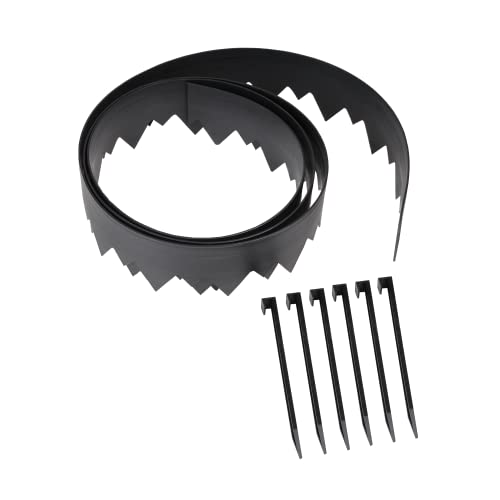
A 4.5-inch straight-top recycled plastic edging that pounds into scored soil with a mallet; 20-foot coil with 6 stakes.
Check price on AmazonWhy we like it
- Taller 4.5-inch body for below-grade depth
- Pounds in with a rubber mallet
- Recycled plastic, bends to tight curves
- Rated to handle string trimmers
| Specification | Details |
|---|---|
| Material | Recycled plastic |
| Size | 4.5 in straight top, 20 ft coil |
| Stakes | 6 anchoring stakes |
| Installation | Score soil, then pound in with a rubber mallet |
| Durability claim | Withstands trimmers, temperature changes, ground movement |
| Weight / warranty | Not stated in listing |
EasyFlex 3500-20CXX-3 — recycled plastic pound-in edging, 4.5 in x 20 ft, 6 stakes.
A taller plastic profile that can go into the ground
Most plastic coils on the shelf are 1.5 to 3 inches tall and sit on the surface. The EasyFlex pound-in strip is 4.5 inches, which means you can sink most of it below grade and still keep a lip above, the configuration that blocks shallow runners. Only the Amazon Basics coil, at 5 inches, is taller among the plastic options.
Installation is simple: score a line with a spade or edger, then drive the strip in with a rubber mallet. The 20-foot coil is short, so most beds need two or three, and six stakes is a modest count; add more in loose soil or on curves. The listing does not state a warranty.
Pros
- Deeper profile for grass control
- Quick mallet installation
- Recycled material
Cons
- Short 20-foot coil
- Few stakes
- Plain black look
Check EasyFlex pound-in 4.5 in price on Amazon
5. GTSABWAY Pre-Rusted Corrugated Edging (6 in x 40 ft) — Best rustic weathered look

A 6-inch, 40-foot pre-rusted corrugated metal border with rolled top and bottom edges for a weathered look.
Check price on AmazonWhy we like it
- Only pre-rusted finish on the shelf
- Rolled, rounded top and bottom edges
- Bends to curves, circles and tree rings
- Heaviest corrugated roll, about 11.9 lb
| Specification | Details |
|---|---|
| Material | Corrugated metal, pre-rusted patina |
| Size | 6 in x 40 ft |
| Edges | Rounded, rolled top and bottom; R-shaped corners |
| Installation | Push into wet soil or set in a narrow trench |
| Weight | About 11.9 lb |
| Stakes | Not stated in listing |
GTSABWAY XSBWJ-6X40Ft — pre-rusted corrugated metal, 6 in x 40 ft, rolled edges, about 11.9 lb.
Weathered steel character without waiting
Three of the four corrugated rolls come in black. GTSABWAY’s pre-rusted finish gives the warm, weathered-steel look popular in modern and prairie-style plantings, and the listing says the patina continues to develop with time. At about 11.9 pounds it is the heaviest of the four 6-inch rolls, which suggests a slightly heavier gauge.
The listing’s installation tips are practical: wet the soil and push the strip in, or dig a narrow trench in harder soil and backfill. Note that rust can stain light-colored pavers or concrete it touches, so keep it a little away from pale hardscape. The listing does not specify the base metal or include stakes.
Pros
- Attractive weathered finish
- Safe rolled edges
- Heaviest corrugated roll
Cons
- Can stain pale hardscape
- Base metal not specified
- No stakes listed
Check GTSABWAY pre-rusted steel price on Amazon
6. Beuta Polyrock Brick Edging (4-pack, Greystone) — Best faux-brick border

Four made-in-USA interlocking sections of six faux bricks each, totaling 16 feet, with 12 securing spikes.
Check price on AmazonWhy we like it
- Brick look without masonry work
- Made in the USA
- Interlocking sections with spikes
- Protects bed edges from trimmer line
| Specification | Details |
|---|---|
| Material | Polyrock faux brick, Greystone color |
| Sections | Four 6-brick sections, about 47.5 in each, 16 ft total |
| Profile | 2.25 in high x about 3.75 in wide |
| Spikes | 12 included |
| Origin | Made in USA |
| Corners | Function bricks for shapes sold separately |
Beuta Polyrock 4-pack — interlocking faux brick, 16 ft, 2.25 in high, 12 spikes, made in USA.
A decorative border that sits on top
Four listings are decorative borders that mimic other materials: two EasyFlex kits (stone-look and wood-look fence) and two Beuta Polyrock packs. Beuta is the only one that says it is made in the USA, and its 3.75-inch-wide brick profile gives a mowing strip that keeps string trimmers off bed plants, a point the listing makes.
Like most decorative edging, it sits mostly on top of the soil at 2.25 inches high, so it frames and contains mulch but does not block underground runners. Sixteen feet per 4-pack is modest for a large bed, and corner or shaping pieces are sold separately. Set it on a leveled, tamped strip of soil so the sections sit flush.
Pros
- Brick look, light weight
- Made in USA
- Wide trimmer strip
Cons
- 16 ft per pack
- Corner pieces extra
- No below-grade barrier
Check Beuta Polyrock bricks, 4-pack price on Amazon
7. Amazon Basics Flexible Landscape Edging Coil (5 in x 40 ft) — Best budget coil

A 5-inch, 40-foot recycled plastic coil with a brown faux woodgrain finish and 10 matching stakes.
Check price on AmazonWhy we like it
- Tallest plastic edging on the shelf, 5 inches
- Recycled plastic
- Brown woodgrain finish blends with mulch
- Bends for curves or straight boxes
| Specification | Details |
|---|---|
| Material | Recycled plastic, faux woodgrain texture |
| Size | 5 in x 40 ft coil |
| Color | Brown |
| Stakes | 10 matching stakes |
| Weight | 8.91 lb |
| Warranty | Not stated in listing |
Amazon Basics JC059 — recycled plastic coil, 5 in x 40 ft, brown woodgrain, 10 stakes, 8.91 lb.
Height on a budget
At 5 inches tall, this coil gives the most below-grade depth of any plastic edging we compared, which makes it better at blocking shallow runners than the 1.5- to 3-inch no-dig strips. The brown woodgrain finish reads as a natural border once mulch is in place, and 40 feet in one piece means fewer seams on long sweeps.
The weak point is anchoring. Ten stakes over 40 feet is one every 4 feet, too sparse to stop frost heave in cold climates. Add stakes every 12 to 18 inches, especially on curves, and trench the coil in rather than relying on stakes alone.
Pros
- Tall 5-inch profile
- Natural-looking brown finish
- Long single coil
Cons
- Only 10 stakes
- Needs trenching for best results
- Coils need sun to relax
Check Amazon Basics 5 in coil price on Amazon
Free, no-obligation quote · Connect with a local pro
How to choose garden edging
Material: steel, plastic or faux stone
Steel gives the crispest, most permanent line, does not crack in cold or turn brittle in sun, and suits modern and formal beds. It costs more and needs care to set level; choose rolled or hemmed edges for safety. Plastic is the cheapest and fastest to install and bends to any curve, but thin coils can curl and heave if under-staked. Decorative plastic and faux-stone borders look good on the surface but rarely extend below grade.
Height above and below grade
Two numbers matter: how much sits above ground to hold mulch, and how much sits below to block grass. Clemson Extension recommends a 2- to 3-inch layer for most organic mulches such as pine bark, wood chips and pine needles, so you want at least 2 inches of lip. For lawns of spreading grasses, depth below grade matters more. Clemson notes bermudagrass spreads by stolons above ground and rhizomes below, and is very difficult to control in flowerbeds and borders; a 6-inch metal edge buried 3 to 4 inches, combined with regular trimming, is the most reliable barrier on this shelf.
Count the stakes
Under-anchored edging is the most common failure. Frost heave lifts strips that are staked every few feet. As a rule, use a stake every 12 to 18 inches, more on curves and in loose soil. Steel stakes outlast plastic spikes in clay. When comparing kits, divide length by the number of stakes included; on this shelf that ranges from about one stake every 8 inches (Bluepro and the EasyFlex stone-look kit) to one every 4 feet (Amazon Basics).
Match flexibility to the layout
Island beds, tree rings and sweeping curves want flexible coils or corrugated metal that follows a tight radius. Long straight runs along drives and foundations favor rigid steel panels or stiff plastic. Measure each bed’s perimeter along the actual curve with a hose or string, then add about 10 percent for overlaps and waste.
Installation tips
Mark the line with a hose or spray paint, cut a clean edge with a half-moon edger or flat spade (see our lawn edging tools guide), and trench to the depth you need. Set the edging so the top sits just above the lawn’s soil line, so a mower wheel can ride along it. Backfill and tamp on both sides, then stake. Finish with mulch and rake it level with a garden rake. Clemson also notes that a ring of mulch protects tree trunks from mowers and trimmers, so an edged mulch circle around young trees does double duty.
Edging also frames raised garden beds, paths and play areas. For whole-yard layouts, retaining edges on slopes or long runs of steel set to grade, a landscaper can install it quickly and precisely; compare quotes through our local services directory, and see our landscaping and hardscaping guide for design ideas.
Rather hire a pro?
Prefer to skip the DIY and have it done right? Compare free, no-obligation quotes from vetted local landscaping pros near you.
Frequently asked questions
Does no-dig edging really stay in place?
Yes, if it is staked often enough, roughly every 12 to 18 inches and more on curves. Kits with only a handful of stakes will heave in freeze-thaw winters, so add stakes, and choose steel stakes for clay soil.
Is steel or plastic edging better?
Steel gives a crisper, permanent line and resists cracking and sun damage, but costs more and is harder to set level. Plastic is cheaper, faster and more flexible. Choose steel for formal or straight runs and plastic for budget curved beds.
How deep should garden edging go?
Leave about 2 inches above grade to contain a 2- to 3-inch mulch layer, and bury as much as possible below grade, ideally 3 inches or more, to slow creeping grass rhizomes.
Can edging stop bermudagrass from invading beds?
It slows it but rarely stops it entirely, because bermudagrass spreads by both above-ground stolons and underground rhizomes. Use a tall, continuous edge with no gaps, sink it deep, and trim runners along the edge regularly.
How much edging is needed for a bed?
Measure the full perimeter along the actual curve with a string or hose, then add about 10 percent for overlaps and cutting waste. Buy rolls or kits that total at least that length.