

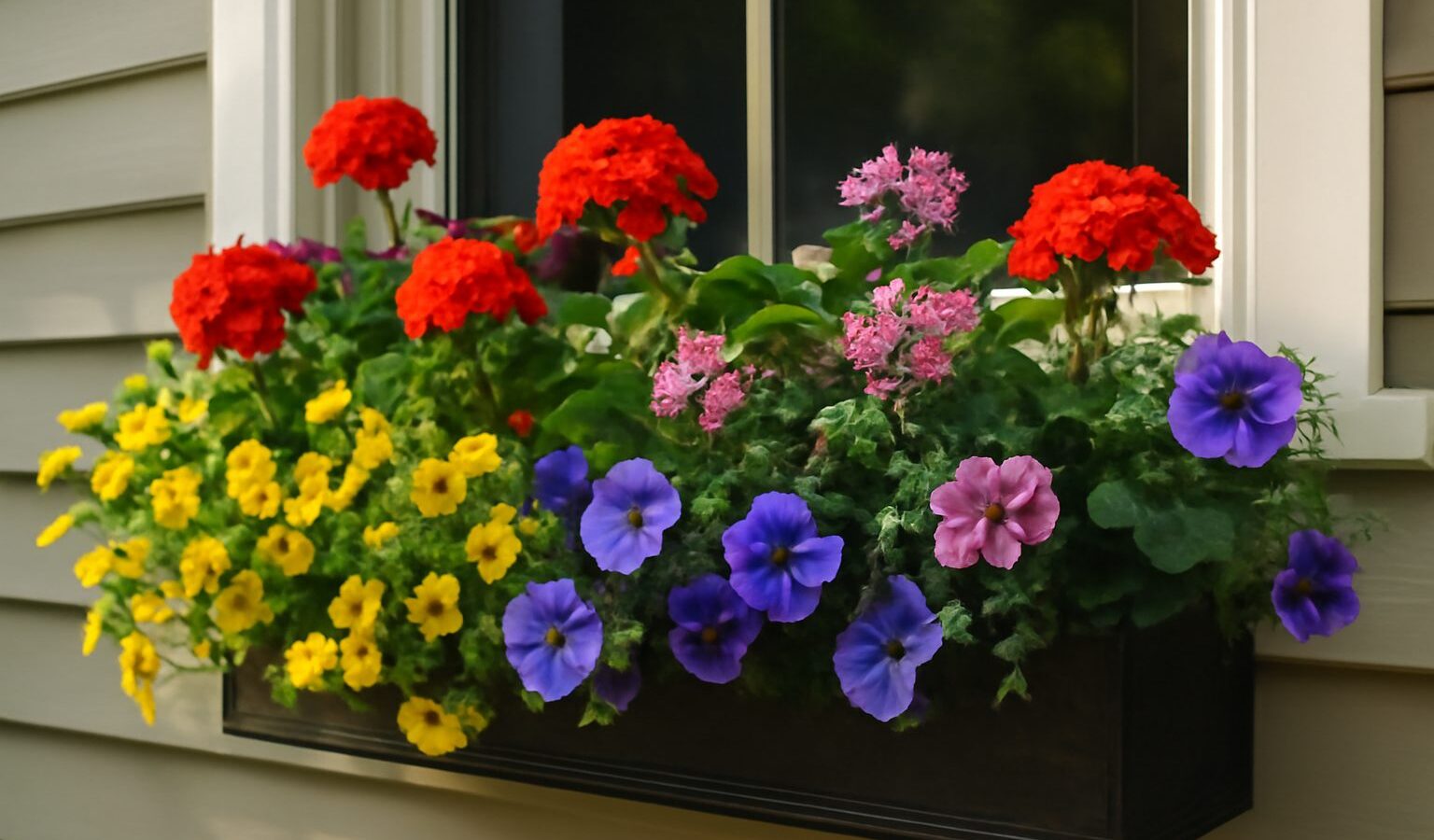
A well-planted window box turns a flat wall into a layered, living display and gives renters and small-space gardeners a full season of color without a single square foot of yard. The difference between a window box that overflows by midsummer and one that limps along is almost entirely in the setup: the right box size and material, a free-draining potting mix, plants matched to the window’s light, and a watering routine that keeps up with a container that dries faster than anything else in the garden. This guide gives you a proven planting formula, sun and shade plant lists by name, exact box dimensions, and the maintenance steps that keep a box looking full from May through October.
Key Takeaways
- Choose a box at least 8 inches deep and 8 inches wide so roots have room and soil doesn’t dry out by noon.
- Use the thriller-filler-spiller formula: one or two tall focal plants, mounding fillers, and trailing edge plants.
- Fill with a peat- or coir-based potting mix amended with slow-release fertilizer and water-retaining crystals — never garden soil.
- Match plants to the window’s light first; a south-facing box and a north-facing box need entirely different plant lists.
- Plan to water window boxes daily in summer heat and feed every two weeks with a liquid fertilizer.
Choosing the Right Box and Material
Size drives success more than any other factor. Aim for a box at least 8 inches deep and 8 inches front-to-back; deeper and wider is always better because soil volume buffers against drying out. A box too shallow will cook its roots and need watering twice a day. For length, run the box the full width of the window or slightly wider for a balanced look. A standard 36-inch window pairs with a 30–36 inch box.
- PVC and fiberglass: Lightweight, rot-proof, and retain moisture well. Best all-round choice for ease of care.
- Cedar and other rot-resistant wood: Classic look and good insulation for roots, but heavier and needs eventual resealing.
- Metal (galvanized or powder-coated): Sleek, but heats up fast in full sun and dries soil quickly — line it or reserve it for shade.
- Self-watering boxes: A built-in reservoir cuts watering to once or twice a week; worth it for hard-to-reach upper windows.
Whatever the material, the box must have drainage holes. Drill several 1/2-inch holes along the bottom if it has none. Mount it on heavy-duty steel brackets rated for the filled, watered weight — a 36-inch box of wet soil can weigh 50 pounds or more — and bolt the brackets into studs or masonry, not just siding.
Soil and Drainage
Never fill a window box with garden soil or topsoil. It compacts into a dense, airless block that drowns roots and dries to concrete. Use a quality peat- or coir-based potting mix, which stays light and holds moisture without compacting. Before planting, blend in a measured dose of slow-release fertilizer such as a 14-14-14 product, and stir in a small handful of water-retaining polymer crystals if your box sits in full sun — they swell to hold reserve moisture and buy you a few hours on hot days.
Skip the old “layer of gravel for drainage” advice; research shows it actually raises the saturated zone in the root ball. Instead, cover the drainage holes with a square of landscape fabric or a coffee filter to keep soil in while letting water out. Fill the box to within an inch of the rim so there is room to water without overflow.
The Thriller-Filler-Spiller Formula
The most reliable design recipe for any container, window boxes included, has three roles. Thrillers are upright, eye-catching focal plants placed at the back or center. Fillers are mounding, bushy plants that fill the middle and cover bare soil. Spillers are trailing plants set at the front edge to cascade down the face of the box and soften the line. For a standard 30–36 inch box, plan on one or two thrillers, two or three fillers, and two or three spillers, spaced closer than the nursery tag suggests — window boxes are meant to look packed.
Plant Lists by Light
Full Sun (6+ hours)
- Thrillers: Upright geraniums (zonal pelargonium), salvia, dwarf snapdragons, ornamental grasses, angelonia.
- Fillers: Petunias, calibrachoa (Million Bells), lantana, marigolds, verbena, dusty miller for silver contrast.
- Spillers: Trailing petunia, sweet potato vine (Ipomoea), bacopa, creeping zinnia, trailing verbena.
Part Shade to Full Shade
- Thrillers: Caladium, upright fuchsia, dragon-wing begonia, dwarf coleus, torenia.
- Fillers: Impatiens, wax begonias, coleus, lobelia, browallia.
- Spillers: Trailing fuchsia, creeping Jenny (Lysimachia), trailing ivy, English ivy, vinca vine.
For a productive twist, an herb window box in a sunny kitchen window can hold basil, parsley, thyme, chives, and trailing oregano, all within arm’s reach of the stove. Cool-season boxes for fall and spring lean on pansies, violas, ornamental kale, snapdragons, and trailing ivy, which shrug off light frost.
Step-by-Step Planting
- Prep the box. Confirm drainage holes, cover them with landscape fabric, and fill with moist potting mix to within an inch of the rim, blending in slow-release fertilizer as you go.
- Plan the layout dry. Set the plants, still in their pots, on top of the soil to arrange thrillers at the back, fillers in the middle, and spillers at the front edge before you dig anything in.
- Plant from back to front. Dig a hole, loosen the root ball, set the plant at the same depth it grew in its nursery pot, and firm the soil. Tuck plants close together — within 3–4 inches — for an instant full look.
- Water in thoroughly. Soak the box until water runs from the drainage holes, settling the soil and removing air pockets. Top off any mix that sinks.
- Pinch and tidy. Pinch back leggy stems by an inch to encourage branching, and remove any broken foliage.
Watering and Feeding
Window boxes dry faster than any other planting because they have a large surface area, full exposure, and limited soil. In summer heat, expect to water every day, and on hot, windy days sometimes twice. Water in the morning so foliage dries before night, and water slowly until it drains from the bottom rather than splashing the surface. Stick a finger an inch into the soil to check: if it’s dry at the second knuckle, water.
Frequent watering flushes nutrients out, so feed every 10–14 days with a balanced water-soluble fertilizer at half the labeled strength, even if you used slow-release in the mix. Deadhead spent flowers weekly to keep petunias, geraniums, and calibrachoa blooming, and pinch back any plant that outgrows its neighbors so no single variety swamps the box. For more container-focused techniques, the urban gardening hub covers small-space growing, and our guide to planting and caring for hanging baskets shares the same watering principles for overhead displays.
Seasonal Refresh and End-of-Season Care
Most window boxes are planted as annual displays and refreshed each season. Swap cool-season pansies and violas for heat-loving petunias and calibrachoa once nights stay above 50°F, then swap back to ornamental kale, mums, and pansies in fall. If you want to carry plants over, lift tender perennials like fuchsia or geraniums and overwinter them indoors before the first hard frost. At season’s end, empty the box, compost the spent annuals, and store the box under cover; refresh the potting mix annually since one season of heavy watering depletes it. A quick scrub with a mild bleach solution between plantings prevents disease carryover. With the box emptied and stored, you’re set to start the cycle again the following spring — see the spring garden checklist for timing.
Frequently Asked Questions
How deep should a window box be?
At least 8 inches deep and 8 inches front-to-back. Deeper and wider is always better because more soil volume holds moisture longer and gives roots room. Shallow boxes dry out by midday and need watering twice daily in summer.
How many plants go in a window box?
For a 30–36 inch box, use one or two upright thrillers, two or three mounding fillers, and two or three trailing spillers — about six to eight plants total. Set them closer than the nursery tags suggest, around 3–4 inches apart, since window boxes are meant to look full and packed.
What plants work for a shady window box?
Impatiens, wax and dragon-wing begonias, coleus, lobelia, and torenia for fillers and thrillers; caladium and fuchsia for height; and creeping Jenny, trailing fuchsia, and ivy as spillers. Avoid sun-lovers like petunias and geraniums, which get leggy and refuse to bloom in shade.
How often should I water a window box?
In summer heat, plan to water daily — sometimes twice on hot, windy days. Water in the morning until it drains from the bottom holes. Check by pushing a finger an inch into the soil; water whenever it’s dry at the second knuckle. A self-watering box with a reservoir can stretch that to once or twice a week.
Can I use garden soil in a window box?
No. Garden soil compacts into an airless, dense block in a container, suffocating roots and drying to concrete. Use a light peat- or coir-based potting mix amended with slow-release fertilizer, and add water-retaining crystals for full-sun boxes. Refresh the mix each season.