

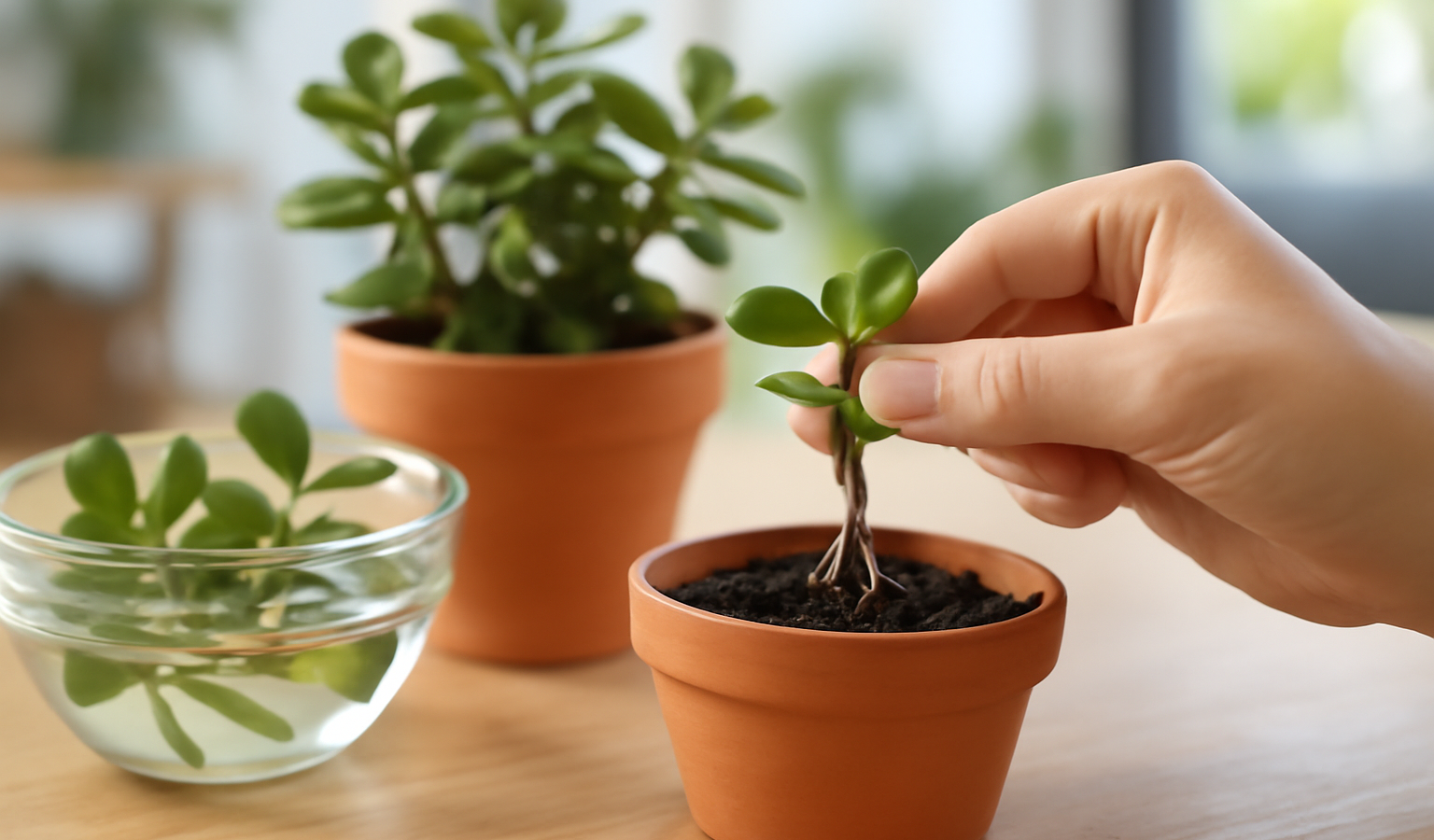
Jade plant (Crassula ovata) is one of the most rewarding houseplants to propagate, which is why a single thriving jade tends to spawn a whole windowsill of offspring passed between friends. As a succulent, it’s built to survive: every fat leaf and chunky stem is a packed reservoir, so a piece broken off the mother plant has the energy to grow roots and become a whole new plant with almost no help from you. There are two reliable routes — stem cuttings, which are faster and more dependable, and single leaves, which are slower but let you turn one knocked-off leaf into a brand-new plant. Both come down to the same secret that trips up beginners: let the cut dry and callus before it ever touches soil, then resist the urge to overwater.
Key Takeaways
- Stem cuttings root faster and more reliably than leaves; single leaves work too but take longer and have a lower success rate.
- Always let the cut callus (dry over) for 3–7 days before planting — fresh wet cuts rot in soil.
- Use a fast-draining cactus/succulent mix and a pot with a drainage hole; never leave cuttings in soggy soil.
- Don’t water for the first week or two. Once planted, water sparingly only after roots form; before that, mist lightly at most.
- Propagate in spring or summer during active growth, in bright indirect light around 65–80°F — roots appear in 2–4 weeks for cuttings, longer for leaves.
When to Propagate Jade
Timing tilts the odds in your favor. Jade roots fastest during its active growing season — spring through summer, when warmth and longer days push it to grow. You can propagate in fall or winter, but rooting slows dramatically and cuttings sit longer in a vulnerable state, so success rates drop. Aim for temperatures around 65–80°F. If you have a healthy mother plant that needs a prune, that’s the perfect moment: you can shape the parent and start new plants in one go. A bonus — jade leaves that simply fall off when you bump the plant are free propagation material, so you rarely need to harvest much.
What You’ll Need
- A healthy, pest-free jade plant to take material from
- Clean, sharp scissors or a knife (wipe with rubbing alcohol to avoid spreading rot or disease)
- Cactus/succulent potting mix, or regular potting mix cut 50/50 with perlite or coarse sand
- Small pots or a shallow tray with drainage holes
- Optional: rooting hormone powder (jade rarely needs it, but it can speed stubborn cuttings)
- A bright spot out of harsh direct midday sun
Method 1: Stem Cuttings (Fastest, Most Reliable)
Step 1: Take the cutting
Choose a healthy stem or branch 2–5 inches long, ideally with a few leaves near the tip. Cut cleanly just below a node (the slightly thicker point where leaves attach) with your sterilized blade. A pencil-thick branch tip is ideal; very young, soft green growth roots less reliably than slightly firmer stems. Gently pluck the lowest one or two pairs of leaves off so you have a bare section of stem to plant — those nodes are where new roots emerge.
Step 2: Let it callus
This is the step beginners skip and then wonder why their cutting turned to mush. Set the cutting somewhere dry, shaded, and airy for 3–7 days until the cut end dries and forms a dry, slightly hardened skin (the callus). The callus seals the wound so the cutting can sit in soil without rotting. Thicker stems may want the full week. Do not put it in water and do not plant it wet.
Step 3: Plant it
Fill a small pot with dry cactus mix. Optionally dip the callused end in rooting hormone, tap off the excess, then poke a hole and set the cutting an inch or so deep, firming the mix just enough to hold it upright. Stake taller cuttings with a chopstick if they tip. Now leave the soil dry. Place the pot in bright, indirect light.
Step 4: Water sparingly and wait
Wait about a week after planting, then give a small drink — just enough to lightly moisten the mix — and let it dry out completely before watering again. The cutting lives off its stored water while it builds roots, so dry-leaning is exactly right; constant moisture invites rot. Expect roots in 2–4 weeks. Test gently by tugging — resistance means roots have taken. Once it’s clearly rooted and pushing new growth, switch to a normal succulent watering routine.
Method 2: Leaf Propagation (Slower, More of Them)
Step 1: Remove whole leaves
The trick with leaves is to remove the entire leaf, including the base where it joins the stem — a leaf torn in half won’t grow, because the growth tissue is at that base. Gently wiggle a plump, healthy leaf side to side until it pops off cleanly. Naturally dropped leaves work perfectly. Take several, since leaf success rates are lower than stem cuttings, so a batch hedges your bets.
Step 2: Callus, then lay on soil
Let each leaf dry for a couple of days until the broken end calluses. Then lay the leaves flat on top of dry succulent mix, base end touching or barely tucked into the soil — don’t bury them. Set the tray in bright indirect light.
Step 3: Mist and be patient
Mist the soil surface lightly every few days to keep it barely damp — never soggy. After a few weeks you’ll see tiny pink roots reaching for the soil and, soon after, a miniature rosette of new leaves forming at the base. This whole process is slow; leaves can take several weeks to a couple of months to produce a recognizable baby plant. The original leaf eventually shrivels and feeds the new plantlet — that’s normal, not failure. Once the babies have their own roots and a few leaves, pot them up individually in cactus mix.
How Many Cuttings Should You Start?
Because jade is so reliable, you don’t need a huge batch — but starting three to five stem cuttings at once is smart insurance and lets you build a fuller pot faster. If you want a single bushy plant rather than several spindly ones, root several cuttings and then pot three or four of the rooted survivors together into one container; they’ll knit into a single dense specimen far quicker than waiting for one cutting to branch out on its own. For leaf propagation, start a dozen or more leaves at a time, since each is slower and a few will inevitably stall. Spreading your bets across both methods at once is the surest path to a windowsill full of jades by the end of a single growing season.
Aftercare for New Jade Plants
Once rooted and growing, treat your new jades like any healthy succulent. Give them bright light — a south or west window indoors, or gradually acclimated morning sun outdoors — because low light makes jade leggy and weak. Water on a “soak and dry” rhythm: water thoroughly, then wait until the soil is completely dry (and the leaves just begin to feel slightly less firm) before watering again. In winter, water far less. Use a pot with a drainage hole, and don’t feed at all until the plant is established and growing, then only a dilute succulent fertilizer a few times in the growing season. Jade is a beginner-friendly choice for a sunny windowsill or a small-space indoor garden.
Troubleshooting
- Cutting turned soft, black, or mushy: rot from skipping the callus step or from wet soil. Cut back to firm tissue, re-callus, and start drier.
- Cutting shriveled and crispy: too little water once roots should have formed, or too much harsh sun. Move to bright indirect light and give a small drink.
- Leaf did nothing for weeks: jade leaves are slow — give it more time, more warmth, and brighter light. A torn (incomplete) leaf base won’t sprout, so it may simply be a dud.
- Roots but no top growth: normal early on; new leaves follow roots. Ensure it’s warm and bright.
Once you’ve succeeded with jade, the same callus-then-plant logic applies to most succulents. For a contrast in technique, see our guide on propagating a ZZ plant, which roots from leaves and rhizomes a little differently.
Frequently Asked Questions
Can you propagate jade in water?
You can root jade cuttings in water, but it’s not recommended — water-grown roots adapt poorly to soil and the cutting is more prone to rot. Jade is a succulent built to root in dry mix, so callusing and planting in cactus soil is more reliable.
Why do I need to let the cutting dry first?
The drying period lets the cut form a callus — a dry, sealed skin over the wound. Without it, the moist cut sitting in soil quickly rots. Allow 3–7 days until the end is dry and slightly hardened before planting.
How long does jade take to root?
Stem cuttings usually root in 2–4 weeks in warm, bright conditions. Single leaves are slower, often taking several weeks to a couple of months to form roots and a tiny new rosette.
Is it better to use a leaf or a stem cutting?
Stem cuttings are faster and far more reliable — start there if you want a usable plant quickly. Leaf propagation works and lets you make many plants from fallen leaves, but it’s slower and has a lower success rate.
How often should I water a jade cutting?
Hardly at all at first. Don’t water for the first week or two after planting; the cutting lives on stored water while rooting. After that, give small drinks and let the soil dry completely between waterings to prevent rot.