

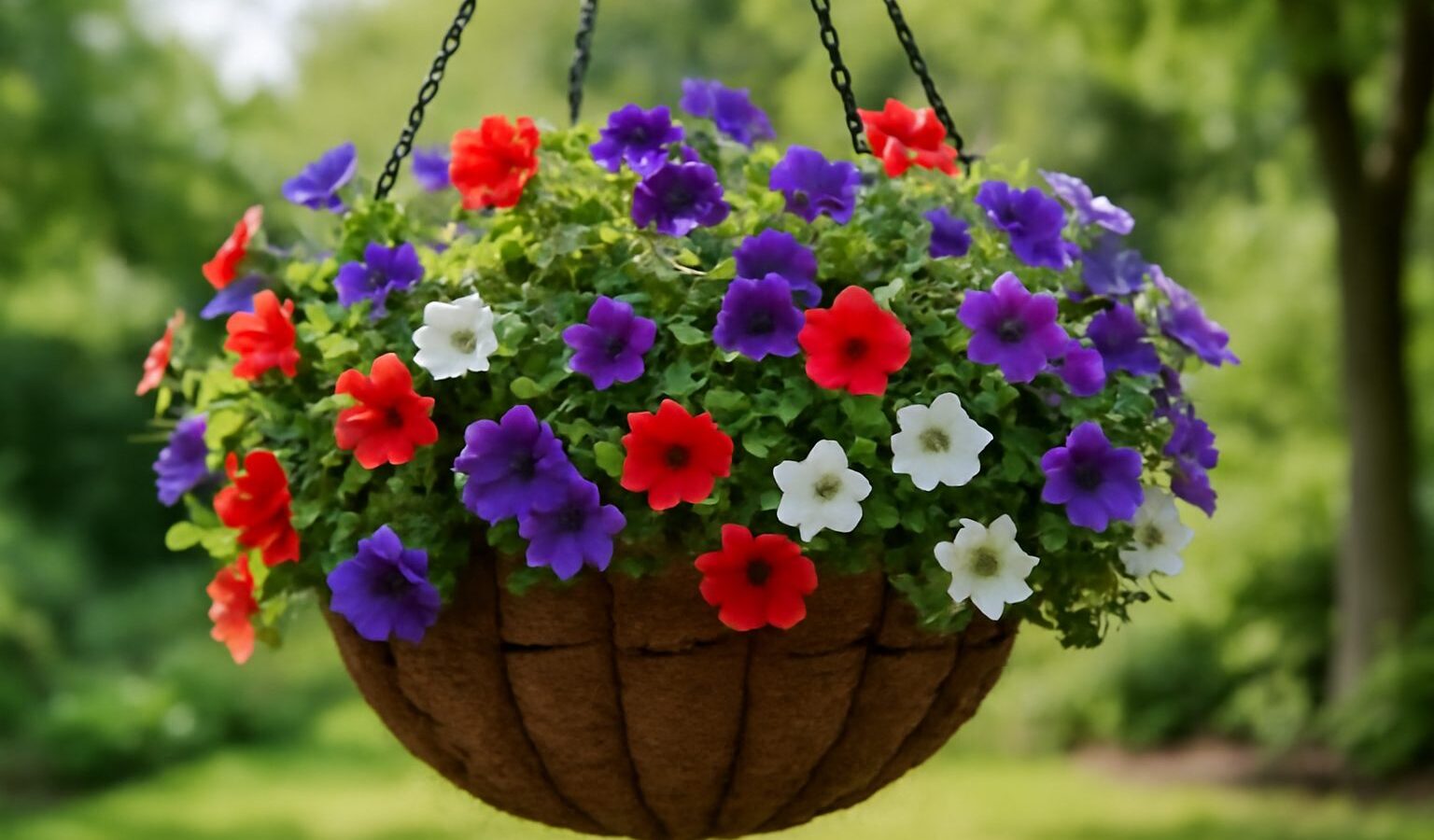
A hanging basket is one of the most rewarding ways to garden in a small space — it adds color at eye level on a porch, balcony, or fence with no ground at all — but it is also the fastest-drying container you will ever plant. The whole basket is exposed to sun and wind on every side, the soil volume is small, and gravity pulls water straight through. The baskets that look spectacular into September are the ones set up correctly from day one: the right basket size and liner, a moisture-retentive mix, plants matched to the light, and a watering and feeding routine that never lets the basket go bone-dry. This guide covers all of it with specific plant names, sizes, and a maintenance schedule.
Key Takeaways
- Choose a basket at least 14–16 inches across; small baskets dry out within hours and never fill in.
- Use a peat- or coir-based potting mix with water-retaining crystals — hanging baskets dry faster than any other container.
- Expect to water daily, and twice a day in peak summer heat; a basket that wilts hard repeatedly will decline.
- Feed every 7–10 days with a half-strength liquid fertilizer because frequent watering flushes out nutrients.
- Deadhead and pinch back monthly to keep baskets full instead of bald in the center with growth only at the edges.
Choosing a Basket and Liner
Bigger is genuinely better with hanging baskets. A 10-inch basket holds so little soil that it can dry out in a single hot afternoon and the plants never reach full size. Aim for 14–16 inches in diameter at minimum; a 16-inch basket holds roughly twice the soil of a 12-inch and is far more forgiving. Make sure the bracket or hook is rated for the soaked weight, which can hit 15–25 pounds for a large basket after watering.
- Plastic baskets with attached saucers: The easiest to maintain. The saucer catches runoff and acts as a small reservoir, so they dry more slowly. Best for beginners and hot exposures.
- Wire baskets with coco-coir liners: The classic, lush “ball of flowers” look that lets you plant the sides, but they dry the fastest. Line the inside with a punctured plastic bag or a layer of plastic sheeting behind the coir to slow water loss.
- Moss-lined baskets: Beautiful and natural but the highest-maintenance for moisture; reserve them for shade or use a moisture liner.
- Self-watering baskets: Built-in reservoirs that stretch watering to every two or three days — excellent for busy gardeners and high or awkward hanging spots.
Soil and Filling the Basket
Fill with a lightweight, peat- or coir-based potting mix, never garden soil, which is too heavy and compacts. Because moisture is the constant challenge, blend in water-retaining polymer crystals and a slow-release fertilizer before planting. Some gardeners mix in extra coir or a thin layer of sphagnum moss for additional water holding. Fill to within an inch of the rim to leave a watering reservoir.
For a wire basket you can plant through the sides for that full, spherical look: line the basket, fill it a third of the way, then poke small trailing plants through slits in the liner from the inside out, spacing them evenly. Add more mix and repeat a second tier, then plant the top. This side-planting is what transforms a basket from a flat top of flowers into a dense globe.
Best Plants for Hanging Baskets
Match plants to the basket’s light, and combine a mounding center plant with trailers that cascade over the rim. Crowd them — a 16-inch basket can hold five or six plants for instant fullness.
Sun Baskets (6+ hours)
- Trailers: Trailing petunia (Wave and Supertunia types), calibrachoa (Million Bells), bacopa, trailing verbena, sweet potato vine, trailing lobelia.
- Mounding centers: Geraniums, lantana, angelonia, gazania, scaevola (fan flower).
Shade Baskets
- Trailers: Trailing fuchsia, creeping Jenny, trailing ivy, vinca vine, trailing torenia.
- Mounding centers: Impatiens, begonias (tuberous and dragon-wing), coleus, browallia, lobelia.
For something different, strawberry baskets, cascading cherry tomatoes (“Tumbling Tom”), and trailing herbs like oregano and thyme all thrive overhead and put food at eye level. A single dramatic specimen — a Boston fern in shade or a large trailing begonia — also makes a striking solo basket without any combining.
Watering: The Make-or-Break Task
Watering is where most hanging baskets fail. Their all-around exposure and small soil volume mean a basket in full sun can need water every single day by midsummer, and on hot or windy days, twice. Water in the morning, slowly and thoroughly, until water runs freely from the bottom — a quick splash only wets the top inch while the core stays dry. Lift the basket occasionally; a heavy basket is wet, a light one needs water.
If a basket dries out completely and the mix pulls away from the sides, surface watering will just run down the gap and out the bottom. Rehydrate it by lowering the whole basket into a tub or bucket of water for 15–20 minutes until the soil fully reabsorbs moisture, then let it drain. To reduce the workload, consider a self-watering basket, a drip line on a timer for several baskets, or simply moving the basket to morning sun and afternoon shade in the hottest part of summer.
Feeding for Continuous Bloom
Daily watering constantly flushes nutrients out of the mix, so hanging baskets are heavy feeders. Even with slow-release fertilizer mixed in at planting, supplement with a water-soluble bloom fertilizer (higher middle and last numbers, such as 15-30-15) every 7–10 days at half strength. Petunias and calibrachoa especially turn pale and stop blooming when underfed — yellowing leaves with green veins signals iron or general nutrient shortage, fixed by stepping up feeding. Stop fertilizing about two weeks before you expect the season-ending frost.
Deadheading, Pinching, and Mid-Season Rescue
Left alone, most baskets grow leggy — bald and woody in the center with all the flowers crowded at the trailing tips. Prevent this by pinching back the longest stems by a third in early summer and again in midsummer to force bushy branching and new bloom. Deadhead spent flowers weekly on petunias, geraniums, and fuchsia, though self-cleaning varieties like calibrachoa, bacopa, and Wave petunias drop their old blooms on their own.
If a basket looks exhausted by late July, give it a hard “haircut” — cut everything back by half, water well, feed, and within two to three weeks it will rebound with fresh, dense growth and a second flush of bloom. Watch for the common pests of stressed baskets: aphids on tender tips, spider mites in hot dry spells (fine webbing and stippled leaves), and whitefly clouds when disturbed. Treat early with insecticidal soap, spraying the undersides of leaves. These same maintenance habits apply to other containers — see our window box planting guide and the broader urban gardening hub for more small-space techniques.
End-of-Season and Overwintering
Most basket annuals are composted at season’s end, but several plants are worth saving. Fuchsia, geraniums, and tender perennials can be cut back, brought indoors, and overwintered in a cool, bright room or kept semi-dormant in a 45–55°F space with minimal water. Boston ferns can winter indoors as houseplants in bright, humid spots. Empty and clean the basket, replace coir or moss liners if degraded, and store hardware under cover. Refresh the potting mix every season — a summer of heavy watering depletes it — and you’ll be ready to replant the following spring. For a guide to easing tender plants through the cold, see our overwintering plants and containers guide.
Frequently Asked Questions
How often do I need to water a hanging basket?
In summer, expect to water daily, and twice a day during hot, windy spells, because a basket is exposed on all sides and holds little soil. Water in the morning until it drains from the bottom. If the mix has dried out and pulled from the sides, soak the whole basket in a tub of water for 15–20 minutes to rehydrate it.
What size hanging basket is best?
At least 14–16 inches in diameter. A 16-inch basket holds roughly twice the soil of a 12-inch and dries out far more slowly, so the plants grow larger and need less frequent watering. Small 10-inch baskets dry within hours and rarely fill in well.
Why does my hanging basket look bald in the middle?
Most trailing plants grow leggy, putting all their flowers at the cascading tips and leaving the center woody. Pinch the longest stems back by a third in early and midsummer to force branching. If it’s already exhausted, cut the whole basket back by half, then water and feed — it will rebound in two to three weeks.
How do I keep basket flowers blooming all summer?
Feed every 7–10 days with a half-strength bloom fertilizer, since daily watering flushes out nutrients. Deadhead spent flowers weekly on petunias, geraniums, and fuchsia, and choose self-cleaning varieties like calibrachoa and Wave petunias to reduce that chore. Never let the basket wilt hard repeatedly.
Can I overwinter a hanging basket?
Yes for several plants. Cut back fuchsia, geraniums, and tender perennials and bring them indoors to a cool, bright room, or keep them semi-dormant at 45–55°F with minimal water. Boston ferns can winter indoors as humid-loving houseplants. Most annuals, though, are simply composted and replanted in spring.