

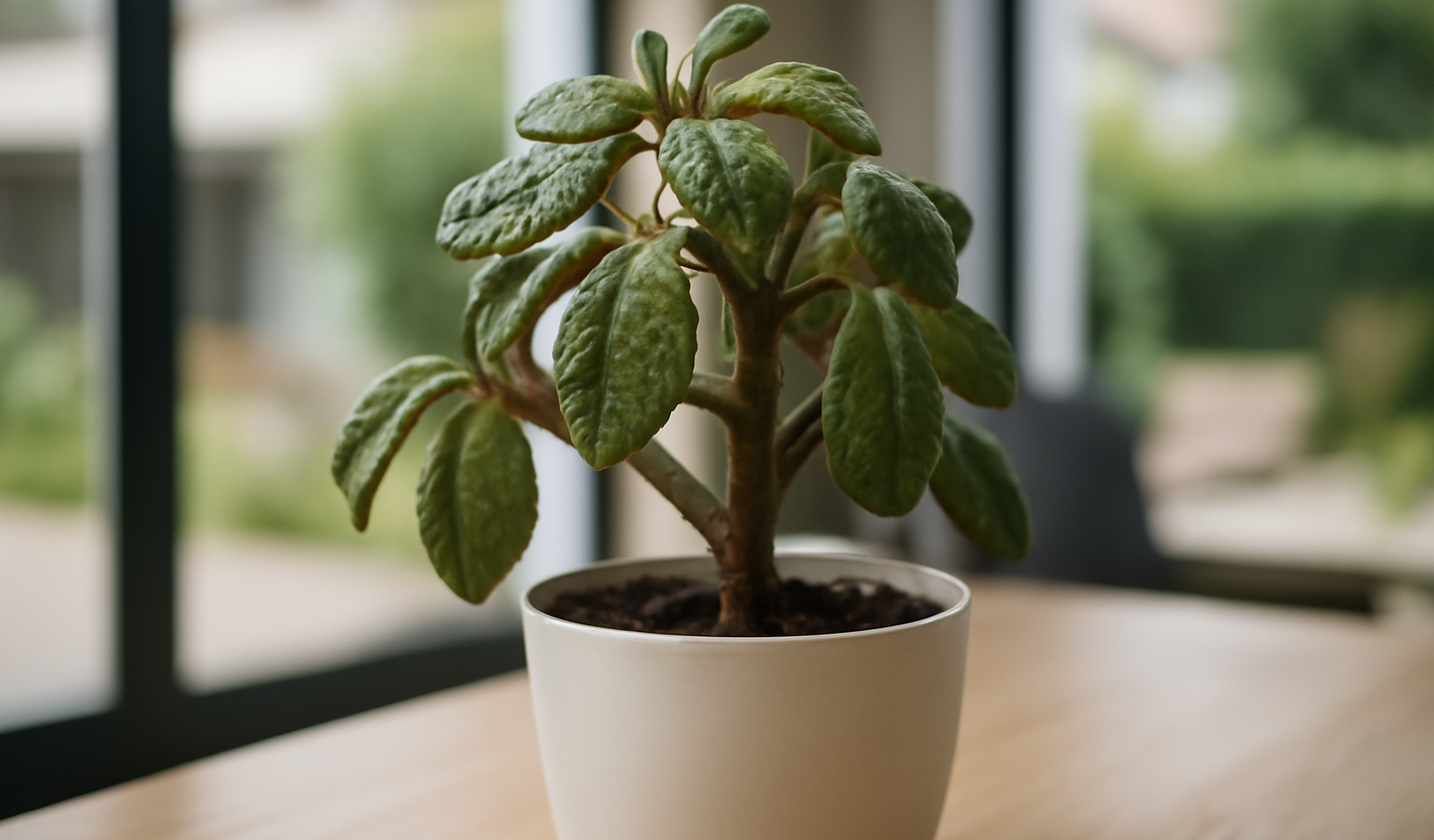
A healthy jade plant (Crassula ovata) stores water in plump, glossy, coin-shaped leaves. So when those leaves go soft, wrinkled, or shriveled, your plant is telling you something about its water balance — but the message is easy to misread. Wrinkling has two completely opposite causes: the plant is either too dry (underwatering) or its roots have rotted and can no longer take up water (overwatering). Treat one like the other and you can kill the plant fast. This guide walks you through diagnosing which problem you actually have, fixing it correctly, and keeping those succulent leaves firm for good.
Key Takeaways
- Wrinkled jade leaves mean a water problem — but it could be too little water OR rotted roots that can’t drink.
- Firm-but-thin, dull leaves with bone-dry soil = underwatering. Soft, mushy, yellowing leaves with wet soil = root rot.
- Underwatered jade recovers in days after a deep soak; rot-damaged jade needs unpotting, trimming rotten roots, and dry repotting.
- Water only when the soil is fully dry — roughly every 2–3 weeks in summer, monthly or less in winter.
- Use a gritty, fast-draining succulent mix and a pot with a drainage hole. Standing water is the #1 jade killer.
How to Tell Underwatering From Root Rot
Before you do anything, diagnose. The fastest test is to push a finger two inches into the soil and lift the pot to feel its weight. Bone-dry, light pot, and leaves that are wrinkled but still firm and matte points to thirst. Damp, heavy soil — especially a sour or musty smell — combined with leaves that are wrinkled and also soft, translucent, or dropping at the slightest touch points to root rot. Underwatered leaves wrinkle from the surface inward and feel like a slightly deflated balloon; rotting leaves feel squishy and waterlogged near the base of the plant. Look at the stem too: a healthy jade stem is firm, while a black, soft, or shriveled lower stem is a classic late-stage rot sign.
Cause 1: Underwatering (the most common reason)
Jade is so famously drought-tolerant that many owners forget it ever needs water at all. The plant draws on the moisture stored in its leaves during dry spells, and as that reserve depletes, the leaves lose volume and the skin folds into fine wrinkles. This is by far the most frequent cause of shriveling, especially in plants sitting in a warm, sunny window where evaporation is high.
How to diagnose
The soil will be completely dry several inches down, and the pot will feel noticeably light when you lift it. Leaves are wrinkled but still firm and intact — not mushy. They may also look slightly dull or develop fine surface puckering rather than a glossy sheen. The plant looks shrunken overall but the stems stay firm. If you gently squeeze a leaf, it has give but does not ooze or collapse.
How to fix it
Water deeply and thoroughly. Take the plant to a sink and run water through the soil until it pours freely from the drainage hole, then let it drain completely before returning it to its spot. A single deep soak rehydrates the whole root zone far better than frequent sips, which only wet the top layer. Within two to five days the leaves should visibly plump back up and regain their gloss — jade recovers from thirst remarkably fast. If the soil has gone so dry that it repels water and the moisture runs straight down the sides, bottom-water instead: set the pot in a few inches of water for 20–30 minutes so the mix can wick moisture up and rehydrate evenly. After this, settle into a real schedule (covered in prevention below) rather than waiting for the plant to shrivel again.
Cause 2: Root Rot From Overwatering
This is the dangerous one. When jade sits in consistently wet soil — too-frequent watering, a pot with no drainage, or a dense moisture-holding mix — the roots suffocate and begin to rot. Rotted roots can no longer pull water up to the leaves, so paradoxically an overwatered jade shows the same wrinkling as a thirsty one. Owners often respond by watering more, which accelerates the decline. Cool temperatures and low light make rot far more likely because the soil dries so slowly.
How to diagnose
The soil is damp or wet even though leaves are wrinkling, and the pot feels heavy. Leaves are not just wrinkled but soft, mushy, translucent, or yellowing, and they may drop off when brushed. You may notice a sour, swampy smell from the soil. The lower stem may be soft, dark, or blackened. To confirm, slide the plant out of its pot: healthy roots are firm and pale, while rotted roots are brown or black, mushy, and may slough off when touched.
How to fix it
Stop watering immediately and act on the roots. Remove the plant from its pot and shake or rinse off the wet soil. Using clean, sharp scissors, cut away every brown, black, or mushy root until only firm, healthy tissue remains. If the lower stem is rotting, cut above the damage into clean green tissue. Let the trimmed plant air-dry on a paper towel for a day or two so the cuts callus over — this prevents new infection. Then repot into fresh, dry, gritty succulent mix in a pot with a drainage hole, and do not water for about a week to let the wounds seal. If rot has taken most of the plant, salvage it by taking healthy leaf or stem cuttings, letting them callus, and propagating new plants — jade roots easily this way.
Cause 3: Wrong Soil and No Drainage
Even with careful watering, jade planted in ordinary potting soil or a pot without a drainage hole stays wet too long and trends toward rot. Heavy peat-based mixes hold water around the roots like a sponge, and decorative cachepots that trap runoff keep the roots standing in it.
How to diagnose
Check what the plant is potted in. If the soil looks dark, dense, and stays wet for many days after watering, or if the pot has no hole, the growing setup is working against you. A pot that still feels heavy a week after watering confirms the mix drains too slowly.
How to fix it
Repot into a fast-draining medium: a cactus and succulent mix amended with extra perlite, pumice, or coarse sand at roughly one part grit to two parts mix. Always use a pot with a drainage hole, and if you like a decorative cachepot, empty any collected water within minutes of watering. Terracotta is ideal for jade because the porous clay wicks moisture out of the soil and helps prevent the soggy conditions that cause rot.
Preventing Wrinkled Jade Leaves for Good
The whole game with jade is the wet-dry cycle. Water deeply, then let the soil dry out completely before watering again. In practice that means roughly every two to three weeks during the warm growing season and as little as once a month — or less — in winter when growth slows. Never water on a fixed calendar alone; always check that the soil is dry first by pushing a finger in and lifting the pot to feel the weight. Give jade as much bright light as you can, ideally several hours of direct sun, which keeps growth compact and helps the soil dry at a healthy pace. Use the gritty mix and draining pot described above, and feed lightly with a diluted balanced or cactus fertilizer only during spring and summer. Get the watering rhythm right and wrinkled, shriveling leaves become a thing of the past. For broader care once your plant recovers, see our guides on how to clean houseplant leaves and pruning houseplants for bushier growth, or browse more in the Plants & Flowers collection.
Frequently Asked Questions
Will wrinkled jade leaves go back to normal?
Yes, if the cause is underwatering. After a deep soak, the leaves usually plump up within two to five days. Leaves damaged by root rot — soft and mushy — won’t recover and will drop; the goal there is saving the rest of the plant.
How do I know if it’s underwatering or root rot?
Feel the soil and the leaves. Dry soil + firm, wrinkled leaves = underwatering. Wet soil + soft, mushy, yellowing leaves and a sour smell = root rot. When in doubt, slide the plant out and inspect the roots: firm and pale is healthy, brown and mushy is rot.
How often should I water a jade plant?
Only when the soil is fully dry — about every two to three weeks in summer and roughly monthly (or less) in winter. Always check the soil first rather than watering on a fixed schedule.
Can I save a jade plant with root rot?
Often, yes, if you catch it early. Unpot it, cut away all mushy brown roots, let it callus for a day or two, and repot in dry, gritty mix. If the stem has rotted badly, take healthy cuttings, let them callus, and propagate new plants.
Why is my jade wrinkled even though I water it?
Frequent watering in dense soil or a pot without drainage causes root rot, and rotted roots can’t take up water — so the leaves wrinkle as if thirsty. Check whether the soil is staying wet; if so, you’re dealing with rot, not thirst.