

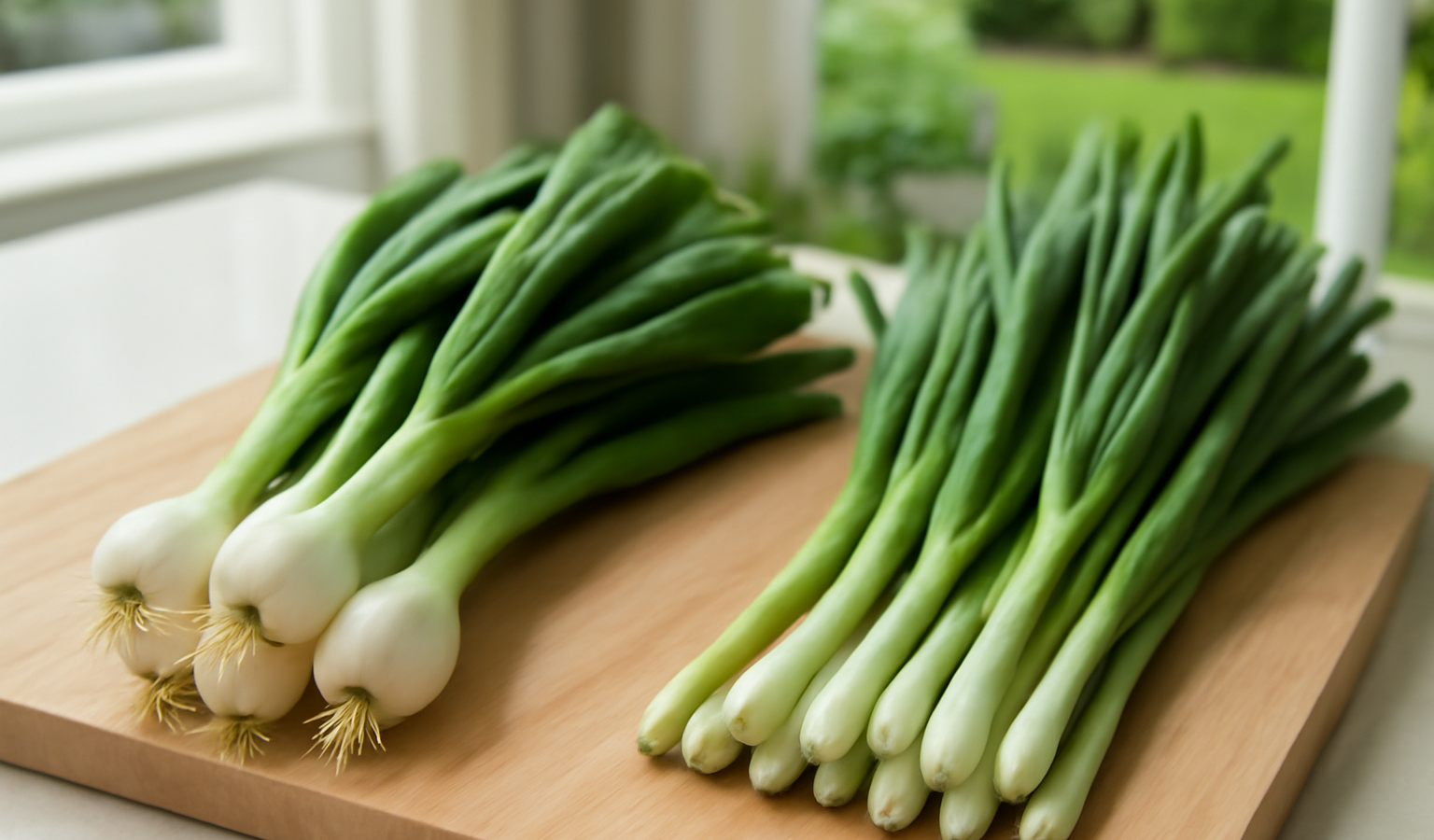
Here is the answer first: scallions and green onions are the same thing. Two names, one vegetable. Both refer to a young onion harvested early, before it forms a bulb, sold in bunches with long white bases and tall green tops. There is no botanical difference, no flavor difference, and no difference in how you use them. “Scallion” and “green onion” are simply regional and personal preferences for naming the identical product, and you can swap one word for the other in any recipe without a second thought.
Part of our Vegetable Gardening & Raised Beds guide →
In this guide
Where it gets genuinely confusing is the cluster of related alliums that look similar and sometimes get lumped in: spring onions, shallots, chives, and leeks. Those are real, distinct things, and mixing them up will change your cooking. A spring onion, for instance, is not just another word for a scallion — it has a small rounded bulb at the base because it was left in the ground a bit longer. The rest of this guide clears up the scallion-equals-green-onion question for good, then walks through how to tell these cousins apart, how to use the white and green parts, and how to grow your own from seed or regrow them from grocery-store scraps.
Key Takeaways
- Scallions and green onions are the same vegetable — two names for a young onion harvested before the bulb forms.
- They are usually Allium fistulosum (bunching onion) or immature Allium cepa; either way the names are interchangeable.
- Spring onions are different — they have a small rounded bulb and a slightly stronger flavor from extra time in the ground.
- The white bases are sharper and stand up to cooking; the green tops are milder and best raw as a garnish.
- You can regrow store-bought scallions from the root ends in water or soil for several harvests.
- From seed, expect roughly 60 to 80 days, or treat an established planting as cut-and-come-again.
| Factor | Scallions / Green Onions | Spring Onions |
|---|---|---|
| Are they the same? | Yes, identical | No, more mature |
| Bulb | None — straight white base | Small, rounded bulb |
| Maturity | Youngest harvest | Left in ground longer |
| Flavor | Mild, fresh, mildly oniony | Stronger, more pungent |
| Species | A. fistulosum or young A. cepa | Usually young A. cepa |
| Green tops | Mild, great raw | Usable, a bit stronger |
| Best raw use | Garnish, salads, dips | Salads, grilling whole |
| Best cooked use | Stir-fry, soups, eggs | Roasting, grilling |
| Name origin | Regional preference | Distinct stage of growth |
Scallions and Green Onions: The Same Vegetable
Why two names?
The two names are a matter of habit and region more than anything else. “Green onion” is common across much of the United States and reads as plainly descriptive. “Scallion” is heard more on the East Coast and in restaurant kitchens, and it traces back through old trade routes to the ancient port city of Ascalon. Some grocery stores label the exact same bunch differently from week to week depending on their supplier. None of it changes what you are buying. If a recipe calls for one and your store sells the other, you already have the right ingredient — buy the bunch of slender young onions with white bottoms and green tops and you are set.
What they actually are
Botanically, the bunches you buy are usually one of two things. Many are Allium fistulosum, the Welsh or bunching onion, a species that naturally grows in clumps and never forms a large bulb, which makes it the ideal scallion plant. Others are ordinary bulb onions, Allium cepa, simply pulled while they are still young and slender before the bulb has had a chance to swell. Either way, the result on your cutting board is the same: a mild, fresh allium with a crisp white shank and tender green tops. The flavor sits well below that of a mature onion, sweet and grassy rather than sharp and pungent, which is why scallions are so often used raw.
The Cousins You Might Confuse Them With
Spring onions
Spring onions are the most likely to trip you up because they look so similar at a glance. The tell is the bulb: a spring onion has a small, distinct rounded bulb at the base, because it was left in the ground longer than a scallion. That extra maturity gives it a stronger, more pungent onion flavor. Use a spring onion when you want more punch, especially for grilling or roasting whole, where the little bulb caramelizes nicely. If a recipe specifically calls for spring onions, a scallion will work but will taste milder; bear that in mind if onion bite matters to the dish.
Shallots, chives, and leeks
Shallots are not green at all — they are small, mature bulbs with coppery papery skin, sold dry like garlic, and they bring a sweet, refined, garlicky-onion flavor used minced in dressings and sauces. Do not substitute them one-for-one for scallions; they are a cooking onion, not a fresh garnish. Chives are the slenderest of the bunch, thin hollow grass-like blades with the mildest flavor of all, used purely as a fresh herb snipped over eggs, potatoes, and soups. Leeks are the giants: thick, mild, cylindrical stalks that need long, slow cooking and a careful wash to flush grit from between their layers, classic in soups and braises. Each of these is a distinct plant with its own job — only scallions and green onions are truly interchangeable.
Using and Growing Scallions
White parts versus green parts
Use the whole scallion, but use the two ends differently. The white and pale-green bases are firmer and have a sharper, more onion-forward flavor that stands up to heat, so they are the part to add early in stir-fries, soups, and sautes where you want that base note. The dark green tops are milder, softer, and fade fast when cooked, which makes them best raw or added at the very end — sliced thin over noodles, tacos, dumplings, baked potatoes, and dips as a fresh, colorful garnish. Slicing on a sharp diagonal gives you those pretty oval pieces and exposes more surface for flavor. A classic move in stir-fries is to cook the whites with the aromatics and scatter the raw greens on at the finish.
Growing from seed or sets
Scallions are one of the easiest things to grow and a great fit for containers and small beds. Sow seed shallowly, about a quarter to half an inch deep, in cool weather; they are forgiving and tolerate light frost. Because you are not waiting for a bulb, spacing can be tight — a half inch to an inch between plants, in rows or a dense band. Plan on roughly 60 to 80 days from seed to a good harvest, though you can start pulling thinnings earlier. They are well suited to the kind of intensive, small-footprint planting we cover in our urban gardening guides, and they pair easily with other quick crops in a mixed bed; the plants and flowers hub has more starter-friendly edibles. Keep the soil evenly moist and they will reward you with very little fuss.
Regrowing from store-bought
This is the trick worth knowing: you can regrow scallions from the very root ends you would normally throw away. Save the bottom inch or two with the roots attached, stand them root-down in a small glass with about an inch of water on a sunny windowsill, and within a few days the green tops start shooting back up. Change the water every couple of days to keep it from going slimy, and you can snip fresh greens for two or three harvests. For more durable results, plant those rooted bases in soil, where they keep producing far longer than they will in plain water. Treating an established clump as cut-and-come-again — snipping the green tops and leaving the white base and roots in place — keeps a steady supply coming with no replanting.
Storing them
Fresh-cut scallions keep about a week to ten days in the refrigerator. Wrap the bunch loosely in a slightly damp paper towel inside a bag in the crisper, or stand them upright in a jar with an inch of water and a loose bag over the tops, refreshing the water as needed. Sliced scallions also freeze surprisingly well for cooking — spread them on a tray to freeze, then bag them, and drop them straight into soups and stir-fries later, though frozen ones lose the crispness you want for a raw garnish.
When Does the Name Matter?
For cooking, the name never matters. Scallion and green onion are the same vegetable, full stop, so use whichever your recipe and your grocery store happen to call it and move on. The only time naming should slow you down is when a recipe specifically asks for spring onions, which carry a small bulb and a stronger bite, or for one of the genuinely different cousins — shallots, chives, or leeks. Those are not interchangeable with scallions and choosing the wrong one will change the dish.
For buying and growing, the practical advice is simple. Pick bunches with crisp, perky green tops and firm white bases, avoiding any that are slimy or yellowing. If you want a steady, cheap supply, grow your own — sow a band of seed in cool weather, or regrow the root ends from the bunch you just bought and keep a little jar going on the windowsill year-round. Either way you will have fresh scallions, or green onions, on hand whenever the recipe calls for them, no matter which word it uses.
Frequently Asked Questions
Are scallions and green onions actually the same thing?
Yes, completely. They are two names for the identical vegetable — a young onion harvested before it forms a bulb. There is no difference in plant, flavor, or use. Which word you see depends on region and store labeling, and you can swap the terms freely in any recipe.
What is the difference between a scallion and a spring onion?
A scallion has no bulb — just a straight white base. A spring onion is left in the ground longer and develops a small rounded bulb, which gives it a stronger, more pungent flavor. You can substitute a scallion for a spring onion, but expect a milder result.
Can I eat the green tops of scallions?
Absolutely. The green tops are milder than the white bases and are best used raw as a garnish or added at the end of cooking, since they soften quickly. Use the firmer white parts earlier in cooking where you want more onion flavor.
How do I regrow scallions from the grocery store?
Save the root ends with about an inch of white attached, stand them root-down in a glass with an inch of water on a sunny sill, and change the water every couple of days. New green tops regrow in days. Plant the bases in soil for longer, more productive regrowth.
Can I use chives instead of scallions?
In small amounts as a raw garnish, chives can stand in, but they are much milder and far more slender. They will not give the same onion body or the crisp white bases that scallions bring to cooking, so they are not a true one-for-one substitute.