

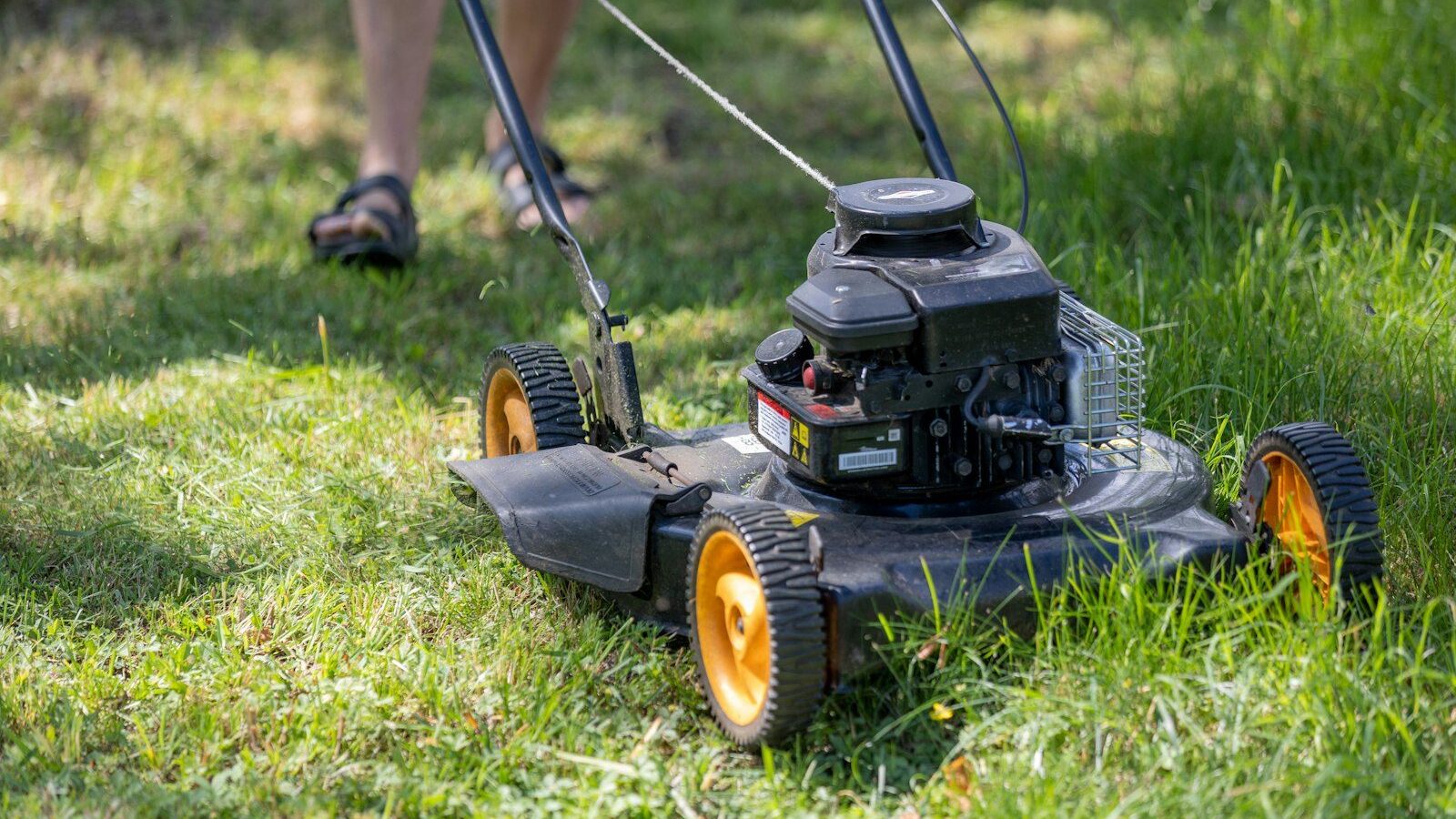
The short verdict: buy a push mower if your lawn is flat, under about a quarter acre, and you do not bag clippings; buy a self-propelled mower if your yard has any real slope, is larger than a quarter acre, or you regularly bag grass, because the drive system does most of the work that wears you out. Self-propelled models cost more and weigh more, and they add a transmission and drive cable that can need repair, but on hills and big lawns they turn a draining chore into an easy walk. The comparison below breaks down where each type wins so you can decide for your specific yard.
Part of our Lawn Care guide →
In this guide
- Side-by-Side Comparison
- How Each Type Works
- Factor 1: Lawn Size
- Factor 2: Slopes and Terrain
- Factor 3: Bagging vs Mulching
- Factor 4: Maneuverability and Obstacles
- Factor 5: Cost
- Factor 6: Maintenance and Reliability
- Factor 7: Gas vs Battery
- Front-Wheel, Rear-Wheel and All-Wheel Drive
- Who Should Buy a Push Mower
- Who Should Buy a Self-Propelled Mower
- What to Check in the Store
- Which Should You Choose?
- Frequently Asked Questions
Key Takeaways
- Push mowers are lighter, simpler and cheaper, and they are ideal for small, flat, open lawns.
- Self-propelled mowers pay off on slopes, lawns over about 1/4 acre, thick grass and when bagging.
- Rear-wheel drive is best for hills and bagging; front-wheel drive suits flat lawns with lots of turning.
- A self-propelled model typically adds roughly $100 to $250 over a comparable push mower.
- Both types use the same deck sizes and engines; the difference is only how the mower moves.
Side-by-Side Comparison
| Factor | Push mower | Self-propelled mower |
|---|---|---|
| Best lawn size | Up to about 1/4 acre | About 1/4 to 3/4 acre |
| Slopes | Tiring on anything beyond gentle grades | Handles moderate slopes easily |
| Physical effort | You push the full weight | You guide; drive wheels pull |
| Typical weight | Lighter (often 50–70 lb gas) | Heavier (often 70–100 lb gas) |
| Bagging | Gets hard as the bag fills | Drive compensates for bag weight |
| Maneuverability | Easy to pivot and pull back | Heavier to pull backward; FWD pivots easily |
| Purchase cost | Lower | Typically $100–$250 more |
| Maintenance | Engine or battery only | Adds transmission, drive belt and cable |
| Storage | Easier to lift and hang | Bulkier |
How Each Type Works
A push mower’s engine or motor spins only the blade. You supply all the forward motion. A self-propelled mower adds a small transmission that sends power to the front or rear wheels, engaged by a bail lever, trigger or a pressure-sensitive handle. Many newer models use variable speed, either a dial or a handle that speeds up as you push forward, so the mower matches your walking pace rather than dragging you along.
Deck widths (usually 20 to 22 inches for push, 21 to 30 inches for self-propelled), engines and battery platforms overlap heavily between the two types. Cut quality depends on the deck, blade and engine power, not on whether the wheels are driven. For a broader look at the categories, see our guide to types of lawn mowers.
Factor 1: Lawn Size
On a typical suburban lot with 3,000 to 6,000 square feet of turf, a 21-inch push mower finishes in 30 to 45 minutes and most healthy adults manage it without trouble. Above about 10,000 square feet, roughly a quarter acre, mowing time stretches past an hour and fatigue becomes the deciding factor. Self-propelled models shine from a quarter acre to about three-quarters of an acre. Beyond that, a riding mower or zero-turn is usually the better tool. Our guide on what size mower you need has a full size-to-lawn chart.
Factor 2: Slopes and Terrain
This is where self-propelled mowers earn their keep. Pushing a 65-pound mower uphill repeatedly is hard work, and lawns with banks, swales or a sloped front yard turn every pass into a workout. Rear-wheel drive mowers grip best on slopes because the operator’s weight on the handle and the engine’s weight both press the rear wheels down. Front-wheel drive mowers can lose traction going uphill since lifting the handle unloads the drive wheels.
For safety, mow across slopes with walk-behind mowers, not up and down, and avoid mowing slopes steeper than about 15 to 20 degrees with any mower. Bumpy, uneven lawns also favor larger rear wheels, which many self-propelled models have.
Factor 3: Bagging vs Mulching
A full grass bag can add 20 to 30 pounds to the back of the mower. With a push mower, that extra weight makes each pass harder, especially in the last third of the bag. A rear-wheel drive self-propelled mower handles the added weight naturally, since the bag sits over the drive wheels and actually improves traction. If you mulch or side-discharge, the weight difference matters less, and a push mower stays easy on flat ground.
Factor 4: Maneuverability and Obstacles
Push mowers are lighter and easier to pivot, pull backward and lift over edging or onto a curb. On lawns full of flower beds, trees and tight corners, that agility matters. Front-wheel drive self-propelled mowers are the compromise: you can tip the front wheels up to turn, and the drive disengages automatically. Rear-wheel drive mowers feel heavier in tight spaces, and pulling one backward with the drive engaged is not possible on most models.
Factor 5: Cost
For the same brand, deck and engine, the self-propelled version typically costs roughly $100 to $250 more than the push version. All-wheel drive and premium variable-speed systems cost more still. Over a mower’s life of perhaps 8 to 10 years, that premium is modest if it means you actually enjoy mowing a large or sloped yard. On a small flat lawn, it buys you little.
Factor 6: Maintenance and Reliability
Every extra system is something that can fail. Self-propelled mowers have a drive belt, a transmission and a control cable. Belts stretch, cables fray and transmissions can wear, particularly if the mower is often used on steep slopes or the drive is engaged while pulling backward. These repairs are usually straightforward but add cost over time. Push mowers have only the engine or motor, blade and wheels to worry about. Both types need the same routine care: sharpen the blade, clean the deck and service the engine yearly. See how to sharpen a lawn mower blade.
Factor 7: Gas vs Battery
Both push and self-propelled mowers come in gas and cordless electric versions. On battery models, the drive system draws extra power, so runtime on a self-propelled cordless mower is shorter than the same mower in push mode, often by a noticeable margin. Many battery mowers let you turn the drive off on flat sections to stretch runtime. Weight also matters more with batteries, since packs add several pounds. If you are deciding fuel type as well, our electric vs gas lawn mower comparison covers that decision.
Front-Wheel, Rear-Wheel and All-Wheel Drive
| Drive type | Best for | Weakness |
|---|---|---|
| Front-wheel drive (FWD) | Flat lawns, frequent turns, lots of obstacles | Loses traction on hills and with a full bag |
| Rear-wheel drive (RWD) | Slopes, bagging, thick grass | Harder to turn and pull back |
| All-wheel drive (AWD) | Steep, uneven or wet terrain | Heaviest and most expensive |
For most buyers who choose self-propelled, rear-wheel drive is the best all-round option. Pick FWD only if your lawn is flat and you value easy turning, and AWD only if you mow genuinely difficult terrain.
Who Should Buy a Push Mower
- Your lawn is under about 1/4 acre and mostly flat.
- You mulch or side-discharge rather than bag.
- Your lawn has many beds, trees or tight areas that need constant pivoting.
- You want the lightest, simplest machine with the fewest parts to fail.
- You need to lift the mower into a truck, up steps or onto a wall hook.
- You want the lowest purchase cost.
For very small, flat lawns, a manual reel mower is also worth considering; see our reel vs rotary mower comparison.
Who Should Buy a Self-Propelled Mower
- Your lawn has slopes, banks or a sloped front yard.
- You mow more than about 1/4 acre with a walk-behind.
- You bag clippings regularly or deal with thick, fast-growing grass in spring.
- You have back, knee or shoulder issues, or simply want mowing to be less tiring.
- You want a wider 22 to 30 inch deck to cut mowing time; wider decks are heavy to push.
If that describes your yard, our best self-propelled lawn mowers roundup compares current models by drive type, deck size and power source.
What to Check in the Store
Spec sheets do not tell you how a mower feels. Before buying either type, spend a few minutes with the floor model:
- Handle height: adjust it to your height. A handle that is too low makes you stoop, and that fatigue matters more than drive type on a long mow.
- Drive control: on self-propelled models, try the bail or trigger. Some systems surge forward abruptly; better ones ramp up smoothly and let you set a slow pace for trimming around beds.
- Pull-back feel: pull the mower backward with the drive off. Some rear-wheel drive transmissions drag noticeably, which gets annoying around obstacles.
- Wheel size: larger rear wheels (9 to 11 inches) roll more easily over bumpy turf than small, equal-size wheels.
- Bag access and height adjustment: check how easily the bag comes off and whether deck height changes with a single lever or four separate wheel adjusters.
- Storage footprint: if space is tight, look for a folding handle or a model designed to stand on end.
Which Should You Choose?
- If your lawn is small, flat and you mulch: buy a push mower. It is lighter, cheaper and has less to break.
- If your lawn is small but sloped: buy a rear-wheel drive self-propelled mower. Slope matters more than size.
- If your lawn is 1/4 to 3/4 acre: buy self-propelled, ideally rear-wheel drive with variable speed.
- If you always bag: buy rear-wheel drive self-propelled.
- If your lawn is flat but full of beds and trees: a push mower or a front-wheel drive self-propelled model.
- If your lawn is over 3/4 acre: skip walk-behinds and look at a riding mower or zero-turn.
Whichever you choose, the mower is only one part of a healthy lawn. Mowing height, frequency and blade sharpness matter as much as the machine. Our lawn care guide covers mowing heights by grass type and the rest of a season-long care plan.
Frequently Asked Questions
Is a self-propelled mower worth the extra money?
It is worth it for lawns with slopes, lawns larger than about a quarter acre, or anyone who bags clippings. On a small, flat lawn where you mulch, a push mower does the same job for less money and with fewer parts to maintain.
Can you use a self-propelled mower as a push mower?
Yes. When the drive control is disengaged, a self-propelled mower can be pushed like a regular mower. It is heavier, so it takes more effort than a dedicated push model.
Is front-wheel or rear-wheel drive better?
Rear-wheel drive is better for hills, bagging and thick grass because more weight sits over the drive wheels. Front-wheel drive is easier to turn on flat lawns with many obstacles.
Do self-propelled mowers break down more often?
They have more parts, including a drive belt, cable and transmission, so there is more that can wear. With basic care, such as keeping the deck clean and not engaging the drive while pulling backward, most last many seasons.
How big a lawn can I mow with a push mower?
A fit adult can comfortably mow up to about a quarter acre of flat lawn with a 21-inch push mower. Beyond that, or on slopes, a self-propelled model makes the job noticeably easier.