

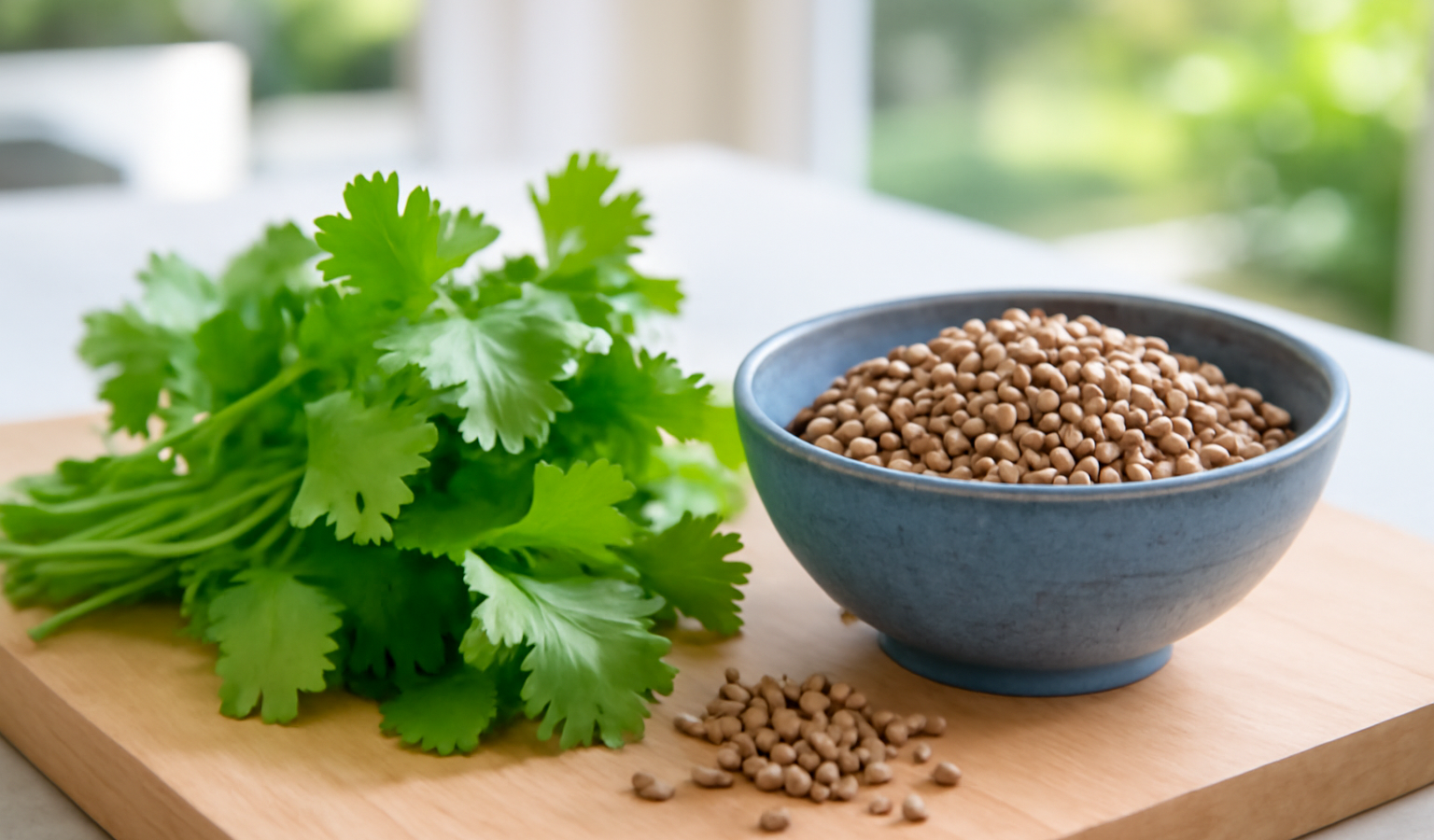
Here is the short answer: cilantro and coriander are the same plant, Coriandrum sativum. In the United States, the two words split the plant into parts. “Cilantro” means the fresh green leaves and tender stems you chop over tacos and stir into salsa. “Coriander” means the dried, round seeds, whole or ground, that you toast for curry powder and pickling brine. So when an American recipe calls for cilantro, reach for the leafy bunch in the produce cooler. When it calls for coriander, reach for the spice jar. Same plant, two different harvests, two different jobs in the kitchen.
The confusion is almost entirely a matter of geography. In the United Kingdom, Australia, and much of the rest of the English-speaking world, “coriander” refers to the whole plant, leaves included, and the seeds get called “coriander seed” to keep them straight. There is no “cilantro” on a British shopping list at all. The word cilantro is simply the Spanish name for the herb, which entered American English through Mexican cooking and stuck for the fresh leaves. Understanding that single fact clears up most of the arguments people have about it. Below I will walk through the naming, the very real flavor differences between leaves and seeds, how to cook with each, and how to grow one plant that gives you both.
Key Takeaways
- Cilantro and coriander come from one plant, Coriandrum sativum — the difference is which part you harvest.
- In the US: cilantro = fresh leaves and stems; coriander = dried seeds and ground spice.
- In the UK and elsewhere: “coriander” means the whole plant; the seeds are “coriander seed.”
- The leaves taste bright and citrusy to most people, but soapy to about 4 to 14 percent of people because of a genetic quirk in smell receptors.
- The seeds taste warm, nutty, and lightly citrusy — completely different from the leaves, and the soap effect does not apply.
- It is a cool-season annual that bolts fast in heat. Succession sow every 2 to 3 weeks for steady leaves; let plants flower if you want seeds.
| Factor | Cilantro (leaves) | Coriander (seeds) |
|---|---|---|
| Plant | Coriandrum sativum | Same plant, later stage |
| Part used | Fresh leaves and stems | Dried ripe seeds |
| Flavor | Bright, citrusy, herbal (soapy to some) | Warm, nutty, lemony, slightly sweet |
| Soapy taste risk | Yes, for some people | No |
| Form sold | Bunches, fresh | Whole or ground spice |
| Typical cuisines | Mexican, Thai, Indian, Vietnamese | Indian, Middle Eastern, pickling |
| Added to dish | At the end, raw or barely cooked | Early, toasted or simmered |
| Shelf life | About 1 week refrigerated | Years, whole; months, ground |
| Harvest timing | While plant is young, before flowering | After flowering, when seeds turn brown |
| UK name | Coriander (leaves) | Coriander seed |
Cilantro: The Fresh Leaves
What it tastes like
Cilantro leaves are bright, green, and citrusy, with a peppery edge. The flavor lives in volatile aldehyde compounds that evaporate quickly, which is why cilantro smells strongest the moment you chop it and fades the longer it cooks. That same chemistry is behind the famous “soap” complaint. For somewhere between 4 and 14 percent of people, depending on the population studied, those aldehydes register as soapy or metallic instead of fresh. It is tied to variation in a cluster of olfactory receptor genes, most notably one called OR6A2 that is sensitive to those exact aldehyde molecules. If cilantro tastes like dish soap to you, you are not imagining it and you are not being picky — your nose is genuinely reading the same compound differently. Crushing or finely mincing the leaves can blunt the soapy note somewhat by speeding up enzyme breakdown of the aldehydes, but it does not erase it.
How to cook with it
Treat cilantro like a finishing herb, not a base. Heat destroys its delicate aromatics fast, so add it at the very end of cooking or use it raw. Chop it over tacos, fold it into guacamole and salsa, scatter it across a bowl of pho or pad thai, or blend it into chutneys and chimichurri. Do not throw away the stems — they carry as much flavor as the leaves and are more tender than parsley stems, so mince them right along with the leaf. In Thai and Vietnamese cooking the roots get used too, pounded into curry pastes for a deeper, earthier version of the same flavor. A bunch keeps about a week in the fridge if you stand it stem-down in a glass of water with a loose bag over the top, refreshing the water every couple of days.
Coriander: The Dried Seeds
A completely different flavor
This surprises people: the seeds taste nothing like the leaves. Where the leaves are sharp and herbal, the dried seeds are warm, nutty, and gently sweet, with a soft lemony or floral note. The harsh aldehydes that define the fresh leaf are mostly gone by the time the seed dries, replaced by a compound called linalool that reads as mellow and citrusy. That is why people who hate cilantro leaves often love coriander seed without realizing it is the same plant — the soapy receptor issue simply does not apply to the dried spice. Coriander seed is one of the quiet backbones of curry powder, garam masala, and countless spice blends, and it is a standard in pickling spice and some sausage and beer recipes.
How to use it
Buy coriander whole when you can. Whole seeds hold their oils for a couple of years, while pre-ground powder goes flat within a few months. Toast whole seeds in a dry skillet over medium heat for a minute or two until they smell fragrant and start to pop, then grind them in a mortar or a spice grinder. Toasting wakes up the nutty depth and is worth the thirty seconds. Add ground coriander early in cooking, with the onions and other spices, so it has time to bloom in the fat and infuse the dish. It pairs naturally with cumin, which is why the two are so often used together. A good rule: coriander softens and rounds out a spice blend, where cumin and chili push it forward.
Growing the Plant for Both
Cool season, and it bolts fast
Here is the single most important thing to understand about growing this plant: it is a cool-season annual that is built to flower and set seed quickly, and warm weather triggers that flowering, called bolting. Once daytime temperatures climb into the 80s Fahrenheit, the plant stops making leaves, shoots up a tall flower stalk, and the leaf flavor turns bitter. This is why so many gardeners complain their cilantro “died” in early summer — it did not die, it simply did what its biology tells it to do. Plant it in early spring as soon as the soil can be worked, and again in late summer for a fall crop. In mild-winter regions it grows happily right through the cool months. Direct sow the seeds about a quarter to half an inch deep, because the long taproot resents being transplanted, and keep the soil consistently moist while it germinates over one to two weeks. For more on timing cool-season crops, our urban gardening guides cover working a small space across the seasons.
Succession sowing for steady leaves
Because each plant has a short useful leaf window before it bolts, the trick to a continuous supply is succession sowing. Sow a new short row or a fresh container every 2 to 3 weeks through the cool part of the season. That way, as one batch starts to flower, the next is coming up behind it. Give plants a little afternoon shade once the weather warms to buy yourself extra leaf time, and look for varieties labeled “slow bolt” if your springs heat up quickly. Harvest the outer leaves once plants are 4 to 6 inches tall, cutting stems near the base and leaving the center to keep growing. Take no more than about a third of the plant at once so it can recover.
Letting it bolt for coriander seed
When you want coriander seed, bolting becomes the goal rather than the enemy. Let a few plants flower; the small white-to-pink umbels are pretty and the pollinators love them. After flowering, green seeds form and slowly ripen to tan-brown. You can clip a few green seeds early for a bright, herbal coriander note in fresh dishes, but for the dried spice you want to wait. Once the seeds turn brown and the plant starts to dry out, cut the seed heads, drop them into a paper bag, and hang them somewhere dry. After a week or two the seeds release easily — shake the bag and pour off the chaff. Store the cleaned seeds whole in a jar, and save a pinch to sow next season, since this plant readily self-seeds and will often replant itself in the garden if you let a few heads scatter. Pairing it with other easy-from-seed herbs makes a productive bed; see our plants and flowers hub for companions.
Which Should You Use?
In the kitchen, let the recipe and the geography guide you. If you are following an American recipe and it says cilantro, you want the fresh leaves, added late. If it says coriander, you want the seeds or ground spice, added early. If you are cooking from a British, Australian, or Indian cookbook, read carefully: “coriander” on its own usually means the fresh leaves, while “coriander seed” or “ground coriander” means the spice. When in doubt, the cooking stage is the tell — anything stirred in at the end and meant to stay green is the leaf, anything toasted or simmered into the base is the seed.
In the garden, decide up front what you are growing for. If you want a steady run of fresh leaves for salsa and garnish, succession sow every 2 to 3 weeks, harvest young, and grow it in the cool shoulders of the year so it does not bolt on you. If you want coriander seed for your spice rack, plant once, let it flower, and be patient through the ripening. The beautiful part is that one packet of seed gives you both ends of the plant. Plant a long row in spring, eat the leaves from the early-bolting plants, and let the stragglers go to seed for your spice jar. Same plant, two harvests, no waste.
Frequently Asked Questions
Can I substitute coriander seed for fresh cilantro?
Not really — they taste different. The fresh leaf is bright and herbal while the seed is warm and nutty, so swapping one for the other changes the dish. If you have no fresh cilantro, a little fresh parsley with a squeeze of lime mimics the look and brightness better than ground coriander would.
Why does cilantro taste like soap to me?
It is genetic. A subset of people carry a variation in their olfactory receptor genes that makes the aldehyde compounds in cilantro leaves register as soapy or metallic. It is real, not a preference, and it affects only the fresh leaves — coriander seed will taste fine to you.
Why does my cilantro keep dying in summer?
It is almost certainly bolting, not dying. Cilantro is a cool-season plant that flowers and sets seed when temperatures rise into the 80s. Once it bolts, leaf production stops and flavor turns bitter. Sow in spring and fall instead, choose slow-bolt varieties, and give afternoon shade in warm weather.
Can I grow cilantro and harvest coriander seed from the same plant?
Yes. Harvest leaves while the plant is young, then let it bolt and flower. The seeds that form ripen to brown and become coriander. You can even do both across a single planting by eating leaves from some plants and letting others go to seed.
Is the whole cilantro plant edible?
Yes — leaves, tender stems, roots, flowers, and seeds are all usable. The stems carry strong flavor and can be chopped with the leaves, the roots are pounded into Thai curry pastes, and the green or dried seeds are coriander. Very little of the plant goes to waste.