

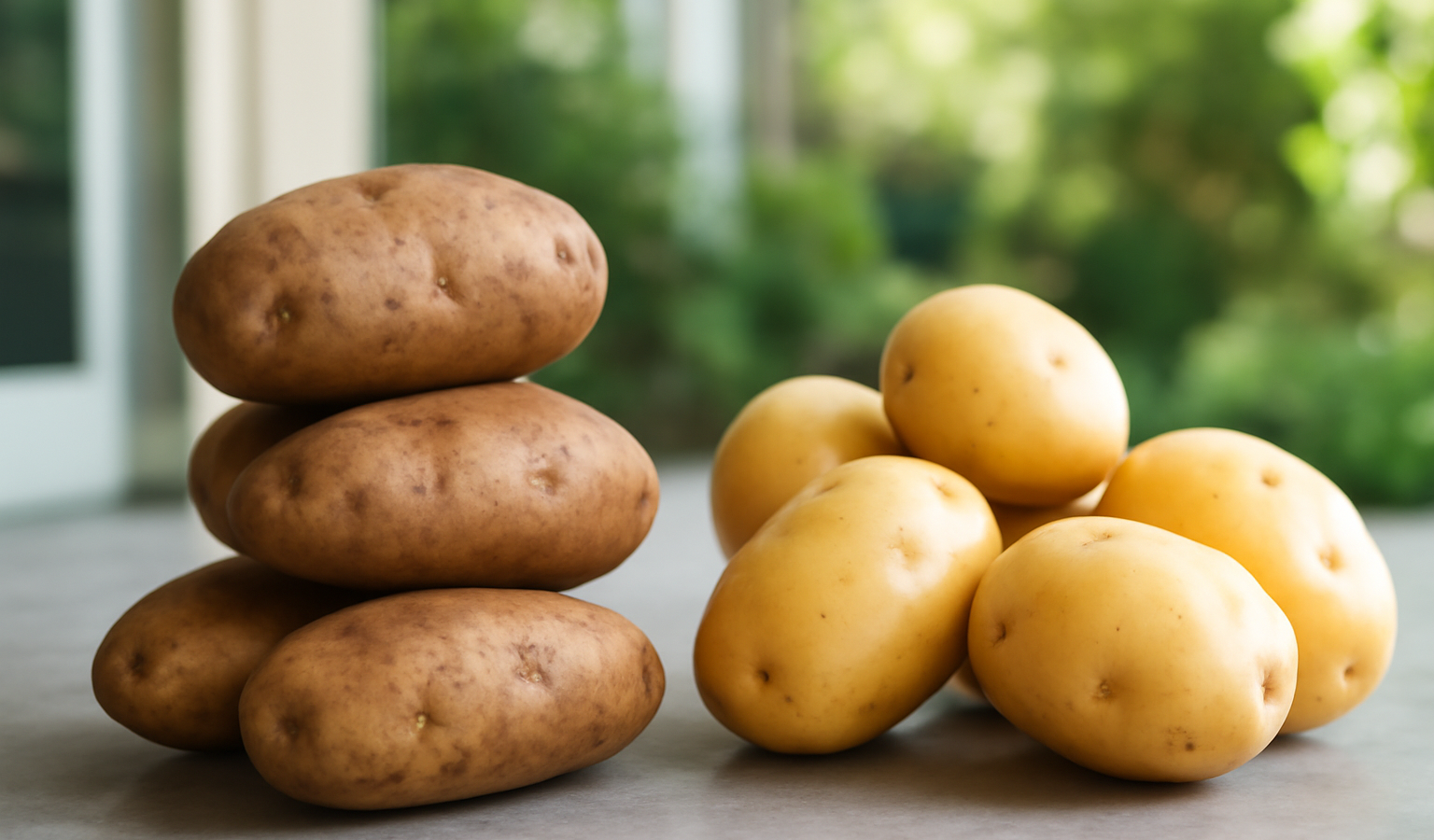
The short version: russets are high-starch, low-moisture potatoes that bake fluffy and fry crisp, while Yukon Golds are medium-starch all-rounders with buttery, golden flesh that hold their shape better and make outstanding mashed potatoes. Russets are a late-season storage crop that keeps for months; Yukon Golds mature earlier and store moderately well. Both grow the same way in the garden, so your choice comes down to how you cook and how long you need them to last. If you want one variety that does almost everything, Yukon Gold is the safer pick; if you fry and bake a lot, grow russets.
Key Takeaways
- Russets are high-starch and floury — best for baking, fries, and fluffy mash. They store the longest.
- Yukon Gold is medium-starch and all-purpose — great mashed, roasted, boiled, or pan-fried, with buttery yellow flesh.
- Russets are a late-season crop (~100–120 days); Yukon Gold is early-to-mid (~80–95 days).
- Both grow identically: plant seed potatoes after frost in loose soil, hill as they grow, and keep tubers covered to prevent greening.
- For long winter storage, grow russets; for earlier harvest and versatility, grow Yukon Gold.
- Cure harvested potatoes 1–2 weeks in the dark, then store cool (40–50°F), dark, and humid.
| Trait | Russet | Yukon Gold |
|---|---|---|
| Starch level | High (floury) | Medium (all-purpose) |
| Flesh | White, dry | Golden, buttery, moist |
| Skin | Thick, brown, netted | Thin, smooth, tan |
| Maturity | Late, 100–120 days | Early-mid, 80–95 days |
| Best for | Baking, fries, fluffy mash | Mash, roast, boil, sauté |
| Holds shape when boiled? | No (falls apart) | Yes (fairly well) |
| Storage life | Excellent (months) | Good |
| Yield per plant | High | Moderate-high |
Russet Potatoes: The Baking & Frying Standard
Russets — ‘Russet Burbank’ is the classic — are the big, oblong, brown-skinned potatoes you picture when you think “baked potato.” They’re defined by high starch and low moisture, which is exactly what gives a baked russet its dry, fluffy interior and what makes them the gold standard for French fries and hash browns. When cooked, the starch granules swell and separate, so the flesh turns light and mealy rather than dense and waxy.
That same high starch is a weakness for some uses: russets fall apart when boiled and turn gluey if you over-mash them in a food processor (mash by hand or with a ricer instead). They’re best for baking whole, frying, roasting in chunks, and making a light, fluffy mash. In the garden, russets are typically a late-maturing, full-season crop, taking 100–120 days, and they reward the patience with heavy yields of large tubers and the best long-term storage of any common variety. Beyond ‘Russet Burbank’, look for ‘Russet Norkotah’ (earlier, good for shorter seasons) and ‘Goldrush’ (smoother skin, strong baker).
Yukon Gold: The Versatile All-Rounder
Yukon Gold is a Canadian-bred variety from the 1980s that became a home-garden and chef favorite for one reason: it does almost everything well. It’s a medium-starch potato — sitting between floury russets and waxy boiling potatoes — with thin, smooth tan skin and distinctive golden-yellow flesh that tastes naturally buttery. That moderate starch and slightly waxy structure let it hold its shape when boiled or roasted while still mashing smooth and creamy.
Because of that balance, Yukon Gold is the potato to grow if you want a single variety that handles mashing, roasting, pan-frying, potato salad, soups, and gratins. Its rich color and flavor mean you often need less butter to get a satisfying mash. In the garden it’s an early-to-midseason crop, maturing in roughly 80–95 days, so you’ll dig it weeks before a russet — handy in shorter growing seasons or when you want new potatoes sooner. Yields are good though typically not quite as heavy as a full-season russet, and storage is solid but not as long as russets’.
Cooking: Starch Is the Deciding Factor
Almost every kitchen difference between these two traces back to starch. High-starch russets absorb fat and crisp aggressively, which is why they make the best fries and the fluffiest baked potatoes — but that same quality makes them disintegrate in soups, stews, and potato salad. Medium-starch Yukon Golds resist falling apart, so they’re the better choice anywhere you need the chunks to stay intact: a hearty stew, a roasted potato medley, a layered gratin, or a chunky potato salad.
For mashed potatoes the answer is “it depends on what you like.” Russets give you a light, fluffy, classic American mash; Yukon Golds give you a denser, creamier, more buttery mash with that golden color. Many cooks split the difference and use a 50/50 blend. For frying, russets win clearly. For boiling, roasting, and anything where shape matters, Yukon Gold has the edge. Knowing this, plenty of gardeners grow both and let the dish decide.
How to Grow Both (Same Method)
Russets and Yukon Golds are planted and tended identically — only the harvest date differs. Start with certified seed potatoes (not grocery-store potatoes, which may carry disease or be treated to prevent sprouting). Cut larger seed potatoes into chunks with at least one or two “eyes” each, let the cut faces callus over for a day or two, and plant 3–4 inches deep and about 12 inches apart in rows 30–36 inches apart. Plant two to three weeks after your last spring frost, once the soil reaches about 45–50°F.
Potatoes want full sun and loose, slightly acidic soil (pH 5.0–6.0, which also helps suppress scab) that’s rich in organic matter but not freshly limed. The single most important growing task is hilling: as the plants reach 6–8 inches tall, mound soil or straw up around the stems, leaving the top few inches of foliage exposed, and repeat every couple of weeks. Hilling gives the tubers room to form and — critically — keeps them buried so light can’t turn them green and bitter (green potatoes contain the toxin solanine and should not be eaten). Provide steady moisture, about 1–2 inches per week, especially once tubers start forming; uneven watering causes knobby, cracked, or hollow tubers.
Harvest, Curing & Storage
You can steal a few “new potatoes” from either variety a couple of weeks after flowering, but for full-size storage tubers wait until the plants’ tops yellow and die back. That happens earlier for Yukon Gold (around 80–95 days) and later for russets (100–120 days). Stop watering once the foliage starts to die, and dig on a dry day, lifting gently with a fork well away from the plant to avoid spearing tubers. Handle them like eggs — bruises and cuts are where rot starts in storage.
Cure freshly dug potatoes for one to two weeks in a dark, humid spot at about 50–60°F to toughen the skins, then move them to long-term storage: cool (40–50°F), dark, and humid, with good airflow, never washed until you’re about to use them. This is where russets pull ahead — their thick skins and low moisture let them keep for several months, making them the better crop if you want to eat your own potatoes deep into winter. Yukon Golds store well too but are best used within a couple of months. Keep potatoes away from onions (which speed each other’s spoilage) and out of the fridge, where cold converts starch to sugar. For more on putting the garden to bed, see our guide on how to winterize a vegetable garden, and for general crops browse our vegetable growing guides.
Verdict: Which Potato to Grow
Grow russets for baking, fries, and long storage
If your household goes through baked potatoes, oven fries, and big bowls of fluffy mash — and you want potatoes that keep through the winter — russets are the clear choice. They give the heaviest yields and the longest storage of the common varieties. Just be ready for a longer season and remember they’re not the potato for soups or salads where you need the pieces to hold together.
Grow Yukon Gold if you want one do-everything potato
For most home gardeners, Yukon Gold is the most practical single variety. It mashes, roasts, boils, and fries acceptably, holds its shape in mixed dishes, matures earlier, and has that buttery golden flesh that makes simple preparations taste rich. If you only have room for one potato and a short-to-medium season, plant Yukon Gold.
Grow both to cover every dish and stagger the harvest
Because they share identical care, growing a bed of each is easy and genuinely useful. Yukon Golds come in early for fresh summer eating and everyday cooking, while a later russet crop fills the storage bins for fall and winter baking and frying. Together they cover essentially every potato dish you’d ever make.
Frequently Asked Questions
Which is better for mashed potatoes, russet or Yukon Gold?
Both are good but different. Russets make a light, fluffy classic mash; Yukon Golds make a denser, creamier, buttery mash with golden color. Many cooks blend the two 50/50. For boiled potato dishes where shape matters, Yukon Gold is better.
Can I plant store-bought potatoes?
It’s risky. Grocery potatoes may carry diseases or be sprayed with sprout inhibitors that prevent growth. Use certified disease-free seed potatoes from a garden supplier for reliable results and a healthy crop.
Why did my potatoes turn green?
Green skin means the tubers were exposed to light, which triggers chlorophyll and the bitter, mildly toxic compound solanine. Hill soil or straw over the developing tubers and store them in the dark. Cut off small green areas or discard heavily greened potatoes.
How long do these potatoes store?
Russets are the champions — several months in cool, dark, humid conditions thanks to their thick skin and low moisture. Yukon Golds store well too but are best eaten within a couple of months. Keep both out of the fridge and away from onions.
When do I harvest each variety?
Wait until the plant tops yellow and die back. That’s roughly 80–95 days for Yukon Gold and 100–120 days for russets. You can also dig small new potatoes a couple of weeks after flowering, but those won’t store.