

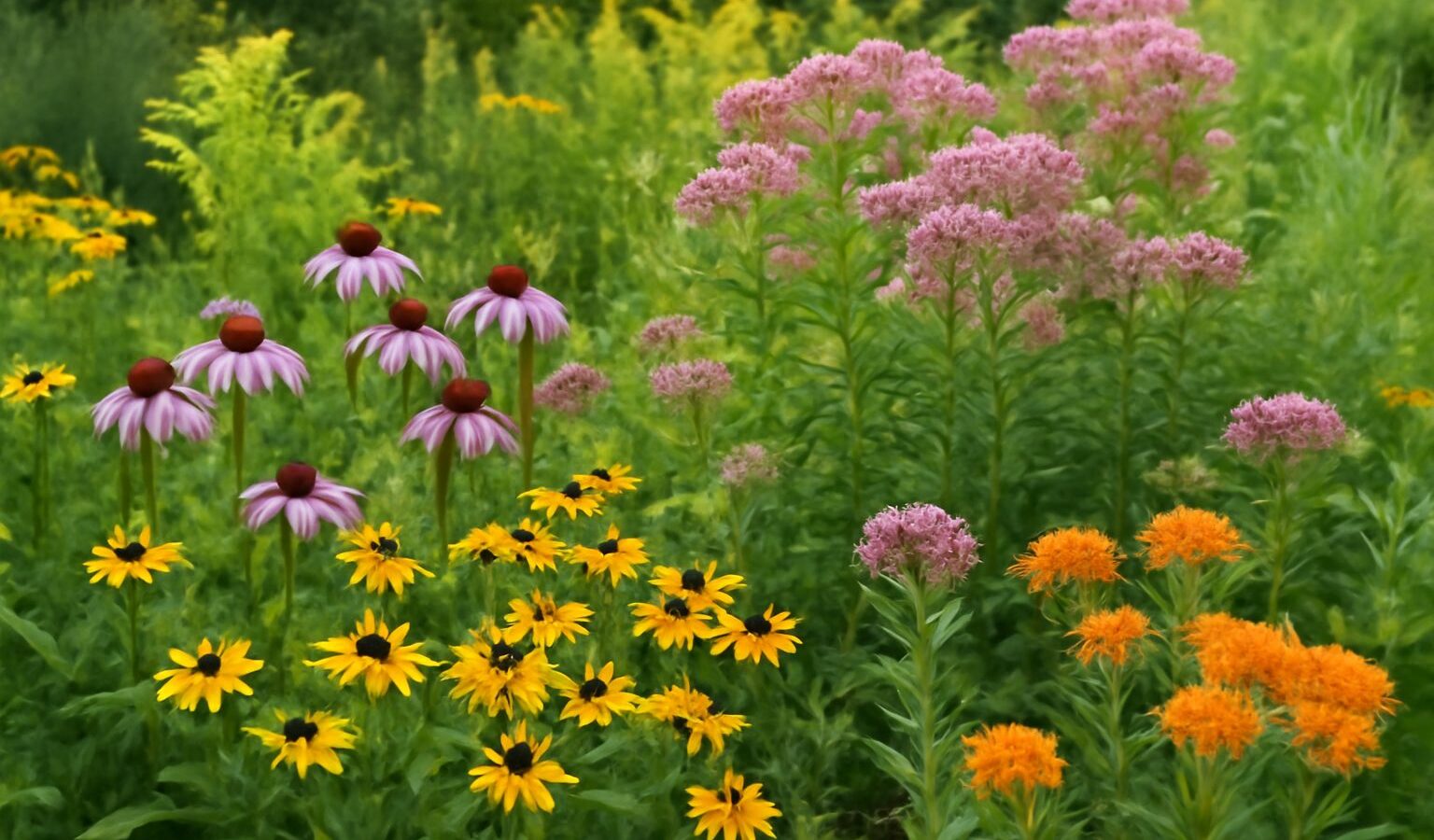
A native plant garden is the rare landscaping choice that asks less of you and gives more to everything around it. Plants that evolved in your region are already adapted to its rainfall, soil, and temperature swings, so once established they need far less water, no fertilizer, and almost no fussing — while feeding the insects, birds, and pollinators that non-native ornamentals leave hungry. The reason matters: native plants support the specialist insects and caterpillars that local birds depend on, and a lawn or a bed of exotic shrubs is, ecologically, close to a desert. Converting even part of your yard to natives measurably increases the wildlife it supports. This guide explains how to figure out what’s truly native to your area, prepare the ground, design a layered planting that looks intentional rather than weedy, and get plants established with minimal effort.
Key Takeaways
- “Native” means indigenous to your specific region and ecoregion — use a regional native-plant database or local native nursery, not a generic “wildflower” mix.
- Match plants to your existing conditions (sun, soil, moisture) rather than amending the site; right-plant-right-place is the whole strategy.
- Native gardens establish slowly — “sleep, creep, leap” over three years — so water the first season, then largely leave them alone.
- Design in layers with drifts, defined edges, and keystone species like oaks, goldenrod, and native asters that feed the most wildlife.
What “Native” Actually Means
Native means a plant occurred naturally in your region before European settlement and co-evolved with the local insects, birds, and soil organisms. That’s more specific than “wildflower” — many seed mixes sold as wildflowers contain non-native or even invasive species that simply aren’t your natives. It’s also more specific than “North American native,” because a plant native to the Pacific Northwest may be useless or even weedy in the Southeast. You want plants native to your ecoregion, ideally locally sourced.
To find them, start with a regional native-plant database — most states have a native plant society, and tools like the National Wildlife Federation’s Native Plant Finder let you enter a ZIP code and see the natives that support the most butterfly and moth species. Local native-plant nurseries are gold: their stock is regionally appropriate and often grown from local seed (called local ecotype), which is best adapted to your conditions. Avoid digging plants from the wild, and steer clear of “native cultivars” bred so heavily for double flowers or odd colors that they no longer offer accessible pollen and nectar.
Reading Your Site: Right Plant, Right Place
The core philosophy of native gardening is to match plants to the conditions you already have rather than changing the site to suit the plants. So before buying anything, assess your yard honestly. How many hours of direct sun does each area get — full sun (6+ hours), part shade (3–6), or full shade? Is the soil sandy and fast-draining, heavy clay, or loam? Where does water sit after rain, and where does it dry out fastest? These three factors — light, soil, and moisture — determine which natives will thrive with zero intervention.
Resist the urge to amend. If you have dry sandy soil, plant the prairie and dryland natives that love it rather than pouring in compost to grow moisture-lovers; if you have a wet low spot, celebrate it with native sedges, swamp milkweed, and cardinal flower instead of fighting to drain it. A soil test tells you your pH and texture so you can match plants accurately — our guide on how to read a soil test report walks through interpreting one. The beauty of working with your conditions is that the plants then largely take care of themselves.
Preparing the Ground
The hardest part of a native garden is the first step: removing existing turf or weeds without leaving roots and seeds that fight you for years. The lowest-effort method is sheet mulching (also called smothering): in late summer or fall, mow the area low, lay down overlapping cardboard or thick newspaper, top it with 3–4 inches of compost or mulch, and let it sit over winter. By spring the grass below is dead and you can plant straight through the decomposing layers. For larger areas, solarizing with clear plastic over a hot summer, or careful spot-removal, also works. Avoid rototilling, which brings up a decade of buried weed seeds.
Do not add fertilizer. Most natives evolved in lean soils and grow leggy, flop over, or get outcompeted by weeds when the ground is too rich — fertility actually works against you. Once the ground is cleared, you’re ready to plant into the existing soil, amending only by adding a little compost if your soil is truly dead, never to create artificially rich beds.
Designing a Native Garden That Looks Intentional
The biggest worry people have is that natives look messy or “weedy” to neighbors. The fix is design cues that signal care: a mowed edge or border, a defined path, a fence or low wall, and plants arranged in deliberate drifts rather than scattered. Frame the wildness with neat edges and it reads as a garden, not neglect. Plant in masses of the same species — at least three to seven of each — so the eye sees intentional sweeps of color and texture instead of a chaotic mix.
Think in layers, mimicking a natural plant community. Use a matrix of low groundcover and grasses to knit the planting together and cover soil (replacing mulch over time), mid-height perennials for the seasonal flower show, and taller structural plants and shrubs for height and winter form. Choose for succession so something blooms from early spring through fall, and include keystone plants — the species that support the most wildlife. In much of the country those include native oaks (which host hundreds of caterpillar species), goldenrod (Solidago), native asters (Symphyotrichum), native sunflowers (Helianthus), and milkweed (Asclepias). Even a small bed should include a keystone or two for maximum ecological return.
Sample Plant Palettes by Region
These are starting points — always verify against a regional database, but they illustrate the idea. For an Eastern/Midwest sunny meadow garden (zones 4–7): purple coneflower, black-eyed Susan, bee balm (Monarda fistulosa), butterfly weed and swamp milkweed, New England aster, little bluestem grass (Schizachyrium scoparium), and goldenrod. For a shadier woodland edge in the same regions: wild columbine, foamflower (Tiarella), wild geranium, Christmas fern, and great blue lobelia.
For the arid Southwest and West (zones 5–9): penstemon, blanketflower (Gaillardia), desert marigold, native salvias, buckwheat (Eriogonum), and blue grama grass — drought-adapted natives that thrive without irrigation once established. For the Southeast (zones 7–9): coreopsis, blazing star (Liatris), purple coneflower, mistflower, muhly grass (Muhlenbergia capillaris), and beautyberry. For the Pacific Northwest (zones 7–9): Oregon grape, red-flowering currant, camas, yarrow, and sword fern. Pair these with our companion guides on creating a pollinator garden and building a butterfly garden, since native plantings naturally double as habitat for both.
Planting and Establishment
Plant in spring or fall when temperatures are mild and rainfall is more reliable; fall planting in zones 5 and warmer gives roots a head start before summer. You can start from plugs and potted plants for faster results, or sow seed for large meadow areas at far lower cost — though many native seeds need cold stratification (a period of moist cold) to germinate, so sow them in late fall or stratify in the fridge. Space plants closer than a typical ornamental bed so they grow together and shade out weeds within a couple of seasons.
Native gardens follow the rhythm gardeners call “sleep, creep, leap.” Year one the plants put energy into roots and look modest above ground — sleep. Year two they fill out — creep. Year three they hit their stride and bloom profusely — leap. The crucial task is watering through that first season: even drought-tolerant natives need regular water until their deep roots establish, typically the first full growing season. After that, water only in extreme drought. Don’t be discouraged by a quiet first year; the underground work is what makes the hands-off years possible.
Long-Term Care and the “Messy Is Good” Mindset
Once established, a native garden needs only light annual care. Skip the fall cleanup that conventional gardening demands: leave seed heads standing through winter to feed birds, and leave hollow stems and leaf litter as overwintering habitat for native bees and beneficial insects. Cut back the old growth in late spring, not fall — wait until temperatures are reliably above 50°F so overwintering insects have emerged. Weed during the establishment years while gaps remain, then less as the planting closes in.
Never spray pesticides; the entire point is to host insects, and even organic broad-spectrum sprays undo the benefit. Edit rather than weed-and-feed: remove aggressive self-seeders that crowd others, divide spreading clumps to share or expand, and add plants to fill any bare ground. Over a few years your native garden becomes a self-sustaining community that asks for a fraction of the water, time, and inputs a lawn or exotic border demands — while quietly rebuilding the local food web. For more low-maintenance landscaping approaches, browse the Outdoor Living hub.
Frequently Asked Questions
How do I find out which plants are native to my area?
Use a regional native-plant database or your state native plant society, and tools like the National Wildlife Federation’s Native Plant Finder, which lists natives by ZIP code. Local native-plant nurseries are the best source, since their stock is grown from regional seed and adapted to your exact conditions.
Do native plant gardens look messy?
Only if you skip the design cues that signal intention. A mowed edge, a defined path, a fence, and plants arranged in deliberate drifts make a native garden read as cared-for. Framing the planting with neat edges is the single best trick for keeping neighbors happy.
How long until a native garden fills in?
About three years, following the “sleep, creep, leap” pattern: roots establish in year one, growth picks up in year two, and the planting blooms fully in year three. Water through the first growing season, then the garden becomes largely self-sufficient.
Do native plants need fertilizer?
No — and fertilizing usually hurts them. Most natives evolved in lean soils and grow floppy or get outcompeted by weeds when fertility is high. Match plants to your existing soil rather than enriching it, and skip fertilizer entirely.
When should I cut back a native garden?
In late spring, once temperatures are reliably above about 50°F, so overwintering bees and insects sheltering in the hollow stems and leaf litter have emerged. Leaving seed heads and stems standing through winter also feeds birds and adds habitat.