

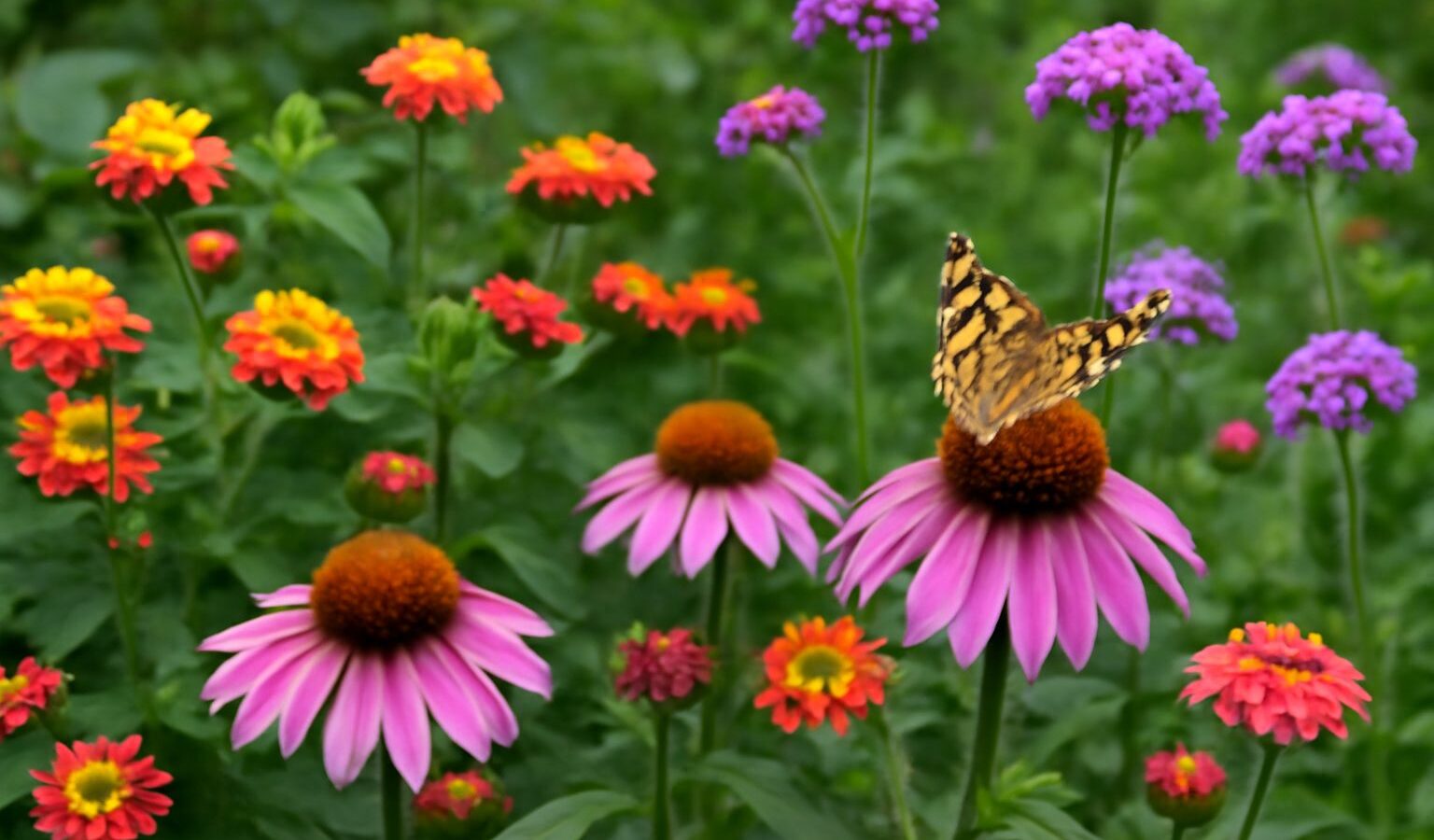
A butterfly garden is not just a flower bed that happens to attract butterflies — it’s a habitat built to feed two completely different life stages. Adult butterflies drink nectar, but their caterpillars eat leaves, and usually only the leaves of specific host plants. The single biggest reason a “butterfly garden” fails to hold butterflies is that it offers a buffet of nectar with nowhere for the insects to lay eggs and complete their life cycle, so the adults sip and move on. Get both halves right — host plants for caterpillars and a long, overlapping bloom of nectar flowers for adults — and you’ll have a yard that hums with monarchs, swallowtails, fritillaries, and skippers from spring through the first hard frost. This guide covers site selection, the plants that actually work by USDA zone, a layout that butterflies prefer, and a season-by-season plan to keep the show going.
Key Takeaways
- Provide both host plants (where caterpillars feed) and nectar plants (where adults drink) — milkweed for monarchs is non-negotiable.
- Site the garden in full sun, at least 6 hours, sheltered from wind, with flat stones for basking and a shallow mud puddle for drinking.
- Plant in drifts of the same flower rather than singles, and choose varieties that bloom in succession from April through October.
- Never use insecticides, including systemic neonicotinoids — they kill caterpillars on the very plants meant to host them.
Understanding What Butterflies Actually Need
Butterflies have four needs your garden must satisfy: nectar for adult energy, host plants for egg-laying and caterpillar food, sun for warmth, and shelter from wind and predators. Nectar gets all the attention, but host plants are what turn a passing visitor into a resident population. A monarch will only lay eggs on milkweed (Asclepias species); a black swallowtail needs members of the carrot family like dill, fennel, and parsley; eastern tiger swallowtails use wild cherry, tulip tree, and willow. If you plant only nectar flowers, you’re feeding adults but raising none of the next generation in your yard.
Sun matters more than most people expect. Butterflies are cold-blooded and cannot fly until their flight muscles reach roughly 85°F, which is why you see them spreading their wings flat on a warm rock in the morning. A butterfly garden in shade simply won’t get the traffic of one in full sun, no matter how good the plants are. Plan for at least six hours of direct sun, eight if you can, and include a few flat light-colored stones where butterflies can bask.
Choosing the Site and Layout
Pick the sunniest, most sheltered spot you have — a south- or southwest-facing bed against a fence, hedge, or house wall is ideal because the structure blocks wind and radiates stored heat. Butterflies struggle to feed in gusty conditions, so a windbreak dramatically increases activity. Avoid low frost pockets and deep shade. If the only sunny ground you have is exposed, plant a backdrop of taller shrubs or grasses on the windward side to calm the air around the flowers.
Design in drifts, not dots. A single coneflower in a mixed border is easy for a butterfly to miss; a block of five or seven of the same plant is a beacon they spot from across the yard and can work efficiently without flying far between blooms. Arrange plants in tiers — low edgers in front, mid-height nectar plants in the middle, tall host shrubs and grasses at the back — so every plant gets sun and the bed reads as a layered, intentional habitat. Leave a few patches of bare ground or flat stones in the sun for basking, and tuck a shallow dish or a depression of damp sand into a sunny corner so males can “puddle” — gathering minerals from wet soil, a behavior you’ll see them cluster around on warm afternoons.
Because the same sun-loving, pollinator-friendly principles overlap heavily with bee gardening, it’s worth reading our companion guide on how to create a pollinator garden before you finalize the plant list — many species feed both groups and let you do double duty.
Host Plants: Where Caterpillars Feed
Host plants are the foundation. Accept that they will get chewed — that’s the point — and tuck them where ragged leaves won’t bother you. The most important by far is milkweed for monarchs. In zones 3–9, common milkweed (Asclepias syriaca) and swamp milkweed (Asclepias incarnata) are reliable; in warmer zones 8–10, butterfly weed (Asclepias tuberosa) and the orange-flowered native species do well. Avoid tropical milkweed (Asclepias curassavica) in mild-winter regions because it doesn’t die back and can disrupt monarch migration and spread disease.
For black swallowtails, plant extra dill, fennel, parsley, and carrots in zones 3–9 — grow more than you need so the caterpillars and your kitchen both get a share. Eastern tiger swallowtails use tulip poplar, wild cherry, and willow trees (zones 4–9). Spicebush swallowtails need spicebush (Lindera benzoin) or sassafras (zones 4–9). Gulf and variegated fritillaries depend on native passionflower vine (Passiflora, zones 6–11). Painted ladies use thistles, hollyhock, and mallow (most zones). Red-spotted purples and viceroys use willows and poplars. Plant the host species that match the butterflies actually present in your region — a quick look at what flies through your yard in summer tells you where to invest.
Nectar Plants: Feeding the Adults
Adults want flowers with broad, flat landing pads or tight clusters of small florets they can probe one after another. The all-stars across most of the country (zones 3–9 unless noted) include purple coneflower (Echinacea purpurea), black-eyed Susan (Rudbeckia), bee balm (Monarda), blazing star (Liatris), New England aster (Symphyotrichum), Joe Pye weed (Eutrochium), and of course the milkweeds, which feed adults as well as caterpillars. Zinnias and Mexican sunflower (Tithonia) are unbeatable annuals — Tithonia in particular is a magnet for monarchs and swallowtails in late summer and grows in any zone as a warm-season annual.
Butterfly bush (Buddleia) earns its name for nectar but is invasive in many states and offers nothing to caterpillars, so prefer the native options above; if you grow it, choose sterile cultivars and never let it seed. Yarrow, lantana (zones 9–11 perennial, annual elsewhere), pentas, salvia, verbena bonariensis, and goldenrod round out a strong list. The key is succession: choose so that something is always blooming. Aim for early-season bloomers like phlox and verbena, a strong midsummer core of coneflower and bee balm, and a late wave of asters, goldenrod, and sedum that fuels monarchs heading south.
Water, Basking and Shelter
Butterflies rarely drink from open water — they’d drown — but they do “puddle” on damp soil and wet sand to pull up salts and minerals. Make a simple puddling station by sinking a shallow saucer of coarse sand into a sunny patch of soil, keeping it damp, and adding a pinch of sea salt or a flat stone in the center as a perch. Site it in the open sun near the flowers. Add a couple of broad, flat stones in full sun as basking platforms, and leave some leaf litter and a few standing perennial stems through winter as overwintering shelter for chrysalises and hibernating adults like mourning cloaks.
Avoid Pesticides — Completely
This is the part people resist, but it’s non-negotiable: a butterfly garden cannot coexist with insecticides. Caterpillars are insects, and any product that kills aphids or “garden pests” will kill them too. Worse, systemic neonicotinoid pesticides — often present in plants bought from big-box nurseries without your knowing — move into nectar and leaves and poison butterflies that visit. Buy plants from native-plant nurseries that certify them neonic-free, or grow from seed. Even Bt (Bacillus thuringiensis), the “organic” caterpillar control, is lethal to butterfly larvae, so never use it anywhere near the garden. Tolerate the holes in the leaves; they’re the sign it’s working.
A Season-by-Season Plan
Spring (March–May): Cut back last year’s perennial stems in mid- to late spring, not earlier, so overwintering insects emerge first. Plant cool-season host plants like parsley and dill, sow zinnia and Tithonia seeds after frost, and put in nectar perennials. Add early bloomers — phlox, columbine, verbena — to feed the first emerging adults.
Summer (June–August): Keep new plantings watered with an inch a week until established. Deadhead annuals like zinnias to extend bloom, but leave coneflower and other perennials to keep flowering. This is peak caterpillar season — check milkweed for monarch eggs and tiny caterpillars, and resist the urge to spray aphids on milkweed; a strong jet of water or simply leaving them is fine. Refresh the puddling station so it stays damp.
Fall (September–October): This is the critical fueling window for migrating monarchs, so let asters, goldenrod, and sedum bloom freely. Do not cut everything down for tidiness — standing seed heads and stems shelter chrysalises and overwintering adults. Plant new perennials now in zones 5 and warmer; fall planting gives roots a head start. For ideas on extending the planting beds and structure into the cooler months, our spring garden checklist pairs naturally with this fall wind-down, and the broader Outdoor Living hub has more habitat-focused landscaping guides.
Winter (November–February): Leave the garden standing. The “messy” winter bed full of stems and leaf litter is exactly the habitat overwintering butterflies need. Plan next year’s additions and order seeds for milkweed and native nectar plants, many of which need cold stratification you can do in the fridge or by sowing in late fall.
Frequently Asked Questions
What is the single most important plant for a butterfly garden?
Milkweed (Asclepias), because it is the only host plant monarch caterpillars can eat and it also provides nectar for adults. Choose a native species for your zone — swamp milkweed or common milkweed in most of the country, butterfly weed in drier sites — and avoid non-native tropical milkweed in mild-winter regions.
How big does a butterfly garden need to be?
It doesn’t need to be big. Even a few containers or a 4×8-foot bed with milkweed, a couple of nectar perennials, and a host herb like parsley will attract butterflies. Larger drifts hold more of them longer, but the rule is variety and continuous bloom, not square footage.
Why do butterflies visit but never stay in my garden?
Almost always because you have nectar but no host plants, so adults feed and leave to lay eggs elsewhere. Add the host plants for the butterflies in your region — milkweed, dill and fennel, passionflower, spicebush — and they’ll have a reason to take up residence.
Will a butterfly garden attract wasps and pests?
It attracts a full range of pollinators, including some wasps, but most are harmless or beneficial predators. Because you won’t be spraying, you’ll have a healthier balance of insects overall, and the occasional aphid or beetle rarely does meaningful harm to a diverse planting.
When should I plant a butterfly garden?
Spring after the last frost is ideal for most plants and lets them establish before summer heat, but fall planting of perennials in zones 5 and warmer gives roots a strong start. Sow milkweed and many native seeds in late fall or after cold-stratifying them, since they need a chill period to germinate.