

More houseplants die from watering mistakes than from anything else, and the cruel twist is that overwatering and underwatering can look almost identical: drooping leaves, yellowing, crispy edges. The fix is not a rigid schedule like “water every Sunday,” because how fast a pot dries out depends on the plant, the pot size and material, the potting mix, the light, the humidity, and the season. A plant that needs water twice a week in a hot July window might want it once every three weeks in a dim, cool December room. The reliable approach is to stop watering by the calendar and start watering by what the soil and the plant are actually telling you. This guide covers the three tests that take the guesswork out of it, the finger test, the moisture meter, and the weight method, then walks through how watering needs shift by plant type and season, and how to read the signs of getting it wrong in either direction.
Key Takeaways
- Water on demand, not on a fixed schedule; how fast a pot dries depends on plant, pot, mix, light, humidity, and season.
- The finger test, stick the first 1 to 2 inches of soil, is the fastest reliable check for most plants.
- The weight method (lift the pot) is the most accurate everyday signal once you learn what dry versus saturated feels like.
- Cheap moisture meters are useful but can be unreliable in chunky or salty mixes; treat them as a second opinion.
- Overwatering causes soft, yellow, mushy growth and a sour soil smell; underwatering causes crispy, drooping, slow-recovering leaves.
Why a Watering Schedule Fails
The instinct to water “every X days” is understandable, but it ignores everything that actually controls how quickly soil dries. A small terracotta pot in a sunny window breathes moisture out through its porous walls and can dry in two days; a large glazed ceramic pot in low light can hold moisture for three weeks. A fast-draining cactus mix dries far quicker than a dense peat-heavy blend. Warm, bright, low-humidity conditions pull water out of the soil rapidly through the plant; cool, dim, humid conditions slow it to a crawl. Because all of these factors shift with the seasons and your home’s layout, a schedule that is perfect in summer drowns the same plant in winter. Watering to the plant’s actual moisture level, every time, is what keeps roots healthy.
The Three Tests for “Is It Time to Water?”
1. The Finger Test
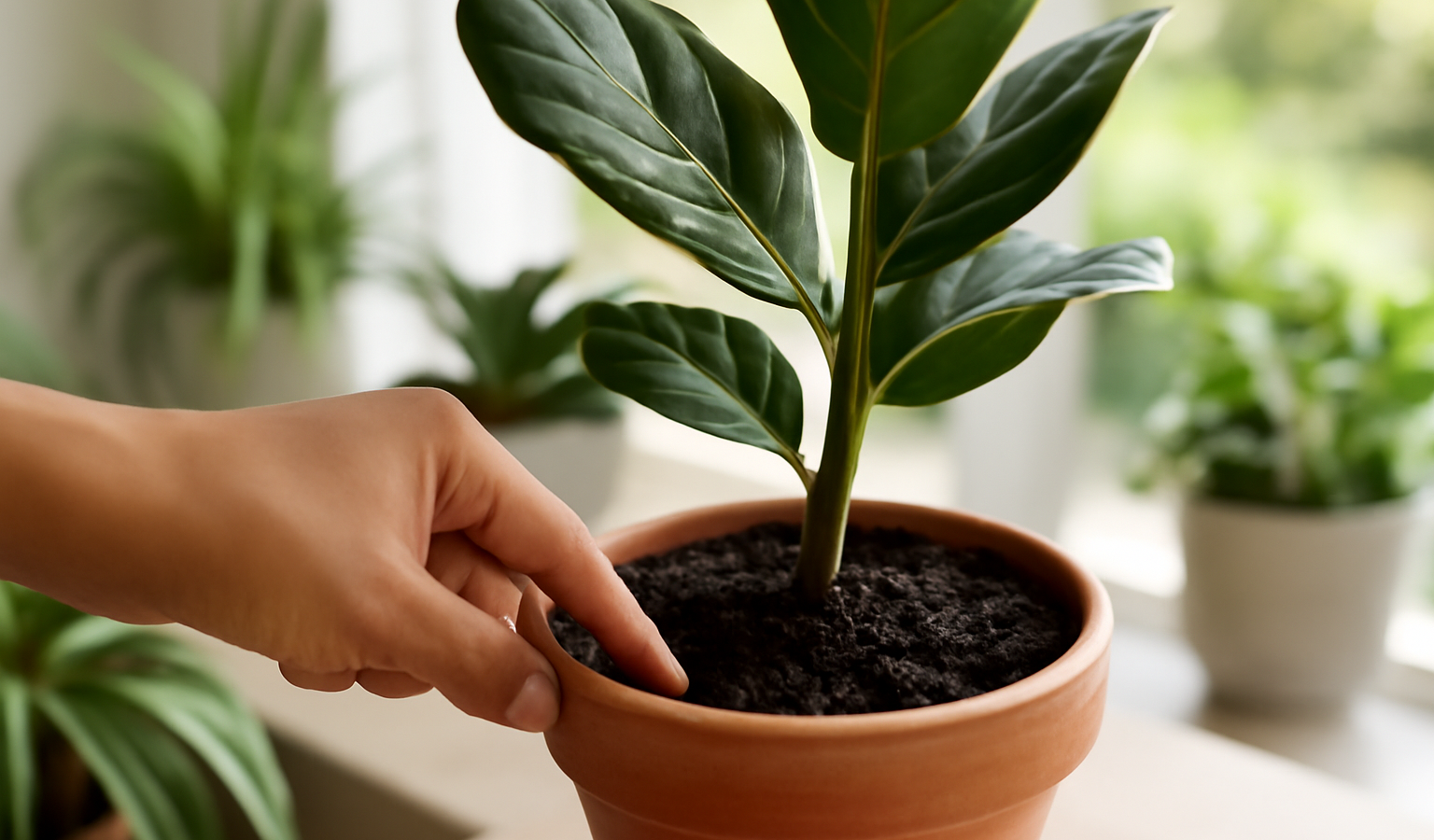
This is the workhorse and it costs nothing. Push a clean finger 1 to 2 inches into the potting mix, roughly to your first or second knuckle. If it comes out with soil clinging to it and feels cool and moist, wait. If the top 1 to 2 inches feel dry and crumbly, it is time to water for most common foliage plants. The reason you check below the surface is that the top layer dries out first and looks deceptively parched while the root zone an inch down is still wet. For smaller pots, checking the top inch is enough; for pots deeper than about 8 inches, go two inches or use a wooden chopstick or skewer pushed deeper, like a cake tester, and read whether it comes out clean and dry or with damp soil stuck to it.
2. The Moisture Meter
An inexpensive analog moisture meter, the probe-style ones that read dry to wet on a 1 to 10 dial, gives you a reading deeper in the pot than a finger can reach, which is handy for big containers and for plants you do not want to keep disturbing. Insert the probe two-thirds of the way toward the bottom, wait a few seconds, and read it. As a rough rule, water most foliage plants when the meter reads in the dry-to-slightly-moist range (about 2 to 3), succulents when it hits near-dry (1 to 2), and moisture-loving plants like ferns when it reaches the lower-moist band (3 to 4). The caveat: cheap meters actually respond to electrical conductivity, not water directly, so fertilizer salts can make dry soil read “wet,” and very chunky or bark-heavy mixes can fool them. Use the meter as a useful second opinion, not gospel, and calibrate your trust in it against the finger test until you know how it behaves in your pots.
3. The Weight Method
Once you get a feel for it, lifting the pot is the most accurate everyday signal there is, because water is heavy and a dry pot weighs dramatically less than a saturated one. Right after a thorough watering and full drainage, pick the pot up and register how heavy it feels. A few days later, lift it again; as the soil dries, the pot gets noticeably lighter. With a little practice you can tell a plant needs water just by hefting it, no probing required, which is especially gentle on plants that resent having their roots disturbed and a fast way to check a whole shelf at once. For very large floor plants you obviously cannot lift, combine the finger or chopstick test with watching the plant, or rest a finger on the pot, terracotta darkens and feels cool when wet and lightens as it dries.
How Much, and How, to Water
When a plant does need water, water it thoroughly rather than in cautious sips. Pour slowly and evenly across the whole soil surface until water runs freely from the drainage holes, which wets the entire root ball and flushes out accumulated fertilizer salts. Let the pot drain completely and never leave it standing in a saucer of water, since waterlogged roots suffocate. This “soak and drain” approach beats frequent little splashes, which only moisten the top layer and encourage shallow, weak roots while leaving the deep roots dry. Tepid or room-temperature water is gentler than ice-cold tap water, which can shock tropical roots. If your tap water is heavily chlorinated or softened, letting it sit out overnight or using filtered water helps sensitive species, though most plants tolerate ordinary tap water fine.
Watering by Plant Type
Different plants want very different things, and matching the test threshold to the plant matters as much as doing the test at all.
- Succulents and cacti: Let the mix dry out completely, top to bottom, between waterings, then water thoroughly. In winter, many go nearly dormant and need water only every few weeks or less. Their biggest enemy is staying wet.
- Aroids (pothos, philodendron, monstera, ZZ, snake plant): Let the top 1 to 2 inches dry before watering. Snake plants and ZZ plants store water and prefer to dry out more, closer to succulent treatment, than the thirstier pothos and monstera.
- Ferns, calatheas, and prayer plants: Keep the mix lightly and evenly moist, never soggy and never bone-dry. These are the plants most likely to crisp if you let them go fully dry, so check more often.
- Peace lilies: Like consistent moisture and will dramatically wilt as a warning when thirsty, then bounce back after watering, useful, but repeated severe wilting stresses the plant.
- Orchids (phalaenopsis): Grown in bark, not soil. Water when the bark is dry and the roots turn silvery-green; a thorough soak roughly weekly suits most homes.
Watering by Season
Your plants’ water needs swing with the calendar even though they live indoors. From spring through summer, longer days and active growth mean plants drink more, often noticeably faster, so you will check and water more frequently. In fall and winter, shorter days, weaker light, and cooler temperatures slow growth to a near halt for many species, and water use drops sharply, sometimes you will water a third as often as in summer. The classic winter killer is keeping up a summer watering pace into a season when the plant simply is not using the water, leaving the soil constantly wet and the roots rotting. Indoor heating adds a wrinkle: forced-air heat dries the air and the top of the soil quickly, which can make a plant look thirsty on the surface while the root zone stays wet, so lean on the deeper finger, chopstick, or weight check rather than the dry surface in winter. Let the tests, not the date, set the pace, but expect the interval to stretch out as the year cools.
Signs of Overwatering vs Underwatering
Both extremes can cause drooping and yellowing, which is why people misdiagnose them and then “fix” an overwatered plant by watering it more. Read the texture and the soil, not just the leaf color.
Overwatering signs
- Yellowing leaves that feel soft, limp, or mushy rather than crisp.
- Brown spots with soft, dark, water-soaked edges.
- Soil that stays wet for many days and smells sour or musty (a sign of rotting roots).
- Fungus gnats hovering around constantly damp soil.
- Generalized wilting even though the soil is clearly wet, the rotted roots can no longer take up water.
Underwatering signs
- Crispy, brown, brittle leaf edges and tips.
- Drooping or wilting that perks back up within hours of a thorough watering.
- Dry, hard soil that has pulled away from the sides of the pot so water runs straight down the gap.
- Slow growth and lower leaves dropping after going fully crisp.
If the soil has shrunk away from the pot and water races through without soaking in, the root ball has gone hydrophobic; sit the whole pot in a basin of water for 20 to 30 minutes to rehydrate the soil from the bottom up, then let it drain. For suspected overwatering, stop watering immediately, move the plant somewhere brighter and warmer to speed drying, and if the soil smells of rot, unpot the plant, trim any black mushy roots, and replant in fresh, well-draining mix. The right potting medium and pot are half the battle, which ties directly into giving a plant a calm start, the same principles in our guide on how to acclimate a new houseplant apply, and if you grow in tight quarters, our take on small-space and container growing covers drainage choices that make watering far more forgiving. You can also explore more indoor-growing guides on our urban gardening hub.
Frequently Asked Questions
How often should I water my houseplants?
There is no universal number, and that is the point. It depends on the plant, pot size and material, soil mix, light, humidity, and season. Instead of a fixed day, use the finger test (water when the top 1 to 2 inches are dry for most foliage plants), the weight method, or a moisture meter, and expect to water far less often in winter than in summer.
Are moisture meters accurate?
Cheap probe meters are useful but imperfect. They measure electrical conductivity rather than water directly, so fertilizer salts can make dry soil read “wet,” and chunky bark mixes can fool them. Use one as a second opinion for deep or hard-to-check pots, and cross-check it against the finger test until you trust how it behaves in your specific pots.
How can I tell overwatering from underwatering when both cause droopy yellow leaves?
Check texture and soil. Overwatered leaves are soft and mushy, the soil stays wet for days and may smell sour, and you might see fungus gnats. Underwatered leaves are crispy and brittle, the soil is bone-dry and pulled from the pot’s sides, and the plant perks up within hours of watering. When in doubt, feel the soil before adding more water.
Should I water on a fixed weekly schedule?
No. A schedule that suits summer will drown the same plant in winter, when slower growth and weaker light cut water use sharply. Watering by calendar ignores everything that controls how fast soil dries. Check the soil first with the finger, weight, or meter test every time, and water only when the plant actually needs it.
What does it mean to water “thoroughly”?
Pour slowly and evenly across the whole soil surface until water drains freely from the bottom holes, which wets the entire root ball and flushes out fertilizer salts. Let it drain completely and never leave the pot sitting in water. This soak-and-drain method beats frequent small splashes, which only wet the surface and encourage weak, shallow roots.
Watering well is less about discipline and more about observation. Pick the test that fits your routine, the finger test for quick checks, the weight method for whole shelves, a meter for deep pots, match the threshold to the plant, and let the season stretch or shorten the interval. Once you are reading the plant and the soil instead of the calendar, the constant cycle of soggy roots and crispy leaves quietly disappears.