

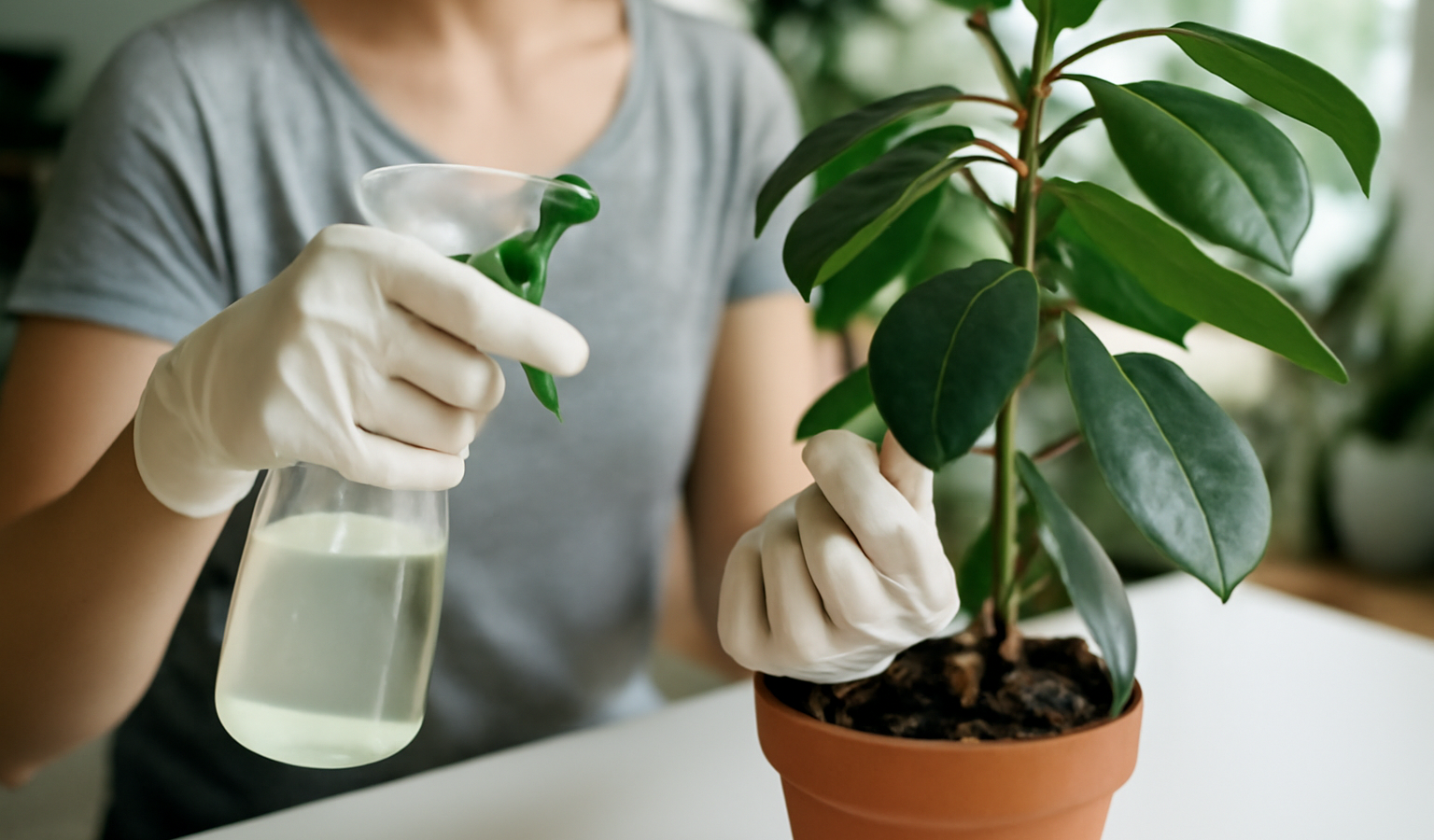
The moment you see a houseplant pest, do two things: isolate the plant and identify what you are dealing with. Those two steps decide whether you lose one plant or an entire windowsill. Indoor plants have no ladybugs, lacewings, or hard rain to knock pest populations back, so a few insects can balloon into an infestation in a week or two. The good news is that the six pests responsible for the vast majority of indoor problems—fungus gnats, spider mites, mealybugs, scale, aphids, and thrips—are all treatable with three cheap supplies you may already own: neem oil, insecticidal soap, and 70% isopropyl alcohol. This guide shows you how to tell them apart, knock them down fast, and keep them from coming back.
Key Takeaways
- Isolate any infested plant immediately—move it at least 3 feet from healthy plants, ideally into another room.
- Identify the pest before you treat: fungus gnats live in the soil, spider mites and thrips hide on leaf undersides, mealybugs and scale cling to stems.
- Three products handle almost everything: 70% isopropyl alcohol (spot-kill), insecticidal soap (soft-bodied pests), and neem oil (broad-spectrum, breaks the life cycle).
- Treat every 5–7 days for at least 3 cycles—one spray rarely kills eggs, and reinfestation is the most common failure.
- Prevention beats treatment: quarantine new plants 2–3 weeks, avoid overwatering, wipe leaves, and inspect undersides weekly.
Step One: Isolate Before You Do Anything Else
Pests spread by walking, flying, and drifting on air currents from one canopy to the next. The instant you suspect an infestation, separate the plant from your collection. Move it to a bathroom, garage, or a windowsill in a different room—at minimum 3 feet of clear air from any other plant. Wash your hands after handling it and avoid letting leaves touch healthy foliage as you carry it. Keep the plant isolated through the entire treatment period (typically three to four weeks) and for one extra week after you see no live pests. Rushing a plant back into the group is the single most common way people reinfest an entire collection.
While the plant is isolated, inspect its neighbors. If one plant had spider mites, the plants that sat next to it are the most likely to be carrying the first few mites already. Catching them at that stage—when there are five mites instead of five thousand—is the difference between a five-minute wipe-down and a month-long battle.
Your Three-Product Treatment Kit
Before walking through each pest, it helps to understand what your three core treatments actually do, because you will reach for them again and again.
70% Isopropyl Alcohol
A cotton swab dipped in 70% isopropyl alcohol dissolves the waxy coating on mealybugs and scale and kills them on contact. Use it for spot-treating individual insects. For light spraying, dilute to roughly 1 part alcohol to 3 parts water and test on one leaf first—some thin-leaved plants (calatheas, some ferns) can scorch. Avoid alcohol on fuzzy-leaved plants like African violets.
Insecticidal Soap
Insecticidal soap kills soft-bodied pests—aphids, mites, young scale crawlers, mealybugs, thrips larvae—by breaking down their cell membranes. It only works on contact and on wet insects, so coverage is everything: spray until leaves drip, top and bottom. You can buy ready-to-use bottles or make your own with 1 to 2 teaspoons of pure liquid Castile or dish soap (no degreasers, bleach, or moisturizers) per quart of water. Test it on one leaf for a day before treating the whole plant.
Neem Oil
Neem oil is your broad-spectrum workhorse. Its active compound, azadirachtin, disrupts feeding and the molting cycle, so it kills pests slowly but also stops eggs and nymphs from maturing—exactly what you need to break a life cycle. Mix about 1 to 2 teaspoons of cold-pressed neem with a few drops of soap as an emulsifier per quart of warm water, shake constantly, and apply to a fresh batch each time. Spray in the evening or out of direct sun to avoid leaf burn, and never spray a wilted, thirsty plant.
Fungus Gnats: Tiny Flies Around the Soil
How to ID them: Small (about 1/8 inch) dark flies that hover around the soil surface and scatter when you water. The damaging stage is actually the translucent larvae in the top inch of soil, which feed on roots and organic matter. Persistently soggy soil is almost always the cause.
How to treat them: Let the top 1–2 inches of soil dry out completely between waterings—this alone kills most larvae and stops adults from laying eggs. Set out yellow sticky traps flat on the soil to catch adults. For a heavier infestation, drench the soil with a Bacillus thuringiensis israelensis (Bti) product such as mosquito bits steeped in water, which targets the larvae specifically. Topping the soil with half an inch of coarse sand or fine gravel creates a dry barrier that adults won’t lay eggs through. Bottom-watering also keeps the surface dry. Fungus gnats are more nuisance than killer, but they signal you are overwatering—fix that and they disappear.
Spider Mites: Fine Webbing and Stippled Leaves
How to ID them: Spider mites are nearly microscopic, but their damage is obvious—tiny yellow or white speckles (stippling) across the upper leaf surface, leaves that look dusty or dull, and in advanced cases fine webbing in the leaf axils and between stems. Hold a sheet of white paper under a leaf and tap it; if you see slow-moving specks that smear reddish when wiped, you have mites. They thrive in hot, dry air, which is exactly what heated winter homes provide.
How to treat them: Start by taking the plant to a sink or shower and blasting both sides of every leaf with a strong stream of water to physically knock down the population. Then spray thoroughly with insecticidal soap or neem oil, paying obsessive attention to leaf undersides where mites live. Repeat every 4–5 days for at least three weeks—mite eggs hatch on a tight cycle, so a single treatment leaves the next generation to rebound. Raising humidity (a pebble tray, grouping survivors after the all-clear, or a humidifier) makes the environment far less hospitable to them long-term.
Mealybugs: White Cottony Fluff on Stems
How to ID them: Mealybugs look like small tufts of white cotton wedged into leaf joints, stem crevices, and the undersides of leaves. They are slow-moving sap-suckers that leave behind sticky honeydew, which often grows a black sooty mold. Their waxy coating makes them surprisingly resistant to sprays.
How to treat them: For a light infestation, dip a cotton swab in 70% isopropyl alcohol and touch each insect directly—the alcohol cuts through the wax and kills them instantly. For heavier cases, follow the alcohol wipe with a full neem oil spray every 7 days. Check the root zone too: root mealybugs hide in the soil, so if a plant keeps reinfesting itself, repot it, rinse the roots, and discard the old soil. Be patient—mealybugs are among the most stubborn houseplant pests and often need four or more treatment cycles.
Scale: Brown Bumps That Don’t Wipe Off
How to ID them: Scale insects look like small, flat or domed brown, tan, or black bumps stuck along stems and leaf veins. They have a hard protective shell and barely move, so people often mistake them for part of the plant. Like mealybugs (their close cousins), they excrete honeydew and attract sooty mold. If a bump scrapes off with your fingernail and leaves a slightly sticky spot, it’s scale.
How to treat them: The hard shell shrugs off most sprays, so start mechanically—scrape adults off with a fingernail, old toothbrush, or alcohol-soaked swab. Then spray with neem oil, which smothers the vulnerable mobile “crawlers” (the young, shell-less stage) and disrupts their development. Because crawlers hatch over time, repeat neem treatment every 7 days for at least a month. Prune heavily infested stems and dispose of them. Scale is slow to spread but slow to eradicate, so consistency matters more than force.
Aphids: Clusters on New Growth
How to ID them: Aphids are small (1/16 to 1/8 inch) pear-shaped insects—green, black, yellow, or pink—that cluster on tender new growth, flower buds, and stem tips. They reproduce explosively and, like scale and mealybugs, leave sticky honeydew. Curled, distorted new leaves are a telltale sign.
How to treat them: Aphids are soft-bodied and easy to kill. Rinse them off in the sink, then spray thoroughly with insecticidal soap or neem oil, hitting the growing tips and leaf undersides where they congregate. Because they breed so fast, repeat every 4–5 days for a couple of weeks. They rarely survive determined treatment, but they will return quickly if even a few are missed, so be thorough on the new growth.
Thrips: Silvery Streaks and Black Specks
How to ID them: Thrips are slender, fast, sliver-of-a-pencil-shaved insects under 1/16 inch, often pale yellow or dark. They are hard to spot, but their damage isn’t: silvery or bronze streaking on leaves, distorted new growth, and tiny black specks of frass (droppings). Tap a flower or leaf over white paper and watch for thin specks that dart and crawl. Thrips are among the most frustrating houseplant pests because they tuck into buds and crevices.
How to treat them: Thrips need a layered attack. Prune off the worst-damaged growth, then alternate insecticidal soap and neem oil sprays every 5–7 days, hitting leaf undersides, leaf joints, and any flowers. Blue sticky traps catch the flying adults and help you monitor numbers. Because thrips also pupate in the soil, letting the top of the soil dry and even swapping the top layer of potting mix helps interrupt the cycle. Expect to treat for four to six weeks—thrips are the pest most likely to require persistence.
A Simple Treatment Rhythm That Works
No matter the pest, the same rhythm applies. Isolate the plant, identify the culprit, and knock the population down with a water rinse. Apply your chosen treatment to full coverage—top and bottom of every leaf, into the joints, until it drips. Then repeat on a 5- to 7-day cycle for a minimum of three rounds, because no single spray kills eggs that haven’t hatched yet. Inspect at each round; when you see no live pests for two consecutive cycles, you can call it. This patient, repeated approach is far more effective than one heavy blast, and it’s why people who “treat once and give up” keep losing plants. For more on diagnosing plant problems before they become infestations, our guide on why pothos leaves curl covers the early stress signals worth watching.
Prevention: Stop Pests Before They Start
- Quarantine new plants. Every new plant—nursery, big-box, or swap—gets 2–3 weeks isolated from your collection before it joins the others. This single habit prevents most infestations.
- Don’t overwater. Soggy soil breeds fungus gnats and weakens roots. Let the top inch or two dry between waterings.
- Inspect weekly. Flip a few leaves over and check the stem joints. Pests are always easiest to beat in the first week.
- Wipe leaves. A monthly wipe-down with a damp cloth removes dust, exposes early pests, and lets you spot trouble.
- Manage humidity and airflow. Stable humidity discourages spider mites; gentle air circulation discourages fungus gnats and fungal issues.
- Keep plants healthy. A well-fed, properly lit plant resists and recovers from pests far better than a stressed one.
If you grow in tight quarters where plants sit shoulder to shoulder, prevention matters even more—pests jump between touching leaves in a heartbeat. Our notes on small-space and container growing cover spacing and airflow strategies that double as pest defense, and beginners building their first indoor collection will find useful care fundamentals in our guide to leggy philodendrons.
Frequently Asked Questions
How do I know which houseplant pest I have?
Location is the fastest clue. Tiny flies around the soil are fungus gnats. Fine webbing and stippled leaves mean spider mites. White cottony fluff in leaf joints is mealybugs, while hard brown bumps on stems are scale. Clusters on new growth are aphids, and silvery streaks with black specks point to thrips. When in doubt, tap a leaf over white paper and watch what moves.
Is neem oil safe to use indoors?
Yes, when used correctly. Mix fresh each time, add a drop of soap to emulsify, and spray in the evening or away from direct sun to prevent leaf burn. It has a strong garlic-like smell that fades in a day or two. Test on one leaf first, never spray a thirsty or wilted plant, and keep it off fuzzy-leaved plants like African violets.
How often should I treat for houseplant pests?
Treat every 5 to 7 days for at least three cycles. A single application rarely kills eggs that haven’t hatched, so the follow-up sprays catch the next generation. Continue until you see no live pests for two consecutive treatments, then keep the plant isolated for one more week before returning it to your collection.
Can I just throw out an infested plant instead?
For a severely infested, low-value, or hard-to-treat plant, discarding it is a perfectly valid choice that protects the rest of your collection—bag it before carrying it out so pests don’t drop off along the way. But most infestations caught early are fully treatable with isolation and repeated neem or soap sprays, so it’s worth trying first on plants you value.
Why do my houseplant pests keep coming back?
Almost always one of three reasons: you stopped treating after one application and missed the eggs, you returned the plant to your collection too soon, or there’s a hidden source—root mealybugs in the soil, an untreated neighboring plant, or a new plant that skipped quarantine. Treat on a full multi-week cycle, check the soil and roots, and inspect every nearby plant.