

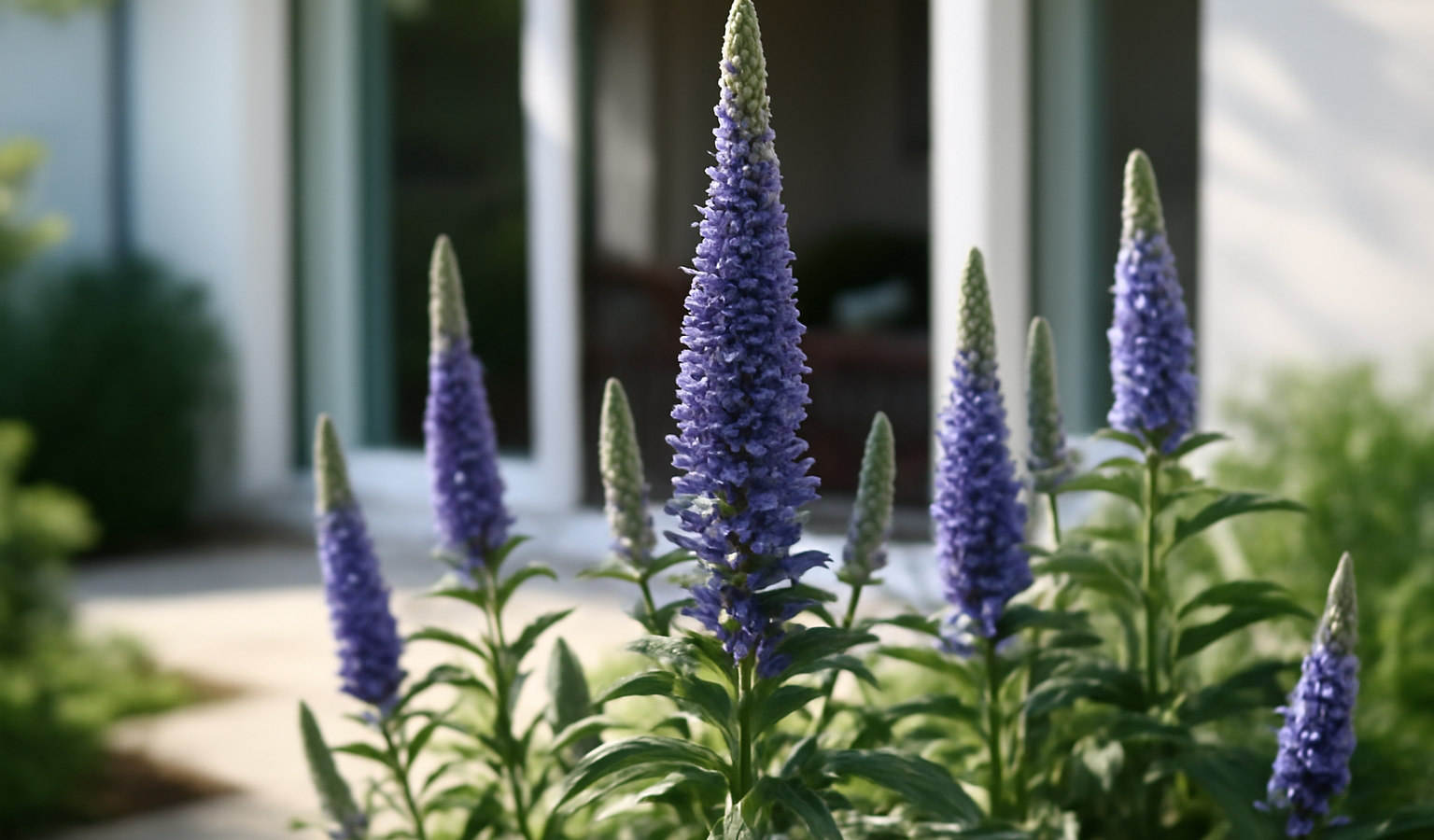
Veronica, better known as speedwell, is one of those reliable perennials that earns its place in the border without asking for much in return. The upright spike forms send up dense, tapering wands of blue, purple, pink, or white from early summer, while a whole other group of low creeping species hugs the ground as flowering groundcover. It comes back every year, shrugs off deer, feeds the bees, and reblooms if you keep the shears handy. Below is the full picture: which type to plant where, the hardiness zones it survives, and the handful of jobs that keep it tidy and flowering for years.
Key Takeaways
- Speedwell is a hardy perennial that returns each year; most spike types are reliable in USDA zones 3-8, with a few good to zone 9.
- Give it full sun (it tolerates light shade) and well-drained average soil—wet winter feet cause crown and root rot, its single biggest killer.
- Space plants 12-18 inches apart; upright types reach 1-3 feet, creeping types stay around 6 inches.
- Deadhead or shear spent spikes after the early-summer bloom to trigger a strong rebloom.
- Divide every 3-4 years in spring or fall to keep clumps vigorous and free-flowering.
- Low water once established, deer-resistant, and a magnet for bees and butterflies.
Meet Veronica (Speedwell)
Veronica is a large genus, and the part of it gardeners care about splits cleanly into two camps. The first is the upright spike speedwells—plants like Veronica spicata and Veronica longifolia—that form a low mound of foliage and throw up narrow, candle-like flower spikes from early summer. These are the border plants, growing roughly 1 to 3 feet tall depending on variety, and they read as vertical accents next to rounder, mounding perennials. The second camp is the creeping or prostrate speedwells, such as Veronica repens, Veronica prostrata, and Veronica peduncularis, which stay 2 to 6 inches high and spread sideways as flowering groundcover and rock-garden plants.
Both groups share the same easygoing temperament. They flower in cool blues, violets, soft pinks, and clean whites, the colors that knit a mixed planting together rather than fighting it. Pollinators work the small individual florets constantly—bees especially—and deer and rabbits generally leave the foliage alone, which makes speedwell a dependable choice in country and suburban gardens where browsing is a problem. It is not a short-lived perennial, but it does benefit from periodic division to stay dense, a point I’ll come back to.
Hardiness and Where to Plant
Speedwell is genuinely cold-hardy. The most common garden spike speedwells—Veronica spicata and the named hybrids derived from it—are reliable in USDA zones 3 through 8, and several cultivars push to zone 9 in regions where summers aren’t brutally humid. Veronica longifolia (long-leaf speedwell) carries a similar zone 3-8 rating. The creeping species are mostly comparable, though some, like Veronica peduncularis ‘Georgia Blue’, are a touch more heat-tolerant on the warm end. Always check the tag for the specific cultivar, but as a rule of thumb, if you garden anywhere from the upper Midwest down through the mid-South, speedwell will overwinter for you.
Where you plant matters more than how cold it gets, because the thing that actually kills speedwell is not winter cold but winter wet. A spot that sits soggy from autumn through spring will rot the crown long before frost ever does. Choose a site that drains freely—a slope, a raised bed, or naturally gritty ground—and avoid low pockets where snowmelt and rain collect. Get the drainage right and the listed hardiness ratings hold up well; get it wrong and even a zone-3 plant can disappear over a mild, sodden winter.
Sun and Soil
Plant speedwell in full sun for the best flowering and the sturdiest, most upright spikes. It will accept light or afternoon shade, particularly in hot-summer regions, but in too much shade the stems stretch, flowering thins out, and the upright types flop. The creeping species are a little more shade-forgiving and can take dappled light under high tree canopies, though they too flower most freely in sun.
Soil should be average and well-drained—and that second word is the one that counts. Speedwell does not need rich ground; ordinary garden loam is fine, and lean, gritty soils often produce tougher, more compact plants. What it cannot stand is heavy clay that stays wet, because waterlogged soil suffocates and rots the roots. If your ground is dense, work in compost and coarse grit to open it up, or plant on a raised bed or berm. If you’re starting a new bed, it’s worth doing the groundwork properly first; our guide on how to prepare soil for planting walks through improving drainage and structure before anything goes in. Speedwell is unfussy about pH, performing well anywhere from slightly acidic to slightly alkaline.
Planting and Spacing
The best windows for planting are spring and early fall, giving roots time to settle before the stress of high summer or hard frost. Set plants at the same depth they sat in the nursery pot—burying the crown invites the same rot that poor drainage causes. Dig the hole twice as wide as the rootball, loosen the sides, and backfill with the native soil rather than a pocket of rich amendment that would hold water around the roots.
Space upright spike speedwells 12 to 18 inches apart, leaning toward the wider end for taller, fuller cultivars and the closer end for compact ones. That spacing isn’t just about look—it keeps air moving through the foliage, which matters for preventing the powdery mildew and leaf spot that crop up in crowded, humid plantings. Creeping types can go closer, roughly 8 to 12 inches apart, since you generally want them to knit together into a continuous mat. Water plants in well at planting, then mulch lightly to conserve moisture and suppress weeds, keeping the mulch pulled back an inch or two from the crown so it doesn’t trap dampness against the stems.
Watering and Feeding
For the first season, water newly planted speedwell regularly—about an inch a week in the absence of rain—to establish a deep root system. After that, it is genuinely low-water and drought-tolerant. Established plants get by on natural rainfall in most climates and only need supplemental water during extended dry spells. Err on the dry side rather than the wet; speedwell would far rather be a little thirsty than sit in saturated soil. Water at the base in the morning rather than overhead in the evening, so foliage dries quickly and fungal disease has no foothold.
Feeding is a light-touch affair. These are not hungry plants, and overfeeding—especially with high-nitrogen fertilizer—produces soft, leggy growth that flops and flowers poorly. A single application of a balanced, slow-release fertilizer in early spring, or simply a topdressing of compost, is all most plantings need for the whole season. In already-fertile beds you can skip feeding entirely and the plants won’t notice.
Deadheading, Cutting Back, and Dividing
This is the section that separates a tidy, long-flowering speedwell from a tired one. Spike speedwells bloom heavily in early summer—roughly June into July in much of the country—and the single most effective thing you can do is deadhead spent spikes as they fade. Snip each finished spike back to a set of leaves or a lower side bud, and the plant redirects energy into a fresh flush of secondary spikes, extending the show well into late summer. When a whole flush is past, shear the entire plant back by about a third; it looks drastic for a week, then rebounds with clean foliage and another round of bloom.
After the final flush, cut the plants back to the basal foliage to neaten them for the rest of the season. Whether you cut all the way down in fall or leave the stems for winter interest and spring cleanup is your call—both work, though leaving some standing offers a little cover for overwintering insects. Creeping types rarely need deadheading; a quick shear after their spring bloom is enough to keep them dense.
Every 3 to 4 years, clumps of upright speedwell start to thin or die out in the center—that’s the cue to divide. Lift the whole plant in early spring as growth begins, or in early fall, slice the clump into sections each with healthy roots and several shoots, discard the worn-out center, and replant the vigorous pieces at the same depth. Division rejuvenates the plant, keeps it flowering freely, and gives you free plants to spread through the border. Speedwell pairs naturally with other dividable border perennials; if you’re filling out a planting, see our guide on how to grow amsonia for another tough, long-lived companion.
Upright vs. Creeping Types and Varieties
Choosing the right speedwell starts with deciding what job you need it to do. The upright spike types are border plants for vertical color and cutting. Standout cultivars include ‘Royal Candles’ (also sold as ‘Glory’), a compact Veronica spicata hybrid with intensely violet-blue spikes on a tidy 12-18 inch plant; ‘Sunny Border Blue’, a long-blooming, taller selection prized for its deep blue spikes; and the species Veronica spicata itself, which comes in blue, pink, and white forms. Veronica longifolia brings taller, slimmer spikes around 2-3 feet, excellent at the middle or back of a border. These all reward the deadheading and shearing routine above.
The creeping and prostrate types serve completely different roles—groundcover, edging, rock gardens, and the gaps between stepping stones. Veronica repens forms a tight, low carpet studded with tiny flowers. Veronica prostrata is a classic rock-garden plant, spreading into mats topped with blue spikes in spring. Veronica peduncularis ‘Georgia Blue’ is a vigorous spreader smothered in true-blue flowers very early in the season, with foliage that bronzes attractively in cold weather. For a sunny slope, a rockery, or a tough spot where turf won’t thrive, these low species are the ones to reach for. Across both groups you’ll find the same useful palette of blues, purples, pinks, and whites, so you can match the color to your scheme regardless of form.
Pests and Problems
Speedwell is refreshingly trouble-free where pests are concerned. Deer and rabbits typically pass it by, and serious insect problems are rare. The issues that do arise are nearly all moisture- and air-flow related. Powdery mildew and leaf spot show up in humid weather or where plants are crowded with stagnant air—the foliage develops a dusty white film or dark blotches. The fix is cultural: space plants properly, divide crowded clumps, water at the base rather than overhead, and cut back any badly affected growth to improve circulation.
The most serious problem, and the one that actually kills plants, is root and crown rot in soil that stays wet—especially over winter. There is no spraying your way out of it; the solution is prevention through good drainage, as covered earlier. If an established plant suddenly collapses, blackens at the base, or fails to emerge in spring, soggy soil is almost always the culprit. Lift and replant survivors on better-draining ground or a raised bed and the problem usually disappears.
Companions in the Border
The vertical spikes of upright speedwell are most effective when set against contrasting flower shapes and a shared love of sun and good drainage. Plant it alongside salvia, whose similar upright habit and blue-purple range reinforce the vertical theme while overlapping in bloom time. Pair it with the daisy-flowered coreopsis for a hit of clean yellow that makes the cool blues pop, and let the arching foliage and bold blooms of daylilies provide bulk and a different texture nearby. Other strong partners include catmint, yarrow, lavender, and ornamental grasses—all sun-lovers that thrive in the same lean, well-drained conditions and bloom across the same long stretch of summer.
The creeping speedwells, meanwhile, work beautifully threaded among rock-garden plants, spilling over low walls, or carpeting beneath taller perennials and spring bulbs. Because the whole genus draws bees and butterflies, weaving speedwell through a mixed planting turns it into a pollinator destination. For more ideas on building a long-blooming, low-maintenance perennial planting, browse the Plants & Flowers hub for companion guides and combinations.
Frequently Asked Questions
Is veronica (speedwell) a perennial or an annual?
The garden speedwells are hardy perennials that return every year. Most spike types like Veronica spicata and Veronica longifolia are reliable in USDA zones 3-8, with some cultivars good to zone 9. The key to longevity is well-drained soil—wet winter conditions, not cold, are what shorten their lives.
Will veronica rebloom if I deadhead it?
Yes. After the main early-summer flush, snip spent spikes back to a set of leaves or a side bud and the plant pushes out fresh secondary spikes. When a whole flush is done, shear the plant back by about a third to trigger another round of bloom into late summer.
How far apart should I space speedwell?
Space upright spike types 12 to 18 inches apart, which keeps air moving to prevent mildew. Creeping groundcover species can go closer, around 8 to 12 inches, since you usually want them to knit into a continuous mat.
How often should I divide veronica?
Divide upright speedwell every 3 to 4 years, in early spring as growth begins or in early fall. Lift the clump, discard the worn-out center, and replant the vigorous outer sections at the same depth. Division keeps plants dense, free-flowering, and gives you extra plants.
Is veronica deer-resistant and good for pollinators?
On both counts, yes. Deer and rabbits typically leave speedwell alone, making it a dependable choice where browsing is a problem. At the same time, its small flowers are worked constantly by bees and butterflies, so it pulls double duty as a deer-resistant pollinator plant.