

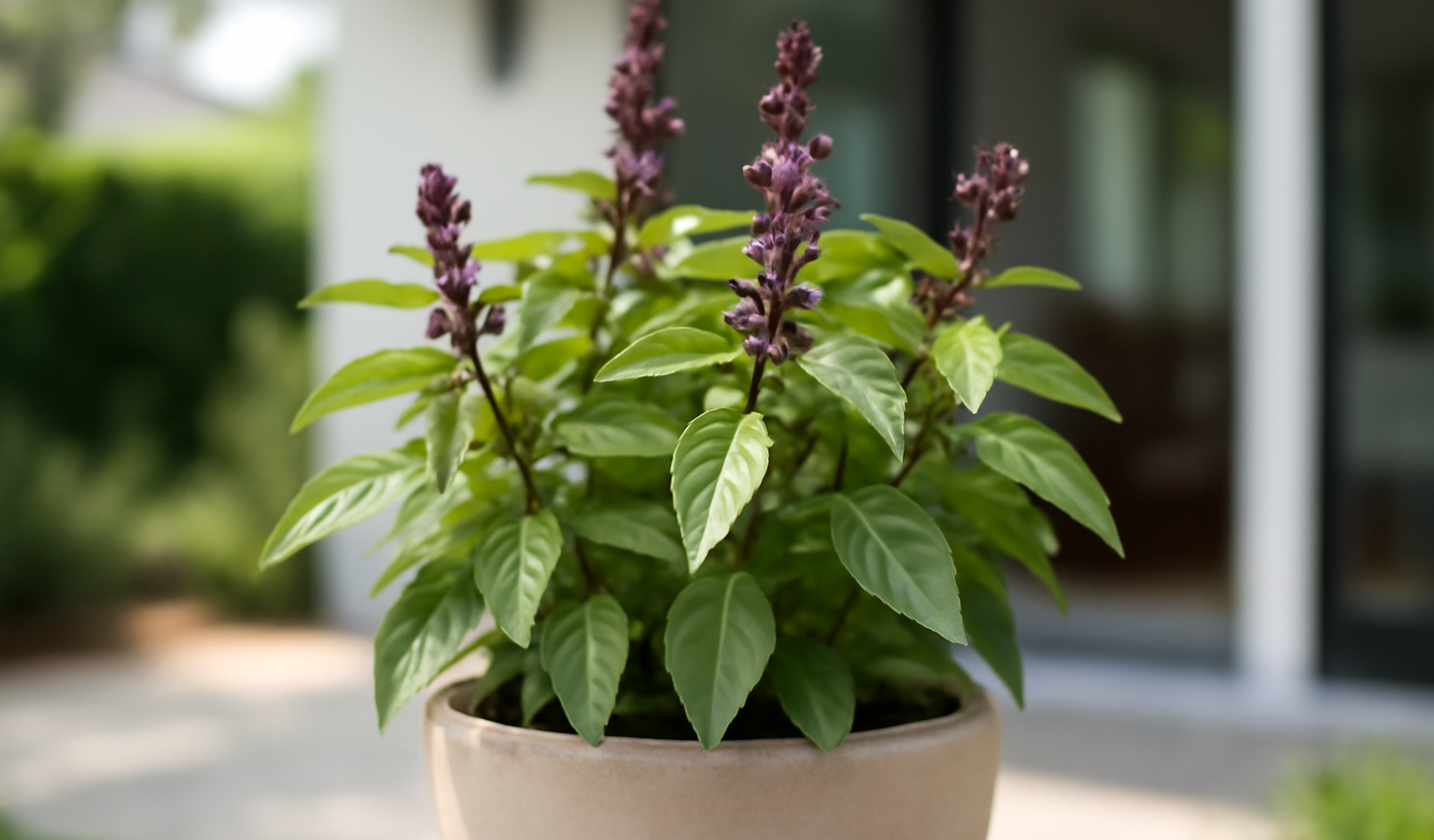
Thai basil is the herb that makes a stir-fry, a bowl of pho, or a fresh spring roll taste authentic, and it is just as easy to grow as the sweet Italian basil most gardeners already know. The difference is in the flavor and the constitution: Thai basil carries a distinctive anise-licorice note with a hint of spice, holds up far better to high-heat cooking, and is more tolerant of hot, humid weather than its Mediterranean cousin. It is also a handsome plant, with sturdy purple-tinged stems, narrow pointed green leaves, and spikes of small purple flowers that bees love. Like all basils it is a tender annual that craves warmth and sun, and the single most important skill for a big harvest is regular pinching. This guide covers starting Thai basil, the heat and sun it wants, pinching for bushiness, watering and feeding, harvesting, and keeping a plant going past summer.
Key Takeaways
- Thai basil is a tender annual with an anise-licorice flavor, purple stems, and better heat tolerance than sweet basil.
- It is heat-loving: plant out only after nights stay above 50°F and give it full sun, 6+ hours a day.
- Pinch the growing tips often to force bushy growth and prevent early flowering, which is the key to a big harvest.
- Keep soil evenly moist in warm weather and feed lightly; Thai basil is a steady grower in heat.
- It will not survive frost, but you can take cuttings or pot it up to grow on a sunny windowsill over winter.
How Thai Basil Differs From Sweet Basil
Thai basil (Ocimum basilicum var. thyrsiflora) is a variety of common basil bred and selected in Southeast Asia. Compared to the broad, soft leaves of Genovese or sweet basil, Thai basil has smaller, narrower, firmer leaves with serrated edges, purple-flushed stems, and purple flower spikes. The flavor is the real distinction: a pronounced anise or licorice character with a peppery, slightly clove-like warmth, where sweet basil leans toward clove and mint. Crucially for cooks, Thai basil’s sturdier leaves hold their flavor and texture under high heat, so it can be added to stir-fries and curries without collapsing the way delicate sweet basil does. In the garden, Thai basil is also a touch more tolerant of the heat and humidity that can stress sweet basil. If you want a side-by-side comparison of the two, our guide on basil vs Thai basil breaks down the differences in detail.
Starting Thai Basil From Seed or Transplant
You can grow Thai basil from seed or buy young plants, and both work well. To start from seed, sow indoors about 6 to 8 weeks before your last spring frost. Surface-sow or barely cover the tiny seeds, keep them warm at 70 to 75°F, and they germinate in 5 to 10 days. Basil seedlings are fragile and absolutely intolerant of cold, so do not rush them outside. Harden off plants gradually and transplant into the garden only after all danger of frost has passed and night temperatures hold reliably above 50°F. Cold soil and chilly nights stunt basil and turn the leaves dark, so patience early in the season pays off.
You can also sow Thai basil directly outdoors once the soil is warm, around 65 to 70°F, though transplants give you a head start. Space plants about 10 to 12 inches apart in the garden, or grow one plant per 6 to 8 inch container. Thai basil is excellent in pots, which warm up faster than garden soil and can be moved to chase the sun or escape an early frost. Use a quality potting mix and a container with drainage holes.
Heat, Sun, and Soil
Thai basil is unapologetically a warm-weather plant. It thrives in full sun, wanting at least 6 to 8 hours of direct light a day, and grows fastest when daytime temperatures sit in the 80s and nights stay warm. This is a herb that genuinely enjoys a hot summer, which makes it a reliable performer in regions where sweet basil sometimes struggles. Give it rich, well-drained soil with plenty of organic matter; work compost into the bed before planting. The soil should hold moisture but never stay waterlogged, since soggy roots invite rot and disease in basils.
Because it loves heat so much, do not even think about planting Thai basil until your weather has settled into reliable warmth. In cool, marginal conditions the plant simply sulks. A sunny, sheltered spot that catches and holds warmth, like against a south-facing wall or in a raised bed, brings out its best growth. Mulching around plants with a light organic mulch helps keep soil moisture even through hot spells.
Pinching: The Key to a Bushy, Productive Plant
If you do one thing right with Thai basil, make it pinching. Left alone, a basil plant grows tall and lanky on a single stem and quickly tries to flower, which signals it to stop producing leaves and divert energy into seed. Regular pinching prevents this and forces the plant to branch into a full, bushy mound with many more leaves to harvest. Start when the plant is young, around 6 inches tall with several sets of leaves. Pinch or snip the central growing tip just above a pair of leaves, and the plant responds by sending out two new shoots from that point. Repeat every couple of weeks throughout the season, always cutting back to just above a leaf pair.
The same logic applies to flowers. As the season warms, Thai basil pushes up its pretty purple flower spikes, but flowering shifts the plant’s energy away from leaf production and can make the foliage taste slightly more bitter. Pinch off flower buds as they form to keep the plant focused on leaves and extend your harvest, unless you specifically want flowers for the bees or for saving seed. In practice, your routine harvesting and pinching are the same action: every time you take a stem for the kitchen, you are also shaping a bushier plant.
Watering, Feeding, and Harvesting
Keep Thai basil consistently watered during the growing season, especially in hot weather and in containers, which dry out fast. Aim for evenly moist soil, watering deeply when the top inch begins to dry, and try to water at the base rather than over the foliage to keep leaves dry and reduce disease. The plant is a steady grower and a moderate feeder; mix compost or a balanced organic fertilizer into the soil at planting, then feed container plants every few weeks with a diluted liquid fertilizer. Avoid heavy nitrogen, which can produce lush leaves with diluted flavor.
Harvest Thai basil generously and often, since cutting only makes the plant bushier. Snip whole stems or sprigs from the top, always cutting back to just above a leaf node so the plant branches there. Use the leaves fresh for the best flavor, adding them late in cooking to preserve their aromatic anise notes. Thai basil does not dry as well as some herbs, losing much of its character, so for storage it is better to freeze leaves (whole or in oil) or simply keep harvesting through the season. A single well-tended plant can supply a steady stream of leaves for months.
Overwintering and Common Problems
As a tender annual, Thai basil is killed by the first frost and will not survive winter outdoors in cold climates. To keep a plant going, take stem cuttings in late summer, which root easily in a glass of water within a week or two, then pot them up. Alternatively, pot up a whole plant and bring it indoors to a bright, sunny windowsill or under a grow light, though indoor plants need strong light and warmth to stay productive. In frost-free climates Thai basil can persist much longer, even behaving as a short-lived perennial.
The most common problems are cold-related: chilled plants develop blackened or browning leaves and stalled growth, so keep them warm. Overwatering or poor drainage can cause root rot and fungal issues like fusarium wilt, where plants suddenly wilt and brown, so ensure good drainage and avoid wetting the foliage. Downy mildew shows as yellowing leaves with gray fuzz underneath and is encouraged by humidity and crowding; space plants for airflow and remove affected leaves. Aphids, slugs, and Japanese beetles occasionally nibble basil but rarely cause serious harm. Give Thai basil the heat, sun, and regular pinching it wants, and it rewards you with one of the most flavorful and productive herbs in the summer garden.
Frequently Asked Questions
How is Thai basil different from regular basil?
Thai basil has a distinct anise-licorice flavor with peppery warmth, narrower and firmer leaves, purple stems, and purple flowers. It holds up to high-heat cooking far better than sweet basil and tolerates hot, humid weather more readily, making it the go-to basil for stir-fries, curries, and pho.
Why should I pinch Thai basil?
Pinching the growing tips forces the plant to branch into a full, bushy mound with many more leaves, and it prevents early flowering, which would otherwise slow leaf production and turn the flavor slightly bitter. Pinch every couple of weeks just above a pair of leaves for the biggest harvest.
Can Thai basil take full sun and heat?
Yes, Thai basil loves heat and full sun, wanting at least 6 to 8 hours of direct light and warm temperatures in the 80s. It actually outperforms sweet basil in hot, humid climates. Just wait to plant it out until nights stay reliably above 50°F, as it is killed by cold.
Will Thai basil survive winter?
No, it is a tender annual killed by frost. To keep it going, take stem cuttings in late summer (they root in water within a week or two) or pot up a plant and bring it indoors to a bright, warm windowsill. In frost-free climates it can persist as a short-lived perennial.
How do I harvest Thai basil without killing the plant?
Snip stems from the top, always cutting back to just above a pair of leaves (a node), so the plant branches there and grows bushier. Harvest regularly and generously, since frequent cutting actually increases production. Use leaves fresh, adding them late in cooking to preserve their flavor.