

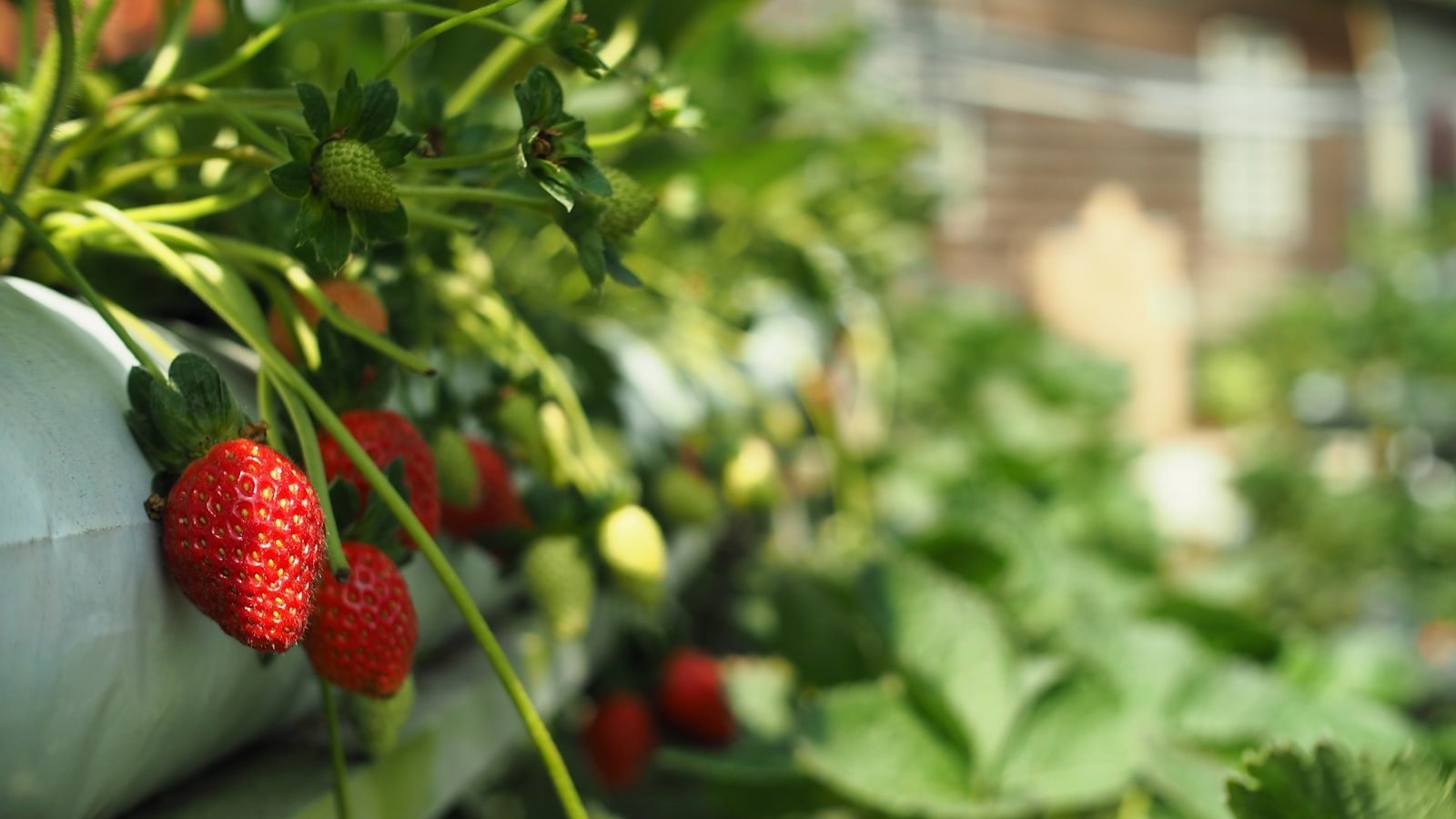
Strawberries are the ideal container fruit: they have shallow roots, a compact habit, and they fruit fast — often within the first season — which means a balcony, patio, or sunny windowsill can produce sweet, sun-ripened berries that taste nothing like the watery supermarket kind. Growing them in pots also solves the biggest in-ground headaches: you sidestep soil-borne rots, dodge slugs and rotting fruit lying on wet earth, and you can move plants to chase the sun or shelter them over winter. The trade-off is that containers dry out fast and leach nutrients, so success hinges on the right variety, a generous pot, a free-draining mix, and consistent water and feeding. This guide covers all of it.
Key Takeaways
- Day-neutral and everbearing varieties like ‘Albion’, ‘Seascape’, and ‘Tristan’ fruit all season and suit containers best.
- Use a pot at least 8 inches deep with good drainage; space plants 6–8 inches apart in a fast-draining, slightly acidic mix (pH 5.5–6.5).
- Containers dry out fast — water when the top inch is dry, often daily in summer, and feed every 2 weeks with a balanced or tomato fertilizer.
- Give 6–8 hours of full sun, remove runners to boost fruit, and protect crowns from hard freezes over winter.
Choosing the Right Variety
Strawberries fall into three fruiting types, and the choice matters more in containers than anywhere else. June-bearing varieties (‘Honeoye’, ‘Jewel’, ‘Chandler’) deliver one big concentrated crop in late spring to early summer and pump out lots of runners — great for jam, less ideal for steady patio snacking. Everbearing types produce two or three flushes across the season. Day-neutral varieties (‘Albion’, ‘Seascape’, ‘Mara des Bois’, ‘Tristan’) are the container champions: they ignore day length and fruit steadily from late spring until frost, put out fewer runners, and stay compact.
For most container growers, a day-neutral or everbearing variety gives the most satisfying return — a handful of berries every few days for months rather than a single overwhelming week. Alpine strawberries (‘Mignonette’, ‘Yellow Wonder’) are another lovely option: they grow from seed, make no runners, stay tidy in small pots, and produce tiny, intensely aromatic berries all summer. Buy bare-root crowns or plug plants from a reputable nursery; certified disease-free stock pays off in years of clean, productive plants.
Choosing Containers
Almost any container works as long as it’s at least 8 inches deep and has drainage holes — strawberry roots are shallow but they hate sitting in water. Window boxes, half-barrels, grow bags, hanging baskets, and the classic multi-pocket strawberry jar all perform well. Hanging baskets are particularly clever because dangling fruit stays clean, dry, and out of reach of slugs. Terracotta breathes and looks beautiful but dries out fastest; glazed ceramic and plastic hold moisture longer, a real advantage in summer heat.
Plan for 6 to 8 inches of spacing between plants. A standard 12-inch pot comfortably holds three plants; a half-barrel holds eight to ten; a window box, one plant roughly every 8 inches. Resist crowding — packed plants compete for water and nutrients and trap humid air that breeds fungal disease. Lighter-colored pots reflect heat and keep roots cooler, which matters on a baking south-facing balcony where dark pots can cook the roots.
Soil Mix and Planting
Never use garden soil in containers — it compacts, drains poorly, and can carry disease. Use a quality potting mix amended for drainage and acidity. A reliable recipe is two parts good potting mix, one part compost for fertility, and one part perlite or coarse sand for drainage. Strawberries like slightly acidic conditions around pH 5.5 to 6.5; mixing in a little composted pine bark or peat-free ericaceous material nudges the pH down nicely. Blend in a slow-release balanced fertilizer at planting to carry the plants through their first weeks.
Planting depth is the make-or-break detail. Set each crown so the midpoint sits exactly at the soil surface: bury the crown too deep and it rots; plant too high and the roots dry out and the plant fails. Spread the roots downward in the hole, firm the mix around them, and water in well. Plant bare-root crowns in early spring once hard frosts have passed, or plant plug plants anytime through early summer. Mulch the surface with a thin layer of straw to keep fruit clean and conserve moisture.
Container growing is a gateway to a whole productive small-space garden — the Plants & Flowers hub has more edible guides, and if you catch the berry bug, our walkthroughs on how to grow raspberries and how to grow blackberries cover the bramble fruits that pair beautifully with strawberries.
Light and Placement
Strawberries need full sun — six to eight hours of direct light daily — to produce sweet, abundant fruit. Less light gives leafy plants with few, sour berries. Position pots in the sunniest spot you have, and because they’re portable, rotate them every few days so all sides get even exposure and the plants grow symmetrically. In regions with brutal afternoon heat (zones 8 and warmer), a little dappled shade during the hottest part of the day actually helps, preventing scorched leaves and protecting the fruit, since strawberries are cool-season plants at heart.
Watering and Feeding
Watering is the single biggest factor in container strawberry success. Pots dry out far faster than open ground, and during hot summer weather you may need to water daily, sometimes twice a day for small terracotta pots or hanging baskets. Check by pushing a finger an inch into the mix — water thoroughly when that top inch feels dry, until water runs from the drainage holes. Try to water at the base in the morning and keep it off the foliage and fruit to reduce mold. Inconsistent watering causes small, misshapen berries and stresses the plants.
Because every watering flushes nutrients out the drainage holes, container strawberries need regular feeding. Start fertilizing about two to three weeks after planting and continue every one to two weeks through the growing season with a balanced liquid feed, or switch to a high-potassium tomato fertilizer once flowering begins to push fruit production. Ease off feeding in late summer so the plants harden off before winter. A monthly dose of liquid seaweed keeps foliage healthy and resilient.
Runners, Flowers and Ongoing Care
Strawberries send out runners — long stems that root into new plantlets. In containers, runners drain energy away from fruiting, so snip them off close to the crown unless you want to propagate new plants. To make free plants, peg a runner tip into a small pot of mix beside the parent; once it roots in a few weeks, sever it and you have a new plant for next season. For the strongest establishment on newly planted day-neutrals, some growers pinch off the first flush of flowers for the first four to six weeks so the plant builds roots before fruiting; after that, let it crop freely.
Watch for the common pests: slugs and snails (less of a problem in elevated pots and hanging baskets), aphids on new growth, and spider mites in hot dry conditions. Birds love ripe berries — drape lightweight netting over fruiting pots if they become a problem. Remove any rotting or diseased fruit immediately to stop gray mold (Botrytis) spreading through the plant in humid weather.
Overwintering Container Strawberries
Strawberries are perennials hardy to roughly zone 4, but in containers the roots are far more exposed to cold than they’d be in the ground, where soil buffers the temperature. In zones 6 and colder, protect overwintering pots: move them into an unheated garage, shed, or against a sheltered house wall, or cluster pots together and wrap them in burlap and straw. The goal is to keep crowns dormant but not frozen solid — alternating freeze-thaw cycles are what kill them. Water sparingly through winter, just enough to keep the roots from desiccating.
Container strawberry plants stay productive for about two to three years before vigor and fruit size decline. Refresh your planting by rooting runners or buying new crowns, and you’ll keep the harvest coming. In milder climates (zone 7 and warmer), pots can often stay outdoors in a sheltered corner with a straw mulch over the crowns. Come spring, top-dress with fresh compost, resume feeding, and the cycle begins again — a remarkably small footprint for months of homegrown berries.
Frequently Asked Questions
How many strawberry plants fit in one container?
Allow 6–8 inches between plants. A 12-inch pot holds about three plants, a half-barrel eight to ten, and a window box roughly one plant every 8 inches. Crowding reduces yield and invites disease.
How often should I water container strawberries?
Check daily in summer — pots dry out fast. Water thoroughly whenever the top inch of mix is dry, sometimes twice a day in heat for small or terracotta pots. Inconsistent watering causes small, misshapen fruit.
How long until container strawberries produce fruit?
Day-neutral and everbearing varieties planted in spring often fruit the same season, within a couple of months. June-bearers typically give their first full crop the following spring.
Should I cut off the runners?
Yes, in most cases. Runners divert energy from fruiting, so snip them off near the crown unless you want to root new plants for next year by pegging a runner tip into a nearby pot.
Can strawberries survive winter in pots?
Yes, with protection in cold zones. Move pots to an unheated garage or shelter and insulate them, since potted roots freeze more readily than in-ground plants. Avoid repeated freeze-thaw cycles, which kill the crowns.