

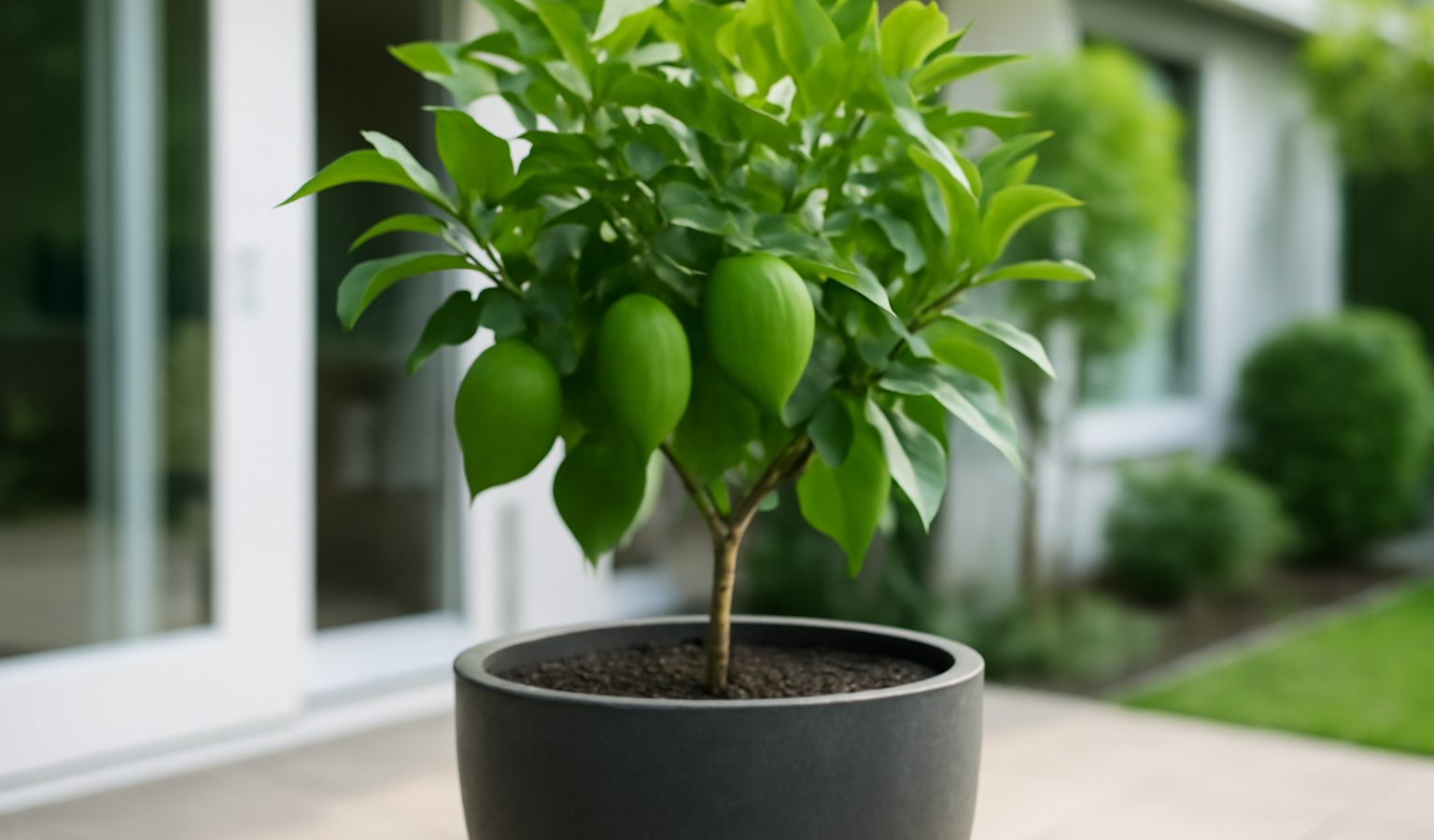
A lime tree gives you glossy evergreen leaves, intensely fragrant white blossoms, and a steady supply of juicy fruit — and you don’t need a subtropical backyard to grow one. Limes are among the most container-friendly citrus, which means gardeners in cold climates can grow them in pots that summer outdoors and overwinter inside. The flip side is that limes are the most cold-sensitive of the common citrus, so understanding zones, watering, and winter protection is what separates a thriving, fruiting tree from a struggling one. This guide covers choosing the right lime, growing in the ground versus a container, the sun, water, and citrus-specific feeding limes need, how to overwinter a potted tree indoors, and how to fix the yellow leaves and fruit drop that worry new growers.
Key Takeaways
- Zones: in-ground only in USDA zones 9–11; the most cold-sensitive citrus, damaged below about 30°F. Anywhere colder, grow in a pot.
- Containers: excellent in pots — start in a 5- to 7-gallon container with sharp drainage and a citrus mix.
- Light: needs 6–8 hours of full sun (or a bright south window plus a grow light indoors).
- Water & feed: deep, even watering when the top inch dries; feed with a dedicated citrus fertilizer through the growing season.
- Overwinter: bring potted limes indoors before nights drop below 50°F; keep cool, bright, and on the dry side.
Choosing a Lime Tree and Knowing Your Zone
The most popular limes for home growing are the Key lime (Mexican lime), which is small, shrubby, and ideal for containers, and the Persian (Bahia or Tahiti) lime, a larger, thornless, more cold-tolerant tree with bigger, seedless fruit. For cold-climate growers, the Key lime’s naturally compact size makes it the easier pot subject, while gardeners in warm regions often prefer the productive Persian lime in the ground. The Kaffir (makrut) lime, grown mainly for its aromatic leaves, is another excellent container choice.
Limes can be grown directly in the ground only in USDA zones 9 through 11, the warmest parts of the country, because they are the most cold-sensitive of all common citrus. Even a light frost can damage foliage, and temperatures much below freezing can kill the tree. If you live anywhere colder than zone 9 — which is most of the U.S. — the answer is a container that lives outdoors in the warm months and comes inside for winter. Buying a grafted tree from a nursery, rather than starting from seed, gets you fruit years sooner and a known, true-to-type variety.
Growing a Lime Tree in a Container
For the great majority of growers, a pot is the way to grow a lime, and limes take to container life readily. Start a young tree in a 5- to 7-gallon container — roughly 14 to 16 inches across — and plan to move up gradually as it grows, eventually to a 15- to 20-gallon pot for a mature tree. Don’t overpot a small tree into a huge container, because the large volume of unused, slow-to-dry soil invites root rot.
Drainage is critical. The pot must have ample drainage holes, and citrus demands a fast-draining medium — use a quality potting mix labeled for citrus or cactus, or amend regular potting soil with extra perlite and bark for porosity. Avoid heavy, water-retentive mixes that stay soggy. A pot on casters or a wheeled plant dolly makes the seasonal move indoors and out far easier on your back. Set the tree so the soil line sits where it was in the nursery pot, and keep the graft union (the swollen joint near the base) above the soil.
Whether in a pot or in the ground, a lime tree needs full sun — six to eight hours of direct light a day is the target for good growth and fruiting. Place potted trees in the sunniest spot in the yard during the growing season. Indoors over winter, set the tree at a bright south-facing window and supplement with a grow light, since natural winter light usually falls short of what citrus wants.
Watering and Feeding
Limes like deep, consistent watering but hate wet feet. The reliable method is to water thoroughly until water runs from the drainage holes, then let the top inch or two of soil dry before watering again. In warm weather a potted lime in active growth may need water every few days; in cool or indoor conditions, far less often. Check the soil with your finger rather than watering on a fixed schedule — both chronic drought and constant sogginess cause problems, and citrus roots rot quickly in waterlogged soil. A 2-inch mulch over in-ground trees (kept off the trunk) helps hold even moisture.
Citrus are heavy feeders with specific nutrient needs, so use a fertilizer formulated for citrus — these supply the extra nitrogen plus the micronutrients (especially magnesium, iron, manganese, and zinc) that limes draw on heavily. Feed regularly through the active growing season, roughly spring through early fall, following the product’s rate, and ease off or stop in winter when growth slows. Container trees in particular benefit from this dedicated feeding, since frequent watering flushes nutrients out of the limited soil. Yellowing leaves with green veins are a classic sign of a micronutrient shortfall that a good citrus fertilizer corrects.
Overwintering a Potted Lime Indoors
For cold-climate growers, overwintering is the make-or-break skill. Because limes are damaged by even light cold, bring the pot indoors before nighttime temperatures start dropping below about 50°F in fall — don’t wait for frost. Move it to the brightest possible spot, a south-facing window, and add a grow light to make up for short, weak winter days.
Indoors, the tree is semi-dormant: keep it cooler than your normal living temperature if you can (a bright, unheated room or enclosed porch in the 50s–60s°F is ideal), water sparingly — only when the top couple of inches dry — and hold off on fertilizer until growth resumes in spring. Indoor heating dries the air, so some leaf drop is normal; running a humidifier or grouping plants helps. In spring, after all danger of frost has passed, harden the tree off by reintroducing it to outdoor sun gradually over a week or two so the leaves don’t sunburn after months indoors.
Pruning, Pollination, and Fruit
Lime trees need only light pruning. Remove any dead, crossing, or weak branches and any suckers that sprout below the graft union, and trim to keep a balanced, open shape — especially useful for container trees you want to keep compact and indoor-friendly. Prune in early spring before the main flush of growth. Most limes are self-fertile, so a single tree will set fruit on its own; indoors, where pollinating insects are absent, you can hand-pollinate by dabbing pollen between flowers with a small brush to improve fruit set.
Be patient with fruit. Limes typically take their time to mature, and young trees may drop some flowers and small fruit — a normal self-thinning the tree does to support the fruit it can ripen. Limes are usually harvested while still green and firm, when they feel heavy and yield slightly; left on the tree they may eventually turn yellowish, but the best flavor is in the green stage. If you’re folding a lime into a broader edible container collection, our urban and container gardening guides cover potting and small-space techniques that apply directly, and our wider plant and flower guides include companions and care for other fruiting plants.
Common Problems
Yellowing leaves are the most frequent worry and have several causes: overwatering (soggy roots — the soil stays wet and leaves yellow broadly), nutrient deficiency (yellowing between green veins points to iron, magnesium, or other micronutrients — feed with citrus fertilizer), or cold stress. Diagnose by checking the soil moisture first, then the feeding history. Leaf and fruit drop often follow a stress or change — moving the tree, a temperature swing, or inconsistent watering — and usually ease once conditions stabilize; some flower and small-fruit drop is also normal self-thinning.
Pests to watch for, especially indoors, include aphids, scale, mealybugs, and spider mites; treat with insecticidal soap or horticultural oil and improve air circulation. Sticky leaves and sooty black mold signal an insect infestation excreting honeydew — clear the pests and the mold follows. Outdoors, watch for citrus leaf miner trails on new growth. Most issues trace back to the same fundamentals: full sun, even (not excessive) water, proper citrus feeding, and protection from cold.
Frequently Asked Questions
Can I grow a lime tree in a pot?
Yes — limes are among the best citrus for containers. Start in a 5- to 7-gallon pot with drainage holes and a fast-draining citrus mix, give it 6 to 8 hours of sun, and move up pot sizes as it grows. In cold climates, the pot lets you summer the tree outdoors and bring it inside to overwinter.
What zones can a lime tree grow in?
Limes grow in the ground only in USDA zones 9 to 11. They are the most cold-sensitive of the common citrus and are damaged by even light frost, with cold below about 30°F threatening the tree. In any colder zone, grow your lime in a container that comes indoors for winter.
Why are my lime tree’s leaves turning yellow?
The usual causes are overwatering, a nutrient deficiency, or cold stress. Broad yellowing with soggy soil means too much water — let it dry out more. Yellowing between green veins signals a micronutrient shortage; feed with a citrus-specific fertilizer. Check soil moisture first, then the feeding routine, to pin it down.
How do I overwinter a potted lime tree?
Bring it indoors before nights fall below about 50°F. Place it at a bright south window with a grow light, keep it cool, water sparingly (only when the top inch or two dries), and stop fertilizing until spring. In spring after frost danger passes, reintroduce it to outdoor sun gradually to avoid leaf scorch.
Do I need two lime trees to get fruit?
No. Most limes are self-fertile, so a single tree will set fruit on its own. Outdoors, insects handle pollination. Indoors, where pollinators are absent, you can improve fruit set by hand-pollinating — gently transferring pollen between open flowers with a small soft brush.
Growing a lime tree comes down to four things: plenty of sun, even watering with sharp drainage, regular citrus feeding, and shelter from cold. Match the tree to your situation — Persian lime in the warm ground, Key lime in a movable pot — and you can harvest fragrant, juicy limes off your own tree whether you garden in Florida or on a snowy northern patio.