

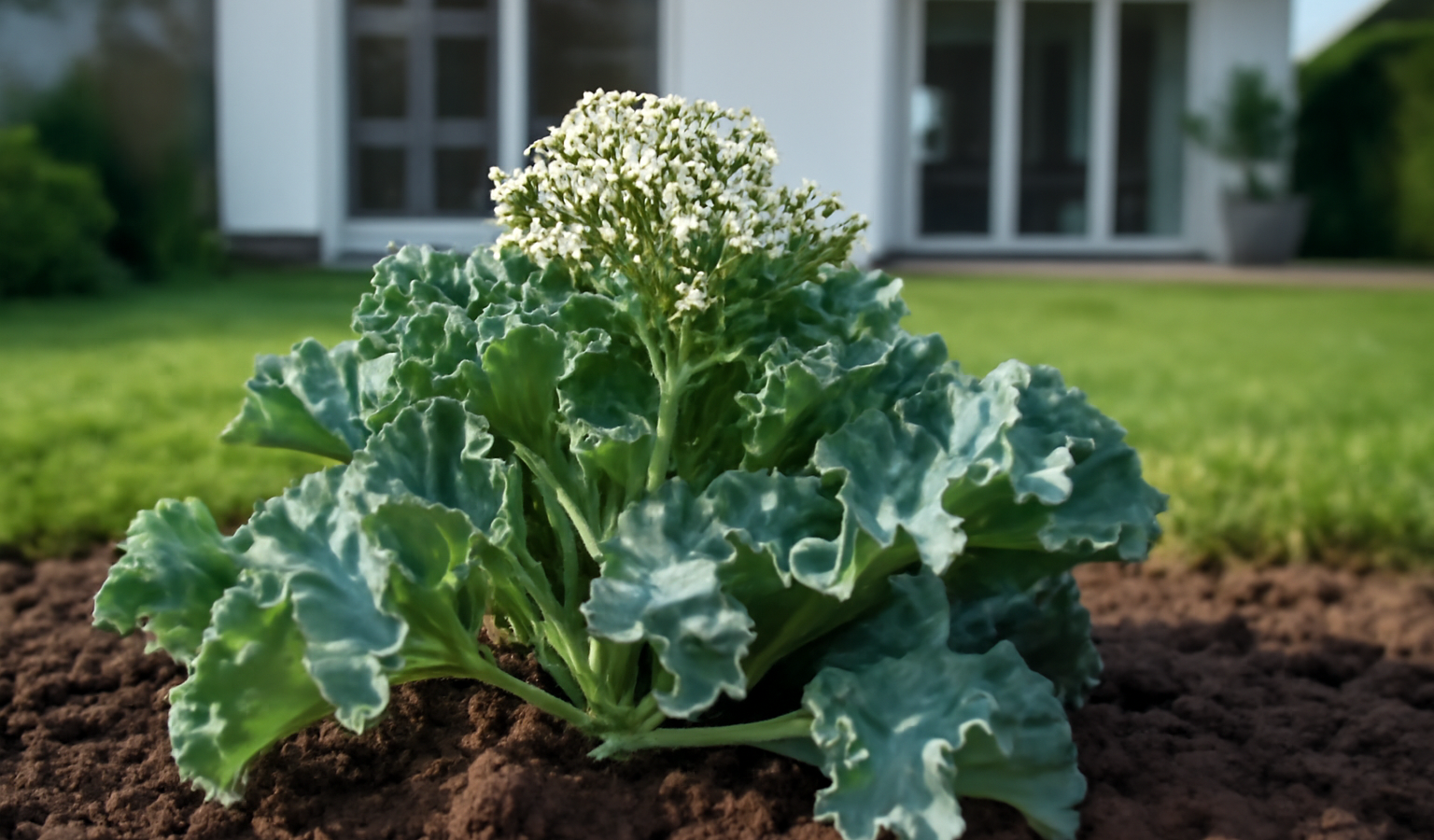
Sea kale (Crambe maritima) is one of those vegetables that belongs in more gardens than it occupies. It is a true perennial, long-lived enough to outlast a fence panel or two, and it earns its keep three ways: as an ornamental with broad blue-grey leaves and domes of honey-scented flowers, as a pollinator magnet in midsummer, and as a gourmet crop in early spring when you force the crown to produce pale, sweet, tender shoots. That forcing trick is the whole point of growing it, and it is far simpler than the Victorian kitchen gardens who perfected it would have you believe. This guide walks through siting, soil, propagation from seed or root cuttings, planting, feeding, and—most importantly—how to force and harvest a crown without exhausting it.
Key Takeaways
- Sea kale is a hardy perennial brassica (USDA zones 4-9) that lives 10+ years and needs winter cold to thrive.
- It demands full sun and sharp drainage; sandy, gritty soil mimics its native shingle beaches and prevents crown rot.
- Propagate from root cuttings called “thongs” for a harvest in about two years, or from seed for a slower 2-3 year start.
- Forcing—covering the dormant crown in late winter to blanch the shoots—turns bitter green stems into sweet, asparagus-like spears.
- Never force young or unrested plants; give each crown a recovery year to rebuild reserves.
About Sea Kale
Sea kale is native to the seashores of Europe, the Atlantic coast, and the Baltic, where it grows on shingle banks and sandy beaches battered by salt spray and wind. Understanding that origin tells you almost everything about how to grow it: it wants gritty, free-draining ground, it shrugs off salt and drought, and it expects a genuine cold winter to break dormancy. As a member of the brassica family it is cousin to cabbage and mustard, and it shares both their flavor notes and a few of their pests.
A mature plant forms a low mound of large, waxy, crinkled cabbage-like leaves in a striking glaucous blue-grey. In early to midsummer it throws up wide, branching heads of small white flowers that smell distinctly of honey—worth growing for the bees alone—followed by curious corky, pea-sized seed pods that persist into autumn. Left unforced and unharvested, it is simply a handsome, trouble-free ornamental perennial that asks for almost nothing. Force it, and it becomes a productive vegetable for a decade or more from a single planting. For more perennial and unusual edibles, browse our plants and flowers hub.
Site & Soil
Give sea kale the sunniest, best-drained spot you have. Full sun—at least six hours, ideally more—produces the strongest crowns and the most flowers. The single most common way to kill sea kale is to plant it somewhere that sits wet over winter; waterlogged soil rots the crown and roots, and a rotted crown is a dead plant. If your ground is heavy clay, you have two choices: build a raised bed, or dig in large quantities of coarse grit, sharp sand, and a little compost to open the soil up.
The ideal is a sandy or gritty loam that drains within minutes after rain—think of the shingle beaches it comes from. Sea kale prefers a neutral to slightly alkaline pH (roughly 6.5 to 7.5) and is happy with the lime that many other vegetables resent. It is genuinely drought tolerant once established, sending roots deep into the ground, and it tolerates coastal salt better than almost any other vegetable. The only non-negotiable is drainage. If water pools where you intend to plant, move the plant or raise the bed.
Bed preparation
Before planting, fork the bed over to at least a spade’s depth and remove perennial weed roots—you will not want to be digging around an established crown later. Work in a few inches of well-rotted compost or, if you can get it, seaweed, which sea kale relishes. On heavier ground, mix a generous bucket of grit per plant into the top 12 inches. The goal is a loose, open root run that never stays soggy.
Propagation: Seed vs. Thongs
You can start sea kale two ways, and the choice mostly comes down to how patient you are.
Growing from seed
Sea kale seed comes enclosed in a hard, corky capsule that the plant uses to float its seed along the tideline. That husk also makes germination slow and erratic. To improve your odds, peel or rub off the corky outer layer and soak the seed in water for 24 hours before sowing. Sow in spring, either in deep pots or modules of gritty seed compost, or directly into a prepared nursery bed once the soil has warmed. Keep them just moist—never sodden—and be patient, as germination can take several weeks and is rarely uniform. Seed-grown plants typically take two to three years before they are strong enough for a first forcing. The upside is that seed gives you many plants cheaply and a little genetic variation.
Growing from root cuttings (thongs)
The traditional and faster method is to propagate from root cuttings known as “thongs.” These are pencil-thick sections of root, around four to six inches long, taken from a dormant established plant in late winter. The key detail is orientation: cut the top (the end nearest the crown) flat and the bottom on a slant so you can tell which way is up. Plant each thong vertically with the flat top just at or barely below the soil surface, in gritty soil or a deep pot. Roots and shoots will form by spring, and a thong-grown plant is usually ready for its first force in about two years—a year sooner than seed. Thongs also come true to the parent, so if you have a particularly good plant, this is how you clone it.
Planting & Spacing
Plant out young sea kale in spring once the soil is workable and the worst frosts have passed, or set out dormant crowns in late winter. Because these are large, long-lived plants, give them room: space them 18 to 24 inches apart at a minimum, and 2 to 3 feet apart if you want each crown to reach full size and intend to fit a forcing pot over it without crowding its neighbors. A mature plant can spread to two feet or more across.
Set the crown so its growing point sits just at the soil surface—planting too deep invites rot. Firm the plant in gently, water once to settle the soil around the roots, and then back off. Finish with a mulch of compost or seaweed spread around (not over) the crown to suppress weeds and feed the soil. In the first year, resist the urge to harvest anything. Let the plant put all its energy into building a deep root system and a fat crown; that investment is what makes years of forcing possible. If you enjoy growing unusual leafy crops, you might also like our guide to growing orach, another striking and easy-going vegetable.
Watering & Feeding
Newly planted sea kale needs regular watering through its first summer while the roots establish—aim to keep the soil lightly moist but never waterlogged. After that first season, established plants are remarkably drought tolerant and rarely need watering except in prolonged dry spells. Overwatering is far more dangerous than underwatering; if in doubt, leave it alone.
Feed in spring as growth resumes. A topdressing of well-rotted compost or, ideally, seaweed mulch suits sea kale’s coastal nature perfectly and supplies a slow trickle of nutrients. A balanced general fertilizer applied in early spring works too. Keep the area weeded, especially around young plants, and renew the mulch each year. Every several years you can lift and divide an old, congested crown to rejuvenate it and to harvest fresh thongs for new plants—autumn or late winter dormancy is the time for that job.
Forcing Sea Kale
Forcing is the technique that transforms sea kale from a curiosity into a delicacy, and it is worth understanding clearly. Left to grow naturally, the spring shoots emerge green, turn tough, and taste bitter—edible, but not something you would seek out. When you exclude light from the emerging shoots, the plant cannot make chlorophyll, so the new growth comes up pale ivory or blush-pink, slender, crisp, and remarkably sweet and mild. Blanched sea kale was a prized winter and early-spring vegetable in 18th and 19th century kitchens, and the method has not changed.
When and how to force
Force at the very start of the growing season, in late winter to early spring, just as you see the crown beginning to stir and the first buds swell. The job is simply to cover the crown completely so no light reaches the shoots. You have three good options:
- A traditional terracotta forcing pot. These bell-shaped pots with a removable lid are made for the job, look lovely, and let you peek at progress by lifting the cap. Worth buying if you grow sea kale seriously.
- An upturned bucket or large pot. Any opaque container works—just block the drainage holes with stones or tape so light cannot leak in, and weigh it down so wind cannot lift it.
- A deep mound of dry leaves or straw. Heap loose, light-excluding material 8 to 12 inches deep over the crown, ideally contained within a ring of wire mesh. Cheap and effective, though messier to harvest through.
Whatever you use, make sure it is tall enough to let the shoots elongate underneath without being squashed. Within several weeks the shoots will push up in the dark, reaching for light they never find.
Protecting the crown for the long term
Forcing draws heavily on the crown’s stored energy, so manage it with restraint. Never force a young plant—wait until it has been established at least two full years and built a strong root system. Just as importantly, do not force the same plant every single year. Give each crown a rest year between forcings (many growers rotate, forcing half their plants one year and the other half the next) so the plant can rebuild its reserves with a full season of normal green growth. Force a plant relentlessly and you will exhaust and eventually kill it. Treat it kindly and a crown will produce for a decade or more.
Harvesting & Cooking
Harvest the blanched shoots when they reach roughly five to nine inches long—they will be pale, fairly thin, and tender. Lift the cover, and using a sharp knife cut each shoot off at the base, taking a thin sliver of the crown with it; this clean cut keeps the plant tidy and the shoot intact. You can usually take several pickings from one plant over a few weeks in spring as new shoots keep coming. Once the harvest tails off, remove the cover entirely and let the plant grow on normally in full light for the rest of the season so it can recharge.
In the kitchen, treat blanched sea kale exactly like asparagus, which it closely resembles in flavor and texture. Steam or lightly boil the stems for just a few minutes until tender, then dress with melted butter, a squeeze of lemon, or a hollandaise. It has a delicate, nutty, faintly sweet flavor that is wasted by overcooking. Eat it fresh and seasonal—it does not store well. For another spring-into-summer crop with a similarly refined flavor, see our notes on growing radicchio.
Pests & Problems
Sea kale is robust, but as a brassica it attracts a familiar cast of pests. Flea beetles can pepper the leaves with small holes, especially on young plants—usually cosmetic on an established crown. Cabbage white caterpillars will chew the foliage in summer, so check the undersides of leaves and pick them off, or net plants if infestations are heavy. Slugs and snails go for soft new growth, particularly on seedlings and freshly forced shoots, so protect young plants accordingly.
Two soil-borne problems matter more. Club root, the brassica disease that distorts and swells roots, can affect sea kale; avoid planting where other brassicas have struggled, and keep the pH on the alkaline side, which suppresses it. The biggest killer, though, remains crown and root rot caused by wet, poorly drained soil over winter. There is no cure once it sets in—prevention through sharp drainage and shallow planting is everything. Get the site right and sea kale is one of the most trouble-free perennials you can grow.
Frequently Asked Questions
How long does sea kale take to crop?
Plants from root cuttings (thongs) are usually ready for their first forcing in about two years; seed-grown plants take two to three years. In both cases, let the plant establish fully before forcing—patience now means a decade of harvests later.
Do I have to force sea kale to eat it?
No, but you will want to. Unforced spring shoots are green, tough, and bitter. Forcing excludes light so the shoots grow pale, tender, and sweet, much like asparagus. Forcing is what makes sea kale a worthwhile vegetable rather than just an ornamental.
Can I force the same plant every year?
It is best not to. Forcing drains the crown’s energy reserves, so give each plant a rest year between forcings to recover with a full season of normal green growth. Many growers force half their plants one year and the other half the next.
What kind of soil does sea kale need?
Sharp-draining, sandy or gritty soil that mimics its native shingle beaches, in full sun. It tolerates salt, drought, and alkaline conditions, but it cannot survive waterlogged ground, which rots the crown. On heavy clay, grow it in a raised bed.
Is sea kale cold hardy?
Very. It is hardy through roughly USDA zones 4 to 9 and actually requires a period of winter cold (vernalization) to break dormancy and grow well. It is a poor choice for frost-free, warm-winter climates that never provide enough chill.