

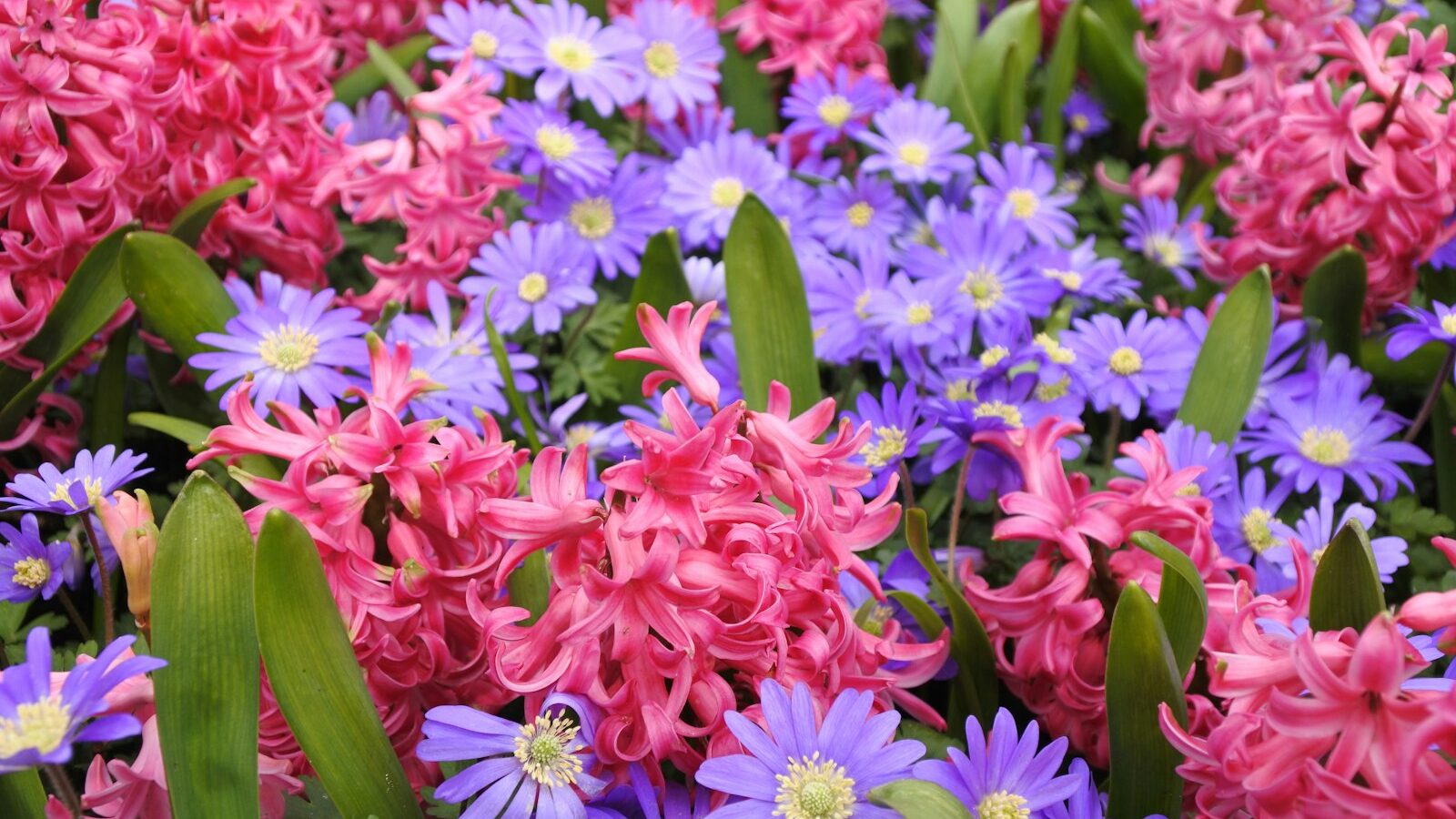
Few spring flowers announce the end of winter quite like hyacinths. Their dense, waxy spikes of star-shaped florets release a perfume so rich it can fill an entire room or carry across a garden bed. Whether you plant them outdoors in fall or coax them into bloom on a sunny windowsill, hyacinths reward a little planning with one of the most fragrant displays in the plant world.
Hyacinth quick facts
- Plant: fall, 4-6 in deep
- Light: full sun to part shade
- Soil: well-drained
- USDA zones: 4-8 (need winter chill)
- Bloom: early-mid spring; very fragrant
As an Amazon Associate we earn from qualifying purchases.
Meet the hyacinth
The common garden hyacinth (Hyacinthus orientalis) is a bulb native to the eastern Mediterranean and Middle East. Centuries of breeding, much of it in the Netherlands, have given us cultivars in a striking range of colors: deep blues and purples, soft pinks, pure whites, sunny yellows, salmon, and even near-black. Each bulb typically produces one chunky flower spike, 6 to 12 inches tall, packed with 30 to 70 individual florets.
Hyacinths are spring-flowering bulbs, which means they put on their show alongside tulips and daffodils and then go dormant through summer. For more on building a layered spring bulb display, see our full plant & flower care guide. Do not confuse true hyacinths with grape hyacinth (Muscari), a smaller, unrelated bulb we cover near the end of this guide.
When and where to plant hyacinth bulbs
Timing
Plant hyacinth bulbs in fall, six to eight weeks before the ground freezes, once soil temperatures have cooled to around 60°F (15°C). For most of the United States that means September through November, with colder northern zones planting earlier and milder southern zones planting later. The goal is to give roots time to establish before winter while still exposing the bulb to the cold period it needs to flower.
Light and soil
Hyacinths perform best in full sun to part shade. Because they bloom in early spring before deciduous trees leaf out, a spot under a tree that is shady in summer can still deliver plenty of light at flowering time. The one thing they will not tolerate is wet feet.
- Drainage is everything. Bulbs sitting in soggy soil rot quickly. Choose a bed that drains freely, or amend heavy clay with compost and coarse sand.
- Aim for neutral to slightly acidic soil, roughly pH 6.0 to 7.0.
- Raised beds and slopes are ideal where your native soil holds water.
Depth and spacing
- Depth: Plant bulbs 4 to 6 inches deep, pointed end up. A good rule of thumb is two to three times the height of the bulb.
- Spacing: Set bulbs 3 to 6 inches apart. Closer spacing gives a fuller, more dramatic block of color and fragrance.
- Watering: Water once after planting to settle the soil and trigger rooting, then let nature take over through winter.
You can buy graded, top-size bulbs online; search for hyacinth bulbs in late summer when the new season’s stock arrives. Larger bulbs produce bigger, denser flower spikes.
The chilling requirement
Hyacinths are programmed by nature to flower only after a sustained cold period. They need roughly 10 to 14 weeks of temperatures below about 45°F (7°C) to break dormancy and develop a flower bud inside the bulb. This is why they thrive in USDA zones 4 through 8, where winter does the chilling for free.
- In cold-winter zones (4-8): Plant outdoors in fall and let the ground supply the chill. No extra effort needed.
- In warm zones (9-11): Winters are too mild. You must pre-chill bulbs in the refrigerator for 10 to 14 weeks before planting, then treat them as annuals because they rarely rebloom well.
- Refrigerator tip: Keep chilling bulbs away from ripening fruit. Ethylene gas given off by apples and other produce can kill the developing flower bud.
Forcing hyacinths indoors
Forcing simply means tricking a bulb into blooming out of season, usually for winter color and scent indoors. Hyacinths are among the easiest bulbs to force, and you can do it in soil or in water.
Forcing in soil or potting mix
- Pot up bulbs in early to mid fall, setting them close together with the tips just at or above the soil surface.
- Give them their cold period: place the pots in a dark, cold spot (a refrigerator, unheated garage, or cellar at 40-45°F / 4-7°C) for 10 to 13 weeks until roots fill the pot and shoots emerge.
- Bring them into a cool, bright room. Blooms usually open within two to four weeks. Look for pre-chilled “prepared” bulbs sold specifically for forcing to save time.
Forcing in water with a hyacinth vase
One of the most charming ways to enjoy hyacinths is to grow them in water using a special hourglass-shaped hyacinth glass (also called a forcing vase). The narrow neck cradles the bulb above a reservoir of water so the roots can reach down without the bulb itself sitting wet and rotting.
- Use a pre-chilled bulb, or chill an untreated bulb in the fridge for 10 to 13 weeks first.
- Fill the vase so the water level sits just below the base of the bulb, not touching it. Roots will grow down into the water.
- Place in a cool, dark spot until a thick mat of roots forms and the shoot is a few inches tall, then move to bright, indirect light.
- Top up or change the water as needed and keep it just shy of the bulb base.
You can find traditional and modern designs by searching for hyacinth forcing vases. Stagger several at once for a continuous indoor show through late winter.
Care after blooming
What you do after the flowers fade determines whether your hyacinths return next year. The key is to let the plant recharge the bulb.
- Deadhead the spent flower spike so the plant does not waste energy making seed, but leave the stem and leaves intact.
- Keep the foliage. Let the leaves stay green and growing until they yellow and die back naturally, usually six to eight weeks. This is when the bulb stores energy for next spring.
- Feed lightly. A scattering of balanced or low-nitrogen bulb food after flowering helps rebuild the bulb. Browse bulb fertilizer options for a slow-release blend.
- Stop watering once foliage dies back. The bulb prefers a dry summer rest in the ground.
Forced bulbs grown in water are usually exhausted and best composted, since they cannot easily store enough energy without soil. Forced bulbs grown in soil can sometimes be planted out in the garden afterward, though they may take a year or two to recover.
Why blooms shrink in later years
Many gardeners notice that the fat, perfect spikes of the first spring give way to thinner, looser, sparser flowers in following years. This is normal. Commercial hyacinth bulbs are grown and primed under ideal nursery conditions to deliver one show-stopping bloom. Once in your garden, they naturalize into a more relaxed, informal look.
- To keep blooms larger: plant in full sun, feed after flowering, and never cut foliage early.
- Treat them as a 2-4 year display in most gardens, replacing or supplementing with fresh bulbs when vigor declines.
- Embrace the change. Looser later-year spikes have a softer, cottage-garden charm that many people prefer.
Safety: skin irritation from hyacinth bulbs
Hyacinth bulbs contain calcium oxalate crystals and natural compounds that can irritate skin, sometimes causing an itchy rash known as “hyacinth itch.” This is common enough that it is worth taking seriously, especially if you are planting many bulbs at once.
- Wear gloves when handling and planting bulbs.
- Wash your hands afterward, and avoid touching your eyes or face.
- Keep bulbs away from pets and children, as they are toxic if eaten.
Grape hyacinth (Muscari)
Grape hyacinth (Muscari) is a different plant entirely, though its name and timing cause endless confusion. These tiny bulbs send up short spikes of clustered, grape-like blue (sometimes white or pale purple) florets in early to mid spring. They are smaller, tougher, and far more willing to spread than true hyacinths.
- Plant in fall, 3 to 4 inches deep and 3 inches apart.
- They naturalize freely and can form drifts or even self-seed, so site them where spreading is welcome.
- Use them as edging, in lawns, or as a carpet beneath taller tulips and daffodils.
Common problems
- Bulb rot: Caused by waterlogged soil. Improve drainage and never overwater. Discard soft, moldy bulbs before planting.
- No flowers (“blind” bulbs): Usually too little chilling, foliage cut back too early last year, or undersized bulbs.
- Floppy or top-heavy spikes: Heavy florets can topple, especially in forced or wind-exposed plants. A discreet stake helps.
- Yellowing leaves before bloom: Often a sign of poor drainage or fungal disease; check soil and spacing.
- Pests: Hyacinths are fairly pest-resistant, but watch for bulb mites and aphids on indoor forced plants.
- Animal damage: Unlike tulips, hyacinths are generally avoided by deer and rodents thanks to their taste and toxicity.
Frequently asked questions
Do hyacinths come back every year?
Yes, in USDA zones 4-8 they are perennial and will return for several years. Blooms tend to get smaller and looser over time, so many gardeners refresh their planting with new bulbs every few years.
How deep should I plant hyacinth bulbs?
Plant them 4 to 6 inches deep with the pointed end facing up, and space them 3 to 6 inches apart. A useful rule is to plant at a depth of two to three times the bulb’s height.
Can I grow hyacinths in just water?
Yes. Use a special hyacinth forcing vase and a pre-chilled bulb. Keep the water level just below the base of the bulb so roots reach down without the bulb sitting wet, then move to bright light once roots and shoots develop.
Why do hyacinth bulbs make my hands itch?
Hyacinth bulbs contain calcium oxalate crystals that can irritate skin and cause “hyacinth itch.” Always wear gloves when planting and wash your hands afterward.
Are grape hyacinths the same as regular hyacinths?
No. Grape hyacinth (Muscari) is a smaller, unrelated bulb with tight clusters of tiny grape-like florets. It spreads readily and naturalizes, unlike the larger, single-spiked true hyacinth.