

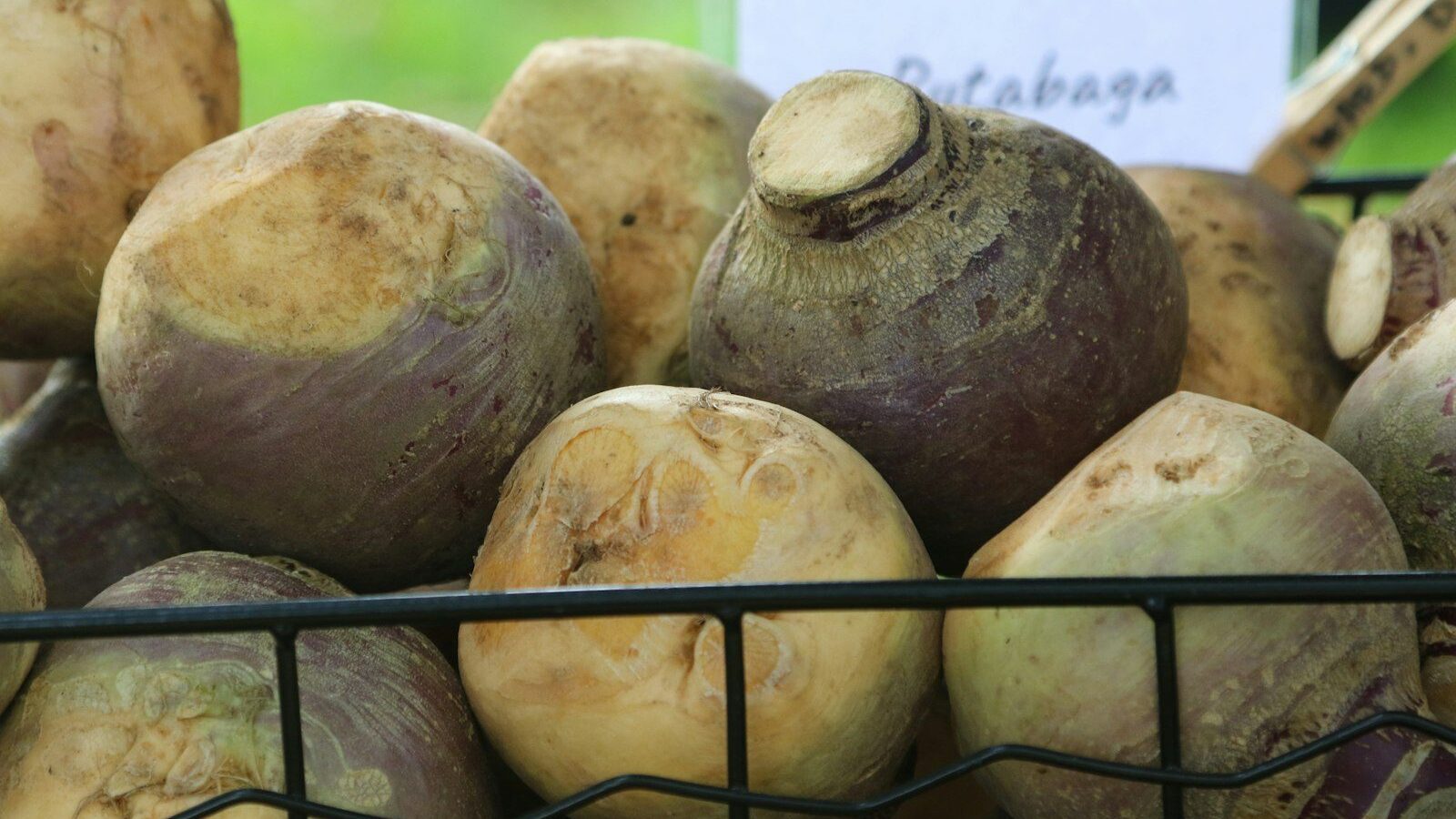
Rutabaga (Brassica napus) is the unglamorous, deeply satisfying root vegetable that rewards patient fall gardeners. A cross between cabbage and turnip, it produces a large, dense, golden-fleshed root that turns sweet and nutty after a frost or two — which is exactly why timing is everything with this crop. Plant it like a spring radish and you’ll get woody, bitter roots in summer heat; plant it in mid-to-late summer for a fall harvest, and you’ll pull sweet, storable roots that keep for months in a cold cellar. This guide covers when to sow for your climate, how deep and far apart to plant, the steady watering that keeps roots from getting tough, the cabbage-family pests to watch, and how and when to harvest for the best flavor and longest storage.
In this guide
Key Takeaways
- Rutabaga is a fall crop. It needs about 90–100 days and tastes best after a light frost, so sow in mid-to-late summer for autumn harvest.
- Direct-sow, don’t transplant. Like most root crops, it resents root disturbance; sow seeds where they’ll grow.
- Thin to 6–8 inches apart. Crowded plants make small, misshapen roots — thinning is the most important care step.
- Water consistently. Even moisture (about an inch a week) keeps roots sweet and tender; drought makes them woody and pithy.
- Harvest after frost, store cold. Frost sweetens the roots, and they keep for months at near-freezing temperatures.
Timing: the key to good rutabaga
More than any other factor, timing makes or breaks a rutabaga crop. Rutabaga is a cool-season biennial grown as an annual, needing roughly 90 to 100 days from seed to harvest, and it develops its best texture and sweetest flavor when the roots mature in cool fall weather and get touched by light frost. Heat ruins it — roots maturing in midsummer turn woody, bitter, and tough, and the plants are quicker to bolt.
For most regions, that means counting back about 90–100 days from your average first fall frost and sowing then, typically from early-to-late summer (often June through July in northern areas, later in mild-winter regions). In very cool-summer climates (the Pacific Northwest, the upper Midwest, New England), you can also sow in late spring for a late-summer-to-fall crop, but the fall-maturing schedule is the reliable one almost everywhere. In hot-summer regions, treat rutabaga strictly as a fall and winter crop. A few light frosts on the maturing roots are a feature, not a problem — they convert starches to sugars and noticeably improve the flavor.
Soil preparation
As a root crop, rutabaga wants loose, deep, fertile soil free of rocks and clods so the roots can swell unobstructed. Work the bed to a depth of about a foot, breaking up clumps; in heavy clay, a raised bed or generous compost addition prevents the forked, stunted roots that compacted soil produces. Mix in a couple of inches of compost, but go easy on fresh nitrogen-rich fertilizer or manure — too much nitrogen drives leafy top growth at the expense of root development and can cause forking. Aim for a soil pH around 6.0–7.0. Like all brassicas, rutabaga is susceptible to clubroot in acidic soils, so if you’ve had that disease, raising the pH toward neutral with lime helps.
Sowing seed: depth and spacing
Direct-sow rutabaga seed right where it will grow — it forms a taproot and dislikes transplanting, which can deform the root. Sow seeds about ½ inch deep in rows spaced 18–24 inches apart, scattering a few seeds per inch along the row; seedlings usually emerge within a week to ten days in warm soil. Keep the seedbed moist until germination, which is especially important when sowing into warm late-summer soil that dries out fast.
Thinning — don’t skip it
Thinning is the single most important thing you’ll do for root size. Once seedlings have a couple of true leaves, thin them to stand 6–8 inches apart. Crowded plants compete and produce small, misshapen, or forked roots no matter how good your soil is. Snip the extras at soil level with scissors rather than pulling, which avoids disturbing the roots of the keepers — and you can eat the thinnings as greens. Resist the temptation to leave plants closer “to be safe”; proper spacing is what gives you those big, round, market-size roots.
Watering and feeding
Consistent moisture is essential. Give rutabaga about an inch of water per week, more in dry or hot stretches, keeping the soil evenly moist throughout the long growing period. This matters because erratic watering — dry spells followed by heavy soakings — makes the roots woody, pithy, and sometimes cracked, and inconsistent moisture also encourages the bitterness gardeners complain about. A 2–3 inch mulch of straw or shredded leaves over the bed conserves moisture, smooths out the wet-dry swings, and keeps the soil cool, all of which the plant appreciates.
Rutabaga is a relatively light feeder. If you enriched the bed with compost at planting, it may need nothing more. On poorer soils, a side-dressing of balanced fertilizer about midway through the season supports growth, but keep nitrogen moderate so the plant builds roots rather than excessive foliage.
Pests and diseases
As a member of the cabbage family, rutabaga attracts the usual brassica pests. Flea beetles riddle young leaves with tiny shotgun holes and hit late-summer sowings hardest; a floating row cover laid over the seedbed right after sowing is the best defense, keeping beetles, cabbage worms, and root maggots off the plants. Cabbage worms and loopers (the green caterpillars from white and brown moths) chew the foliage and are controlled by handpicking or the biological spray Bt. Root maggots tunnel into the roots; row covers and avoiding fresh manure help prevent them. Aphids cluster on growth tips and are knocked back with a strong spray of water or insecticidal soap.
On the disease side, clubroot (which swells and distorts the roots) and other soil-borne problems are managed by crop rotation — don’t plant rutabaga or other brassicas in the same bed more than once every three to four years — and by keeping the soil pH near neutral. Good spacing and airflow also limit fungal leaf spots. For more cool-season root and brassica growing, see our guide on how to grow kohlrabi, and browse the Plants & Flowers section for more edibles.
Harvesting and storage
Begin harvesting when the roots reach about 3–5 inches across, usually about three months after sowing. You can pull them younger and smaller for a milder, more tender root, but the classic large rutabaga comes from letting them size up fully in cool weather. The golden rule: wait until after a few light fall frosts before harvesting the main crop, because that cold sweetens the flesh dramatically and is what makes a homegrown rutabaga so much better than a store-bought one.
To harvest, loosen the soil with a fork and lift the root, or simply pull it in loose ground. The roots tolerate frost in the soil but should be dug before the ground freezes hard. After harvest, twist or cut off the tops (leaving about an inch of stem), brush off excess soil without washing, and store the roots in a cold, humid place — a root cellar, garage, or refrigerator crisper at near-freezing temperatures (around 32–40°F) with high humidity. Stored well, packed in damp sand or in a perforated bag, rutabagas keep for two to four months or more. A traditional trick to slow moisture loss and extend storage even further is to dip the roots briefly in melted food-grade wax. Both the roots and the young greens are edible, so don’t waste your thinnings.
Frequently Asked Questions
When should I plant rutabaga?
Sow rutabaga in mid-to-late summer for a fall harvest, counting back about 90–100 days from your average first fall frost. It’s a cool-season crop that tastes best when the roots mature in cool weather and get touched by light frost. In cool-summer climates you can also sow in late spring.
How far apart should I space rutabaga plants?
Thin seedlings to stand 6–8 inches apart, in rows 18–24 inches apart. Crowded plants produce small, misshapen, or forked roots, so thinning is the most important care step. Snip the extras at soil level rather than pulling to avoid disturbing the keepers.
Why are my rutabagas woody and bitter?
Usually heat or inconsistent watering. Roots maturing in hot weather turn woody and bitter, which is why rutabaga is a fall crop. Erratic moisture — dry spells then heavy watering — also toughens the flesh. Keep the soil evenly moist with about an inch of water a week and mulch to even out the swings.
Do I have to wait for frost to harvest rutabaga?
You don’t have to, but you should. A few light fall frosts convert starches in the roots to sugars, making them noticeably sweeter and nuttier. Harvest the main crop after those frosts, but dig the roots before the ground freezes hard.
How long do rutabagas store?
Stored in a cold, humid place near 32–40°F — a root cellar, garage, or fridge crisper, ideally packed in damp sand or a perforated bag — rutabagas keep for two to four months or more. Trim the tops, leave the roots unwashed, and brush off excess soil before storing.