

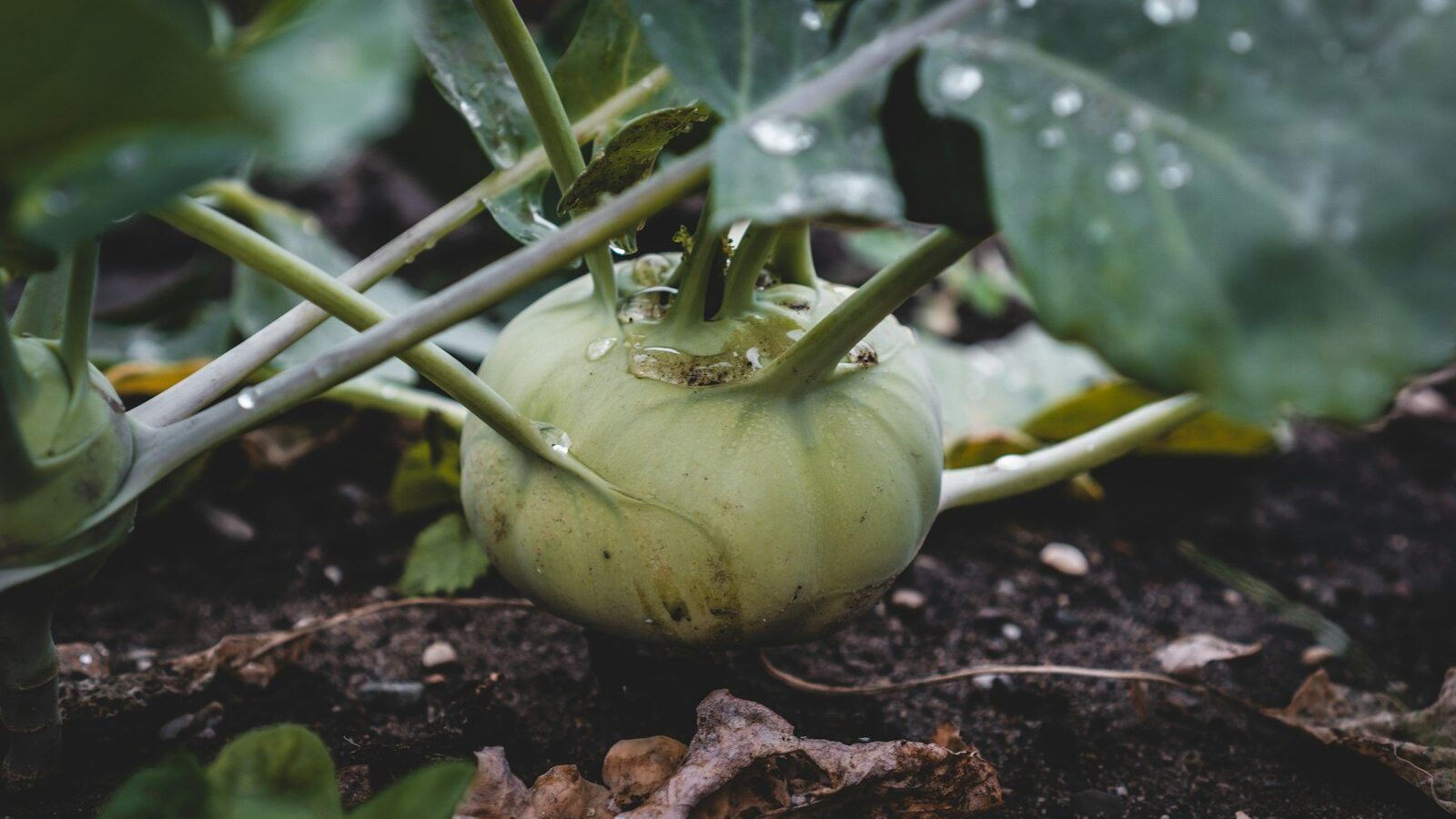
Kohlrabi is one of the most underrated vegetables you can grow, and one of the fastest. The edible part is not a root and not a true bulb but a swollen stem that forms just above the soil line, giving the plant its odd, sputnik-like silhouette. The flavor sits somewhere between a broccoli stalk and a sweet turnip, crisp and mild when grown well, woody and hot when grown badly. The difference between those two outcomes comes down to a few specifics: cool weather, steady moisture, and harvesting before the stem gets too big. Get those right and you can pull a crop in as little as 45 to 60 days, often squeezing in two harvests a year. This guide walks through everything from choosing varieties to slicing into a flawless globe.
Key Takeaways
- Kohlrabi is a cool-season brassica; grow it in spring and fall when daytime temps stay below 75°F to avoid woody, bitter stems.
- Direct-sow or transplant 4 to 6 inches apart in rich, well-drained soil with a pH of 6.0 to 6.8.
- Steady moisture is non-negotiable: aim for 1 to 1.5 inches of water per week so the stem swells evenly and stays tender.
- Harvest when the swollen stem reaches 2 to 3 inches across (golf-ball to tennis-ball size); larger globes turn fibrous.
- Most standard varieties mature in 45 to 60 days, making kohlrabi ideal for succession sowing every two to three weeks.
When to Plant Kohlrabi
Kohlrabi is a member of the brassica family alongside cabbage, broccoli, and kale, which means it thrives in cool conditions and resents heat. Warm weather triggers the swollen stem to turn tough and pithy, and prolonged heat or stress can push the plant to bolt and flower before it forms a usable crop. Plan your sowings around the cool shoulders of the season rather than the middle of summer.
For a spring crop, start seeds indoors about 4 to 6 weeks before your last expected frost, then transplant the seedlings out 2 to 4 weeks before that frost date. Kohlrabi seedlings tolerate light frost down to about 28°F once hardened off, so you can get them in the ground early. Alternatively, direct-sow seeds outdoors as soon as the soil can be worked, usually when soil temperatures reach 45°F or higher. In USDA zones 3 through 7, that typically means an early-to-mid spring sowing.
The fall crop is often the better one because the plant matures into cooling weather rather than rising heat, which keeps the stems sweet and crisp. Count back roughly 8 to 10 weeks from your first fall frost and sow then, usually mid-to-late summer. In warm climates (zones 8 through 10), kohlrabi can be grown straight through fall, winter, and early spring, with the coldest months giving the cleanest flavor.
Choosing a Variety
Varieties split roughly into green (white) types and purple types, plus a handful of giant storage cultivars. For everyday eating, the standard quick-maturing kinds are the most reliable.
- ‘Early White Vienna’ — the classic pale-green globe, ready in about 55 days, tender and dependable.
- ‘Purple Vienna’ — purple skin over white flesh, slightly later at around 60 days, attractive and cold-hardy.
- ‘Kossak’ — a giant storage type that can reach 8 inches across and still stay tender; matures in roughly 80 days and keeps for months.
- ‘Kolibri’ — a vivid purple hybrid prized for uniformity and a sweet, crisp interior.
- ‘Konan’ — a fast hybrid that resists cracking and holds quality in the row longer than older open-pollinated types.
If you are new to the crop, start with ‘Early White Vienna’ or a modern hybrid like ‘Kolibri’ so the first harvest comes quickly and you learn the timing.
Soil Preparation
Kohlrabi wants fertile, moisture-retentive soil that still drains freely. Work 2 to 3 inches of finished compost into the top 8 inches of the bed before planting. The target pH is 6.0 to 6.8; slightly acidic is fine, but very acidic soil increases the risk of clubroot, a brassica disease that deforms the roots. A soil test is the only reliable way to know your starting pH, and lime should only be added based on those results.
Because the crop matures fast, it benefits from a moderate dose of balanced nutrition up front. Mixing in a balanced organic granular fertilizer at planting gives the plant the nitrogen it needs for leafy growth, which in turn feeds the swelling stem. Avoid heavy fresh manure, which can encourage soft, watery growth.
How to Plant Kohlrabi
Direct Sowing
Sow seeds 1/4 to 1/2 inch deep, spacing them about an inch apart in rows 12 inches apart. Seeds germinate in 5 to 10 days in soil between 45°F and 75°F. Once seedlings have two or three true leaves, thin them to a final spacing of 4 to 6 inches between plants. Thinning is essential: crowded kohlrabi competes for water and light and produces small, stringy stems. The thinnings themselves are edible as tender greens.
Transplanting
If you started seedlings indoors, harden them off over 7 to 10 days before setting them out, exposing them gradually to outdoor sun and wind. Transplant at the same depth they grew in their cells, spacing them 4 to 6 inches apart in rows 12 to 18 inches apart. Water in well. Transplants give you a head start in cold climates with short springs, while direct sowing avoids transplant shock and is simpler for the fall crop. Either way, succession-sow a fresh batch every two to three weeks for a continuous supply rather than one giant glut.
Watering and Mulching
Consistent moisture is the single most important factor in growing tender kohlrabi. The swollen stem is largely water, and any check in the supply causes uneven growth and woody texture; a sudden flush of water after a dry spell can even split the globe. Aim for 1 to 1.5 inches of water per week from rain or irrigation, delivered deeply rather than in frequent shallow sprinkles. Soaker hoses or drip lines keep the foliage dry and reduce disease pressure.
A 2-inch layer of organic mulch such as straw or shredded leaves stabilizes soil moisture and keeps roots cool, which matters most when spring transitions into early summer. Mulch also suppresses the weeds that compete with shallow-rooted brassicas.
Fertilizing
With good compost worked in at planting, kohlrabi usually needs only a single side-dressing midway through its growth. About three weeks after the seedlings establish, scratch a nitrogen-leaning fertilizer such as blood meal or a balanced vegetable feed into the soil a few inches from the stems and water it in. This sustained nitrogen keeps the leaves growing, and healthy leaves are what power the stem to swell. Stop heavy feeding once the stem begins to bulb; at that point even moisture matters more than additional fertilizer.
Common Pests and Problems
As a brassica, kohlrabi shares the family’s usual pest list, though its fast turnaround often lets it outrun the worst damage.
- Cabbage worms and loopers — green caterpillars from white or brown moths that chew the leaves. A floating row cover at planting blocks the egg-laying adults; Bacillus thuringiensis (Bt) controls existing larvae.
- Flea beetles — tiny jumping beetles that riddle young leaves with shot-hole damage. Row covers and keeping plants well watered help seedlings outgrow the harm.
- Cabbage root maggots — larvae that tunnel into roots and stems. Row covers and crop rotation are the main defenses.
- Aphids — clusters on new growth; blast them off with water or use insecticidal soap.
- Clubroot — a soilborne disease causing swollen, deformed roots and wilting. Maintain pH near 6.8 and rotate brassicas on at least a three-year cycle.
The most common non-pest problem is woody, fibrous texture, almost always caused by heat stress, inconsistent watering, or simply letting the stem grow too large before harvest. Bolting (premature flowering) is triggered by heat or by cold shock to young transplants; both point back to planting in the right cool window.
Harvesting Kohlrabi
Harvest standard varieties when the swollen stem reaches 2 to 3 inches in diameter, roughly the size of a tennis ball. This is the most common mistake new growers make: leaving the globe to bulk up like a softball, only to find it has turned woody and hot. Smaller is better than larger. Giant storage types like ‘Kossak’ are the exception and stay tender even at 6 to 8 inches.
To harvest, cut the stem off at the soil line with a sharp knife, or pull the whole plant and trim the roots and leaves. The leaves are edible too and cook up much like collards. Most varieties mature 45 to 60 days from sowing. In a fall crop, light frosts actually sweeten the flavor, so you can leave plants in the ground through the first few frosts and harvest as needed.
Store harvested kohlrabi with the leaves trimmed off in a perforated bag in the refrigerator, where standard types keep for two to three weeks and storage types for months in a cold cellar. Peel the tough outer skin before eating; the crisp, sweet interior is excellent raw in slaws, roasted, or steamed. For more cool-season crops to pair with it, see our guide to growing rutabaga, and browse the full Plants & Flowers hub for companion vegetables. If you are tight on space, a container or raised-bed approach suits kohlrabi’s shallow roots well.
Frequently Asked Questions
How long does kohlrabi take to grow?
Most standard varieties mature in 45 to 60 days from sowing. Giant storage types like ‘Kossak’ need about 80 days. Because of the quick turnaround, kohlrabi is ideal for succession sowing every two to three weeks.
Why is my kohlrabi woody and tough?
Woody texture comes from heat stress, inconsistent watering, or letting the swollen stem grow too large. Harvest at 2 to 3 inches across, keep moisture steady at 1 to 1.5 inches per week, and grow during cool weather to keep it tender.
Do you eat the bulb or the root of kohlrabi?
You eat the swollen stem, which forms above the soil line, not the root. Peel off the tough outer skin and use the crisp interior raw or cooked. The leaves are also edible and can be cooked like collards or kale.
Can kohlrabi survive frost?
Yes. Hardened-off plants tolerate light frost down to about 28°F, and a fall crop actually sweetens after the first few frosts. Avoid exposing tender young transplants to a hard cold snap, which can trigger bolting.
How far apart should I space kohlrabi plants?
Space plants 4 to 6 inches apart in rows 12 to 18 inches apart. Crowding produces small, stringy stems, so thin direct-sown seedlings once they have two or three true leaves. Giant storage varieties need a bit more room, around 8 to 10 inches.