

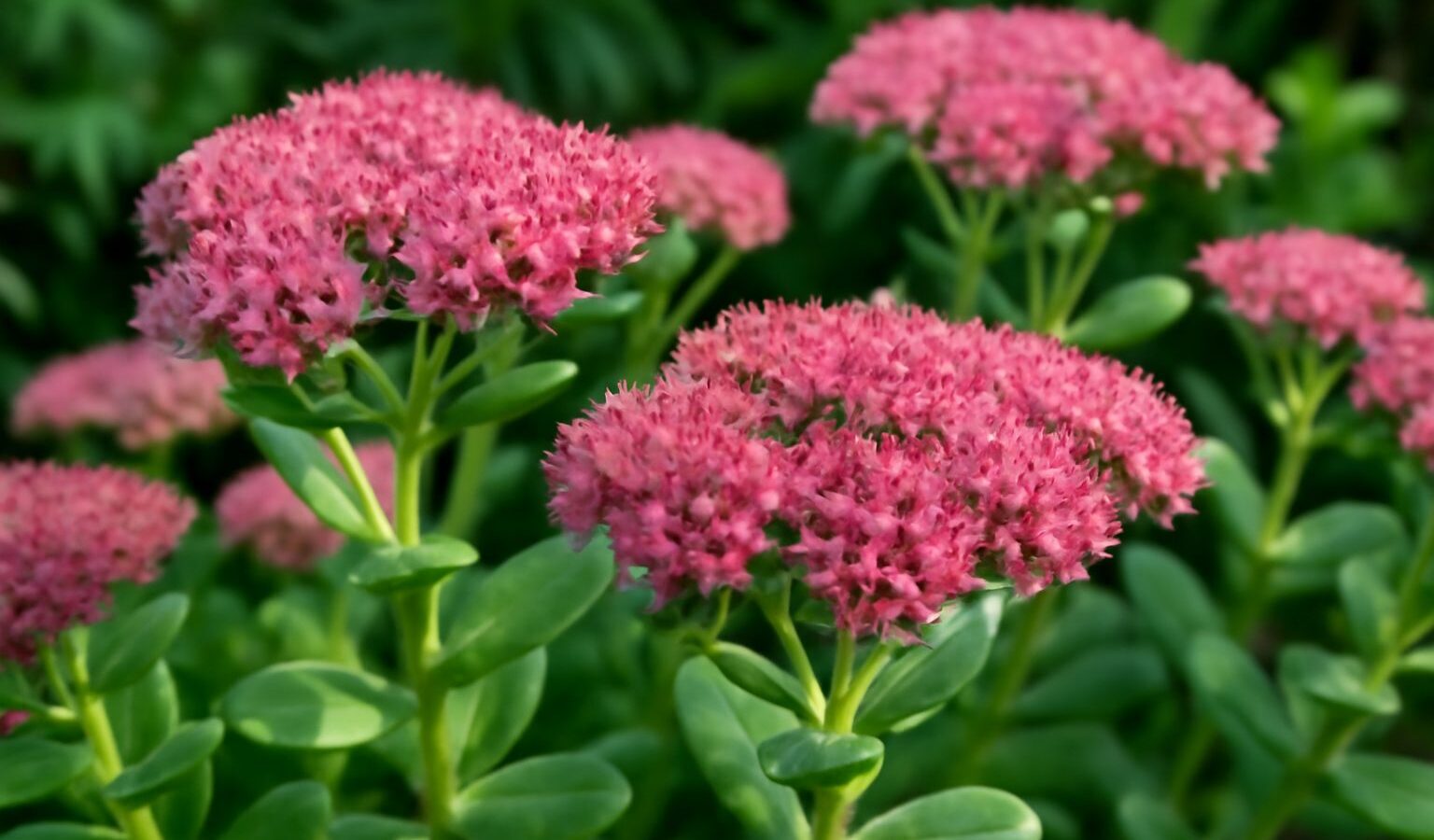
Sedum, also called stonecrop, is the perennial for gardeners who want maximum reward for minimal effort. These succulents store water in thick, fleshy leaves, which makes them virtually drought-proof, and they fall into two broad camps: low creeping groundcovers that knit together into living carpets, and tall upright types like the famous ‘Autumn Joy’ that form clumps topped with broccoli-like flower heads buzzing with bees in fall. Hardy across USDA zones 3 through 9 depending on the species, sedum thrives in hot, dry, poor soil where fussier plants give up, and it asks for almost no water, fertilizer or coddling. This guide covers both groups — choosing types, siting, planting, spacing, watering, the “Chelsea chop” for upright sedums, easy propagation, and the handful of things that can go wrong.
Key Takeaways
- Hardiness: USDA zones 3–9 (species-dependent); full sun for the best color, form and bloom.
- Soil: Lean, gritty, sharply drained. Rich or soggy soil causes rot and flopping — drainage is everything.
- Two types: Creeping groundcovers (2–6 in tall) and upright clumping border sedums (1–2 ft).
- Spacing: Creepers 6–12 in apart; upright types 18–24 in apart.
- Water: Minimal once established — these are true drought-tolerant succulents; overwatering is the main risk.
- Wildlife: Fall-blooming upright sedums are a top late-season nectar source for bees and butterflies; deer-resistant.
The Two Kinds of Sedum
Knowing which type you have changes how you use and prune it. Some upright border sedums have been reclassified into the genus Hylotelephium, but the nursery trade and most gardeners still call them all sedum, and they’re grown the same way.
Creeping / Groundcover Sedums
- ‘Angelina’ (S. rupestre): Needle-like chartreuse foliage that turns orange-amber in cold; spreads fast as a tough groundcover.
- ‘Dragon’s Blood’ (S. spurium): Bronze-red foliage and rosy summer flowers; excellent between pavers and on slopes.
- S. album & S. acre: Tiny-leaved mat-formers ideal for green roofs, rock gardens and crevices.
Upright / Clumping Sedums
- ‘Autumn Joy’: The classic — 18–24 inches, with flower heads that open pink, deepen to coppery rust, and dry to bronze for winter interest.
- ‘Brilliant’: Bright pink late-summer flower heads on a tidy clump.
- ‘Matrona’: Burgundy-tinged stems and gray-green leaves with dusky pink flowers; very sturdy and upright.
- ‘Dark Magic’ / ‘Black Jack’: Near-black foliage cultivars for dramatic contrast.
Sun, Soil and Site
Plant sedum in full sun — six or more hours a day. Sun produces the strongest leaf color, the sturdiest stems, and the heaviest flowering. The upright types are notorious for flopping open in the middle, and inadequate sun is the most common cause; in shade they stretch, weaken, and split apart. Creeping sedums tolerate a little light shade but color up best in full sun.
Drainage matters more than anything else. As succulents, sedums hold their own water, so wet soil — especially in winter — rots the roots and crown quickly. They actively prefer lean, sandy, gravelly or rocky ground and a neutral to slightly alkaline pH. Don’t amend with rich compost or manure; fertile soil makes upright sedums lush and floppy and shortens the life of creeping types. If your soil is heavy clay, plant in raised beds, on slopes, in rock gardens, or amend heavily with coarse grit. This tolerance of harsh, dry, poor sites makes sedum a star of green roofs, hell strips, gravel gardens, and the dry edges of patios — the kind of low-maintenance plantings we explore across our Outdoor Living articles.
Planting and Spacing
Set out nursery plants in spring after the last frost or in early fall while the soil is still warm enough for roots to establish. Dig a hole as deep as the root ball and twice as wide, set the crown level with the soil surface — never buried, which invites rot — backfill with native soil, and water once to settle it in. Then back off the water.
Space creeping sedums 6–12 inches apart; they’ll knit together into a solid mat within a season or two. Space upright clumping types 18–24 inches apart so air circulates freely around the stems, which keeps them sturdy and helps prevent rot. Upright sedums look best planted in groups of three or five toward the front or middle of a sunny border, where their bold flower heads and winter seed heads earn their keep through several seasons. They pair beautifully with ornamental grasses, coneflowers, asters, and the silvery haze of Russian sage.
Watering and Feeding
Water new plantings lightly every week or so for the first month to help roots settle, then taper off. Established sedums are genuinely drought-tolerant and in most climates need no supplemental water at all once their roots are down; only in prolonged drought might you give upright types an occasional deep soak. The cardinal rule with sedum is: when in doubt, don’t water. Soft, mushy, blackening stems or leaves are the classic sign of overwatering and rot.
Feeding is unnecessary and counterproductive. Sedum evolved for lean conditions, and fertilizer produces weak, floppy, disease-prone growth — particularly in the upright types. Skip it entirely, or at most scatter a very thin topdressing of compost in spring. A gravel mulch helps keep crowns dry and suppresses weeds without holding moisture against the plant.
Pruning, the Chelsea Chop and Winter Cleanup
Creeping sedums need almost no pruning — just trim back any patch that outgrows its space or pull stray runners. They root wherever stems touch soil, so they’re easy to shape or contain.
Upright sedums benefit from the Chelsea chop to prevent flopping. In late spring, when the clump is about 8–10 inches tall, cut all the stems back by a third to a half. This delays flowering slightly but produces a shorter, sturdier, denser plant with more (if smaller) flower heads that stand upright through fall. If you skip the chop and your sedum still splays open, that’s your sign to chop next year. Leave the dried flower heads standing through winter — they hold snow handsomely, provide structure in the dormant garden, and offer seeds and shelter for wildlife. Cut the old stems to the ground in early spring just before new rosettes emerge from the base.
Propagation — the Easiest Plant to Multiply
Sedum is almost comically easy to propagate, which is part of its charm. For creeping types, simply lift a rooted section and replant it, or lay a stem on bare soil and it will root on its own. Stem cuttings work for every sedum: snip a 3–5 inch piece, strip the lower leaves, let the cut end callus for a day, then press it into gritty soil — roots form within a couple of weeks. Even individual leaves of many creeping species will root if laid on soil.
Upright clumping sedums can also be divided in early spring every three or four years to rejuvenate them and prevent the center from going hollow. Dig the clump, split it into sections each with roots and shoots, and replant. Division both refreshes an aging plant and gives you plenty of free starts for the rest of the garden or to share.
Pests, Diseases and Wildlife Value
Sedum is one of the lowest-maintenance perennials there is. The main disease is rot — root, stem or crown — and it’s nearly always a symptom of too much water or poor drainage rather than a pathogen to spray. Fix the drainage and the problem disappears. Occasionally aphids or mealybugs appear on soft new growth, and slugs may chew tender shoots in damp shade, but in the dry, sunny sites sedum prefers, pests are rare. The succulent foliage is also reliably deer-resistant.
The wildlife payoff is the upright sedums’ best feature. Blooming in late summer and fall, those flat flower heads are landing pads covered in honeybees, native bees, and butterflies at a time when nectar is growing scarce — making them an essential bridge into autumn for pollinators. Plant them alongside fall asters, goldenrod and milkweed for a late-season feast; for more on supporting pollinators, see our guide to growing milkweed for monarchs and the wider Plants & Flowers collection.
Frequently Asked Questions
Why is my upright sedum flopping over in the middle?
Flopping is caused by too little sun, soil that’s too rich, or too much water. Plant it in full sun, never fertilize, and water sparingly. The reliable fix is the Chelsea chop: cut the stems back by a third to a half in late spring to produce a shorter, sturdier, self-supporting clump.
How often should I water sedum?
Very little. Water new plants weekly for the first month, then stop. Established sedums are drought-tolerant succulents that usually need no supplemental water at all. Soft, mushy or blackening stems mean overwatering — when in doubt, don’t water.
Can sedum grow in shade?
Most sedums need full sun for good color, sturdy growth and flowering. Some creeping groundcover types tolerate light shade but will be looser and less colorful. Upright border sedums grown in shade stretch and flop badly, so reserve them for the sunniest spots.
How do I propagate sedum?
It’s one of the easiest plants to propagate. Take a 3–5 inch stem cutting, strip the lower leaves, let it callus a day, and press it into gritty soil — it roots in a couple of weeks. Creeping types root wherever stems touch soil, and upright clumps can be divided in early spring.
Should I cut back sedum in fall or spring?
Leave upright sedums standing through winter — the dried flower heads add structure and feed wildlife. Cut the old stems to the ground in early spring just before new rosettes appear. Creeping sedums need only occasional trimming to control their spread.