

Parsley (Petroselinum crispum) is far more than a plate garnish — it’s a versatile, productive herb that earns a permanent spot in any kitchen garden, supplying fresh leaves from late spring through fall and often well into winter in milder regions. The one quirk to know up front is that parsley is a biennial grown as an annual: it produces lush leaves in its first year, then bolts to flower and seed in its second, so most gardeners replant fresh each spring for the best leaves. Parsley seed is also famously slow and erratic to germinate, which trips up beginners who assume it has failed. Master those two facts and the rest is easy — this guide walks through sowing, spacing, care and a long harvest.
In this guide
Key Takeaways
- Parsley seed is slow — soak it overnight and expect 2–4 weeks to germinate; be patient.
- Sow ¼ inch deep, thin to 8–10 inches apart, in full sun to part shade and rich, moist, well-drained soil at pH 6.0–7.0.
- It’s a biennial grown as an annual; leaves are best in year one, then it bolts in year two.
- Leaves are ready in 70–90 days; harvest outer stems first, cutting at the base.
- Flat-leaf (Italian) parsley has stronger flavor for cooking; curly is sturdier and decorative.
Flat-Leaf vs. Curly Parsley
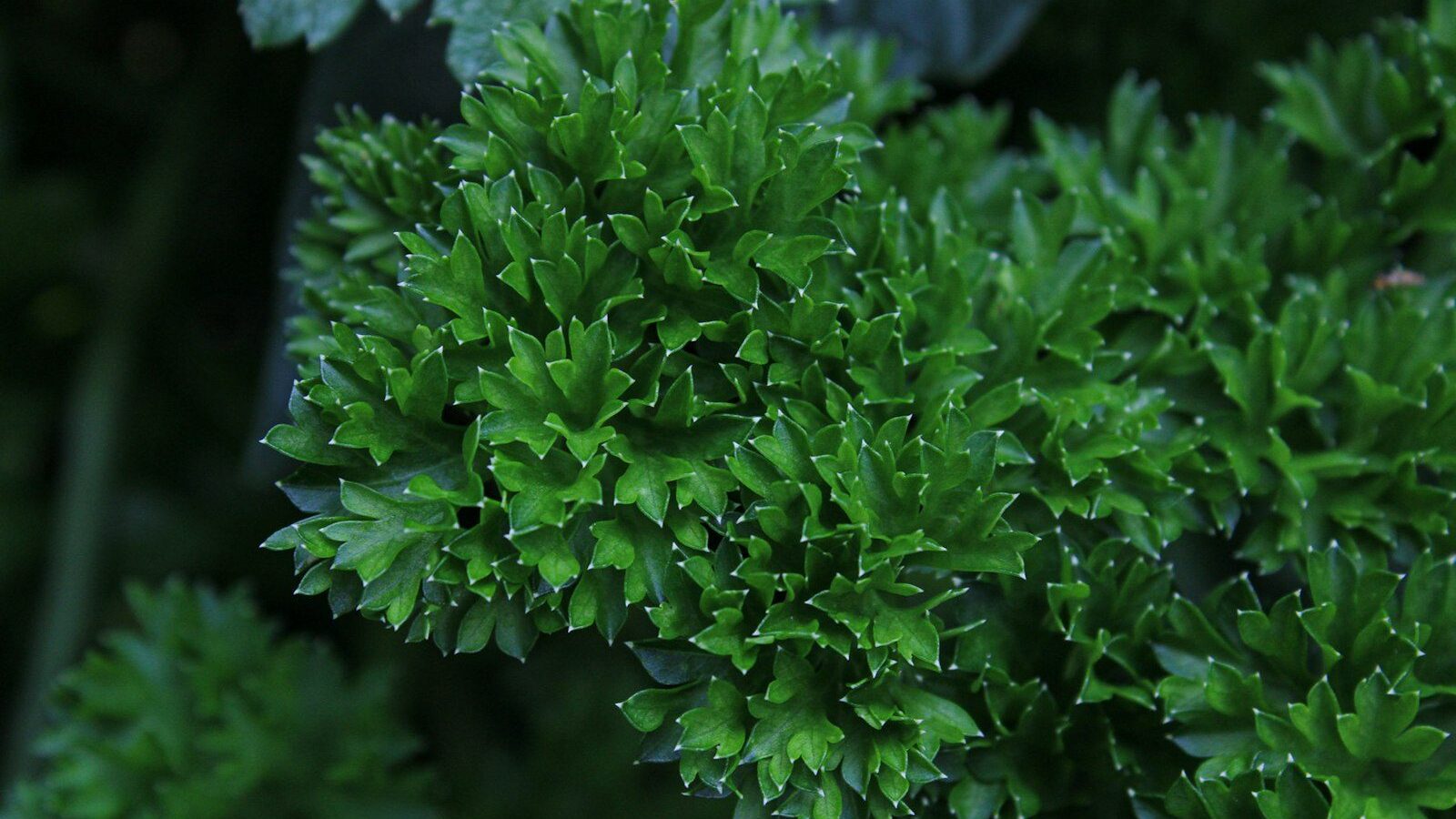
The two common types differ in flavor and use. Flat-leaf (Italian) parsley has flat, deeply cut leaves, a more robust and slightly peppery flavor, and is the cook’s choice for sauces, dressings and finishing dishes. Curly parsley has tightly ruffled leaves, a milder taste, holds up better as a garnish, and tends to be more cold-hardy and ornamental. There’s also Hamburg (root) parsley, grown for its parsnip-like edible root. For most kitchen gardens, flat-leaf is the workhorse and curly the decorative edging plant; growing both covers all bases.
When to Plant Parsley
Parsley tolerates cool weather and light frost, so it’s an early starter. Direct-sow outdoors three to four weeks before your last spring frost, once soil can be worked and has reached at least 50°F — though germination is fastest at soil temperatures of 70°F. In zones 8 and warmer you can also sow in late summer or early fall for a crop that carries through winter. Because parsley germinates so slowly, many gardeners get a jump by starting seed indoors 6 to 8 weeks before the last frost.
Getting Parsley Seed to Germinate
Parsley’s reputation for poor germination comes down to a coating of germination-inhibiting compounds on the seed and the fact that it simply takes time — two to four weeks is normal, not a failure. Speed things up by soaking the seed in warm water overnight before sowing, which leaches out the inhibitors and softens the seed coat. Sow about ¼ inch deep, keep the soil consistently moist (never letting the surface dry out during the germination window), and resist the urge to dig up and check. Warmth and patience are the whole secret.
Like dill and other taprooted herbs, parsley dislikes root disturbance, so if you start indoors use biodegradable pots you can plant whole, or sow directly where it will grow. Transplant or thin seedlings to stand 8 to 10 inches apart, with rows 12 to 18 inches apart.
Light and Soil
Parsley grows well in full sun but is one of the more shade-tolerant herbs, taking partial shade — four to six hours of sun — which is actually an advantage in hot climates where afternoon shade slows bolting and keeps leaves tender. Give it a rich, moisture-retentive but well-drained soil heavy in organic matter, with a pH of 6.0 to 7.0. Work two to three inches of compost into the bed before planting. Because the taproot runs deep, loosen the soil at least eight to ten inches down; in containers, choose a pot at least 8 to 10 inches deep. Parsley is a fine container and windowsill herb, making it a natural fit for small-space and herb-spiral plantings.
Watering and Feeding
Keep parsley consistently moist — about one to one-and-a-half inches of water per week. It has a relatively high moisture demand for an herb, and letting it dry out causes the leaves to wilt, yellow and turn bitter, and can trigger premature bolting. Mulch around the plants to hold moisture and keep the roots cool. Water at the base in the morning to keep the foliage dry and reduce disease. Container parsley dries quickly and may need watering daily in summer.
As a leafy crop you harvest repeatedly, parsley appreciates steady feeding. Mix a balanced fertilizer into the soil at planting, then side-dress with compost or feed with a dilute liquid fertilizer every three to four weeks through the season, especially after heavy cutting. A nitrogen-leaning feed supports lush leaf growth. Don’t starve it — pale, slow-growing parsley is usually hungry or dry.
Bolting and the Biennial Cycle
Parsley is a biennial: in its first season it builds a rosette of edible leaves, and in its second season — triggered by the cold of winter followed by warming spring days — it sends up a flower stalk, sets seed, and dies. Once it bolts the leaves turn bitter and tough. Because of this, most gardeners treat parsley as an annual and start fresh plants each spring for top-quality leaves. If you let a second-year plant flower, its umbels attract beneficial insects and it will self-seed, giving you volunteer plants for the following year. In the first year, hot, dry stress can cause early bolting, so consistent water and a little shade in summer help keep plants in leaf longer.
Pests and Diseases
Parsley is generally low-maintenance but shares pests with its carrot-family relatives. Black swallowtail caterpillars (green with black and yellow bands) feed on the foliage — many gardeners plant extra and relocate them, since they become beautiful butterflies. Aphids cluster on tender growth and wash off with a spray of water or insecticidal soap. Carrot rust fly and cutworms can be occasional problems.
Disease-wise, watch for leaf spot and blight (brown or yellow spots on leaves) and crown/root rot in poorly drained soil. Prevention is the same recipe as for most herbs: don’t crowd plants, water at the base in the morning, ensure good drainage, and rotate so parsley doesn’t follow carrots, celery or dill in the same spot. Remove and discard badly affected leaves promptly to slow any spread.
Companion Planting
Parsley is a good neighbor to tomatoes, peppers, asparagus, corn and brassicas, and when allowed to flower it draws in hoverflies, parasitic wasps and other beneficial insects that prey on garden pests. Keep it away from lettuce (it can encourage bolting) and from other carrot-family plants that share its pests and diseases. It pairs naturally with the same beds of chives and other culinary herbs you reach for in the kitchen.
Harvesting Parsley
Parsley is usually ready to start harvesting 70 to 90 days from sowing, once the plant has several mature leaf stems each with three segments. The right technique is to cut whole stems at the base of the plant, working from the outside in, rather than picking individual leaflets from the top. Outer-stem harvesting lets the central growing point keep producing new foliage, so the plant stays productive for months.
Don’t be timid — regular cutting actually encourages bushier growth. You can take up to a third of the plant at a time and it will bounce back quickly. Harvest in the morning when the leaves are crisp and flavor is strongest. A single healthy plant, kept watered and cut from the outside, will supply a kitchen all season and continue into cold weather, since light frost only sweetens curly parsley.
Storing and Preserving
Fresh parsley keeps up to two weeks with the stem ends in a glass of water and a loose bag over the leaves in the fridge, refreshing the water every few days. To preserve a surplus, chop and freeze it in ice-cube trays with water or oil, which holds the flavor far better than drying. If you do dry parsley, do it quickly in a dehydrator or warm oven and store in an airtight jar away from light; dried parsley is milder but useful in cooked dishes. For more easy herbs to grow alongside it, see our guide to growing dill.
Frequently Asked Questions
Why won’t my parsley seeds germinate?
Parsley is just slow — two to four weeks is normal, and the seed has natural germination inhibitors. Soak seed overnight in warm water before sowing, keep the soil consistently moist and warm, and be patient rather than assuming failure.
Does parsley come back every year?
Parsley is a biennial. It grows leaves the first year and flowers, sets seed, then dies in its second year. Most gardeners replant each spring for the best leaves, but a flowering plant will self-seed for volunteers.
How do I harvest parsley so it keeps growing?
Cut whole stems at the base, working from the outside in, rather than picking individual leaflets from the top. This leaves the central growing point intact so the plant keeps producing for months.
Can parsley grow in shade?
Yes — it’s one of the more shade-tolerant herbs and grows well with just four to six hours of sun. In hot climates, afternoon shade actually keeps the leaves tender and delays bolting.
What’s the difference between flat-leaf and curly parsley?
Flat-leaf (Italian) parsley has a stronger, peppery flavor preferred for cooking and sauces. Curly parsley is milder, more decorative, sturdier as a garnish, and a bit more cold-hardy. Both grow the same way.