

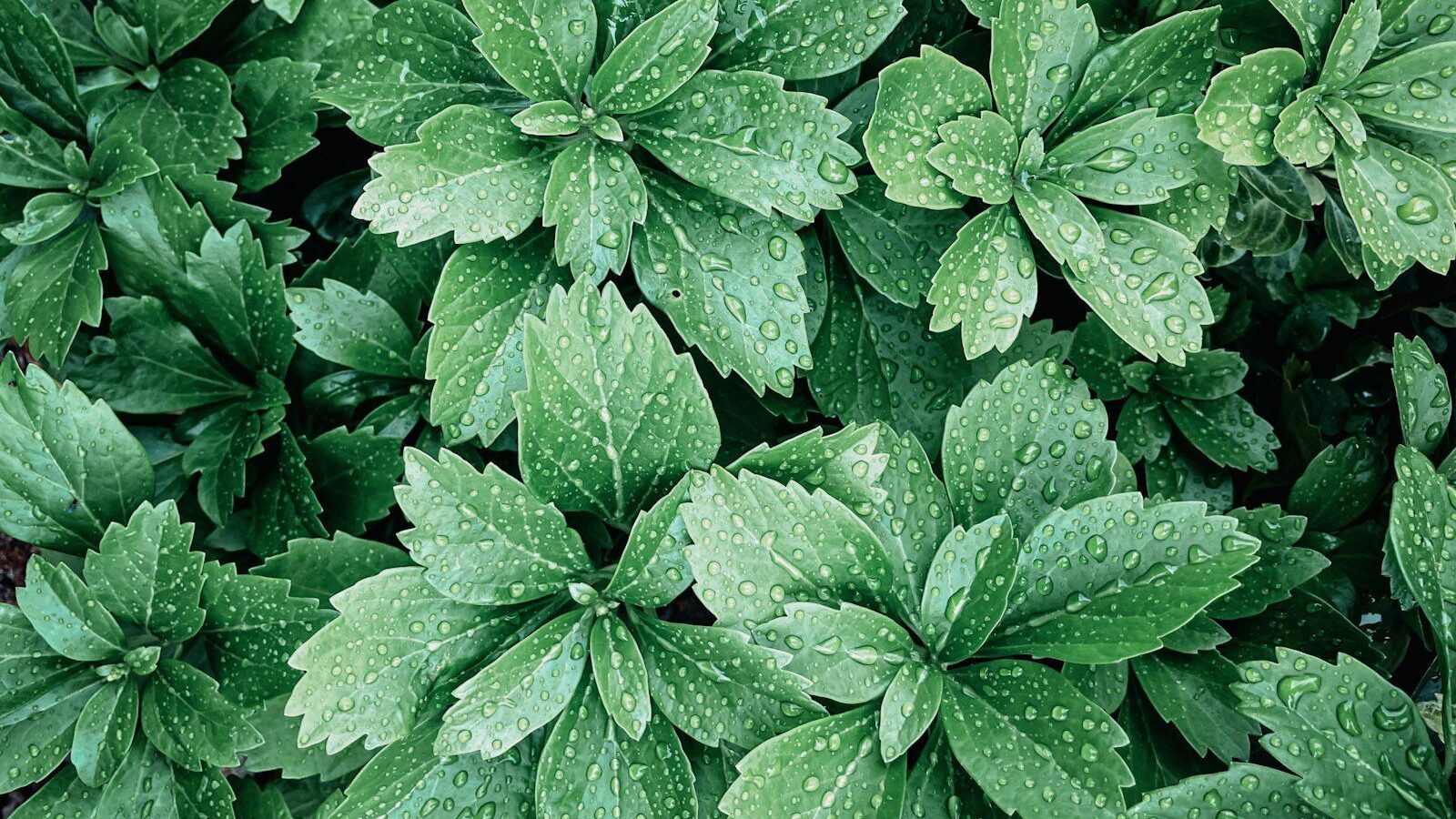
Japanese pachysandra (Pachysandra terminalis) is the classic evergreen ground cover for dry-ish shade under trees, where grass gives up. Plant rooted cuttings 6 to 12 inches apart in loose, mulched, slightly acidic soil in part to full shade in USDA zones 4 or 5 through 8, keep them watered for the first season, and within two to three years you will have a solid, 6- to 10-inch-tall carpet that smothers most weeds. The trade-offs are real, though: it scorches in sun, it is prone to a serious blight in crowded, wet conditions, and it escapes into woodlands in parts of the eastern US. This guide covers planting and care, problem-solving, and native alternatives worth considering, including the native Allegheny spurge.
In this guide
Key Takeaways
- Best in part to full shade; leaves yellow and scorch in afternoon sun.
- Plant rooted cuttings 6 to 12 inches apart in spring or early fall; closer spacing fills in faster.
- Prefers moist, well-drained, organic, slightly acidic soil; mulch between plants until they fill in.
- Volutella blight is the main disease; thin crowded beds and avoid overhead watering in the evening.
- Native Allegheny spurge (Pachysandra procumbens) and other native ground covers are good alternatives where invasiveness is a concern.
Pachysandra at a Glance
| Trait | Japanese pachysandra |
|---|---|
| Botanical name | Pachysandra terminalis |
| Hardiness | USDA zones 4 or 5 to 8 |
| Height | 6 to 10 inches, occasionally to 12 |
| Spread | Indefinite, by underground rhizomes |
| Light | Part shade to full shade |
| Soil | Moist, well-drained, rich in organic matter, pH roughly 5.5 to 6.5 |
| Foliage | Evergreen, glossy, toothed leaves in whorls |
| Flowers | Small white spikes in early spring |
| Deer | Generally deer resistant |
Popular cultivars include ‘Green Carpet’, a compact, deep-green form; ‘Green Sheen’, with extra glossy leaves; and ‘Silver Edge’ (sometimes sold as ‘Variegata’), with white-edged leaves that brighten dark corners but grow more slowly and are less vigorous.
Where to Plant Pachysandra
Pachysandra thrives where many plants struggle: under the canopy of mature deciduous trees, on the north side of buildings, and on shady slopes where mowing is awkward. It handles root competition from trees better than most ground covers once established. It does not handle sun well. More than a few hours of direct afternoon sun turns the leaves yellow-green and then bleached and brown, especially in hot summers. Morning sun with afternoon shade is the upper limit.
Avoid planting it next to natural woodlands or wild areas, particularly in the mid-Atlantic and Northeast, where it has spread from gardens into forests. Edging or a mowed strip helps contain it, but rhizomes can still creep under barriers over time. For broader design ideas in dim spots, see our guide on how to create a shade garden.
How to Plant Pachysandra
Pachysandra is usually sold in flats of rooted cuttings, often 50 or 100 per flat, or in small pots. Flats are the economical way to plant large areas.
When to plant
Spring, after the soil warms and is workable, and early fall, at least six weeks before the ground freezes, are best. Spring planting gives a full season of root growth; fall planting benefits from cooler temperatures and more reliable rain in many regions.
Preparing the bed
- Remove existing grass and weeds completely, including roots of perennial weeds. Pachysandra is slow to establish, and weeds will outpace it in year one.
- Loosen the soil 6 to 8 inches deep where possible. Under trees, work gently around surface roots and do not pile more than 2 inches of soil over them.
- Mix in 2 to 3 inches of compost or leaf mold to improve organic matter.
- If a soil test shows a pH above about 7, pachysandra may show yellowing; amend with elemental sulfur per test recommendations or choose another ground cover.
Spacing and planting
Space plants 6 to 12 inches apart in a staggered, triangular grid. At 6 inches you will have nearly full coverage in about two seasons; at 12 inches expect three or more. As a rough guide, 100 plants at 6-inch spacing cover about 25 square feet, while at 12-inch spacing they cover about 100 square feet.
- Water the flats an hour before planting.
- Make a slit or small hole with a trowel, set each cutting so the roots are covered and the lowest leaves sit just above the soil, and firm it in.
- Water thoroughly to settle the soil.
- Spread 1 to 2 inches of shredded leaves or fine bark mulch between plants to hold moisture and suppress weeds. Keep mulch off the crowns.
Care and Maintenance
Watering
Water new plantings about once or twice a week for the first growing season, giving roughly an inch of water per week including rain. Under trees, the canopy often blocks light rain and tree roots compete for moisture, so check the soil even after storms. Once established, pachysandra is moderately drought tolerant in shade but looks best with a deep watering during long dry spells. Water in the morning at soil level with a soaker hose rather than evening sprinklers, which helps prevent blight.
Fertilizing
Feed in early spring with a light application of a balanced slow-release fertilizer or a fertilizer for acid-loving plants, or simply top-dress with a half inch of compost. Pale yellow-green leaves in shade often point to low nitrogen or high pH. Avoid heavy feeding, which produces soft growth that is more prone to disease.
Leaves and cleanup
A light layer of fallen leaves can stay as mulch, but thick, matted leaf layers trap moisture and encourage disease. Rake or blow off heavy leaf piles in late fall or early spring. If the bed looks ragged after winter, mow it on the highest setting or shear it to about 4 inches in early spring to encourage dense new growth.
Keeping it in bounds
Pachysandra spreads by shallow rhizomes. Edge the bed annually with a sharp spade along lawns and paths, and pull runners that cross into other beds. Steel or plastic edging set 4 to 6 inches deep slows the spread.
Propagating Pachysandra
Filling bare spots is easy with your own plants. In late spring or early summer, take 4- to 6-inch stem cuttings from a healthy part of the bed, strip the lower leaves, and stick them 2 inches deep in moist, shaded soil or a flat of potting mix. Keep them consistently moist; most root within four to six weeks. You can also dig up rooted clumps from the edge of an established bed in spring and replant them directly, which gives faster coverage than cuttings. Only take material from disease-free areas so you do not spread blight to new parts of the garden.
Pachysandra pairs well with spring bulbs such as daffodils and Siberian squill, which push up through the leaves before tree canopies leaf out, and with taller shade perennials like hostas and ferns that rise above the carpet.
Pests and Diseases
Volutella leaf and stem blight
This fungal disease is the biggest threat to pachysandra beds. It starts as tan to brown blotches on leaves, often with darker borders, then moves into stems, which darken and collapse, leaving dead patches that widen each year. It thrives in crowded, overly dense beds, wet conditions, plants weakened by sun, winter injury or scale, and beds smothered by leaf litter.
- Remove and bag infected plants as soon as you see them, including the roots.
- Thin dense beds so air can move through them.
- Clear heavy leaf litter and avoid evening overhead watering.
- Fungicides labeled for Volutella blight on pachysandra can protect healthy plants in spring as new growth emerges, but sanitation and improved conditions matter more.
- If a large section dies, replant with a different ground cover rather than more pachysandra in the same soil.
Euonymus scale
Small white or brownish scale insects on stems and leaf undersides weaken plants and make them more susceptible to blight. Treat with horticultural oil in late spring when crawlers are active, and remove badly infested plants. If nearby euonymus shrubs are infested, treat them too.
Native Alternatives to Japanese Pachysandra
If you garden near woodlands or want to support native insects, consider these shade ground covers instead. Check your state’s native plant society for the best fit locally, and see our native plant garden guide for planning tips.
| Plant | Zones | Notes |
|---|---|---|
| Allegheny spurge (Pachysandra procumbens) | 5 to 9 | Native to the Southeast; clumping, mottled leaves, fragrant spring flowers; semi-evergreen and slower to spread |
| Wild ginger (Asarum canadense) | 3 to 8 | Heart-shaped deciduous leaves; spreads steadily in moist shade |
| Foamflower (Tiarella cordifolia) | 4 to 9 | White spring flower spikes; running types fill in well |
| Green-and-gold (Chrysogonum virginianum) | 5 to 9 | Yellow flowers spring into summer; part shade |
| Pennsylvania sedge (Carex pensylvanica) | 3 to 8 | Fine, grassy texture; tolerates dry shade under trees |
| Creeping phlox (Phlox stolonifera) | 4 to 8 | Spring flowers in blue, pink or white; part shade |
Allegheny spurge is the closest substitute in look and habit. It is less aggressive, less glossy, and partly deciduous in colder zones, but it brings early nectar for pollinators and does not escape into woods the way its Japanese cousin can. Mixing several native ground covers gives a more resilient bed than a single-species carpet. For more options, browse our roundup of ground cover plants and our flowers and perennials hub.
Removing Pachysandra
If you inherit a bed you want gone, dig it out with a spade or garden fork, lifting the mat of rhizomes; it pulls up in sheets once you get under it. Follow up by pulling resprouts for a season. Smothering with cardboard and 4 to 6 inches of mulch for a full growing season also works on established patches. Bag removed plants rather than composting them in a pile near woods.
Frequently Asked Questions
How fast does pachysandra spread?
It starts slowly. Expect modest growth in the first year, then faster spread as rhizomes establish. At 6-inch spacing, most beds fill in within two to three seasons.
Can pachysandra grow in full sun?
Not well. In full sun, especially afternoon sun, leaves turn yellow and scorch. It performs best in part to full shade.
Is Pachysandra terminalis invasive?
It has escaped cultivation and is considered invasive in parts of the eastern US, particularly near woodlands. Check your state’s invasive plant list and consider native alternatives such as Allegheny spurge.
Why is my pachysandra turning brown?
Brown blotches spreading into stems usually mean Volutella blight. Overall bleaching suggests too much sun, and brown edges after winter can be winter burn. Remove diseased plants and improve air flow.
Is pachysandra deer resistant?
It is generally considered deer resistant and is rarely browsed, which is one reason it is popular in suburban shade gardens.